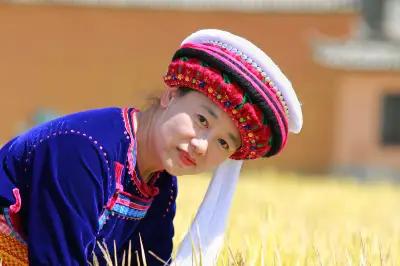
7-Day DIY Itinerary in Northwest Yunnan: Dali, Lijiang, Shangri-La
Let's go to Yunnan!
In May this year, I visited Dali for the first time, and since then, nearly every month has held a journey through Yunnan. Kunming, Yuxi, Dali, Lijiang, Shangri-La – each city has left footprints, each place has given me a handful of images I truly love. After threading together seven trips, I'm burning the midnight oil to write you this 7-day DIY itinerary for northwest Yunnan.
Perhaps you, too, are planning a trip like this – to see Dali's wind, flowers, snow, and moon; to encounter the tenderness of Lijiang Ancient Town; to search for your own pure land in Shangri-La.
【About the Itinerary】
Day 1: Fly directly to Kunming, transfer to Dali by high-speed train; explore Dali Ancient Town; overnight at Nan Guo Boutique Guesthouse.
Day 2: Dali Ancient Town; electric scooter ride around Erhai Lake; visit the Three Pagodas of Chongsheng Temple.
Day 3: Xizhou Ancient Town, Shuanglang; stay at Canghai Suji.
Day 4: Shaxi Ancient Town; arrive in Lijiang; overnight at Arro Khampa Lijiang.
Day 5: Horseback ride through Seven Immortals Lake; Lijiang Ancient Town.
Day 6: Arrive in Shangri-La; Dukezong Ancient Town; overnight at Arro Khampa Shangri-La.
Day 7: Drive from Shangri-La to Lijiang International Airport and head home.
【About Transportation】
Kunming: As the capital of Yunnan, Kunming is extremely well connected. Changshui Airport has become one of China's busiest domestic airports, with direct flights from most major cities. We flew direct from Quanzhou to Kunming, then took an airport shuttle bus to Kunming Railway Station for 35 yuan – a ride of about 35 minutes, not far at all.
Dali: Dali also has an airport, but with fewer routes. You can connect through Kunming, with one flight in the morning and one in the evening. We chose the high-speed train from Kunming to Dali, which takes 2 hours and costs 145 yuan.
Lijiang: Lijiang International Airport is the second busiest in Yunnan, with many busy routes. There's no high-speed train from Dali to Lijiang, only regular trains, but Kunming does have direct high-speed trains to Lijiang. From Dali, instead of taking the train, we rented a car and drove to Lijiang via Shaxi Ancient Town. Shared vans are also plentiful, taking about 3 hours and costing around 100 yuan per person.
Shangri-La: The capital of Diqing Prefecture, Shangri-La has an airport, but no expressway or railway connections yet. It's probably the trickiest destination in northwest Yunnan. Starting from Lijiang Ancient Town, we drove to Shangri-La, first on a short stretch of expressway, then on national roads – about 4 hours in total.
Flying from Quanzhou to Yunnan, a three-hour journey through the sky lands you in the Spring City of Kunming. Then head west all the way to Dali. The fastest way from Kunming to Dali is a flight lasting just over an hour; the next best is the two-hour high-speed train I chose. They say Dali's beauty lies in the Wind of Xiaguan, the Flowers of Shangguan, the Snow on Cangshan's summit, and the Moon reflected in Erhai Lake. But for me, the white clouds drifting under the blue sky are also among Dali's most beautiful sights.
From Dali Railway Station, take bus No. 8 for 3 yuan straight to Dali Ancient Town. With Cangshan at its back and Erhai before it, this square-shaped old town holds Dali's millennia of history and culture. Finding accommodation in Dali isn't hard. If you want to avoid the town's crowds but not be too far away, I recommend the Nanguo Boutique Guesthouse inside the Miwan Tourism Cultural Town.
500 meters from the ancient town, Miwan is a quiet enclave. The guesthouse occupies a Bai-style building. There aren't many rooms – just over a dozen. Our luxury honeymoon king room, 35 square meters, blended Japanese and Nordic simplicity into a relaxed, cozy space. The bedding meets star-hotel standards, and toiletries are custom-made. Though it's a guesthouse, service and facilities are very standardized. At night, a cup of warm milk is brought to you; breakfast is served on the ground floor.
The first-floor lobby is huge, with a tea table free for guests – you can brew tea and chat with companions. Overall, I'd highlight this guesthouse's location, value, and service.
Walking from Nanguo to the ancient town takes about 15 minutes. Gazing at Cangshan in the early afternoon, a belt of cloud draped over the peak, like snow covering the summit. Sunlight streams through gaps in the clouds onto the land – the crepuscular rays seen as a wonder inland feel utterly ordinary in Dali. Viewed from Haidong looking toward Haixi or through a drone, the sight is especially majestic.
Strolling the streets of the ancient town, Renmin Road seems to stretch from the foot of Cangshan eastward all the way to the shore of Erhai. Crowds of visitors and lively shops line the way. If you seek quieter spots, duck into a side alley – you might stumble upon a few lovely little shops.
Like the books inside Persimmon Tree Café, or the cats at Meow Island. Dali is effortlessly artistic, hidden in ordinary lanes.
Wandering around the ancient town until we were tired, we chose a highly rated Yunnan restaurant for our first meal: Duan Gongzi Restaurant. It's at the intersection of the upper section of Renmin Road and Boai Road (150 meters west of Foreigner Street and Fuxing Road, near the Cangshan Gate at the south end). The decor is antique and elegant. A dragon throne sits in the main hall on the first floor – a hit with kids for photos. They have tables for four and larger round tables. Staff wear period costumes, making you feel like you've stepped back into the Kingdom of Dali.
As a restaurant specializing in Yunnan cuisine, the "Feng Hua Xue Yue" fish comes highly recommended – it's their signature dish. The fish is tender and flavorful, with a gentle sour-spicy taste that pleases most palates. The presentation is thoughtful, and any muddy taste from freshwater fish has been removed during preparation.
Bai-style pepper chicken uses local black-bone chicken cut into small, easy-to-eat pieces. The dish has loads of fresh Sichuan pepper – that numbing flavor is perfect with rice. Of course, you can't visit Yunnan without eating mushrooms. The Cangshan wild mushrooms are highly recommended; don't worry, they're the kind that won't make you see stars. Only an authentic Yunnan kitchen could produce wild mushrooms this tasty and beautifully presented.
Duan Gongzi opens from 11:30 am to 10:30 pm daily, with an average spend of around 95 yuan per person – very reasonable. After the meal, take a walk on Renmin Road; if it feels crowded, Yeyu Road is also recommended. Every evening, a small night market springs up there, full of interesting people doing interesting things.
Wake up naturally at Nanguo Guesthouse – even at 10 am, it doesn't feel like wasted time, since Dali is about 1.5 hours behind Beijing time and darkness falls quite late. After a bowl of authentic Bai rice noodles made by the guesthouse aunt, I took a drone over the ancient town for a different view of Dali today.
There's no drone ban over Dali Ancient Town, the airport is far, and there are no restricted zones nearby. Just be careful not to fly too low and watch out for mountain winds. From above, the whole old town spreads before you. Cangshan Gate, Southeast Gate, and Erhai Gate (East Gate) stand out clearly. Erhai Gate, especially, was said to stand right by Erhai's shore long ago; changes in terrain and water levels shrank the lake, creating today's landscape.
Apart from the imposing city gates, the grid of roads connects every corner. Renmin Road running east-west always disorients me – I keep thinking Cangshan is north and Erhai east, but in reality, they face each other east and west.
For lunch today, we went to Jinhua Xiao A Mei on Renmin Road, a restaurant of traditional Dali flavors. It's at the corner of Renmin Road and Boai Road, open from 11 am. The retro Chinese decoration and a photo wall showing old Dali memories are worth a look. The waitstaff wear local costumes – very distinctive. If you eat there, grab a copy of their Dali travel guide; it's quite useful.
Though it's a Yunnan restaurant, they blend in plenty of Sichuan and Cantonese techniques, making it widely palatable. Such places tend to do well in tourist spots, and their reputation builds quickly. The signature dish, A Mei stuffed tofu, might look a bit like stinky tofu at first glance, but it's actually tender tofu that's been fried and then drizzled with a special sauce – perfect with rice and very flavorful. The tofu pieces are big, and the portion is generous.
Cold shredded chicken with red rice noodles – a very appetizing dish with a mildly spicy taste and a hint of sweetness, perfect for southern palates. It's a cold dish, the soft noodles accompanied by chicken; the sauce is poured tableside by the waiter. Black-bone chicken herbal soup is excellent for nourishing in autumn and winter. I particularly liked that it came with at least seven different kinds of mushrooms.
On a certain review platform, this restaurant ranks first for Dali specialties. Overall, it's highly recommended for flavor and value. After lunch, despite the daunting UV levels (remember to apply sunscreen – this is super important in Dali!), we rented an electric scooter to ride along Erhai. Renting one in Dali Ancient Town is easy; a small scooter costs about 60 yuan. If you're worried about being overcharged, ask your guesthouse – they usually have reliable partners. Besides scooters, you can also rent flashy plastic-looking sports cars, but I don't suggest it, because many lakeside spots are only accessible by scooter.
From the old town, a recommended route is towards Cai Village, past fields and Bai women tilling the land. Follow Yuehua Road east to Cai Village Pier, then head north from there. The newly built boardwalk has changed Erhai's appearance and greatly improved the touring environment. Along the way, many bays with waterside curves make great photo spots.
By the lake, buildings have retreated to the second line, leaving mostly wetlands. We basically covered the stretch from Cai Village to Majiuyi, stopping and going. Only by scooter can you find these photo-worthy points. The three-and-a-half-hour ride wasn't long by most visitors' standards, but I felt it was enough – you can capture many good shots in that distance, and beyond that, scenery fatigue might kick in.
Using my little scooter, we cut back from Majiuyi to the Dali-Lijiang road and, drawn by the landmark Three Pagodas, rode toward Chongsheng Temple. But we balked at the over-100-yuan entrance fee, and since it was getting late, I flew my drone nearby instead. That counts as ticking off this royal temple rebuilt in 2005.
Before sunset, we returned the scooter in the old town and went to a Yunnan restaurant in an old courtyard on Renmin Road, recommended by a friend. Jinshan – Hundred-Year Courtyard Restaurant. The owner carefully tends this century-old family courtyard and crafts Yunnan dishes tailored to travelers' tastes. Jinshan's owner was the first local restaurant owner I got to know in Dali – her love of a drink might be my first impression.
The courtyard on Renmin Road, over a hundred years old, belongs to the owner's family. Dining is split between indoors and outdoors; if it's not raining, I highly recommend sitting outside. Dali's climate is so comfortable – even in summer, there are no mosquitoes. The owner has clearly put a lot of heart into the courtyard, filling it with lush succulents and greenery that thrive. By day, it must be a fantastic photo spot.
The restaurant is open daily from 10:00 am to 11:00 pm. Besides many original Yunnan dishes, their homemade wine is also recommended. The mushroom "shuixingyanghua" (a local aquatic plant) was the most unique I've tasted in Dali. The mushrooms are deep-fried with a special touch, giving this original dish its soul.
The signature passion fruit sour-spicy fish – a new twist on the classic, with the natural tartness of passion fruit adding a light fruity fragrance, very appetizing. Corn cake can be a staple or dessert, made from cornmeal, almost bready. This recipe is the owner's own creation.
In short, this restaurant in a century-old courtyard is utterly down-to-earth, with great flavor and value – highly recommended.
Renting a car makes getting around Dali very convenient. Today's destinations are Xizhou Ancient Town on Haixi side and the internet-famous Shuanglang on the opposite shore. Both towns sit beside Erhai, yet offer completely different experiences.
From the old town, Xizhou isn't far. Driving along the Dali-Lijiang road, you'll arrive in half an hour. If you don't drive, there's a bus near the old town to Xizhou – 7 yuan per person, and yes, the price is exactly 7 yuan! Xizhou Ancient Town is a renowned historical and cultural town in Yunnan, the "dignified town" Mr. Lao She once praised.
Enter Xizhou on foot through Zhengyi Gate at the west entrance, and wander its lanes. Almost every traditional Bai courtyard house has its own history and stories. In ancient times, Xizhou was a major stop on the Tea Horse Road, producing wealthy merchants and illustrious figures.
Treading the bluestone paths of Xizhou, meander through the streets. Yan Family Compound by Sifang Street, along with Dong and Yang family compounds, are worth visiting. But most tourists love the internet-famous corner building and the Xilin Yuan among the fields – these are Xizhou's most photogenic spots online.
Of course, if you ask when Xizhou is most beautiful, I think many would answer: autumn, when the rice is ready for harvest. At the end of September this year, we were lucky to catch Xizhou's golden fields.
If you go to Xizhou, I strongly recommend spending a full day. Stay in a small courtyard like Huanxi, try Bai snacks represented by Xizhou baba. Xizhou Meeting Hall and Xizhou Farming Museum are also great places to linger and daydream.
Compared to Xizhou, my first impression of Shuanglang didn't match my imagination. A friend said it felt like a faux ancient commercial block in a modern city – noisy, flashy. Yet as Dali's most internet-famous destination, Shuanglang has its own attractive highlights.
Driving from Xizhou to Shuanglang takes about 40 minutes; from the old town it's farther, over an hour. Navigation often suggests the expressway, but it's unnecessary – it's a bit of a detour and takes about the same time. Buses from the old town to Shuanglang are available, though you might have to wait a bit.
They say the best scenery in Dali lies between Cangshan and Erhai, and the best of that is in Shuanglang, which has long been a favorite. Shuanglang Ancient Town is arguably the finest spot around Erhai for lake views – here you can appreciate Erhai's exquisite beauty up close, while in the distance, the verdant Cangshan rises. On a fine day, words fail to describe the scenery.
Beyond the natural beauty, Shuanglang's manufactured photo spots are what truly set social media ablaze! Lakeside guesthouses and "sky mirrors" – nearly every visitor to Dali wants to snap a picture at these spots. So even on days when Dali Ancient Town feels sparse, Shuanglang still draws a sizable crowd. Shuanglang is where you watch the sun set behind Cangshan's peak. Tonight, we'll stay in a place where we can see the sunrise: Jijian Canghai Suji.
This guesthouse sits inside the Dali Canghai Golf International Community, at the foot of Cangshan and right next to the Three Pagodas and Chongsheng Temple. In Dali, the golf community is one of the highest residential areas. Staying at Canghai Suji, the lake-facing rooms overlook Erhai; on a clear morning, you can watch the first rays of sunlight spill onto the lake without leaving your bed. Because it's some distance from the old town, at night you can also see a sky full of stars.
The guesthouse occupies two connected villas, with dining spaces of different sizes, a multi-function meeting room, a Western-style bar, a Chinese tea bar, a cozy library, an outdoor barbecue area, a laundry room, and other personalized facilities. Butler service adds to the outstanding value.
Our sea-view king room was over 30 square meters. From it, we could see Chongsheng Temple's Three Pagodas and the not-too-distant Erhai. The interior was warm and comfortable, well-equipped, with TOTO bathroom fixtures and imported SevenPlus toiletries from the UK.
Sleeping in Cangshan's embrace, the first morning light slips through the curtain gaps. In the afternoon, thin mist lingers around Cangshan's waist – perhaps this is the hidden paradise city dwellers seek, or something close to it. Today, we leave Dali for Lijiang, with the first destination being Shaxi Ancient Town, about two hours from the old town.
A friend said Shaxi is the Dali of her heart. For me, it's the same. Walking through Shaxi Ancient Town, stepping on the uneven bluestone paths, elderly Bai people in traditional dress shuttle back and forth. An old man sits under the corridor, his eyes filled with the marks of time. For a moment, it feels like another world; then you realize life can be lived this slowly. Wandering the lanes, dogs doze in doorways, sunlight filters through leaves onto the ground, visitors stroll through this ancient town left behind by the world. This is what Dali is like.
I first learned about Shaxi on a travel website post, and after longing for it for so long, I finally arrived. I've never loved an ancient town the way I love Shaxi, because so many others I've visited feel mass-produced, their old buildings steeped in commerce. Shaxi is very different – it preserves the original memories of the Tea Horse Road and exudes a deep everyday life vibe. So if you go to Dali, don't miss Shaxi Ancient Town.
If you ask where to go in Shaxi, I'd say Sideng Street. It's the heart of Shaxi, and the Kuige Pavilion with its stage is one of the town's tallest structures. They say the one in Dali's Foreigner Street is actually a copy of this.
About a 10-minute walk from the core of Shaxi, in a village, lies Yunnan's most beautiful bookstore: Librairie Avant-Garde Shaxi Bai Bookstore. Far from the tourist center, in an unremarkable village surrounded by fields, perhaps its purpose has already moved beyond profit.
The bookstore's curated selection strongly reflects local culture. At the same time, cultural products created with local elements are its biggest draw: jiama prints, tile cats, tie-dye – all superbly crafted and designed. And of course, you must climb the Poetry Tower inside.
By the time we finished exploring Shaxi, it was afternoon. The drive from Shaxi to Lijiang was long – about an hour, so we arrived before sunset. First thing in Lijiang: find an authentic restaurant in the old town to reward ourselves. Lijiang Ancient Town is arguably one of the hottest travel destinations this year. The restaurant we chose, Dianxi Wangzi, specializes in Yunnan ethnic cuisine right inside Lijiang Ancient Town.
The decor mirrors the old town itself – antique and elegant. Many details in the interior showcase Yunnan's multi-ethnic culture. I loved the staircase, a great spot for photos. Dianxi Wangzi opens from 11:00 am to 10:00 pm; cars can't get in, so you have to walk. Enter from the northeast gate, walk a few minutes, and you'll spot this restaurant by the roadside.
As a fish lover, I first recommend their ethnic bamboo-tube snow mountain fish – a very creative dish. The bamboo tube serves as the container; after it's presented, sauce is poured over the fish from another bamboo tube. Beyond the creativity, the fish is incredibly tender, the special sauce masks any muddy taste, and there aren't many bones.
In Lijiang, the Naxi are one of the main ethnic minorities, so you must try Lijiang Naxi spare ribs. This is a highly recommended local dish: half ribs, half salad, a great mix of meat and veg. Cured spare ribs are a Lijiang specialty, and this dish is cooked in a style somewhat like dry-pot – excellent.
Finally, I recommend Yunnan's steam-pot chicken. Perfect for autumn and winter. Chicken is the main ingredient, steamed in a special pot with various accompaniments, resulting in a nourishing, kidney-tonifying soup.
After dinner, walk around Lijiang Ancient Town. The streets aren't very wide, and the stone-paved roads have been polished shiny by countless visitors. Night is the liveliest time in the old town, especially in the roadside bars. I'm not too fond of noisy old towns, so for our Lijiang stay, we chose a place in Shuhe Ancient Town, some distance away. A Naxi-style estate, Arro Khampa Qingyun Manor. The reason for choosing this guesthouse is closely tied to its owner – the story will unfold in tomorrow's itinerary.
Arro Khampa means "Come, my friend" in Tibetan. The greatest charm of this guesthouse likely lies in its host, Zhaba Gedan, a former monk who speaks fluent English, Chinese, Tibetan, and Hindi. He loves dancing and yoga, and is a guardian and practitioner of local culture.
Arro Khampa Qingyun Manor is a guesthouse with Naxi and Tibetan architectural features. The interior decor is rich in ethnic style while still offering modern comforts.
We stayed in a 55-square-meter luxury view room. Though called a guesthouse, you enjoy a five-star experience. The bedding, bathroom facilities, and all amenities match or exceed five-star standards. Butler service adds a warm, homely feel, as if you're a guest at a friend's place.
Arro Khampa has its own Western restaurant for guest breakfasts. I also highly recommend trying the copper-pot hotpot for dinner one evening. A pot of beef, a few friends gathered around, paired with the house Tibetan beer – it couldn't be more perfect.
Besides the restaurant, Arro Khampa has a small meeting room, a library, a terrace, a back garden, and a thangka studio. But for me, the coolest experience was riding across Seven Immortals Lake with Mr. Zhaba, retracing the Tea Horse Road.
Setting off from Arro Khampa, the horseback ride takes about five hours. An experienced horse team accompanies you, carrying professional equipment and all the food and water needed for lunch. We started riding and soon left the village behind, entering the mountains. Uphill, downhill, through forests, after over an hour we reached an open grassy meadow. We rested there, watched the white clouds, and danced with our Naxi companions.
Then we continued, the path narrowing, the vegetation growing thicker. In some places, we had to lean close to our horses and duck under branches. Remember: wear long sleeves and pants for the Seven Immortals Lake ride, and ensure adequate sun protection. After a rugged mountain trail, we finally arrived at a lakeside spot hidden in the hills – a true paradise.
On a gentle slope covered in green grass, a few abandoned wooden huts stood by the path – said to be old rest stops on the Tea Horse Road. By the time we got there, it was afternoon. We unpacked our prepared lunch and spread it on a blanket with strong ethnic character: fruits, staples, plenty of variety.
After lunch, we could have ridden deeper into the mountains, but we chose to stay by the lake and meditate with Mr. Zhaba. By the lake, on the grass, under the blue sky and white clouds – it was my first time experiencing life like this, and my whole body and mind felt utterly relaxed.
It took some time to ride back from there to Arro Khampa. After washing up and resting in our room, the sky was still bright. We went back to Lijiang Ancient Town for dinner. A restaurant near Sifang Street: Dian Yuan Private Kitchen, between Big Stone Bridge and Small Stone Bridge on Wuyi Street.
Dian Yuan Private Kitchen doesn't look big from the front – just a single shopfront, but an imposing one. Step inside, and you discover a world within. There's a separate kitchen, not large, and many carefully tended succulents. This old courtyard is a perfect photo setting; the restaurant has two floors and ample seating. It's open daily from 11:00 am to 11:00 pm; cars can't enter, so walking is the only way.
The most recommended dish is their stuffed tofu – over 40 yuan, it's my top pick. The fried tofu skin has rich texture, giving way to soft, tender bean curd inside, enhanced by a secret sauce – fantastic. It's perfect with rice, especially the sauce drizzled over the tofu.
Their secret fragrant snow mountain fish – I've eaten a lot of fish in Yunnan, and this one is also highly recommended. The flesh is fresh and tender, free of any muddy taste, and the portion is generous.
Fried rice with tea tree mushroom and minced beef – a very distinctive fried rice, the first time I've tried this combination. The flavor isn't heavy, and it pairs perfectly with the other dishes. The rice was fried just right, each grain distinct.
After dinner, the sun dipped behind the western hills of the old town, and the streets gradually filled with people. It was my first time in Lijiang, but I didn't get to truly soak in the old town – that's a good excuse to return next time.
Driving from Lijiang to Shangri-La takes about three and a half hours, quite a distance. Only a short stretch has an expressway; most of the route is on national roads. But with friends and the passing scenery outside the window, time flew. Along the way, you can pass through Tiger Leaping Gorge Scenic Area – if interested, you could stop. Since our goal was to reach Arro Khampa inside Dukezong Ancient Town, we didn't pause there.
Some say Shangri-La is most beautiful in summer, when the grasslands bloom with colorful flowers. Sadly, our time was brief, just one night in Dukezong Ancient Town. Perhaps due to the pandemic, there weren't many visitors; walking through the old town, we passed only a handful of people.
Climb up to Guishan Park inside the old town. From the steps of the Great Buddha Temple, you can overlook Dukezong and the new town of Shangri-La in the distance. And the best place to sit and admire the Great Turtle Temple is probably the terrace of the Arro Khampa where we stayed.
Seated on Arro Khampa's terrace, not far away is the main hall of the Great Turtle Temple, its golden roof dazzling against the blue sky. Arro Khampa Nansuoda Manor in Shangri-La is Mr. Zhaba's chain brand. The architecture again blends Tibetan and Naxi styles; the interior decor is similar to the Lijiang location. The restaurant, bar, and other amenities are equally well-appointed.
Our 36-square-meter luxury view king room overlooked the Great Turtle Temple. A humidifier in the room adds comfort in dry Shangri-La. After we checked in, the butler brought snacks and milk – a very thoughtful touch.
Shangri-La has so many places to visit; with only one night, we didn't go anywhere. If you go, I recommend at least three days. Slowly explore Pudacuo National Park, Shika Snow Mountain, Dukezong Ancient Town, and Ganden Sumtseling Monastery. What Shangri-La offers is more than what "Lost Horizon" describes.
After one night in Shangri-La, our 7-day northwest Yunnan itinerary was drawing to a close. The return journey felt unusually complicated because of that final stop in Dukezong. We set off early from Shangri-La, driving to Lijiang Airport, then flew from Lijiang to Changsha, transiting back to Quanzhou.
Northwest Yunnan has always been Yunnan's hottest tourist area. Dali, Lijiang, Shangri-La – each city has its own unique ethnic customs and distinct natural landscapes. Seven days can't show you all the mountains and rivers there, nor can you deeply feel the local ways and people. If you have enough time, I suggest extending this itinerary to ten days or more.
【About Accommodation】
In the same city, I like staying with the same brand.
In Dali, close to the old town, I recommend the Jijian brand's Nanguo Boutique Guesthouse and Canghai Suji. The Huanxi Garden Guesthouse in Xizhou is also highly recommended. If you want to stay in Shuanglang with a frontline lake view, the newly renovated Lanting Villa is also great.
In Lijiang, Arro Khampa inside Shuhe Ancient Town, and Husinianyue in Lijiang Ancient Town are both excellent.
In Shangri-La, Arro Khampa and Saloyihe offer two completely different experiences.
You can find most of these guesthouses on mainstream OTA platforms and booking sites. Of course, there are thousands of guesthouses in Yunnan – your choice will surely be dazzling.
【About Food】
Dali: You must try Xizhou baba and er si (rice noodle blocks). Duan Gongzi, Jinshan Hundred-Year Courtyard Restaurant, and Jinhua Xiao A Mei are all good choices in the old town.
Lijiang: In the old town, Dian Yuan Private Kitchen and Dianxi Wangzi are foolproof options.
Shangri-La: Jingjing De Manishi Tibetan Restaurant is worth a visit.
【About Costs】
Prices in Dali, Lijiang, and Shangri-La aren't high; Dali is especially affordable. None of the spots on my itinerary had entrance fees, so we spent nothing on tickets. We mainly drove between the three destinations, and with the pandemic situation, major transportation wasn't expensive either, especially since HNA and China Eastern flights cover Yunnan well. Overall, for a 7-day trip including round-trip transport, budget around 6,000–8,000 yuan per person.
【Things to Note】
Northwest Yunnan sits at relatively high altitude. Dali is around 1,800 meters, while Shangri-La exceeds 3,500 meters. So, be prepared with sun protection and hydration. When in Shangri-La, watch out for altitude sickness.
Also, Yunnan is home to many ethnic minorities living side by side. When traveling there, respect local customs and beliefs, especially in Shangri-La.
Travelogue Contents
1. Foreword
2. 'One': First Glimpse of Dali – Beyond Wind, Flowers, Snow, and Moon, I Also Loved Its Clouds
3. 'Two': Riding an Electric Scooter Around Erhai – a Must-Do in Dali
4. 'Three': From Haixi to Haidong, Different Experiences in Xizhou and Shuanglang
5. 'Four': Shaxi Ancient Town, the Dali of My Heart (and On to Lijiang Today)
6. 'Five': Retracing the Tea Horse Road – an Amazing Outdoor Adventure
7. 'Six': The Final Leg, Shangri-La
8. 'Seven': The Complicated Journey Home
9. Afterword – Various Summaries
Hotel Index
Itinerary Index
Flight Index
Website Navigation
Travel Indexes
Cruise Index
Corporate Travel Index
Partnerships
Distribution Alliance
Friends' Links
Corporate Gift Cards
Insurance Agency
Partner Cooperation
Hotel Partnerships
Destination and Scenic Spot Cooperation
More Partnerships
About Ctrip
About Ctrip
Ctrip Hot Topics
Contact Us
Careers
User Agreement
Privacy Policy
Business License
Security Center
Ctrip Content Hub
Intellectual Property
Trip.com Group Algorithm Disclosure