Yunnan is a place to yearn for
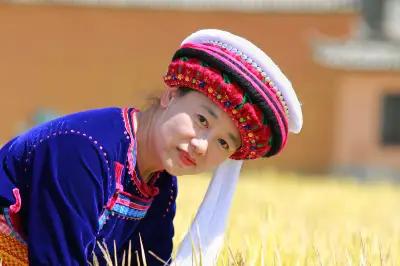
Yunnan has always been a much-anticipated travel destination for me. Yunnan Province boasts many unique natural landscapes and is the province with the largest variety of ethnic groups in China. Every year, it attracts a large number of tourists to explore its diverse ethnic cultures and beautiful scenery. I booked this trip about a month in advance, choosing the period from mid-October to late October, after the National Day holiday.
We took a noon flight from Wuhan to Kunming, arriving in about 2 hours. At Kunming Airport, we took Metro Line 6, transferred to Line 2 at Tangzi Alley, got off at Kunming Railway Station, and then took a high-speed train to Dali. There are many round trips daily from Kunming to Dali. The high-speed train takes about 1 hour to reach Dali from Kunming. We arrived at Dali Railway Station shortly after 6 p.m. Exiting the station, we turned right and walked a few minutes to the bus stop, where we took Bus No. 8 to the East Gate stop of the ancient city. After a short walk, we reached the pre-booked guesthouse. The streets in Dali Ancient City are paved with uneven stone slabs, so it's best to carry suitcases by hand to avoid damaging the wheels. Upon entering the guesthouse room, we found a pleasant surprise: a bouquet of fresh lilies and a plate of fruit. Seeing these, our travel fatigue vanished, and our mood immediately lifted. After storing our luggage and resting a bit, we went out to explore the streets. We bought local snacks such as grilled milk fan, ersi (rice noodles), and erkuai (rice cakes) from street vendors. Before we knew it, we were full, so we skipped dinner and returned to the guesthouse to rest.
Dali was our first stop on this trip. Dali is a national nature reserve and an excellent tourist area. The main ethnic minority here is the Bai people, and it is China's only Bai autonomous prefecture. During the Tang and Song dynasties, Dali successively established two local regimes: Nanzhao and Dali Kingdom. For over 500 years during the Tang and Song periods, it was the political, economic, and cultural center of Yunnan. The novel "The Demi-Gods and Semi-Devils" also contains many descriptions of Dali.
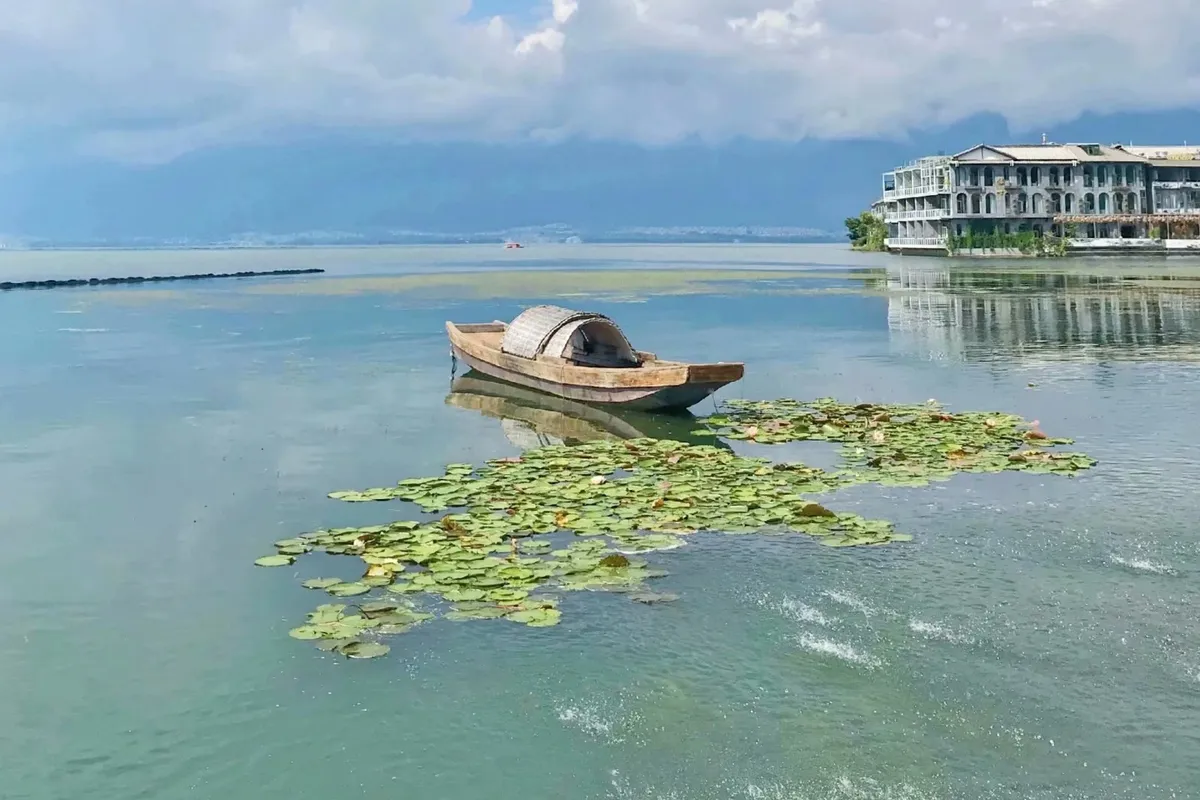
We woke up naturally today and went to an old noodle shop in the ancient city for a bowl of rice noodles. Today, we planned to visit the Erhai Lake area. At the roadside near the East Gate of the ancient city, there are minibuses to Shuanglang, a famous scenic spot on Erhai Lake, costing 15 yuan per person. While waiting for the minibus, a driver approached us offering a shared ride to Shuanglang for 30 yuan per person. Eventually, a car needed two more passengers to fill up, and we negotiated a price of 20 yuan per person to Shuanglang. The drive from the ancient city to Shuanglang took about 50 minutes. Alternatively, you can rent a car in the ancient city for a lake tour, or rent a high-power electric scooter for a lakeside ride. The rental fee for an electric scooter is 80–100 yuan per day. The distance from the ancient city to Shuanglang is about 55 km, and riding an electric scooter takes about 1 hour, which can be a bit tiring. Although it is now the off-season, Shuanglang still had quite a few visitors. There are many shops renting convertible sports cars in Shuanglang, with various bright colors that look very attractive. Many young couples rent convertibles to drive around the lake and take photos. Many others rent electric scooters for the lake tour. We rented an electric scooter in Shuanglang for 50 yuan per day, leaving an ID card as a deposit (no cash deposit required). We rode from Shuanglang to Wase and Xiaoputuo, then turned back to Shuanglang. Unfortunately, Butterfly Spring is in the opposite direction from Xiaoputuo, so we didn't have enough time to visit it. After returning the scooter, we took a minibus back to Dali Ancient City. In the ancient city, we ordered a two-person mushroom hotpot via a group-buying deal at "Yueyue Xiaochu". The group-buying mushroom hotpot was vegetarian, and a hotpot without meat is imperfect, so we added a plate of beef rolls. After dinner, we strolled around Dali Ancient City for a while and then returned to the guesthouse to rest.
The guesthouse we stayed at was run by people from Northeast China. This morning, breakfast was free: celery and egg buns and porridge, which is good for the stomach. We had previously booked a one-day tour ticket for the Cangshan Ximatan Scenic Area online. We walked to the scenic area shuttle bus stop outside the South Gate of Dali Ancient City. The staff there gave each of us a 1-liter oxygen canister, which might be needed when climbing Cangshan. The scenic area bus took us to the Cangshan Ximatan Scenic Area in a few minutes. After getting off, we took a cable car up the mountain. This cable car is 5,555 meters long with a vertical drop of 1,648 meters, said to be the longest and most technologically advanced cable car in Asia. The cable car has two sections, requiring a transfer midway, taking over 30 minutes. The cable car rose to an altitude of 3,900 meters, where we alighted. Visitors walk along the path upward to Ximatan. Legend has it that Kublai Khan, the founder of the Yuan Dynasty, once washed his horse here, hence the name "Ximatan" (Washing Horse Pond). Ximatan is at an altitude of about 4,000 meters, but the path is relatively gentle, and I didn't feel too tired, so I didn't use the oxygen. After playing on the mountain for over an hour, we took the cable car down. At the bottom of the cable car was the Tianlong Babu Film City. In Dali city, we didn't see the legendary Dali Imperial Palace or Prince Duan's Mansion, but the Tianlong Babu Film City recreates the splendor of the legendary Dali Imperial Palace and Prince Duan's Mansion. The film city also has impromptu short performances by actors from time to time. After finishing our visit, we could take Bus No. 10 from the film city. Bus No. 10 starts from the film city and passes through the ancient city, conveniently stopping right at the entrance to our guesthouse. We rested at the guesthouse for a while and then went out for dinner. After dinner, we continued wandering around Dali city before returning to the guesthouse to rest.
Dali Cangshan Ximatan
Dali Tianlong Babu Film City
Dali Tianlong Babu Film City
Today, we took a pre-booked bus to Lijiang. The guesthouse owner drove us to the Leicuiyuan Passenger Station at the South Gate of Dali Ancient City. The bus departed at 9:30 a.m. and arrived at the South Gate of Lijiang Ancient City around 12:30 p.m. We took a taxi to the North Gate of Lijiang Ancient City, with the meter showing 11.9 yuan. The guesthouse we booked in Lijiang was just a few minutes' walk from the North Gate. Like Dali, the streets in Lijiang Ancient City are paved with uneven stone slabs. After getting out of the taxi, we called the guesthouse owner, who came to the North Gate to help us carry our suitcases. After checking in and settling into our room, we rested for a bit. Around 2:00 p.m., we went out for lunch. At a restaurant called "Grandma's Smoked Pork Ribs," we ordered a Naxi specialty: smoked pork rib hotpot. The hotpot was delicious, with a unique smoky flavor, reasonably priced, and great value. Lijiang Ancient City is at an altitude of 2,416 meters. It was built in the Song Dynasty and has a history of over 800 years. It is a settlement area for the Naxi ethnic minority. The ancient city is built along water, with a dense network of waterways and a very beautiful environment. After lunch, we strolled through the ancient city in light rain. Although it was not peak tourist season, there were still many tourists in the ancient city. Most of the street-front houses were various shops. The ancient city has historical sites, ancient ethnic architecture, small bridges, and flowing water—a place that requires a calm mind to enjoy slowly.
Lijiang Grandma's Smoked Pork Ribs
D5. Light to moderate rain
We had booked a one-day group tour to Jade Dragon Snow Mountain online in advance. Last night, we arranged with the driver to meet at the North Gate of Lijiang Ancient City at 9:30 a.m. The tour group had only five tourists, and the driver also acted as a guide. The driver provided each person with a free waterproof warm jacket, bottled water, and a small oxygen canister. Today, we visited Blue Moon Valley and Jade Dragon Snow Mountain. The driver briefly introduced the scenic spots along the way. The distance from Lijiang Ancient City to Jade Dragon Snow Mountain is about 20 km, but the road condition was poor, so the drive took 50 minutes. First, we spent 1.5 hours at Blue Moon Valley at the foot of Jade Dragon Snow Mountain. Blue Moon Valley is a valley at the base of the snow mountain. On sunny days, the river in the valley appears blue, and the valley is crescent-shaped, looking from a distance like a blue moon embedded at the foot of the snow mountain, hence the name "Blue Moon Valley." At noon, we had a group lunch at the Blue Moon Valley restaurant, which was a smoked chicken hotpot. After lunch, the driver took us to Jade Dragon Snow Mountain. Jade Dragon Snow Mountain is a national AAAAA-level scenic area and a sacred mountain for the Naxi people. We entered the mountain gate, took a scenic area bus to the cable car point, then switched to a cable car that rose to an altitude of 4,506 meters. From there, we began walking up along the boardwalk. Since it was raining, the boardwalk and paths were very slippery. Walking at altitudes above 4,500 meters requires more physical effort. Exercise at high altitude is particularly tiring, so we had to stop frequently to take oxygen and rest. Finally, after more than an hour, we reached 4,680 meters, the highest point accessible to tourists. It is said that Jade Dragon Snow Mountain is covered with snow and ice only from November to April each year. Although we didn't see snow on the mountain, reaching 4,680 meters gave us a strong sense of achievement. The entire ascent and descent took about 3.5 hours. We returned to the parking lot at the entrance, found our tour vehicle, and headed back to Lijiang, ending the day's itinerary.
Jade Dragon Snow Mountain cable car rising to 4,506 meters
4,680 meters is the highest point on the tourist boardwalk
Today, we started the three-day Shangri-La tour. Last night, we arranged with the driver the time and place to meet. At 7:10 a.m., we boarded the vehicle at the North Gate of Lijiang Ancient City. Again, the driver also served as the guide. It was cloudy before boarding, but luckily, after leaving Lijiang, the weather gradually cleared up. This tour group to Shangri-La had only four tourists. The driver was Tibetan, skilled at driving, and very enthusiastic. Along the way, he introduced local customs, people, and scenic spots. The first scenic spot on the way to Shangri-La was Tiger Leaping Gorge. Tiger Leaping Gorge is a national AAAA-level scenic area. It is located along the road from Lijiang to Shangri-La, 80 km from Lijiang city and 96 km from Shangri-La. The drive from Lijiang to Tiger Leaping Gorge town took about 3 hours. The Jinsha River, originating from the Geladandong Snow Mountain in Qinghai, travels a long distance to this point, suddenly blocked by the Jade Dragon Snow Mountain and Haba Snow Mountain. The originally calm river becomes furious. Tiger Leaping Gorge is the first large canyon of the Yangtze River, crossing between Haba and Jade Dragon Snow Mountains, named after the legend of a tiger leaping across the river on a rock in the middle. The south bank of the Jinsha River is Lijiang's Jade Dragon Snow Mountain, and the north bank is Shangri-La's Haba Snow Mountain.
The driver parked near the entrance, and we walked down to the riverside of the gorge. There were many tourists in the scenic area. The huge rock in the middle of the river, hit by the surging water, produced a sound that shook the valley. We spent 1.5 hours at Tiger Leaping Gorge. After leaving the gorge, the driver took us to eat and then continued toward Shangri-La. From Lijiang to Shangri-La, all roads were winding mountain roads. Beside the mountain roads, we could see newly built expressways, expected to open next year, which will make traveling to Shangri-La faster and safer. Along the way, we passed a field of flowers. The driver stopped to let us get out and take photos. It was a field of fiery red Stellera chamaejasme (langdus). From its roots and stems to its leaves and flowers, the plant was all red, very unique. After leaving the flower field, we continued to Yila Grassland. On Yila Grassland, we saw blue sky and white clouds, with the green grassland merging into the sky. Adjacent to Yila Grassland is Napahai Lake. Napahai is a plateau freshwater lake at an altitude of 3,266 meters. It is a seasonal lake with a water area of 660 square kilometers and beautiful scenery. The driver drove us around the lake, stopping at beautiful spots for us to enjoy and take photos. Napahai is 8 km from Shangri-La city. Alternatively, you can rent an electric scooter from Dukezong Ancient City for a tour around the lake. After our lake tour, the driver saw it was still early and took us to Songzanlin Monastery. Songzanlin Monastery is the largest Tibetan Buddhist monastery in Yunnan Province and holds a significant position in the entire Tibetan region, known as the Little Potala Palace. After leaving the monastery, the driver took us to our hotel in Dukezong Ancient City to rest. At 7 p.m., the driver picked us up for a group dinner. The dinner was at a Tibetan family's home outside Dukezong Ancient City. Several tour groups were eating there. The dishes exceeded my expectations: butter tea, highland barley wine, yak meat hotpot, plateau chicken soup, and fresh lamb rolls. Importantly, when the food was finished, the host proactively added more. During the meal, Tibetan people sang and danced, interacting with tourists. After dinner, there was a bonfire party. After the bonfire party, we drove back to the hotel to rest.
Shangri-La Stellera chamaejasme
Shangri-La Yila Grassland
Shangri-La Napahai
Shangri-La Napahai
Group dinner at a Tibetan home in Shangri-La
Today's itinerary was Pudacuo National Park. Pudacuo National Park is a national AAAAA-level scenic area. It is 22 km from Shangri-La city, with an altitude of 3,500–4,159 meters. It is an important part of the "Three Parallel Rivers" scenic area. The main components are Bitahai Lake, Shudu Lake, and Militang Subalpine Pasture. It is also one of the main tourist attractions in Shangri-La. The road from Shangri-La city to Pudacuo was in poor condition, taking about an hour by car. At the main gate, we transferred to a scenic area bus, which took about 20 minutes to reach the shore of Shudu Lake. The lake has a 3.3 km boardwalk along its shore, which we finished in less than 1.5 hours. Since it was raining all day, we couldn't see the beautiful scenery of blue sky and blue water that appears on sunny days. Pudacuo National Park fell far short of my expectations. The park should include Bitahai Lake, Shudu Lake, and Militang Subalpine Pasture, but Bitahai and Militang have been closed to visitors for three years. Only the 3.3 km lakeside trail around Shudu Lake is open. It is no longer a complete Pudacuo National Park. I think the scenic area should inform visitors in advance when they book tickets, to avoid disappointment. After returning to Dukezong Ancient City in Shangri-La from Pudacuo, we found a popular Tibetan restaurant. The TV show "Extreme Challenge" had filmed an episode there. We ordered a set meal at the restaurant, which included butter tea, highland barley cake, grilled mushrooms, and yak meat hotpot. The food here was much better than what we had at the Tibetan home yesterday.
Pudacuo National Park
Pudacuo National Park
Shudu Lake in Pudacuo National Park
Dukezong Ancient City is the best-preserved and largest Tibetan residential area in China. There is a giant prayer wheel in the ancient city, the largest in the world. Many people need to turn it together, and many come here to pray. In 2014, a major fire broke out in Dukezong Ancient City, burning down one-third of the buildings. The current ancient city is rebuilt. It is not large and can be fully explored in a few hours.
Dukezong Ancient City, the world's largest prayer wheel
Tibetan restaurant in Dukezong Ancient City
Yak meat hotpot (forgot to take a photo before eating)
Highland barley cake and grilled mushrooms
At 8:10 a.m., the driver came to pick us up at the hotel. Today's itinerary was Shika Snow Mountain, a national AAAAA-level scenic area at an altitude of 4,500 meters, only 7 km from Dukezong Ancient City. It is a sacred mountain for Tibetans. After a ten-minute drive from the hotel, we arrived at the entrance of Shika Snow Mountain, but the staff told us that the mountain had entered a maintenance period and would be closed for one month. So we couldn't visit Shika Snow Mountain this time. After negotiation, the travel company refunded the fee for visiting the mountain. We decided to return to Lijiang. After a 4-hour drive, we were back in Lijiang. After checking into accommodation and resting a bit, we went to "Grandma's Smoked Pork Ribs" again for a meal. After eating, we visited the Mu Mansion. Some say: "In the north, there is the Forbidden City; in the south, there is the Mu Mansion." So the Mu Mansion is well worth looking forward to. Located in Lijiang Ancient City, the Mu Mansion was the palace of the Mu chieftain of Lijiang in the past. The Naxi leader Mu family had been hereditary chieftains of Lijiang since the Yuan Dynasty, spanning 470 years across the Yuan, Ming, and Qing dynasties for 22 generations. Thus, the Mu Mansion was the political and cultural center of the Lijiang area at that time. The TV series "The Mu Mansion Storm" was filmed here. The Mu Mansion is a national AAAA-level scenic area, with an admission fee of 40 yuan per person. Although not as grand as the Forbidden City, as a local chieftain's mansion, its scale is quite impressive. Visiting the Mu Mansion is also a window into Naxi culture, with many displays of Naxi life and customs.
After leaving the Mu Mansion, we continued wandering around Lijiang Ancient City. A good way to explore Lijiang Ancient City is to walk along the water; you won't get lost and the scenery is beautiful. The riverbanks are full of various succulents and beautiful flowers. Strolling by the river, listening to the murmuring water and seeing flowers everywhere, I really wished time could freeze here. We wandered around the ancient city until evening, then left for dinner, ending the day's itinerary.
D9. Light rain
Last night, we arranged with the driver for the two-day Lugu Lake tour to meet at 7:45 a.m. at the North Gate of Lijiang Ancient City for departure to Lugu Lake. The drive from Lijiang to Lugu Lake is about 200 km, mostly mountainous roads. Since it had been raining continuously from yesterday to today, we often saw gravel on the mountain roads and sometimes small landslides. It felt quite dangerous in the car, but fortunately, the driver was skilled and we made it safely. The journey took about 5 hours to reach Lugu Lake. In the afternoon, we started a tour around Lugu Lake. Lugu Lake is located at the border between Yanyuan County in Sichuan Province and Ninglang County in Yunnan Province, jointly administered by Sichuan and Yunnan. There are 7 ethnic minorities around Lugu Lake, including the mysterious Mosuo people who live by the lake. Lugu Lake is at an altitude of 2,685 meters, the highest lake in Yunnan Province and the third deepest lake in China. With its beautiful natural environment and unique ethnic customs, Lugu Lake has become a famous tourist destination. After dinner, we watched a Mosuo song and dance performance.
Group meal at a roadside restaurant on the way to Lugu Lake
A couple taking wedding photos by Lugu Lake despite the rain
Today, we continued exploring Lugu Lake. After breakfast at 9:20 a.m., we took a bus to the pier and boarded a pig trough boat (a traditional Mosuo wooden boat) to experience the beauty of Lugu Lake up close. The lake water is crystal clear and said to be drinkable. Near the shore, clusters of white flowers were blooming, locally called "shuixing yanghua" (water-floating flowers). Around 11 a.m., we concluded our Lugu Lake trip and drove back to Lijiang. We arrived back at the North Gate of Lijiang Ancient City around 5 p.m. After dinner, we once again strolled through the ancient city at night.
Pig trough boat on Lugu Lake
Pig trough boat on Lugu Lake
Lige Peninsula in Lugu Lake
"Shuixing yanghua" flowers in Lugu Lake
D11. Light rain
This morning, we woke up naturally and then wandered around Lijiang Ancient City in light rain. Around noon, we found a restaurant for lunch, returned to the guesthouse to rest, then took a bus to Lijiang Airport to catch an evening flight back to Wuhan. Some say that shopping in Lijiang tourism often involves overcharging visitors, but during our multiple stays in Lijiang, we didn't find it as bad as the rumors. Taxis used the meter, and drivers were polite. Restaurant menus clearly listed prices with sufficient portions. On the streets of the ancient city, there were volunteers providing assistance to tourists. I think Lijiang is one of the better-managed tourist destinations in terms of travel services. In summary, this Yunnan trip was mostly independent travel. For some scenic spots, we booked online and joined local tours. The cost was reasonable, and we enjoyed convenient transportation without the hassle of shopping. We had ample and relaxed time at the scenic areas. In some parts of Yunnan, the rainy season is from May to October, while other times are mostly rain-free. Snow on the mountains in Yunnan lasts from November to April each year. However, during our trip, it rained most of the time, and we didn't see snow on the mountains. Rainy weather affects both mood and the beauty of scenic spots. Although there were regrets, we were basically very satisfied. The total cost for food, accommodation, and transportation on this trip was 7,600 yuan, 3,800 yuan per person. I hope this travel guide can be a little helpful to those planning a trip to Yunnan.