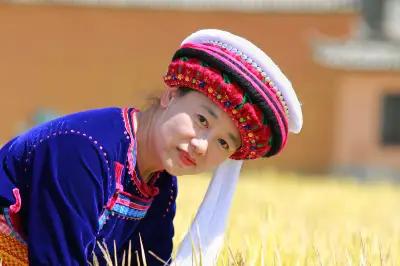
Go! Head West, Road Trip to Dali
2020, it seems, has been extra special for everyone! In the blink of an eye, two-thirds of the year has slipped away, yet I still haven’t had the chance to drag my suitcase out for a carefree wander.
Because of the pandemic, I’ve had to stay put at home, waiting for spring warmth and blooming flowers to arrive.
Occasionally, I flip through old photos, reminisce about past journeys, and recount the amusing little stories that happened along the way.
In the late summer and early autumn, with the domestic situation finally easing, travelers at last have the chance to explore the landscapes nearby.
Take Dali, for example—a place I’ve been to countless times, yet never thoroughly explored, never seriously documented.
So, let’s go, off to Dali!
In mountainous, scenic Yunnan, a road trip is undoubtedly the perfect way to travel.
Driving frees you from the hassle of lugging luggage and enduring long, tiring journeys; you don’t have to rack your brains over which transport to take, nor fear the scorching heat or bitter cold.
Most importantly, you can stop and go as you please, freely soaking in the leisurely charm of the countryside and the contentment the journey brings.
July winds, August rains…
Before the flower fields at the foot of Cangshan Mountain wither, before the lush green rice paddies turn golden…
Head west, road trip to Dali!
The July sunshine is warm and gentle, and the post-rain breeze is no longer biting but rather soft and moist.
Arriving at a destination always lifts the spirits, leaving no room for fatigue.
They say there’s a flower field at the foot of Cangshan Mountain, one that can easily intoxicate the heart.
There are also adorably cute alpacas in the estate; if you’re willing to spend a few dozen yuan, you can take playful photos with them up close.
We want to see the sunrise, the sunset, every corner of this world.
It would be best if I could share it with you, but if not, being alone is fine too.
Doing things alone, traveling alone, reminiscing alone—that’s an important ability too.
Besides, right now, I have mountain slopes full of flowers keeping me company~
Caring about a tree in bloom, its fragrance flooding the sea of my heart, crossing the beauty of seasons.
Not as bright and fragrant as under the sun, but more like a hazy, delicate, subtle scent.
Not the most beautiful stretch, yet it’s a time I cherish in life, immersed in the sun, moon, and stars, in shifting light and shadows.
The moment I saw this creature, memories of my time in New Zealand came flooding back.
I fed them all afternoon, only to be spat on with saliva all over my hands—even got nipped by a hungry little one—but that doesn’t stop me from liking them.
Speaking of the alpacas in this estate, they seem much gentler, more dopey, and much better-looking.
Just take a look for yourselves—aren’t they just adorable~
It’s as if they’ve been tamed by their owner, obediently cooperating with tourists for photos.
Striking all sorts of poses, letting you hug and pet them freely, going along with your every slow motion.
They even seek out attention on their own—
See, the one below suddenly dozed off and scared the photographer, haha~
The flowers in the garden are blooming wildly, as if it were early spring.
Redder and redder hues, pinker and pinker pastels, deeper and deeper purples, brighter and brighter yellows, and cheerier and cheerier oranges…
It’s obviously not spring, yet there’s an air of spring filling the garden.
Without the bustle of tourists, it’s a remarkably quiet little estate! Though not an overwhelming sea of flowers, the beauty still can be felt.
Especially the light near dusk that makes everything around extraordinarily soft.
In Dali, no matter the season, you can always see couples taking wedding photos.
Every time, I can’t help but think:
By Erhai Lake in Dali, there is not only beautiful scenery but also love.
Blue sky, white clouds, endless fields, the faintly visible Cangshan Mountain, ever-changing clouds, the scenery where water meets sky—it’s like gliding through the air.
Standing at a height, you feel the thinness of the air.
I love the distant mountains veiled in mist the most. Embraced by Cangshan and Erhai, nearby are colorful blossoms, and in the distance stretch boundless field ridges.
The breeze on my skin is just right, leisurely and delightful.
The little yellow car by the roadside is particularly eye-catching, and a casual snap turns out great.
In Dali, you often see Tyndall crepuscular rays, especially by Erhai Lake—a light that feels sacred and tranquil.
When sunlight pierces through the clouds and falls onto the lake, beams of light cascade down, as if draping Erhai in a beautiful wedding veil, carrying wishes and hope. Only by being there can you truly feel it.
Anywhere with sunshine and flowers, I’m willing to linger.
A beautiful place always has a reason to attract you.
I love the sunshine here; it always warms you up, without melancholy or sadness.
Would you, like me, want to stay right here, cling to such wonderful times, reluctant to leave?
The clouds in the sky shift unpredictably, the sun occasionally peeping out from thick clouds.
Gradually, that gentle patch of blue transitions into a passionate, radiant golden glow.
I always feel that liking a place is like falling in love with someone—sometimes in just a moment, it leaves an imprint on your heart.
I fell in love with this place that instantly captivated me.
I’ve been to Dali Ancient Town so many times, but thinking back carefully, it seems I’ve always met it under the cover of night.
This time, it was a little different—
in the early morning, accompanied by a light, drizzly rain, I walked towards it.
And for the first time, I found myself so enchanted by it.
In the early morning, the ancient town had almost no tourists, and only a few shops along the streets had opened their doors.
You don’t need to deliberately figure out directions or plan a route—just wander wherever your feet take you, pop into whatever catches your eye.
After all, within this square-shaped town, how could you possibly get lost?
Dali without blue sky and white clouds, only green bricks and white walls remain.
When you recall such a scene, will you still remember this place?
I certainly will, and my mind is filled with nothing but green bricks and white walls.
It simply exists, quietly, without impatience or ostentation, yet possesses its own unique beauty.
Wandering in the ancient town, you’ll truly realize how vast the world is.
Even in the tourist-free morning, stories can be found in every corner.
For the locals, and for a traveler like me,
everyone lives in a myriad of ways, each holding different values on life.
Everyone warms themselves in their own adept way, and warms others too, making this seemingly ordinary life exceptionally interesting.
Wishing plaques are everywhere~
The crisp sound of wind chimes, carried by a gentle breeze, echoes melodiously in my ears.
In the deserted morning, it sounds extraordinarily pleasing.
Of course, having seen the ancient town in the morning, the night scenery deserves a look too.
After all, the night here is truly lively.
I always take a commemorative photo in front of the South Gate of the ancient town; this time, I’ll stay out of the frame~
As evening falls, the ancient town begins to reveal its extraordinary charm and energy, illuminated by lights, pulsing to the rhythm of bars, and lined with a dazzling array of shops.
Walking straight along South Gate, you’ll see it—one of the landmark structures of Dali Ancient Town, where in ancient times officials would gather and host honored guests.
Burnt down and rebuilt several times over history, enduring a thousand years of vicissitudes, the current Wuhua Tower is a four-story building reconstructed in 1998. The lowest level serves as a pedestal, with three stories above; standing on it, you can overlook the ancient town. Entry is free.
Foreigner Street, originally named Huguo Road, is basically a street full of bars.
If you have free time, you can find a cozy little spot and listen to music all evening—that wouldn’t feel like wasted time either~
Honestly, many people mention the commercialized Dali Ancient Town, but I don’t really find it commercialized.
After all, this is exactly what an ancient town should look like! It deserves to be bustling, lively, and brilliantly lit.
Speaking of Xizhou, this is a famous Bai cultural town with over a thousand years of history, located in the northern part of the Dali Bai Autonomous Prefecture.
It is also a typical commercial hub for the Bai people, with a long tradition of trade, well-preserved traditional Bai residences, and the hometown of the movie “Five Golden Flowers.”
The introduction above is all official.
For me, every time I come to Xizhou, there’s only one must-do: eat Xizhou baba.
Hot, fragrant, fresh out of the oven Xizhou baba is my favorite. Often, even on a short trip to Dali, I’ll make a special detour to Xizhou to buy a few to take away.
This is a specialty pastry made from wheat flour, with both sweet and savory fillings. The sweet one has rose sugar, while the savory one has scallion, Sichuan pepper salt, and fresh minced pork. Sweet or savory, I love them both.
Thinking about it, it seems every old town has a Square Street…
Xizhou’s Square Street is right next to the Yan Family Courtyard. You’ll know it when you see the spot with the most people and the most food, enclosed in a square.
Xizhou is indeed a rather well-known old town, attracting quite a few tourists. Yet the locals don’t seem to rely on tourism for a living; everywhere you look, you see the well-preserved authentic local life.
The rapid development of cities has made people increasingly fond of old-town life. Perhaps one doesn’t need a dramatic, spectacular life—just a place that can accommodate souls of all kinds.
Do interesting things, live an interesting life, meet interesting people…
Maybe opening a little shop wouldn’t be so bad.
It’s strange, though—more and more people have fallen for Xizhou, yet every time I come here, I never sense any noise or clamor.
Walk around casually for a while, and you’ll fall in love with what makes it special.
Different people see different scenes. For me, a town like this—its weeds on rooftops and old houses—gives me a feeling of returning to nature. The fresh colors on the streets, the old homes marked by time, mostly built up with yellow mud, always convey an air of simple, honest folk customs.
The elderly grandmother at the lane entrance, though advanced in age, still strives to make a living with her own hands. It’s very moving.
As times change, let’s not lose the original goodness!
I hope such handicrafts can be passed down among the people forever.
Milk fan ice pop—they say this is a treat you can only enjoy in Xizhou~
Strolling slowly through the ink-wash-toned Bai residences, walking down a few lanes, thick with Bai flavors, with charming little scenes in small alleyways, this place captured the heart of Lao She.
In his “Short Notes on a Trip to Yunnan,” he wrote: “Xizhou Town is a miracle. I can’t recall seeing such a decent town in any remote place in China… Entering the town, it felt like arriving in Cambridge, England, with running water flowing by the streets everywhere… Less than a li away is Erhai. Less than five or six li are high mountains. To have such a market town between the mountains and water is truly a paradise!”
It was actually the first time I learned that Xizhou has an internet-famous landmark: the round-cornered building at the Dong Family Old Courtyard.
If you’re not into checking off landmarks, just take a casual look and move on, because the queue of people waiting to take photos is really long.
(I got lucky on the way back, as dusk approached and the tourists had left~)
I, who love Xizhou so much, only now experienced so many firsts here.
My first Xizhou milk fan ice pop, my first encounter with the round-cornered building, my first time idling away time in a little shop…
And my first walk through the rice paddies outside the Linden Centre.
“Hey, 911? Someone’s trying to climb over the wall…”
Looking at the expanse of green, this village amid the rice paddies, even without blazing sunshine, with the breeze swaying the rice and carrying its fragrance, still delights the heart.
Under the old gray roof tiles, an expanse of orange outer wall stretches out.
Standing in the paddies, clouds drifting and breezes light, time seems to stand still, with only the gentle whisper of wind in my ears. A subtle, light sentiment is spreading.
This is probably the small, quiet beauty in life~
I think, from now on, in my memory, Xizhou is no longer just about Xizhou baba.
It also includes these July rice paddies!
East Erhai, West Erhai,
I still love the West Erhai scenery best in Dali.
Yet, though I’ve been to West Erhai countless times, I’ve never calmed my mind and truly felt its countryside melodies.
In July and August, it’s the most beautiful season for West Erhai.
If your journey isn’t rushed, and if you too like to savor leisurely moments,
there’s really no need to chase after the so-called internet-famous spots online. A casual stroll along the field paths is far more pleasant~
Without sunshine, the overcast weather isn’t unpleasant.
Not hot, not muggy; a breeze brings a touch of coolness.
The air carries the fresh scent of rice, and everywhere the eye sees are lush green rice ears.
I remember my first impression of Dali—
“Upper Pass flowers, Lower Pass wind, Cangshan snow, Erhai moon…”
I admit, I was once enchanted by that line, always seeking a story of romance, the pure love of Jinhua and Apeng, imprinted in my mind like a fairy tale.
But now, who cares about those fanciful love stories?
I just want to sit quietly by the rice paddies and enjoy the beautiful moments of the present—that’s the most real existence.
During the rainy season in Dali, I didn’t encounter clear skies, but I could run freely in the rice paddies—that in itself is happiness~
A place like this is probably what we call “peaceful years and quiet goodness.”
Maybe coming here specifically to check it off feels boring and monotonous, but stumbling upon it unexpectedly brings delight.
As I walked, the wind suddenly picked up.
The scenery after the rain is most captivating, and the memories after rain are most cherished.
Speaking of which, Dali has many covered bridges, but the one in West Erhai is more well-known.
Rather than calling it a photo spot, it feels more like a piece of everyday life.
If you’re a photographer, capture the beautiful scenery here; if you’re a painter, bring your easel and sketch; if you’re a traveler, make this a part of your wonderful journey.
But if you just see yourself as an ordinary little person, then come here to feel what life should be like~
Walking along, I turned into a small path leading to the lakeside.
On both sides, tall grass swayed in the wind; wildflowers and foxtail grass appeared now and then, and occasionally you’d spot water birds frolicking among the reeds.
This is probably the West Erhai I love:
carefree and unrestrained.
Before coming to Dali, I’d planned to do so many things, as if to tick off all the unfulfilled wishes from previous visits.
But once I was actually here, I seemed to only want to “watch the sea, gaze at the clouds, feel the wind, and zone out.”
The post-rain sky is ever-changing, sometimes drizzly and overcast, occasionally revealing glimpses of light.
I kept thinking, if only it could give me a small patch of blue sky right now.
In travel, we encounter heat and cold, spring, summer, autumn, winter—just as life must be filled with joy, anger, sorrow, and happiness to be complete.
So why obsess over that little patch of blue?
At this moment, the covered bridge looks clean and crisp; under the gray-blue sky, the lush green marsh is wonderfully refreshing.
Her childhood was blue—blue cloth fluttering under a blue sky, and behind that blue cloth was a kind elderly woman, stitch by stitch, passing on the blue dream.
I believe everyone who has visited Lansu must have heard the story of Xiaobai’s “Blue Childhood.”
Xiaobai’s surname isn’t actually Bai; she simply calls herself Xiaobai out of pride for being a member of the Bai ethnic group. Her hometown is Zhoucheng, 25 kilometers north of Dali Ancient Town, a place known as the “home of Bai tie-dye.”
Xiaobai was once a young woman chasing her dreams in Beijing. When she settled down there and returned to her hometown during pregnancy, she found that the blue of her childhood memories was slowly disappearing. The young people had all gone out into the outside world, while the older generation was passing away one after another, and many tie-dye techniques had been lost. The traditional ancient method of tie-dye faced a crisis of having no successors.
So Xiaobai decided to return to her hometown. Despite the pressure implied in the looks she got from those around her, she visited the village elders and, with their help, brought the ancient tie-dye technique back to life.
She quietly tidied up the traditional Bai-style courtyard her grandfather’s grandfather had left in the village, turning it into her entrepreneurial base, and named the small courtyard “Lansu,” meaning to continue the blue of the ancient tie-dye method.
After hearing her story, I firmly decided to experience it firsthand and create a piece of blue sky and white clouds of my own.
Lansu is tucked deep in the lanes, and the search along the way already made me adore this village.
Maybe because of its simplicity, maybe because of its original, earthy hues.
A Bai-style courtyard home, the layout of a siheyuan courtyard is especially endearing.
In the courtyard, tie-dyed fabrics in various colors hang to dry, dancing lightly in the breeze—absolutely stunning.
The two-story courtyard houses display areas, teaching zones, and lounges on all four sides.
The yard is planted with flowers and plants, with tables and chairs set out for guests to work on their creations, colorful dyed cloth everywhere... Whether it’s the old house or the decorations inside and out, the color combinations are extremely pleasing.
Everywhere, old stories bearing the marks of time are present.
What exactly is tie-dye?
Xiaobai tells you: tie-dye is a traditional hand-dyeing technique.
During dyeing, certain parts of the fabric are tied tightly with needle and thread or other tools to prevent them from absorbing dye. It mainly consists of two steps: tying and dyeing, hence the name tie-dye. The ancient method is complex, requiring at least design, plate-making, printing, tying, soaking, de-sizing, dyeing, oxidation, untying, rinsing, and air-drying before the final piece is complete. And before that, you need to harvest the stems and leaves of indigo to make the dye. Plant indigo in spring, harvest it in July or August, soak the stems and leaves in water, then have a specialist beat the indigo for a whole day. Let it settle, then add rice wine and cooked rice to the mud-like sediment, letting it ferment naturally for about a month. High-quality dye liquor needs even longer care before it produces the blue of Xiaobai’s childhood memories.
An octogenarian is working at the loom, with swift movements and skilled hands.
The display hall showcases many items for sale; if you like any, consider taking a few home.
Alright, after all that introduction, it’s finally time to get our hands dirty.
The steps for Lansu’s ancient tie-dye method are all right here ↓↓↓
Quick tips:
1. The simplest tie-dye piece takes about 1 hour; a more complex one 3-4 hours, so please plan your time accordingly.
2. Normally, you need to book in advance for Lansu, which can be done online. Due to the pandemic, there weren’t many tourists, so I lucked out by showing up without a reservation.
Don’t worry about being clumsy—there’s an instructor guiding you the whole time, with extraordinary patience and very thorough explanations.
Also, don’t worry about your creation not looking beautiful, because it will be your one-of-a-kind blue.
On the table, natural dyes for coloring the cloth are set out. Tie-dye is most famous for its blue and white, the blue extracted from isatis root (banlangen).
Besides isatis, the dyes extend to over 30 plants. For example, the green skin outside walnuts can dye a dignified coffee color; gardenia fruits yield a lively bright yellow; saffron produces a brilliant deep red; sappanwood gives pink; turmeric offers goose yellow; and crofton weed produces yellowish-brown.
In the end, I chose to make a practical canvas bag~
Originally, I only planned to try a few simple tie-dye methods, but with my intense curiosity, I wanted to try everything~~~
In the end, this is what I came up with, hahahaha ↓↓↓↓
Only by experiencing it firsthand did I realize how truly laborious it is to create a complete tie-dye piece.
The required steps are far more than just tying and dyeing; it involves design, plate-making, tying, soaking, de-sizing, dyeing, oxidation, untying, rinsing, and air-drying before the piece is finally finished.
After soaking and de-sizing, I went through four rounds of dyeing and oxidation.
Untying the stitches was the hardest part, especially with canvas material—I had to unpick stitch by stitch.
I must admit I don’t have much patience; without the teacher’s help, I probably wouldn’t have finished untying even by nightfall, haha~
After repeated soaping, washing, beating, and air-drying naturally, it was done.
Seeing the “patch of blue sky and white clouds” I had tied with my own hands gently swaying in the wind, my mood brightened as well~
If you come to Dali too, give yourself a chance to slow down.
Come to Zhoucheng, the home of tie-dye, and experience the tie-dye art that runs deep in the lives of the Bai people.
All around the village, you see flying eaves and raised corners on Bai residences, equally exquisite wood and earth structures.
The streets, though not long, carry the weight of history; even the mottled walls seem to hold their own stories.
Villagers leisurely chat and doze—
this is the norm of life here.
Zhoucheng is the largest Bai settlement and still perfectly preserves various Bai traditions, hailed as a “living fossil of Bai folk customs.”
“Every doorstep has a stone-paved path, and every household has running water in front” is a feature of Zhoucheng.
In the village, there are two large green trees with lush, umbrella-like canopies.
On the small square below, there’s an ancient opera stage, with rows of shops around it. It’s said to have a history of over 120 years.
The bustling farmers’ market~
Streams from Cangshan Mountain flow down, running along the cobblestone walls and gurgling into Erhai Lake.
A dense network of flagstone paths, with murmuring spring water winding through the lanes, meandering alongside—ancient, simple, and serene.
Another drizzly day, but luckily we had our lovely 02; the beauty of a road trip is that we fear no weather.
Driving my beloved little car, it never says it’s tired…
Our destination was the end of Jiangwei Village, where there’s supposedly a small grove, near Erhai Lake, and especially quiet.
You could stroll, zone out, take photos…
anything would be fine.
The car followed the navigation slowly, turning from the national highway onto a village road. The road grew narrower, and everything became more and more down-to-earth.
My mother kept fretting, worried the car would get stuck once we drove in.
And she repeatedly asked me the soul-searching question: “Are you sure there’s really a scenic spot in there?”
“I… am not! sure!…”
But since we’d already driven in and couldn’t reverse out, we just had to press on.
Fortunately, this Bai village by Erhai was utterly charming; the scenery alone was endlessly captivating.
If we hadn’t mistakenly ventured in, you wouldn’t see a single tourist in such a small village.
Though we just drove through, the authentic Bai customs and everyday life outside the window all filled our eyes.
Every glance seemed to hold a pleasant surprise!
As we were leaving, I poked my head out to capture the scene.
Through my lens, a Bai grandmother stood by the roadside and greeted me, her wrinkled face brimming with smiles.
I couldn’t help but smile; this kind of life—that’s the most simple and genuine happiness~
Setting off from Jiangwei, we originally planned to drive to Haishe Park, since I’d missed it due to time constraints five years ago.
Unexpectedly, Haishe has been closed for construction since last March!!!
So we changed our route, driving along the Dali-Lijiang Highway.
After the failed grove in Jiangwei and the closed Haishe Park, we decided to just go with no plan, driving wherever the road took us…
The West Erhai Ring Road turned out to be a rather scenic driving route. Though there aren’t designated scenic spots along the way, it’s better than many actual spots, with new discoveries at every stretch.
As expected, early morning is the most beautiful—the mist over the distant mountains hadn’t yet dispersed, gray clouds covered the dazzling sun, and the air felt thin.
Along the way, we spotted a flower field; after all, in Dali this season, flower fields are everywhere.
We simply stopped the car and decided to wander around again.
The mist on the far mountains hadn’t yet cleared, and the flowers, even with the drizzle, bloomed vibrantly.
Who says Dali without blue sky and white clouds isn’t beautiful?
I wonder if, walking along this rainbow boardwalk, the sun might eventually appear~
The hammy white goose stealing the show on the grass~
This time of year in Yunnan, whether in the wilds, fields, roadsides, or your own courtyard, flowers in dazzling competition can be seen everywhere.
Swaying gracefully, blooming one after another, they are resplendent yet surreal.
Dali has many places where you can take “mirror in the sky” photos; what a pity it wasn’t sunny today, so the mirror-of-the-sky effect was out—no photos then.
Might as well climb the ladder to the sky, feel the breeze, and imagine myself truly sitting at the edge of a cloud.
No need to stand on tiptoes to get closer to the sunshine~
In such leisurely moments, wouldn’t you want to become a quiet plant…
Waiting for the sunshine to pour down, and for the so-called romance to quietly arrive.
Three inches of sunshine!
Sleeping in till late morning, not wanting to rush on the road.
Wake up naturally, and simply laze around the guesthouse all morning.
Fruit Tree is a terrific guesthouse, so I absolutely must recommend it to you.
It’s not on a bustling, lively street, nor does it have a big glass room with Erhai views when you push open the window.
So what do I love about it?
Probably its simplicity, tranquility, and natural feel~
It’s a scene hidden from the world, yet closer to everyday life.
A big tree at Fruit Tree~
A tea table, sofa, a few plants, several books…
It feels just like a place to live!
My eyes lit up when I spotted the familiar Hallstatt, the town I deeply love.
Memories instantly pulled me back to a year ago, to those wonderful times in Eastern Europe.
I truly hope the pandemic will pass quickly, so people in every corner of the world can return to normal, orderly lives.
So the sunshine can be gentler, the smiles brighter.
The guesthouse breakfast:
mixian, fried eggs, steamed buns—enough to fill the stomach.
On the second floor of the guesthouse, there’s a space for guests to relax and unwind.
Sometimes, don’t expect too much from a destination, because fewer expectations mean more pleasant surprises!
Before coming here, I never imagined I could spend time so leisurely, so lavishly.
No itinerary, no complicated transport, no crowds—just quietly staying, unabashedly letting time slip away.
Took off my shoes and climbed up to the rooftop.
On a rainless morning, only the sound of the blowing wind.
Zoning out, mumbling a few words with my mom, letting the breeze brush past.
Watching the cloud-shrouded sky, the slanted shadows of old houses in the morning light.
As dusk falls, lights come on in the courtyard.
Goodnight, traveler of the night.
My memory of Haidi:
One table, one chair,
facing Erhai, with spring warmth and blooming flowers.
Time flies—the story with Se’er at Haidi, when recalled, is all sweetness.
Returning to Haidi, my first impression of Shuanglang is still right here.
Without the standard blue sky and white clouds, Erhai is still beautiful today.
For just ten yuan, you can sit inside the glass sphere and snap a set of quintessential Dali photos.
There aren’t really few people here; perhaps apart from taking photos, we can also feel the wind, listen to the waves, and just let our minds go blank…
I think, everyone’s heart carries a full load of stories~
There’s no push-and-shove noise, only the sound of wind and crisp bird calls. The quiet of the afternoon makes this place extraordinarily lovely.
Quiet, narrow alleys twist and turn further in; along Erhai, old buildings stand one by one.
I dare not speak too loudly, for fear of disturbing those taking an afternoon nap.
By the walls, many small plants are placed, including my favorite succulents, with their chubby little leaves—so cute.
I guess these little potted plants are lovingly cultivated by the owners of nearby inns.
Life is just like that—overgrown with chaos, but if you take the time to prune it with care, it can surely bloom like brocade.
Wild Sichuan peppers on the roadside~
A mirror-of-the-sky scene without blue sky and white clouds—I’ll skip it~
Walking through narrow lanes, often getting lost, deep in the ancient old village.
Looking at the white walls and green tiles, the mottled doors and windows under the sunlight, the exquisitely carved eaves, and the delicate, hollowed-out corridors.
Fate led me to the very lane I walked through five years ago; I don’t need to rely on imagination to think about it, because beautiful memories instantly flooded back.
Such an ancient village often carries an air of mystery. I wonder, and I think, about how much it has been through? How many stories does it hold?
But before I could figure it out, I met you again, and finally returned, with a restless and uneasy heart, I came…
They say it has too many traces of artsy, hipster charm; they say it gathers all the glorious sunshine; they say countless youth hostels sit here; they say it’s a little fishing village that people yearn for…
People have given it too many beautiful words.
Years pass, people come and go, but these bricks and tiles remain right here.
Though the walls and roof tiles are worn, they carry the flavor of time, granting me endless reverie. Compared with bustling cities, this place feels more like a place forgotten by time, without streets of dazzling lights and wine, seemingly just endless cobblestone paths.
Like it or not.
But you have to admit, there is indeed a genuine ease here, a beauty detached from worldly concerns.
During travel, don’t be too picky about commercialization or crowds. Most of the time, avoiding the crowds and walking into remote, winding lanes is the only way to see the best scenery.
With sunshine and flowers keeping you company, with gentle breezes and white clouds following.
Then add a touch of indifferent calm—perhaps that is what “peaceful years” are all about.
Da Li Mu Xi was a pleasant surprise I stumbled upon by chance.
Having lunch right by Erhai was truly delightful.
Resting my eyes under the tree, it almost felt like I could accidentally doze off at any moment.
Opening my eyes, another summer appeared before me, brimming with flowers.
As I walked, the flowers bloomed again.
So, travel always brings pleasant surprises.
Maybe right now, you’re on a road of laughter, of loneliness, of happiness, of sorrow…
But as long as you’re on the road, you are at your most beautiful—the splendid years will eventually bloom.
Though more and more travelers are finding their way here, I sometimes wonder whether it’s good or bad…
Every first-time visitor surely has a different feeling; those flower-covered roofs, the corners marked by time, the fresh little shops everywhere, and the stone-paved paths underfoot—all seem to have become more lovely.
Once you sit down, you don’t want to leave. If only I could spend a whole day here, zoning out foolishly, watching the sea and listening to the wind.
It seems every sight here is enchanting, as if both myself and all things have vanished, leaving only the sky with drifting clouds as the most real thing.
In the embrace of Cangshan and Erhai, accompanied by the sound of waves, amid the fragrance of clustered flowers.
If I could spend an afternoon curled up in a cozy sofa.
Or, bring a small book and find a quiet corner by the sea, leisurely wasting time.
Or maybe, order a ‘Wind, Flower, Snow, Moon’ beer—even if we sit in silence, it’s enough.
I so want to go back to that warm afternoon,
sitting by Erhai letting time slip away, with occasional sunlight filtering through, dazzling my eyes so I couldn’t open them, my shadow quietly hiding to the side. In that moment of dappled light and shadow, I captured the version of myself I most wanted to see.
Shuanglang has Luoshi Qu to the north, Lianhua Qu to the south, embraced by Jinsuo and Yuji islands in the double bends—hence the name.
The town is surrounded by mountains on three sides and faces the lake on one.
Gazing west at the nineteen peaks of Cangshan, the door facing the vast blue waters of Erhai, backed by the “Buddhist sacred site” Jizu Mountain to the east, and connected to the “Penglai Fairy Island” Little Putuo Island to the south, it earns the title of “Cang’er Scenery’s Number One Town.”
It is said that historically, Shuanglang was just a small fishing village by Erhai Lake, where people’s lives relied on the lake.
Many houses were built right by the water, so pushing open a window revealed Erhai, and daily life was closely intertwined with the lake.
But with constant development and increasing tourists, it gradually became what it is today.
I remember when I first came, it felt like a private little world I had discovered—so beautiful in my eyes.
Without the disturbance of tourists, it had a rare tranquility.
Houses nestled between mountains and water in harmonious disarray, sunlight spilling into every corner of the town, people chatting, laughing, strolling…
Lazily crossing their legs, basking in the sunshine.
Perhaps, we ought to find a quiet little shop like this, and luxuriously spend an entire afternoon inside.
Listening to the most captivating jazz, sipping a cup of golden raw Pu’er tea…
And not leave until nightfall—now that’s living!
I want to open a little shop like this, even if it means idling away the rest of my life there.
I don’t remember when this idea first sprouted and grew deep-rooted.
I like to express my passion for life in the simplest way, not letting complicated thoughts ruin the sweetness life should have.
A lifetime isn’t all that long; I don’t want great achievements, I don’t want to live too laboriously, nor lose my original heart—truly, I only have that much ambition.
Let me have a glass room of my own:
With large floor-to-ceiling windows, the slanting sunlight allows a glimpse from outside into the interior, and at the beautiful figure leaning near the gauze curtains. Outside the shop, fresh flowers are arranged; inside, shelves hold an array of books. Every corner is filled with my care. Perhaps it’s a flower shop, or maybe a bookstore. I can brew coffee, prepare desserts, chat calmly, reminisce about old times, or simply spend a lazy afternoon. Enjoy a romantic light meal, read a beloved book, with floral fragrance filling the room, a cat sleeping at my feet…
This must be the best state of life!
Though it was midday, the overcast weather softened the light. I never expected that in a place gradually enveloped in a commercial atmosphere, there could still be such a tranquil side.
Maybe, it was always like this—just not yet overrun by tourists.
You can also take a boat from Shuanglang to Nanzhao Customs Island, one of the three islands of Erhai.
The island is enchantingly beautiful, with sea and sky merging in one color. There’s a Guanyin statue, some sculptures, a Nanzhao Palace, and a few lovely legends.
Shuanglang has boats ferrying visitors to the island for those interested.
Leaving the ancient town and heading towards Wase, at the top of the East Ring Road, there’s a perfect vantage point to admire Shuanglang Ancient Town.
With just one glance, I fell in love.
Day after day, all kinds of scenes.
We walk every day, scenery receding and rushing past, yet also approaching one after another.
Different landscapes give us different feelings, different feelings give us different moods, and different moods determine the different lives we lead.
People say life is like a journey, beautiful scenery is everywhere, but the most beautiful scenery is the mood you have while taking it in.
I love this colorful Dali, and even more so, its uniquely styled dwellings.
I always feel the beauty of the Bai people is condensed in these simple, ancient buildings of green brick and white walls. The splendid murals are surely a burst of passion after pure simplicity, a creation of idle contentment detached from the world.
Dali’s most beautiful scenery is on the road…
My eyes and heart both crave the small views along the way. Just listening to music, looking out the window, zoning out, thinking of nothing.
The first look facing Erhai—ah, so comforting~
The roadside reeds are just right; the lake surface is calm and shimmering.
And the sudden solar halo in the sky—the entire Erhai’s serenity is captured in that one moment.
Just walking a stretch like this is wonderful enough. Why deliberately seek out romance? Wandering and pausing is also a kind of happiness~
If you’re also in Shuanglang,
if you pass by here too, will you still remember me?
Little Putuo’s most endearing feature is probably the flocks of red-billed gulls here~
Last time I came, it was winter. I still dimly remember chasing after those tiny fellows, feeding them:
In winter, the wind by Erhai was strong; a careless misstep made you seem frail. With the howling wind, crashing waves, and the squawking seagulls, the usually calm lake became instantly lively; not far away, rows of fishing boats had long been rocking unsteadily in the wind and waves.
But what I saw right in front of me were playful little red-billed creatures, utterly adorable.
Now, only a fine, continuous drizzle remains, with mist-wreathed distant mountains.
If you want to see the red-billed gulls, wait for winter~
On rainy days, see the sea with a different mood.
In this world, perhaps the only thing that truly belongs to you is time.
You alone can decide in what mood and appearance you participate; beyond that, all people, scenes, and events are merely backdrops.
Though there wasn’t a clear, cloudless sky, the scenery along the way was still rich, every section of Erhai completely different.
Occasionally encountering a small Bai village, watching the clouds shift unpredictably over distant mountains, or a sudden downpour outside the window.
A different scene at every turn; what I capture through my lens is far from enough to convey her beauty.
What Dali gives me, more than anything, is an unexpected tranquility. People live slowly here, and without realizing it, I get drawn into their rhythm.
I don’t even have time to properly see the unfamiliar faces passing by; I just want to be undisturbed and at peace. The present moment feels like slow-motion film.
The years are quiet, the sunshine just right.
When a warm ray of light gently falls on my face, I turn my face to look…
And see a whole expanse of the most intoxicating sky.
Erhai on a rainy day, compared to sunny days, seems even more thought-provoking.
The damp, fresh air—the whole world is filled with water molecules—so it doesn’t need blue skies and white clouds to show its beauty.
The gloomy rainy days and misty clouds add to this mystery.
Dali’s summer doesn’t bring oppressive heat; instead, it’s pleasantly cool.
Arriving at Langyue Inn, I had a room where pushing the door open reveals the sea.
Though not as luxurious as a big hotel, it’s a delightful little haven full of surprises.
The other travelers at the inn were all out exploring and hadn’t returned, making the building incredibly quiet.
I sat on the rooftop, leisurely passing the time.
Facing Erhai, let no one disturb me.
Yunnan—the creator seems to favor this place especially, bestowing it with the most primal, the purest beauty. Every flower and blade of grass here has its most enchanting posture.
Yunnan has always existed like a dreamscape, with too much scenery, too much tenderness, too much romance, too much fascination, too many stories.
Finally, as dusk approached, I returned to the inn to sit and rest.
It seemed a grand sunset show wouldn’t happen today. We walked out to the perfect spot opposite the inn and took a stroll.
The breeze was gentle, with a slight chill. I threw on a jacket and wrapped a scarf around my neck, feeling the strength nature gave me. There was no more comfortable moment than that.
Facing Erhai, waiting for a ray of sunshine, waiting for the next spring warmth and blooming flowers.
Often on the road, looking out the window, I can’t help but smile to myself; sometimes I zone out for a while, imagining the scene of arriving at that place, or the views I’ve just encountered.
Though we can’t grasp the sunshine outside the window or take away the beautiful scenery along the journey, it’s enough to treasure for a lifetime—like a small field outside the car window, a tiny village, all irreproducible beauty. Some loveliness is destined to stay only in our hearts.
We are so insignificant, so small that even a speck of dust can vanish in an instant, so why be too stubborn?
The places you cannot go, I have brought back their stories for you.
For some places, one encounter is enough, such a memory, so profound—living a slow life, with just a single photo, you can find a sense of belonging.
My first impression of Luwo Mountain site is this little window in the ruins.
I thought there would be many people coming to take photos, but I got lucky—no one was there at all.
So I had a little more time to capture the exact image I wanted.
I love how the gentle sunshine filters through the leaves and falls on me, making me feel as if I’m glowing.
Many people don’t know where Luwo Mountain is, so here’s a guide:
It’s roughly at the location of the little pink car in the picture below; follow the path all the way down to the foot of the mountain.
If you feel tired from walking, find a cozy spot to sit, and quietly feel the goodness nature bestows upon us.
Even if just for a minute, look at the world with your own calm.
In this moment, you only need to be an observer; don’t stubbornly rack your brains to find a way.
I firmly believe: what you want, if you strive for it when time permits, you will obtain. But if you miss it, turning back is surely painful, and perhaps you shouldn’t turn back at all. The charm of life often lies in its one-time nature—once missed, no need to look back.
If you want a different kind of life, you must let go of stubborn attachments.
Photos come from life; all you need is just yourself to perform a different, true story.
With the clearest eyes, see the most beautiful scenery in the world; with the purest heart, feel the emotions each story brings you.
Vines hang from one tree to another, trailing down, with dappled light and shadow—truly beautiful.
At this moment, Erhai is very tranquil, the breeze gentle, the sound of waves hitting the reef barely audible.
The seawater seems to merge with the sky, a single shade of blue.
Such a scene can’t help but stir a sense of romance.
Are you also looking forward to something?
Honestly, the photos I take can’t really deliver stunning, breathtaking visual effects—they’re just ordinary snapshots, pressed like everyone else’s.
I never thought that I, who was originally just ticking off a destination, would have to forge some inextricable connection with this unfamiliar city.
I just follow my whims and fully enjoy the joy that travel brings me.
As for the plaques and stone steles at the entrances of famous scenic spots, I’m really not that into them.
I’ve had those days of rushing non-stop on the road to cover sights, even to the point of not having time to change after getting off a plane—who understands that embarrassment?
But is such travel truly joyful?
If not, then please slow down. Find a random spot to sit, even if it’s just a reef.
At that moment, ask your photographer to press the shutter. Even if you only do a peace sign, the quality of the pose really isn’t important. As long as, years later, when you look back at this photo, you can once again recall that moment of your free-spirited soul and your untamed, unrestrained self!!
The Hall of the Sea—this isn’t really a scenic spot, nor can it be called an internet-famous photo spot; it’s just a venue provided for photo shoots.
Besides photographers, the people you see most here are lovers taking their wedding pictures.
So, I define it as: a wedding photography base.
If you’re not into taking photos, I suggest you don’t even think about it; but if you love taking pictures, please consider carefully.
After all, the entrance fee of about 100 yuan per person is really a rip-off!!!
Since we’re here, we might as well take as many photos as we want~
The scenes on the rooftop are truly enchanting, no wonder the photos taken there make you long to be there.
There is a blue called “Erhai Blue”—it’s hard to tell where the sky ends and the sea begins.
Just looking, emptying my mind, and emptying it further.
Before leaving, I took one last look at Erhai and snapped this photo as the sky finally cleared.
I’ve seen Erhai on rainy days and on sunny days.
But I seem to have grown accustomed to the rhythm of rainy days. Don’t feel regret if you happen to catch an overcast day.
Erhai on an overcast day let me feel its passion and surging energy, letting me know the force with which waves crash against the reef. The sense of mystery that only overcast days bring makes her seem even more unfathomable.
I’ve always felt that when viewing scenery, the mysterious touches the heart most deeply.
Road Trip TIPS:
Dali is over 300 kilometers from Kunming, about a 4-hour drive, or you can take a 1.5-hour high-speed train.
1. I recommend a road trip; after all, you can stop and go, and there are so many views along the way. If you don’t want the hassle of driving, consider taking the train from Kunming or flying directly to Dali from anywhere in the country, then renting a car upon arrival.
2. This route often includes not just Dali, but also Lijiang, Lugu Lake, and Shangri-La. If you have plenty of time, you can continue the journey.
3. Self-drive loop around Erhai: Especially for first-time visitors to Dali, I highly recommend a road trip around Erhai. Starting from Dali Ancient Town, go clockwise from West Erhai to East Erhai.
4. In Dali, you’ll see colorful convertible Beetles and electric scooters—great for posing in photos, but practicality is mediocre. Especially electric scooters: the loop around Erhai is about 130 km, with sun and wind—and especially in rain, you need to be even more cautious.
Personally, I still recommend a comfortable SUV as the most sensible choice. It’s easy to drive, the back seat is spacious, and our 02 is definitely worth having~
DAY1: Depart from Kunming by car to Dali—Sunshine Forest Leisure Art Garden—Dali Ancient Town (stay in Dali Ancient Town)
DAY2: Covered Bridge—Roadside Rice Paddies—Taoyuan Highway—Xizhou (stay in Xizhou)
DAY3: Jiangwei Village—Flower Language Ranch—Zhoucheng Tie-Dye—Xizhou Ancient Town—Linden Centre (stay in Xizhou)
DAY4: Depart West Erhai for East Erhai—Haidi Life—Da Li Mu Xi (stay in Wase, East Erhai)
DAY5: Shuanglang Ancient Town—Wase—Little Putuo— (stay in Wase, East Erhai)
DAY6: Luwo Mountain—Hall of the Sea—Return to Kunming
Other Tips:
1. Yunnan is on a plateau with strong UV rays and big temperature differences between morning and evening. No matter the season, protect yourself from the sun, and adjust clothing as needed for weather changes.
2. Summer in Dali is rainy, so always bring rain gear.
3. Choose accommodation based on your preference: near the ancient town is convenient; in West Erhai, Xizhou is a main base. Comparatively, East Erhai is the most expensive, with mostly lake-view rooms.
4. Dali has so many delicious things: Haishao fish, Shaba fish, milk fans, er si (rice noodles), Bai-style cold noodles, and various preserved plums led by carved plums—foodies, don’t miss out~.
5. Equipment: SONY A7R2 24-70 F4
6. Finally: Bring your smile and courtesy, and have a pleasant journey!
This entire travelogue is finished. Thank you for reading, heartfelt thanks!
If you have any questions, or queries about a Dali road trip, leave a comment below or send me a private message~
Travelogue Contents
1. Flower Fields at the Foot of Cangshan | A Tree in Bloom
2. Dali Ancient Town | Waiting for Morning, Waiting for Night
3. Xizhou | The Essence of Life
4. Rice Paddies | July Rice Fragrance
5. Covered Bridge | The Wind Rises
6. Zhoucheng Tie-Dye | Tying a Patch of Blue Sky and White Clouds
7. Jiangwei Village Life | Strolling at Flower Language Ranch
8. Fruit Tree Guesthouse | Three Inches of Sunshine
9. Return to Haidi | One Table, One Chair
10. Mu Xi Dali | An Afternoon of Blooming Flowers
11. Shuanglang | If You Were Here Too
12. East Erhai Ring Road | A Road Trip Worth Taking
13. Luwo Mountain | Listening to the Wind, Watching the Sea
14. Hall of the Sea | A Base of Love
15. Road Trip TIPS | Itinerary & Other Travel Info
Hotel Index
Guide Index
Flight Ticket Index
Website Navigation
Travel Index
Cruise Index
Corporate Travel Index
Partnerships
Distribution Alliance
Friend Links
Corporate Gift Cards
Procurement
Insurance Agency
Agent Cooperation
Hotel Joining
Destination & Scenic Area Cooperation
More Cooperation
About Ctrip
About Ctrip
Ctrip Highlights
Contact Us
Careers
User Agreement
Privacy Policy
Business License
Security Center
Ctrip Content Center
Intellectual Property
Trip.com Group Algorithm Disclosure