Yunnan: A Place Not to Be Touched Lightly
Apart from the provinces and cities where I live and work, Yunnan is the place I have visited most frequently. I have traveled to the prefecture-level cities and prefectures of Kunming, Chuxiong, Dehong, Baoshan, Dali, Lijiang, Diqing, Honghe, Wenshan, Yuxi, Pu'er, Jinghong, and Qujing. Among them, Dali, Lijiang, Shangri-La, and Xishuangbanna I have visited at least two or three times, and Tengchong four or five times. So much so that when planning a winter trip, my wife asked, 'Why are we going to Yunnan again?'—it forced me to reexamine my Yunnan journeys.
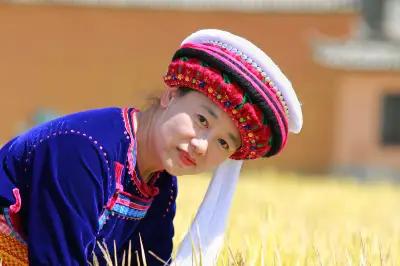
In the land of colorful clouds, birds sing and flowers fragrance all year round, with gentle breezes cooling the air. Kunming enjoys spring-like weather throughout the year; Dali boasts wind, flowers, snow, and moonlight; Lijiang is gentle and beautiful; Xishuangbanna is entwined with countless vines; Shangri-La is a utopia; Ruili exudes exotic charm; Heshun is a place blessed with talented people and beautiful scenery. With its green mountains and clear waters, simple ethnic minorities, colorful traditional costumes, and blue-brick, black-tiled dwellings, walking among the picturesque landscapes and wandering through the quiet ancient town alleys, you are enveloped by Yunnan's unique atmosphere. Yunnan is a place not to be touched lightly.
For reasons unknown, many domestic travel products set the age limit for group tours at 65. We are now at that threshold, and with our only child not living nearby, our sense of urgency grows daily. Two years ago, when traveling to Europe, we planned to spend three to five years touring the continent, but the sudden outbreak of COVID-19 forced us to abandon our plans. My wife had just returned from being stranded in the United States, and Yunnan's exceptional climate and tourism resources naturally became our top choice for a winter getaway.
After searching on several travel websites for quite a while, I found that the destinations and attractions offered by existing travel products were mostly popular and internet-famous spots—most of which we had already visited. The places we truly wanted to go were not covered by any single product. The distances between Yunnan's tourist attractions are vast, and self-driving would be too exhausting. To fill in the places my wife had missed and to avoid unnecessary duplication among products, I decided to use Dali as a hub. I booked three products on Ctrip: two for sightseeing, and after 20 days of travel fatigue, one mobile vacation product to relax and relieve physical stress.
The first leg was a 12-day, 11-night guided tour of Tengchong Heshun Ancient Town, Mangshi, Ruili, Nujiang Grand Canyon, Bingzhongluo, First Bend of the Nujiang River, Taohua Island, Qiunatong Village, Wuli Village, Shimen Pass, Laomudeng Village, Weishan Ancient Town, Wuliangshan Cherry Blossom Valley, Ginkgo Village, and the Dulong River Gorge. It was a small-group tour with independent travelers, starting November 28 and ending December 9. Aside from Tengchong, Mangshi, and Ruili, most attractions were off the beaten path with few visitors. When booking, there was only one departure on November 28—miss it and you'd have to wait a whole year.
This was an excellent itinerary. The group had only six tourists, two Naxi drivers with the surname He, and one 11-seat minibus. We covered over 3,500 kilometers, passing through Dali, Baoshan, Dehong, and Nujiang prefectures. The six travelers—a couple from Shanghai, another from Qingdao, and us—got along like old friends reunited. We first traveled on the Hangrui Expressway, then switched to national highways, provincial roads, county roads, township roads, and village roads. We traced the Nujiang River upstream, winding through the mountains of Nushan and the Gaoligong Range. We stayed in hotels, lodged in local homes, drank homemade wine, and enjoyed authentic free-range chicken meals at villagers' houses, all in a joyful atmosphere. Mr. Meng, over seventy, was affectionately called 'Brother Xiao Meng.' Mr. Chen, past sixty, was dubbed 'Brother Xiao Chen.' I jokingly said I wanted to run for village chief and became the 'chief without a village.' The lady who gave us these nicknames, Ms. Jia, took on the roles of tour guide and secretary. She was the youngest, accompanying her husband, Mr. Yuan, who had just retired, on a journey through the southern counties.
The second leg was a 9-day, 8-night guided tour of Dali, Lijiang, Shangri-La, Lugu Lake, and Erhai Lake, starting December 9 and ending December 17. It began in Dali and ended in Lijiang, advertised as a '4-diamond, 12-person small group tour.' In reality, the group was split and recombined based on each order number. Apart from airport transfers, the principle was one vehicle and one guide per destination. So we changed vehicles and guides every two days at most, and at least every half day. Each change was time-consuming and laborious. In Shangri-La, the driver-guide even used the opportunity to take us to a Tibetan home and push yak jerky sales. Although this caused some inconvenience and awkwardness, it enhanced the guides' targeted and professional commentary, which had local characteristics.
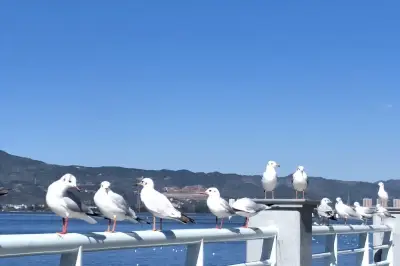
We had visited Dali, Lijiang, Shangri-La, Lugu Lake, and Erhai Lake many times before. What remained unchanged was our awe of nature and our respect for religious beliefs. We explored ancient towns, toured mountains and lakes, watched performances, tasted milk fans, drank highland barley wine, ate hand-grabbed rice. We experienced the biting cold of the Yunnan-Guizhou Plateau, the coziness of boutique inns, the brisk walks before dawn, the idleness at sunset. We watched 'Impression Lijiang' against the backdrop of Jade Dragon Snow Mountain, saw red-billed gulls circling above the pig-trough boats, enjoyed a red wine party on a yacht, savored the farmhouse flavors on Jinsuo Island. We experienced the lives of ethnic minorities and felt the power of religious faith. Traveling is like studying—reviewing the old and learning new things.
The third leg was a 6-day, 5-night guided tour starting from Kunming on December 18 and ending in Kunming on December 23. It was a 'warm winter select' tour with five-star hotels throughout, covering Kunming, Pu'er, and Xishuangbanna. The itinerary included Jiuxiang Caves, Pu'er National Park, the Xishuangbanna Tropical Botanical Garden, the Wild Elephant Valley elephant show, close encounters with red pandas, the Water Splashing Blessing at the Big Buddha Temple, and a visit to a Dai village. It also included a complimentary 'Mengbalanaxi' song and dance show. We flew from Lijiang to Kunming on the 17th, with two days to rest and enjoy local cuisine.
Yunnan has abundant tourism resources and was developed early. It has seen both industry-leading glory and the regret of low-price customer snatching. In the past, when traveling to Yunnan, you would often hear complaints about forced shopping. After rectification and management, things have improved in the last two years. To avoid the trap of low prices, I carefully selected high-quality tours when booking. Unexpectedly, the last of the three tours, despite having the highest daily fee and best hotels, turned out to be the one where we were brainwashed from the moment we got on the bus. The tour guide forced a connection between spending money and Buddhism, claiming that travel is about burning money and shopping equals doing good deeds. He left no room for questions or interjections, nor allowed us to doze off or enjoy the scenery. At his most extreme, he even used threats and curses.
The guide's undisguised motives and vulgar language, even when disguised as poverty alleviation or cloaked in Buddhist authority, could neither win sympathy nor touch people's hearts. At the designated jade shop in Xishuangbanna, where we spent a whole morning with one-on-one surveillance on each family, the total shopping amount for our group of 20 was only a little over 4,000 RMB. The minders were persistent—they even followed us into the restroom, shamelessly saying it was their job. It's the law of diminishing returns: the more 'professional' they were, the more the tourists played hide-and-seek. The VIP travel butler, Mr. Zhou, who followed our itinerary, clearly told us when mentioning the shopping stop that we just needed to look at the exhibits. Given the glib sales pitch and the collusion on site, we made an impromptu decision to buy an item that we didn't like but cost more than the tour price—just to give the guide face and ensure a smooth remainder of the trip.
The Jinsha, Lancang (Mekong), and Nu (Salween) Rivers, originating from the Qinghai-Tibet Plateau, flow parallel for over 170 kilometers in Yunnan, crossing Lijiang, Diqing Tibetan Autonomous Prefecture, and Nujiang Lisu Autonomous Prefecture, forming a unique natural wonder where three rivers run side by side without converging. Over the 26 days of the three legs, we walked through Cangshan and Erhai, climbed Jade Dragon Snow Mountain, lingered in ancient towns and villages, and as the car sped along national, provincial, county, township, and village roads, we sometimes drove upstream along the Nujiang, sometimes downstream along the Jinsha, and sometimes meandered along the Lancang. Along the way, the wind howled and the waters roared, flowers bloomed, and we breathed fresh air, savoring the fragrance of blossoms, as if immersed in a dreamlike state of illusion and profundity.
During this winter journey through Yunnan, we drove over 8,000 kilometers and hiked 600–700 kilometers, measuring the height of the Gaoligong Mountains and the length of the Dulong River with our own feet, leaving our footprints in Yunnan's cities, ancient towns, and villages. Every day, we woke up at 4 or 5 a.m., whether under a sky of stars and moon or thick clouds and rain, whether on concrete roads or muddy stone paths. By the light of the moon or street lamps, we calmly ran 10 kilometers to greet the dawn of a new day. The daily jog combined with the day's trekking—at least 20 kilometers, up to 30 or 40—never felt tiring. A wonderful trip is like entering a fairyland, making one forget time and worries. Everything we experienced, whether joyful or unpleasant, will coalesce into beautiful memories.
(Yunnan Winter Travel Diary 1, visited Nov 28–Dec 23, 2020, written on Jan 3, Zhuhai)
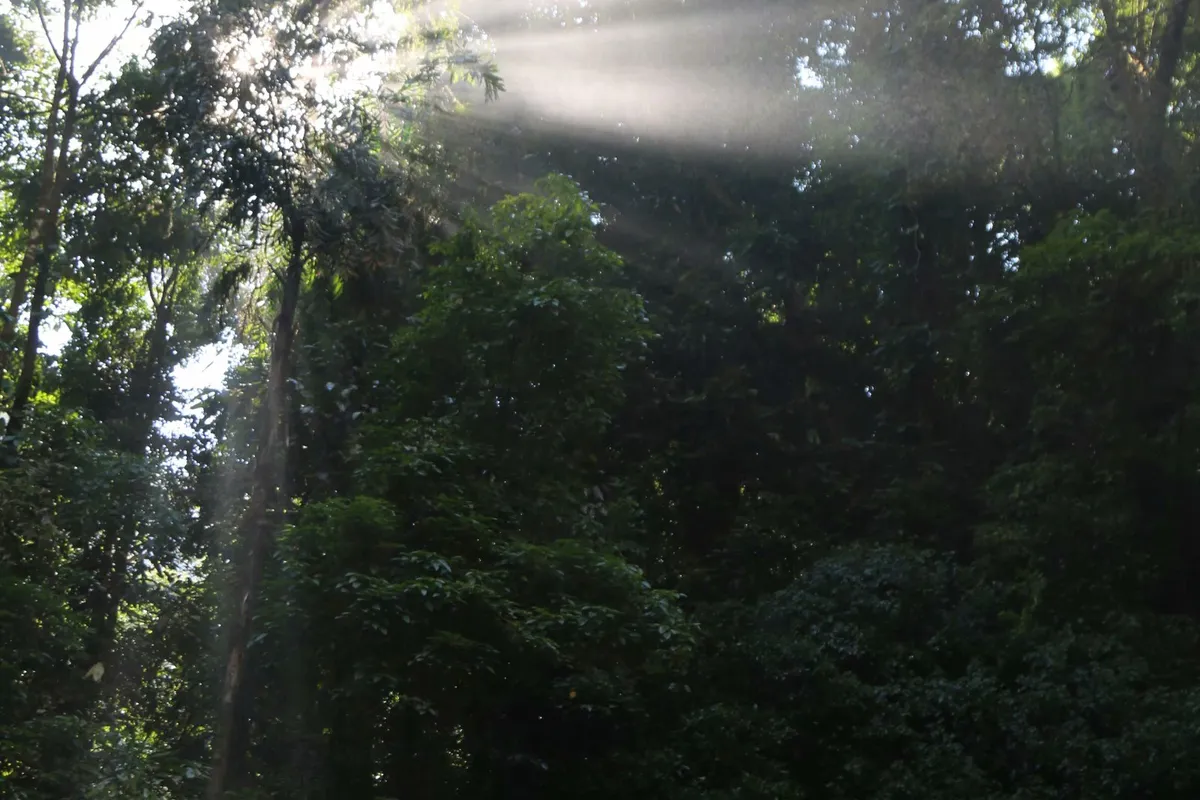
(MoLi Tropical Rainforest)
(Longjiang Bridge)
(Ruili Yinjing Border Gate)
(Ginkgo Village Home)
(Heshun Library)
(Luzhou City Center)
(First Roar of the Nujiang River)
(Abandoned Human-Horse Suspension Bridge in Bingzhongluo)
(Qiuganluo Snow Mountain Sea of Clouds)
(Dulong River Rainbow Bridge)
(Nu Ethnic Museum)
(Laomudeng Church)
(Weishan Ancient Town Xinggong Tower)
(Nanjian Tulin)
(Wuliangshan Cherry Blossom Valley)
(Dali Photo Shoot)
(Erhai Boat Tour)
(Elephant Stroll)
(Mengle Big Buddha Temple)
(Short-legged Horse by Shudu Lake)
(Gadeng Songzanlin Monastery)
(Jade Dragon Snow Mountain Live Show 'Impression Lijiang')