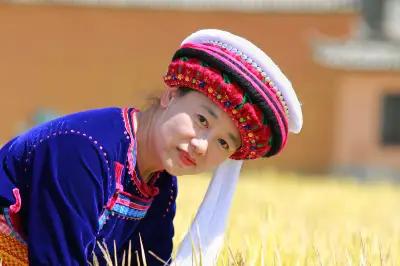
Dali Travel Guide: Cozy, Gentle Winter Moments
There’s a place you can’t forget—
with clear waters and green hills,
with soft, gentle time,
with simple, honest charm.
That place is Dali.
There are a thousand reasons to tire of a city,
but to fall in love with one,
you only need a heart-stirring moment.
Some say a person’s best state is to fully let go while traveling, to savor nature’s splendor and listen to the quiet voice within. If stories are the best confidant, I vaguely recall a saying: many have lived through romance and adventure, yet still can’t walk out of life’s vicissitudes—how deeply that resonates. There’s always a past that’s hard to look back on, and you need a journey to let it settle, to discover more beautiful scenery and richer culture, and to find a better way of living.
Dali is a dream of bygone days, one you don’t want to wake from, holding onto that hazy beauty. The wind of Xiaguan, the flowers of Shangguan, the snow on Cangshan, the moon over Erhai—these “wind, flower, snow, moon” are the perfect description of Dali’s scenery, and also a life state everyone goes through.
**1. Dali Travel Tips**
1.1 Dali lies on the Yunnan-Guizhou Plateau, at about 1,800 meters above sea level. The air is thinner and UV rays are strong, so visitors need to protect against sun and keep skin hydrated.
1.2 June to September is Dali’s rainy season—it rains on and off. If you travel during this time, remember to carry an umbrella.
1.3 National holidays are peak seasons in Dali. If you travel then, be sure to book your guesthouse or hotel online in advance and confirm your room.
1.4 Self-drive travelers should try to know where parking is beforehand, or book a guesthouse or hotel with its own parking lot. Finding a parking spot at the last minute is very inconvenient, especially in peak season when the streets are full of cars and people.
1.5 Try to avoid spur-of-the-moment trips—airfares are high. Have a travel plan, then book flights early to save a lot of unnecessary expense.
**2. Choosing Accommodation: Guesthouse or Hotel?**
For many travelers, accommodation is a big question. Hotel or guesthouse? In Dali, guesthouses offer a distinctive lodging experience and service that you can’t find in most other cities. Guesthouses blend local Dali culture with the warmth of home, creating uniquely designed spaces—a new kind of accommodation. Hotels, by contrast, are enclosed service systems and are many people’s first choice in other cities. When you come to Dali, I recommend choosing a guesthouse, especially for independent travelers—it’s so convenient. Travel itself is about relaxing and discovering more beautiful scenery and human stories, and a guesthouse is the perfect place to experience Dali’s soft, gentle time, another way to taste life.
Dali’s guesthouses are mainly clustered in Dali Ancient Town, Shuanglang, Xizhou, Wase, and other areas. Many guesthouses have their own small private parking lots, which is extremely convenient for self-drive visitors. Guesthouses in Dali Ancient Town offer good value, while those near Shuanglang tend to be pricier, so I’d recommend choosing one in the Ancient Town. At a reasonable price, you can pick a guesthouse that suits your style. For example, ‘I’m Waiting for You in Dali · Fangzhou Muzhai’ guesthouse in Dali Ancient Town illustrates the environment, facilities, experience, and overall high value of Ancient Town guesthouses.
‘I’m Waiting for You in Dali · Fangzhou Muzhai’ is on the lower section of Renmin Road in Dali Ancient Town. It has a private parking lot, making parking easy. The location is excellent, with convenient transport. There are 14 guest rooms, including doubles, twins, family rooms, and suites, priced from about 200 to 1,000 yuan. The design style is simple yet luxurious, with the entire building very much in the distinctive Dali ethnic style. The guesthouse has a quiet, elegant courtyard and lounge areas, a Zen-infused tea room that’s fragrant and graceful, and a rooftop garden where you can watch sunrises and sunsets and gaze at Dali’s faraway scenery. Staying here is wonderfully free and easy—give yourself a quiet moment, read a book, sip tea or coffee, look out at the distant views, and spend a few beautiful nights in a cozy room. That’s the charm of Fangzhou Muzhai.
**3. Dali Food Recommendations**
Whenever you arrive in a new city, food is the biggest concern. Dali’s local specialties are mainly sour and spicy. Some visitors may not be used to it, but most dishes suit the general palate and are quite delicious. For instance: home-style stir-fries, hot pot, cured pork rib hot pot, and wild mushroom hot pot—all tasty and agreeable. Cured ribs and wild mushrooms are two of Dali’s most iconic foods. The famous local sour-and-spicy fish is mostly run by locals and well worth a try, though it may not suit every visitor. For a crowd-pleaser, I recommend the wild mushroom hot pot, which may be even more popular. Wild mushrooms are unique to Yunnan. Limited by altitude, climate, and other conditions, they grow nowhere else, making them an extremely precious and delicious ingredient. They are highly nutritious and have medicinal value. There are many kinds of wild mushrooms, and some are toxic and inedible. When you eat them in a restaurant, you can feel fairly safe—the chefs know how to select the edible ones. In Dali, there’s a particularly tasty wild mushroom restaurant, one of the most popular in town, called ‘I’m Waiting for You in Dali · Fangzhou Pangzi Kitchen’.
Fangzhou Pangzi Kitchen is on the lower section of Renmin Road, the main street of Dali Ancient Town. The location is prime and easy to reach. The restaurant has a retro design style—simple, elegant, spacious, with a touch of warmth. All the wild mushroom dishes are combined with premium ingredients to boost their nutritional value. The restaurant offers a variety of set menus so visitors can choose according to group size, with affordable prices and great value, showing thoughtful consideration. Whenever I pass by, there’s often a long queue at the door, a sign of just how popular it is.
**4. Must-See Sights in Dali**
Encountering the most beautiful scenery and your best self is perhaps the most meaningful part of travel. When you meet Dali, facing Erhai with spring blossoms and warm breezes, here are four highlights: Dali Ancient Town, the Three Pagodas of Chongsheng Temple, Cangshan, and Erhai.
**Dali Ancient Town** (best for evening strolls)
Dali Ancient Town is a must-visit for almost every traveler. It’s one of Dali’s landmark attractions, a city full of stories and age. Dali’s “wind, flower, snow, moon” really comes alive on the bar street at night, with glittering lights, moving music, and crowds of visitors. The ancient town was built in the Ming dynasty and was once called Yeyu City, Forbidden City, Zhonghe Town, and other names. Outside the town is a moat; inside, the buildings have gray-tiled roofs and a simple, classic look. Many cultural relics remain: old gate towers, old academies, old temples. The best time to wander is evening, when the town is softly lit and exquisitely charming. The ancient town isn’t large, so you can stroll slowly along the bluestone paths and savor Dali’s historical flavor. Warm tip: The ancient town gets extremely crowded in peak season—if you’re traveling with children, be sure to keep a close eye on them.
**Cangshan** (set off in the morning, return in the afternoon)
Cangshan is another famous Dali attraction. It’s the main peak at the southern end of the Yunling Mountains, formed by 19 peaks stretching from north to south—from Dengchuan in Eryuan in the north to Tiansheng Bridge in Xiaguan in the south. The 19 peaks are towering and majestic, creating a striking contrast with the graceful beauty of Erhai. The highest, Malong Peak, is about 4,122 meters above sea level. Between each pair of peaks flows a stream that pours eastward into Erhai—hence the famous “18 Streams of Cangshan.” The best visiting period is April to October. Warm tip: The very best season for Cangshan is winter—it snows on the mountain, and the vast white landscape is mesmerizingly beautiful.
**Three Pagodas of Chongsheng Temple** (good for daytime visits)
Chongsheng Temple faces Erhai to the east and is backed by Cangshan to the west. It symbolizes Dali’s history and is near Dali Ancient Town, with easy transport. The temple is famous for its three pagodas, also called the “Three Pagodas of Dali,” one of China’s renowned Buddhist pagodas. They consist of one large and two small pagodas standing in a tripod arrangement. From a distance, they look grand and magnificent—one of the “Superb Views of Cangshan and Erhai.” This is also a filming location for the TV series Tian Long Ba Bu.
**Erhai** (perfect for leisurely afternoons)
Erhai Moon—that’s the description for Erhai at dusk. Erhai is Dali’s most beautiful sight: its tranquil surface beneath blue sky and white clouds is a rare paradise on earth. People say time is the most beautiful witness of passing years, and all art springs from life. Travel is the trace left by time; you and I are just hurried travelers. Escape the flashy noise and search for your own poetry and far-off horizons! Erhai’s romance, its tranquility, the seagulls upon it, the chance encounters beside it… these are all part of Erhai’s unique charm. Many people lose themselves in Erhai, and many find themselves—that’s the soft, gentle time of Erhai. Erhai lies between Cangshan and the Dali basin, in Xiaguan of Dali city. It consists of three islands, four sandbars, five lakes, and nine bends. At Erhai Park in Xiaguan Town, you can take a boat to tour the lake. The best time to visit Erhai is after 3 p.m., when the sun is not too harsh. You can cycle around or rent a vehicle to circle the entire lake. When tired, find a spot to rest and take photos. Photography lovers can set up shots at dusk—the scene is stunningly beautiful. The most important thing when experiencing Erhai is your state of mind: slow down, slowly savor the time that belongs to Erhai, and feel the beauty of life. An encounter with Erhai is, in fact, an encounter with your truest self. Best seasons: spring and winter. Warm tip: The wind by Erhai can be strong, so dress warmly.
Travel is a simple word, yet it holds so many things: scenery, food, meetings, encounters, moods. For many, enjoying a beautiful stretch of time in Dali is contentment enough. Travel broadens your horizons and enriches your life; it can adjust your state and soothe your heart. I never think a person can casually say goodbye to their old self, because there’s never that much letting go, nor that a wounded heart can find another comfort, because there aren’t that many moods. Perhaps the meaning of travel is to find a quiet place to rest, to discover another kind of beauty, and to meet the best version of yourself!