Dali Sojourn: Slow Days When Life Becomes Poetry
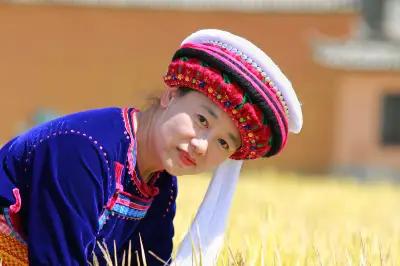
This is the hometown of the Five Golden Flowers, the romantic land from Jin Yong's novels. Every place is a picture, every corner has a story. Dali's beauty lies by Erhai Lake, on the other side of the water, where Cangshan Mountain and Erhai Lake unfold before your eyes. Dali's character is reflected along Erhai Lake, whether in the ancient city, Xizhou, Shuanglang, or Wase—each is a uniquely blessed land. Historically, Dali was a crucial passage for cultural and economic exchanges between East and West. It was a vital hub on the Bonan Ancient Road, part of the Southern Silk Road, and the Tea Horse Road. The Dali Bai Autonomous Prefecture has long been renowned as a 'celebrated realm of culture.' During the Tang and Song dynasties, the Nanzhao and Dali kingdoms both established their capitals here. Cangshan rises like a screen, Erhai gleams like a mirror, the morning bells and evening drums of Chongsheng Temple echo, and the quaint elegance of Foreigner Street brings Dali into a vibrant world in the blink of an eye.
I took a taxi from Dali Ancient City to Caicun Pier. Turning into a small road near Caicun Pier, I managed to ignore the 'overwhelming stench' and, with flies and insects buzzing a welcome on both sides, pressed on without hesitation. I arrived at a place that juts out like a tongue deep into the lake. Along the way, I sighed at the sight of former buildings, some halted even before completion. The spot in the photo where I posed (once a 270-degree sea-view room) — I truly hope that after the restoration efforts, the water of Erhai Lake can regain its former crystal clarity. And we must cherish it more in the future.
I hopped on a double-decker sightseeing bus that circles the lake, mainly to explore the eastern shore. The anticipation and delight were dampened by the renovation of Erhai Lake. Shuanglang Ancient Town was torn up by construction, becoming unrecognizable. Beauty was out of the question—just walking was a struggle. The lakeside appeared dirty, messy, and chaotic, which was shocking and deeply disappointing. Still, I was glad I didn’t give up on this place and visited after all.
Due to the extensive renovation of Erhai Lake, I set out from my guesthouse in Xizhou early in the morning, braving the sun, wind, dust, and sand. After a two-hour walk, I finally reached Haishe (Tongue of the Sea) Park. In the morning, Haishe was deserted, with mosquitoes buzzing in my ears and sending shivers down my spine. Walking clockwise, I found the water at the tip of the tongue so clear you could see the bottom. Seashells lay there, shining even more captivatingly under the dazzling sunlight. I stumbled upon a big banyan tree standing in the water and had a blast playing around. Haishe, I really, really love you.
On my first hurried visit to Dali, I felt indifferent towards the ancient city. But this time, staying nearby, I saw it under a rainbow after rain, under blue skies and white clouds, alive with music, singing, and dancing. After exploring every corner—east, west, south, and north—I was enchanted by the romance of Dali. Dali Ancient City is truly magical.
Since I was taking a night train from Kunming to Dali, I set the train station as my transit point for the day. Getting from the airport to the train station is easiest by airport bus. [Airport Bus] After collecting my luggage and exiting the arrivals hall, buses numbered 1, 2, 3... were neatly lined up. The No. 2 airport express had two routes: one to the train station and one to Wujiaba. You can buy a ticket after boarding. Inside the terminal, along the path from the gate to baggage claim, there are ticket counters for all airport bus lines—you can also buy tickets there with official receipts, no worries. Airport Bus No. 2 (towards the train station): Fare: 25 yuan per person (full journey); Departure frequency: every 15 minutes from 5:00 AM to 11:00 PM. Boarding point at the train station: just 100 meters from the entrance hall of Kunming Railway Station, with clear signs. There's also a 'Kunming International Airport Railway Station City Terminal.' On the way back, I found outside it the 919C city bus (5:00–21:00), which is almost half the price of the airport bus but runs less frequently—every half hour—and costs 13 yuan, stopping at the International Convention & Exhibition Center and Guandu Square along the way. Travel time: 40 to 60 minutes, depending on city traffic during the day; without traffic, it can take just over 30 minutes.
Taking an overnight train from Kunming to Dali has become the top choice for most budget-conscious travelers heading to the 'Kunming-Dali' route. After passing through security at the train station, there's a reliable luggage storage on the left next to 'Dicos,' charging 5 yuan per piece, open from 7:00 AM to 11:00 PM.
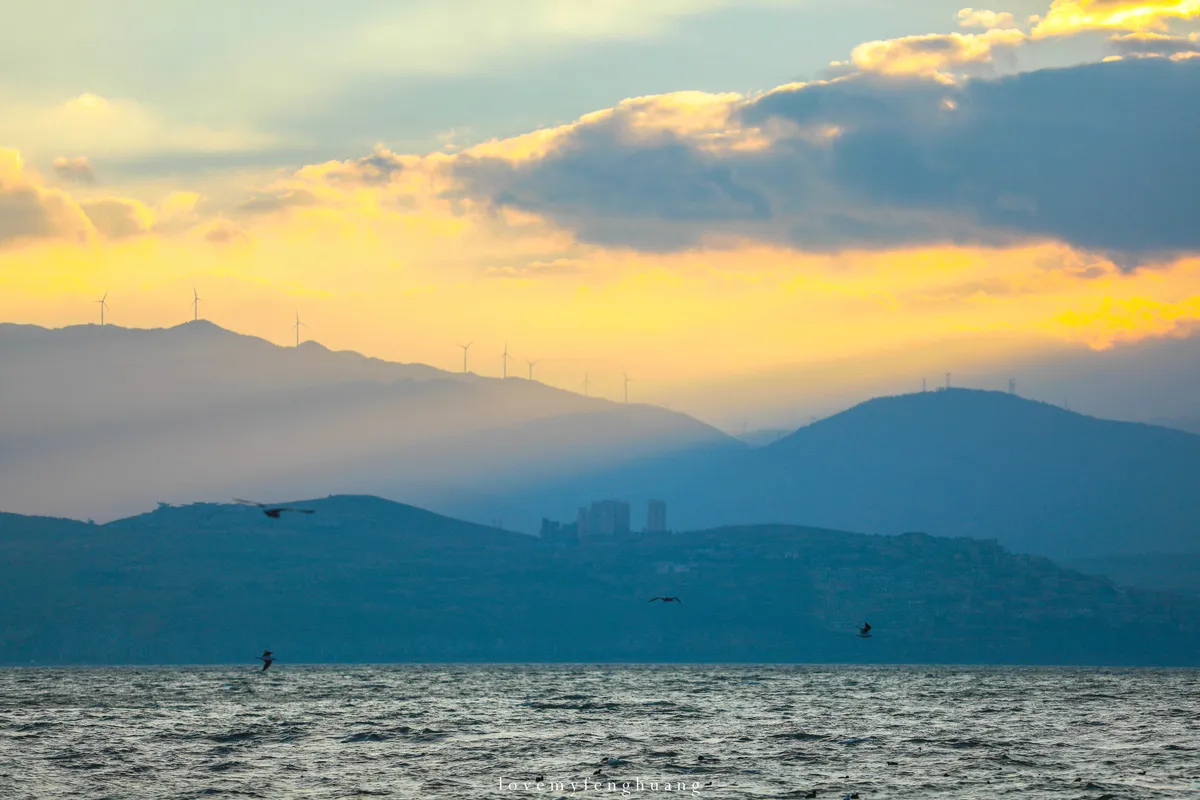
I have to say, the S-shaped road at Longkan Pier and the internet-famous S-shaped road at Panxi Village are so alike that I couldn't tell them apart. I visited Longkan in the morning and Panxi at noon, but both were packed with tourists. Seeing the sunrise is a lucky and blissful experience, though luck sometimes comes when you least expect it. I still remember in May 2017, arriving in Dali on an early morning train, with the sunrise accompanying the journey—it was stunning. Later, at the South Gate of Dali Ancient City, I even caught a rainbow after the rain. In the following days, no sunrise was as spectacular as that one. Winter mornings in Dali are very cold, but many photography teams were there taking wedding photos, braving the fierce lakeside wind, joyfully interacting with the seagulls. My favorite shot is the one with crepuscular rays, with the opposite mountain looming hazily. If you want to watch the sunrise, staying in a lake-view room by the shore is also a great choice.
Dali has its Instagram-worthy guesthouses and scenic spots, but I’m not one to chase after such 'check-in' places. I came to Longkan Pier simply because it’s a great spot for sunrise. In winter, the sun rises around 8 a.m., but I didn’t see the picture-perfect sunrise I had imagined. For two days in a row, the thick clouds lingered stubbornly in the east, blocking the sunrise. Though I didn’t witness the expected sunrise, I took advantage of the quiet early morning to explore Longkan Ancient Town in a counterclockwise direction, enjoying the ever-changing scenery along the wooden walkway. Ponds, wetlands, and metasequoia—landscape features created to blend with the environment—were delightful, and the winter chill didn’t diminish the experience at all. From Longkan Ancient Ferry, you can walk either south or north. I recommend heading north, as the light is more flattering; in the evening, the northern direction offers softer light. Around Caicun, Sansheng Island, and Longkan Pier, there are electric carts, but private cars and scooters are not allowed—only pedal bicycles are permitted. Once you pass Longkan Ancient Ferry, the crowds thin out. Most people you see are sanitation workers or other staff. The results of Erhai Lake’s governance are remarkable, and regulations are very strict. Drones are not allowed on the highway around Erhai West Road; you can only fly them in the villages off the highway.
Near Erhai Gate, I found a restaurant specializing in local mushroom hotpot. The flavor was quite authentic, and I could sit on the second-floor balcony, watching the bustling street of the ancient city while enjoying the meal. Yunnan takes mushrooms very seriously, with dozens of varieties. Besides the well-known matsutake, bamboo fungus, porcini, morel, and chicken fir mushroom, I could also taste thick Huang porcini, peach blossom mushroom, black truffle, squamosus tiger paw mushroom, as well as green-headed mushroom and yellow umbrella mushroom. Mushroom broth is highly nutritious. I ordered a free-range chicken pot to replenish my energy after the long journey. [Stir-fried wild mushrooms: Fragrant stir-fried tiger paw mushroom] There are many ways to cook mushrooms besides soup and hotpot; you can also stir-fry them. The fragrant stir-fried tiger paw mushroom was bursting with aroma, with shredded meat and chili peppers—a perfect dish with rice. For dessert, I ordered 'Yipin Feng Hua Xue Ye,' a name that plays on the homophony of 'Wind, Flower, Snow, Moon' of Dali. It was my first time trying this dessert, and I asked the staff what it contained. It's made by simmering various fruits; you can see red fruit bits, and the texture resembles a sweet soup of tremella and snow pear. All diners can sample the house flower wine for free. Besides the usual green plum, peach blossom, and osmanthus, I tried nearly ten flavors, including purple rice, rose, and lychee. My favorite was still the osmanthus one. [Delicious homestyle dishes: Eggplant in mushroom sauce] This dish must be eaten hot. The eggplant strips are fried and then drizzled with sauce. If you hadn't told me it was mushroom sauce, I would have thought it was a Jiangzhe dish—soft, glutinous, and fragrant. In Yunnan, you'll find that many local dishes incorporate mushrooms, showing how much the locals love them and how they've developed so many tasty recipes. [Hotpot with meat and vegetables] If you like meat, try their yellow beef—hand-cut slices, thick and firm. To keep the broth clear, add the meat last, along with some veggies. I chose pea shoots, a local vegetable that's very tender and delicately fragrant. [Over ten kinds of wild mushrooms to choose from] The mushroom broth is made by simmering local chicken with pork bones, packed with nutrition and infused with local mushrooms. You can choose from over ten types (porcini, red milky porcini, trumpet mushroom, green-headed mushroom, cordyceps flower, snow mountain cold mushroom, lion's mane mushroom, etc.). I picked porcini, bamboo fungus, and morel. Or you can order a wild mushroom platter with porcini, bamboo fungus, yellow umbrella mushroom, red milky porcini, and yam. There are small and large pots; my massive pot was enough for 2–4 people. If there aren't many of you, just order 1–2 kinds of mushrooms. As with hotpot, be sure to drink the broth before adding the meat. The addition of Yunnan red flower takes the nutrition and flavor up a notch—just one word: 'fresh!'
From Erhai Gate into the ancient city all the way to Foreigner Street is an uphill path, with crowds peaking from evening into night. Whether it’s a cozy bar or a tasty restaurant, every corner of Dali needs to be savored slowly to truly appreciate its beauty.
Among Dali's many city gates, I find the South Gate the most charming. I was fortunate to climb it when it was open, walking along the wall, looking down at Erhai Lake and up at Cangshan Mountain. I even witnessed a rainbow after the rain. I didn't bring my camera that time, so it was just a casual snapshot, but I've never seen such a beautiful scene since—perhaps because winters are dry with little rain. I'll try my luck again next May or June.
Returning to Dali in January, I found even fewer people than in November or December. A cold front hit Yunnan; normally, the average temperature should be above 10°C, but these two days were overcast and rainy, with highs of just 4°C. On my second day in Dali, I encountered sleet—tiny snowflakes that visibly clung to my clothes but melted instantly upon hitting the ground.
Learning to take things as they come and cherish the present has been my biggest life lesson this year. Many people complain about Dali, but my first trip here as a child on a guided tour was marred by heavy rain, and sitting on a cruise on Erhai Lake left me with an impression of incessant drizzle and gloomy skies. My second visit was three years ago, when Erhai Lake had just begun its comprehensive restoration, with many places, including Shuanglang Ancient Town, dug up and almost unrecognizable. When I came again in 2019, the results were beginning to show. Last month, walking on the newly built wooden boardwalk by Erhai, I saw Dali's beauty restored—the Dali of old had returned, a paradise ideal for a sojourn. So this year, I decided to settle in Dali for a while and uncover more of its charm.
I arrived at Yu'er Garden just in time for dusk, catching the last rays of sunlight. It was my first time strolling through a garden in Dali. The garden was full of flowers—camellias, chrysanthemums, peonies—as well as towering ancient banyan trees, rockeries, bonsais, and lively squirrels. The whole garden was vibrant and didn't feel like winter at all; it was as if spring was in the air. The covered walkway with its reflection in the water was very reminiscent of Jiangnan gardens, and the stone bridge with its playful little lion statues brought life to the bleak winter.
Historically, Dali was the economic, political, military, and cultural center of Yunnan, renowned as a 'celebrated realm of culture.' During the Ming and Qing dynasties, there were as many as 16 Confucian temples in the Dali area. Within Dali city, there were once Dali Confucian Temple, Fengyi Confucian Temple, Taihe Confucian Temple, Xiaguan Confucian Temple, and Wase Confucian Temple. For a long time, Chinese traditional culture, embodied by these temples, has had a profound and lasting impact on Dali society with its unique and rich connotations. The architecture of Dali Confucian Temple holds high artistic value, reflecting the late Qing Dali hall-style architecture and the characteristics of Bai building art. It is a fine example of the seamless integration of frontier and central Chinese cultures, a unique and precious historical cultural relic. The restoration and reconstruction of the Confucian Temple is an important measure to protect and enhance the cultural essence of Dali Ancient City and promote the prosperity of the city's cultural endeavors, holding positive significance, especially in today's effort to build a beautiful and happy new Dali.
I arrived at noon, and even in winter, the midday sun in Dali was glaring. At first, I chose a seat in the courtyard, but when the mushroom pot arrived, steaming hot and with the bright light, I asked the waiter to move me inside. The owner was very thoughtful and poured me a taste of their homemade flower wine. My favorite plum wine was too strong, so I gave it up and opted for the peach blossom wine at around 10% alcohol.
I ordered a mushroom pot with eight kinds of wild mushrooms, a broth base made from free-range chicken, plus cordyceps, bamboo fungus, morel, and porcini. A small timer was provided; after bringing it to a boil, we had to wait 30 minutes before eating. The corn cake was uniquely prepared—cornmeal wrapped in corn husks, shaped into triangles, with a subtle sweetness and a hint of corn leaf fragrance. But eat it while hot, or it loses its soft, glutinous texture. The carved plum beef slices were a delight—sweet, sour, with plum, beef, and bell peppers stir-fried together, then finished with a thickened sauce, reminiscent of Jiangzhe cuisine, perfectly suiting my taste. The rose milk ru fan soup: if you don't like grilled ru fan (milk fan), this dessert version with a rich milky flavor should suit you. I think many girls would love this dish! Even while traveling, I make sure to maintain a balanced diet. I ordered a local stir-fried sesame greens, a crisp and refreshing local leafy vegetable.
Even while traveling, I make sure to maintain a balanced diet. I ordered a local stir-fried sesame greens, a crisp and refreshing local leafy vegetable.
Jinshan Bannian Guyuan Restaurant (Ancient City Signature Branch)
Address: No. 99 Middle Section of Renmin Road, Dali Ancient City
Average cost: 83 yuan per person.
Xizhou Town, under the jurisdiction of Dali City in the Dali Bai Autonomous Prefecture of Yunnan Province, lies in the northern part of Dali, with Cangshan Mountain to the west and Erhai Lake to the east. In the Sui and Tang dynasties, it was called 'Dali City' and was one of the 'Ten Prominent Cities' of the Nanzhao Kingdom. It is the birthplace of the movie 'Five Golden Flowers' and one of Yunnan's famous historical and cultural towns and key hometowns of overseas Chinese. Xizhou is one of the cradles of Dali culture. As early as when the Six Zhao and Heman peoples coexisted, it was a Bai settlement, originally a city of the Heman. During the Sui dynasty, General Shi Wansui stationed troops here, hence the names 'Shi City' or 'Shichen.' The old capital of Nanzhao in the Tang dynasty was also built here, then called Dali City, which at the time was 'a city with a large population,' another of Nanzhao's 'Ten Prominent Cities.'
If you're interested in tie-dye, you can try a DIY tie-dye experience in Xizhou or nearby Zhou Village, making a piece of clothing or a scarf for yourself or your family. Unlike Dali Ancient City, Xizhou Old Town has fewer tourists and is not as large. On a winter afternoon, simply basking in the sun in a courtyard is a deeply satisfying activity.
If you have plenty of time, I don't recommend taking the electric cart; just walk. Many charming alleys are inaccessible to those carts. You can rent a bicycle and slowly pedal through the old town, forgetting work and worries, just looking up at the blue sky and white clouds—everything will be just fine.
They offer deluxe king rooms, garden twin rooms, family suites, sunny king rooms, and deluxe king rooms. I stayed in a deluxe king room, which was very spacious at 45 square meters, decorated in a simple Chinese style. It had a bathtub, separate wet and dry bathroom areas, and the room was cozy and elegant. All linens and guest supplies were of high standard, with complete facilities and excellent hardware and service. The courtyard featured succulents, greenery, a pond, and rockeries. There was a small terrace on the second floor, where you could sip tea and chat with friends in the afternoon, enjoying the slow Dali lifestyle. The third floor offered an even wider view, allowing you to watch the clouds roll over Cangshan Mountain and wait for a sunset.
During my stay in Dali, each morning I set out from Dali Ancient City to watch the sunrise by Erhai Lake. Erhai Gate is the closest point to the western shore, just a ten-minute walk to a great sunrise viewing spot. I particularly recommend the area around Caicun Pier and Longkan Pier. Over the last two years, Erhai Lake has been undergoing restoration, and it has become much more beautiful. Many boardwalks have been built along the shore, and guesthouses and restaurants are set back at a distance, preventing further pollution from domestic sewage. The renovated Erhai is even more stunning than before. Cars are not allowed; you can cycle, ride an electric scooter, or walk. I recommend bicycles—they're eco-friendly and easy on your stamina.
Travelogue Contents 1. Stories from sojourning in Dali~ 2. Practical information 3. Chasing the winter sunrise: the S-shaped coastal road at Longkan Pier 4. Waiting for you in Dali: Ark Fatzi Kitchen 5. Walking through Dali Ancient City: from Erhai Gate to South Gate 6. Yu'er Garden in full bloom 7. A pilgrimage site for students: Confucian Temple 8. Centennial ancient courtyard restaurant: Jinshan 9. 'Happiness Trio' filming location 'Xizhou,' finding my small bliss 10. Waiting for you in Dali: staying at Ark Mufu Travel Information Hotel Index Guide Index Flight Index Site Navigation Travel Index Cruise Index Corporate Travel Index Join Cooperation Distribution Alliance Friendly Links Corporate Gift Card Procurement Insurance Agency Agent Cooperation Hotel Join Destination and Scenic Cooperation More Cooperation About Ctrip About Ctrip Ctrip Hot Topics Contact Us Careers User Agreement Privacy Policy Business License Security Center Ctrip Content Center Intellectual Property Trip.com Group Algorithm Announcement