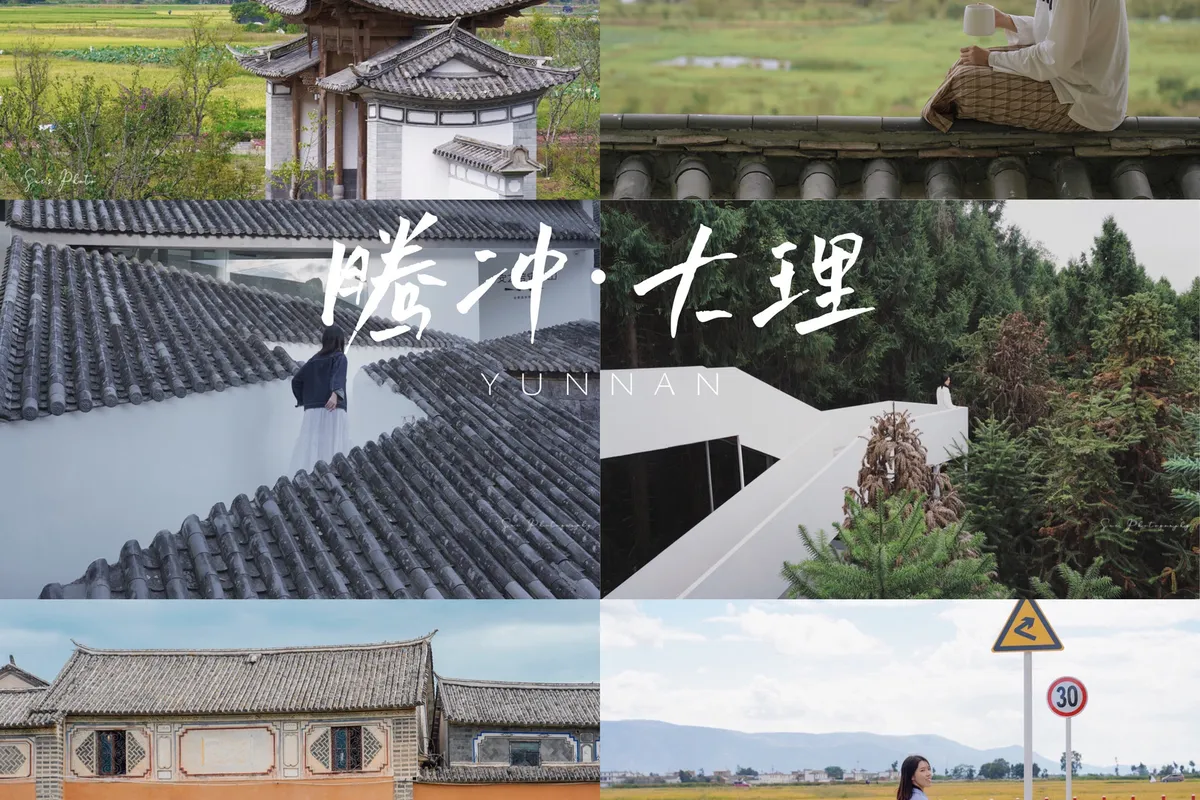
8 Days in Yunnan: From Tengchong to Dali | Where Prosperity Ends, Ordinary Life Shines True
Looking back on the past year, was it a year of stumbling or a year of willfulness? Perhaps it was this very chance that subtly reshaped my usual outlook on things, making me braver in making decisions—whether to pause or to keep moving forward.
Stopping lets you recharge; finding direction lets you start running again. In days when leaving the country isn't possible, I just wanted to find a quiet place to zone out.
That's when a serene border town caught my eye: Tengchong, Yunnan. Living a life of quiet anonymity—maybe it could actually happen here.
In the name of Tengchong, I also revisited Dali and Kunming along the way. The journey was a mix of delightful surprises and minor letdowns, but luckily everything went smoothly. I suddenly realized that what we chase on our travels is nothing more than ordinary, authentic life. Finding small joys in the busyness, lifting your head to catch a heart-stirring view—these are already such fortunate things.
We may not always get what we want, but hey, that's life.
And isn't travel just one of countless facets of life?
When you mention Tengchong, despite its volcanic geothermal wonders, the most worthwhile place to explore is probably Heshun Ancient Town. In Heshun Ancient Town, a signboard reads:
"There's a flavor called Heshun. Gentle as jade, supreme goodness like water. Within that cluster of ancient buildings embraced by volcanic hot seas, echoes of caravan bells linger, the scent of books from farming and scholarly homes drifts, seeds of philosophy for the masses are sown, and even stirring, tragic elegies remain! Going your whole life without once tasting the flavor of Heshun might just be a regret."
Heshun Ancient Town is a serene, ancient town that few visit. Although the TV drama "Beijing Love Story" boosted its fame, it remains a hidden gem due to inconvenient transportation. Flagstone paths climb the hillside, grey-tiled roofs rise in charming disorder. Pick a courtyard guesthouse and stay three days, and only then will you discover the beauty of this hillside town.
Most moments in the old town belong to nature—quiet and ordinary. Residents gather in large courtyards in their spare time, chatting, enjoying the scenery, and gossiping about daily life. Life is just like that.
Heshun now has a population of around 6,000, yet over 10,000 Heshun natives live overseas—hence its nickname "Home of Overseas Chinese." The Huizhou-style architecture, memorial archways, ancestral halls, and deep cultural roots preserved throughout the town are its most precious assets.
Next to the old town sprawls a vast expanse of rice paddies, nourishing generation after generation of residents. Walk to the other side of the paddies, and you can clearly see the entire hillside town growing upwards in a charming jumble, tier upon tier.
Early morning tricycles rumbling by with fresh produce; breakfast stalls where charcoal fires crackle, boiling hot rice noodle soup; sunny afternoons just perfect for hiding away and napping; children bursting joyfully out of school at the end of the day... These are all ordinary scenes that play out day after day.
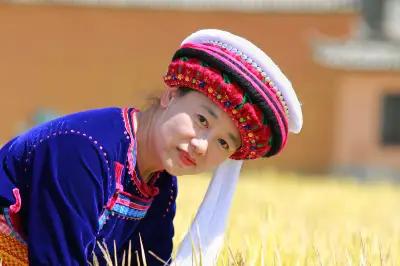
The stretch of rice paddies nestling beside Heshun Ancient Town is ridiculously photogenic. During harvest season, the endless golden fields grow over a meter high, and city dwellers, wide-eyed with novelty, can spend ages snapping photos, reluctant to leave...
Over 400 years ago, villagers here started "traveling to foreign lands." Since Heshun is only 70 kilometers from Myanmar, many went there to trade jade, and not a few became hugely wealthy. Upon returning home in glory, they built grand residences and also funded the construction of ancestral halls. Thus the township has eight major ancestral halls, each with its own distinct style.
Strolling along the small river that circles the town, you'll spot several laundry pavilions. Back then, most men "traveled to foreign lands" to earn a living, while the women stayed behind to wash clothes, cook, and care for the family. These pavilions were built with pooled funds to shield them from wind and sun while doing laundry by the river. Over time, large and small pavilions cropped up all along the way.
If you truly want to soak in Heshun, you need at least three days—not rushing to tick off every architectural landmark, but unhurriedly treading every flagstone path. Morning cooking smoke, afternoon tranquility, the colors of the setting sun, the starry sky deep into the night... Especially after leaving Heshun Ancient Town, you'll miss these little, simple days all the more.
Heshun Ancient Town Tips
1. Original admission to Heshun Ancient Town is 55 yuan, currently half price at 27.5 yuan, covering historical buildings within. Keep your ticket stub or bring ID for re-entry; the ticket is valid for three days.
2. There are many guesthouses in the old town, suiting all budgets. With enough time, you could even stay at two different ones for varied experiences. Guesthouses usually include pickup from the airport or city center.
3. Regarding guesthouse pickups: except for a few branded hotels with their own drivers, local guesthouses generally cooperate with car fleets, so the driver isn't from the guesthouse itself. During the ride, drivers will often ask if you need a chartered car to visit nearby sights. The market rate is 300 yuan per day. If you want to see two or three nearby spots and aren't driving yourself, chartering is reasonably good value. It's up to you—drivers won't pressure you.
4. Nights in Heshun Ancient Town are especially quiet; there's virtually no nightlife. A few bars exist but aren't necessarily open every day. Restaurants usually close by 8–9 pm; later on, only one or two BBQ stalls remain. There are few streetlights, so it's best not to go too far at night.
5. The town streets are all flagstone, so sports shoes are recommended. If your luggage is bulky, better not book a guesthouse too deep inside, otherwise it'll be a major workout for your feet.
6. About hot springs: we went to Bolian Hot Spring Hotel next to the old town. Since the whole Tengchong scenic area was developed by Bolian, their hot spring environment is the best. Hot springs here rarely have private pools; you generally wear a swimsuit and soak in different public pools. The water doesn't have much sulfury smell. If you want that sulfur-scented experience, it's better to head to Rehai (Hot Sea) Scenic Area.
Beihai Wetland is a volcanic barrier lake ecosystem. Aquatic grasses weave densely in the water, repeatedly dying and regenerating in the soaked soil until they form floating meadows on the surface. This ten-thousand-year-old volcanic barrier lake wetland has become a classic Tengchong postcard scene.
Beihai Wetland Scenic Area is an ecological reserve encircled by mountains. The lake surface is mirror-still, water grasses grow wildly, and the area isn't large—you can cover it in about two hours. The wetland boasts rich flora and fauna: wildflowers bloom in spring and summer, migratory birds arrive in autumn and winter. A leisurely walk along the boardwalks and back, or taking a boat to the far end then walking back, are both nice options.
Our tickets were bought through the chartered car driver for 80 yuan, including a boat ride and a grass-rafting experience—cheaper than buying directly.
For anyone long stuck in the city, such lush mountain-water scenery is exactly what urbanites endlessly yearn for.
The whole wetland area is long and narrow; a round trip covers about 3 kilometers. Taking a boat does save some energy. Along the way you'll see birds you can't name; the one below should be an egret, stretching its long neck in solitary elegance.
"Rich water grasses" is probably the most fitting description for this place. As the boat slowly parts the calm lake, the water plants flowing beneath are clearly visible, and flocks of wild ducks glide past the reeds—such a beautiful scene.
Those two captivating blue birds are purple swamphens, a relatively rare waterbird in China.
When the boat approaches the final docking point, a few tiny thatched huts against lush mountains momentarily evoke Swiss lake-and-mountain scenery—a tranquility that truly enchants.
At Beihai Wetland's grass-rafting area, you can try the wondrous experience of floating on water. A thick mat of meadow replaces the bamboo raft, holding three or four people as you pole along, drifting across the lake like a floating carpet.
Beihai Wetland Scenic Area Tips
1. Opening hours: 8:30–19:00
2. Seasonal highlights:
Spring — purple irises;
Summer — a sense of brightness and charm veiled in sheer gauze;
Autumn — fragrant lotus drifting, fish and shrimp frolicking, light boats and bamboo rafts gliding among them;
Winter — flocks of wild ducks, migratory birds fluttering and playing on the water;
3. Activities: boat rides, bamboo rafting, grass rafting, traditional fish trapping
4. Suggested visit: 2–3 hours
5. Ticket prices: admission 55 yuan; admission + boat 80 yuan; admission + bamboo raft 100 yuan; admission + grass rafting 120 yuan
After leaving Beihai Wetland, we headed straight to Rehai (Hot Sea), about half an hour's drive. Chartered car drivers usually suggest visiting them together.
Rehai isn't a sea, but a geothermal hot spring area. From the moment you step out of the car, a dense sulfur smell hits you. Passing the row of small shops at the scenic area entrance, local ladies chase after you selling eggs bundled together with straw—10 yuan per string. It feels almost ceremonial to buy a string and boil it in the "Big Boiling Pot," so I thus embarked on a trek with a string of eggs in tow.
A stream, warm all year round, flows through the entire valley, forming hot spring vents and pools of all sizes. From the ticket office, take a shuttle deeper into the valley, and you'll see wisps of white smoke rising from the hills—a touch ethereal.
Approaching the smoking vents, the air temperature climbs, beads of sweat form on your forehead, the drifting sulfur smell grows thick and salty, and the bare rocks are coated in white calcification. The ground occasionally has small holes for ventilation, columns of smoke curling upward. Being a bit timid, I didn't dare linger near signs marking explosion zones.
It's rather magical: this valley holds bubbling springs of hot water, yet also cool, trickling streams and waterfalls. Why the two don't interfere is another wonder of nature.
Passing the Immortal Pavilion, continue the climb upward, past the hot spring zone and several thermal pools, up dozens of steps, to finally reach Rehai's iconic spot—the "Big Boiling Pot."
The bottom of the Big Boiling Pot has three spout holes, gushing 96-degree water like a huge boiling cauldron. Even the ground here is hot; sitting on the steps to rest, the heat of the ground quickly drove me away.
Signs throughout the area warn "No boiling eggs in the springs." My string of eggs, which had quite the journey, finally found its fate at the egg-cooking zone beside the Big Boiling Pot. "Boiling" here actually means steaming over high-temperature steam. Toss the egg string into the cage for about 10 minutes, and they're fully cooked—my dreams of soft-boiled onsen eggs were dashed.
Still, the egg's trek deserved a memorial photo.
As one of China's three major geothermal areas, Rehai is where Tengchong's geothermal activity is most concentrated. This magical sight is well worth a walk, but whether to soak in the hot springs here is up to individual preference.
Rehai Scenic Area Tips
1. Original ticket price 60 yuan, currently half off within the year. If you're already tired, I suggest buying the combo ticket that includes the battery cart. Walking from the ticket office to the main scenic section takes at least 1.5 km; the cart mainly saves that distance.
2. The climb from Lion's Head Waterfall to the Big Boiling Pot is also about 1.5 km; walking and climbing takes roughly half an hour.
3. Rehai can be visited together with the volcanoes or paired with Beihai Wetland—one day is entirely sufficient. In the evening, I recommend having Chaowei Copper Pot Beef in the city!
4. Beside the Big Boiling Pot there's a foot-soaking experience. If you plan to bathe in the hot springs, I suggest buying a guesthouse combo that includes scenic area + hot spring + battery cart tickets. Also, bring a swimsuit (you can buy one at the spring, but the styles are... well...).
【Cun Dama Pea Jelly】
For locals, breakfast usually starts with a piping bowl of pea jelly, "made fresh and eaten the same day"—gone by afternoon. Cun Dama's place is no exception. We arrived in the afternoon, so we ordered a snack of large thin-sliced pork with jelly instead. Auntie Cun told us to come back next morning for the pea jelly, and we nodded eagerly.
The large thin-sliced pork is cut paper-thin, springy and refreshing. Topped with chili powder and slurped together with jelly that's like jelly cubes, it's a flavor that makes you want bite after bite.
【Niuniu Family Copper Pot Beef】
Inside Heshun Ancient Town, a guesthouse sister recommended this beef hotpot. A massive copper pot holds a rich beef bone broth, loaded with beef offal, beef, and beef skin. I forget how many jin we ordered; all I remember is endlessly pulling out beef from that pot. The beef and offal are especially flavorful—not the melt-in-your-mouth texture of Chaoshan beef hotpot, but comparatively chewier, yet deeply seasoned.
【Lin Li Family Restaurant】
An ordinary family-run eatery with an open living room and two-story building. The owners set up tables in their own courtyard, a familiar and unpretentious dining spot for locals. Handwritten daily specials on a small blackboard, a cold cabinet displaying a dozen-plus unnamed mushrooms, the down-to-earth lady boss busy in the kitchen, calling the boss to take our order. The two of us ordered four dishes and left completely satisfied.
I've already forgotten which seasonal mushroom it was—tender and smooth, stir-fried over high heat to bring out that earthy fragrance.
Clear-fried Tengchong small horn gourd, a vegetable unique to Tengchong. Shaped like a chili but not spicy, it's refreshingly crisp.
In Tengchong restaurants, you'll see "Great Rescue" almost everywhere. "Great Rescue" is actually stir-fried rice cakes (chao er kuai). Legend goes that during the Ming Dynasty, an emperor fleeing to Tengchong was served this dish at a local home, and moved by the gesture, he named it "Great Rescue."
Since you're here, you have to try it. With tomatoes, egg, pickled vegetables, and cured meat, it bundles sour, sweet, salty, and spicy all together—quite a novel taste. But the rice cakes are very filling, almost a meal in themselves.
【Chaowei Copper Pot Beef Restaurant】
After one copper pot beef meal in the old town, we couldn't stop thinking about it. A friend also recommended an even more authentic local copper pot beef joint. Sure enough, Chaowei's beef broth was richer, the beef portions bigger. If you can only eat at one, I wholeheartedly recommend Chaowei!
Every table gets a big platter of dipping sauces.
The perfect marriage of chili oil and beef broth, bubbling on the charcoal stove—this bliss of hearty meat-eating in cool weather fills you with happiness.
【Heshun Ancient Town BBQ Stall】
Late at night, the BBQ stall set up in the old town always draws people from all corners. It's not about stunning flavors, but the sentiment of friends finally gathering together.
The guesthouse sister told us, for BBQ you must order the marinated items, because that's the hallmark of Yunnan-style barbecue. Deeply marinated chicken wings, chicken feet, grilled fish, and especially the batter-coated tofu are must-orders.
The tofu's fresh flavor is irresistible, and the spice level is a serious challenge for a Cantonese palate. Still, we devoured it, hissing and gulping beer all the way.
【Hua Jie Private Kitchen】
Requiring a reservation a day ahead, Hua Jie Private Kitchen is a social-media-famous spot in Heshun Ancient Town. It's charged per person at 158 yuan, with dishes based on seasonal ingredients—around ten or so courses. The food is refined and delicious, the setting lovely. Hua Jie's place has many house-brewed wines; feel free to taste if curious, and plenty of people buy jugs to take home.
Hua Jie is a native of Heshun, and her restaurant is in her family's nearly 300-year-old home—a classic courtyard layout. Both sides of the entrance are lined with wine jars. The flagstones and wooden furniture in the old house brim with age.
Dining at Hua Jie, course after private-course dish arrives: from appetizer fruits and snacks, to meat and fish, to desserts. As you finish one dish, the next is promptly served. The refinement and thoughtfulness linger in memory.
In the tranquility of Tengchong hides an emerald tea garden deep in the hills. Due to its remote location, most visitors drive themselves, making for a wonderfully uncrowded experience! The tea garden owner built a thatched hut and campground here; enjoying a meal amid the serene sea of tea, followed by a hot cup, is bliss.
Driving along small village roads into the tea garden, the rolling hills are already a feast for the eyes. When you turn at the end and see the wooden hut roofed with thatch, for a split second it feels like the Japanese countryside. Up from the hut is a glass restaurant tucked in the forest.
At the tea garden restaurant, the minimum spend for two is 200 yuan; for three or more, it's 68 yuan per person (better value in a group). No need to order—dishes come based on seasonal ingredients, usually eight or nine. The Hump Beef Pot is absolutely delicious, intensely beefy and generous portions—utterly satisfying.
The hump beef pot has a rich broth, the beef stewed tender and aromatic, super tasty.
After the meal, you can enjoy free freshly brewed tea at the tasting area. If you want to experience roast tea (including making a fire, grinding, and brewing the whole process), there's an extra fee. This depends on your time and preference; if you have plenty of time, it's worth trying this ancient method of tea-making.
Outside the hut, vast tea fields stretch into the distance. On sunny days, they glow green; on rainy days, there's a different mood. Strolling slowly into the garden paths, the photos turn out exceptionally beautiful.
Tengchong Da Di Tea Sea Glamping Base
Transport: self-drive, chartered car, or taxi
Hours: 9:30–21:00 (you can dine anytime during these hours, but it's wise to call ahead to check)
In Tengchong, we stayed at a boutique guesthouse I'd long had my eye on: "An Zhi Ruo Su·Shan." Tucked on an old street at the foot of the hill branching from Heshun Ancient Town, it exudes an attitude of indifference to the world—exactly the life I yearn for!
Designed by a Harvard-trained architect, this guesthouse cuts a bright white, zigzag-shaped entrance into a traditional tile roof, sloping upward into a green vista embraced by forest. The whole structure resembles an upward-growing white hill, packed with design flair and immensely pleasing to the eye.
The rooms feel like living inside a landscape painting. Each has a poetic name and a different layout, but all boast huge floor-to-ceiling windows overlooking the fields and Heshun Ancient Town in the distance. Smart appliances and many thoughtful details add comfort.
A personal butler is included; pickup and drop-off when checking in and out. Afternoon tea can be enjoyed in the beautifully designed common areas or at the rooftop viewing spot. Each evening they brought us two bowls of peach gum snow fungus soup, and breakfast could be served in the room.
The hotel lobby doubles as a café—even non-guests can come for afternoon tea and admire the masterful design. Tree-trunk-like pillars stand staggered, sunlight filtering through the gaps, a pure white scene of extreme gentleness.
Throughout the morning and afternoon, the play of light and shadow is intoxicating. The staggered design lets sunlight cast its patterns freely—the light effects are simply stunning! At sunset, watching the sun dip behind the hills is even more captivating. Truly a space for zoning out and whiling away time.
Follow the white stairs up to the third floor, sit atop the roof tiles and gaze over the fields and hillside town. In that moment, it's the most peaceful time imaginable.
Several photo spots in the guesthouse yield stunning shots:
① The extended "rooftop" path at the entrance (backlit in the morning, best shot in the afternoon)
② The outdoor white staircase leading to the third floor (very woodland-chic)
③ The third-floor common space (you can sit right on the roof—like climbing onto the eaves!)
④ In the morning, the corridors in the room area with dappled light and shadow are also lovely.
【Guesthouse Name】An Zhi Ruo Su·Shan Panoramic Hot Spring Hotel
【Address】No.41, Shuidui Shang Er She, Heshun Town
【Transport】Roughly half an hour's drive from the airport. The butler can arrange airport or city pickup. Walking to the old town center takes about 20 minutes.
On the way from Tengchong to Dali, we stopped overnight in Baoshan—for a somewhat childish obsession with visiting a coffee estate. Childish because it wasn't coffee harvest season, but with the "since we're already here" excuse, I still wanted to see it, even though transport was inconvenient and we ended up spending a fortune on a taxi back to the city that night.
Baoshan is a thoroughly offbeat city; its coffee industry supports over half the local economy. An hour-plus from downtown, Xinzhai Village in Lujiangba, with its vast coffee plantations, is dubbed "China's No.1 Coffee Village." Xinzhai has several coffee estates, experience centers, hillsides planted with large coffee trees, and processing stations nestled in the mountains... For coffee enthusiasts, tracing back to the source is the most thrilling part.
The unmissable highlight is Xinzhai Coffee Estate—a mountain-water-art-culture space crafted by a Beijing architect, Hua Li, using 760,000 bricks. It's practically a coffee museum. The estate even made ArchDaily's "China Architecture of the Year 2020" Top Ten. Of course, we came specifically for it.
Originally, after visiting Xinzhai Coffee Estate, we planned to see other estates nearby, but we hadn't done our homework and it was too late when we arrived.
A heads-up: Xinzhai Coffee Estate isn't in Xinzhai Village; it's in Bawan. Most other individual coffee estates are in Xinzhai Village itself. Bawan and Xinzhai Village are on two different hills, about half an hour's drive apart.
Actually, with enough time and a car, covering both hills in a day is no problem. Unfortunately, we arrived in the afternoon and could only tour Xinzhai Coffee Estate before heading down the mountain back to the city—leaving a sense of regret.
The site of Xinzhai Coffee Estate was once a long-abandoned courtyard, the former township government office. Under the architect's bold vision, it transformed into a vintage yet stylish coffee estate. The estate comprises three parts: a cinema built in the 1980s, a two-story red-brick coffee shop, and a three-story main building primarily for storage and processing.
On that dappled-light afternoon, wandering through the coffee estate, the lofty arched corridors, the expansive views, the artfully staggered spaces—all make for stunning photographs.
The estate also hides a small coffee museum, displaying hundreds of items related to Lujiangba's coffee: from bean varieties to processing tools, from watching and learning to hands-on experience. You can trace how a coffee cherry becomes a fragrant cup, delving into the region's decades-old coffee history.
Admire the architecture, sip a coffee—despite the somewhat long journey, it seems worth it.
A 250-year-old banyan tree is the estate's "guardian treasure."
Vintage rectangular windows punctuate the grey-brick wall of the abandoned cinema.
From afternoon into evening, the light gradually fades, and the whole building's nostalgic air deepens.
On the drive from the city to the estate, distant mountains ripple endlessly.
A few tips for visiting Xinzhai Coffee Estate:
① Drive yourself! Definitely have your own car, because public transport is just too inconvenient (don't ask how I know).
② Xinzhai Coffee Estate isn't huge; you can see and photograph everything in about an hour. The surrounding old village has nowhere else to go. If you want to visit multiple coffee estates, go early: see Xinzhai Coffee Estate first, then drive to Xinzhai Village (roughly 30+ minutes). Xinzhai Village has more estates, great views, and good coffee to sample. Here are a few I originally wanted to visit: Brian Coffee Experience Center, Qiteng Culture Coffee Experience Hall, and Bitong Coffee Estate.
③ The mountain roads for self-driving are quite tricky, with many bends—having an experienced driver at the wheel is wise.
④ With even more time, consider visiting Xinzhai Village in the morning, Xinzhai Coffee Estate in the afternoon, and staying overnight at the estate's guesthouse for a fuller experience.
My first visit to Dali was back in my student days. Compared to the bustling Old Town of Lijiang, Dali Ancient Town seemed like a breath of fresh air: broad flagstone streets, lazy afternoons, a slow pace of life... It kept me longing for Dali ever since.
Returning after seven or eight years, it seemed almost unrecognizable. Eateries and shops had multiplied, roads were jammed with cars and scooters, and markets and art spaces were everywhere. Perhaps it was the holiday season, but the crowds in the old town were shoulder to shoulder. Especially after dark, the noisy bustle and brightly lit shop signs dampened my enthusiasm a bit.
Dali Ancient Town had ultimately bowed to the tide of commercialism. Life inside the town is now barely different from the city: milk tea bars and pubs lining streets with waiting crowds, small shops doing roaring business. Merchants make money here, tourists have fun here, but those leisurely, carefree days where happiness was priceless have gradually faded.
Not that commercialism is all bad—we're just fleeting visitors, not longtime Dali residents. For locals, a higher standard of living and faster economic growth do have benefits. The clash of old and new cultures might spark something fresh. For us passersby, maybe we just need time to adjust.
If you yearn for Dali's old carefree, slow life, for that ideal land, I'd advise avoiding holidays. Come in the off-season. Stroll along Erhai Lake, wander through the old town's weathered days, gaze at Dali's deep starry sky—that's truly worthwhile.
Dali is still Dali, just in a different guise.
The lifestyle of new Dali people is best reflected in the various markets. The Bed Sheet Factory Art Zone, Foreigner Street Market, Four Seasons Street Market, and countless others rotate throughout the week. The liveliest is probably Foreigner Street Market, with many movable stalls lining both sides of the street with all kinds of small goods. For a more artistic vibe, Four Seasons Street Market or the Bed Sheet Factory might suit better.
While zipping around the old town on a scooter, we passed a peculiar building. Getting closer, it turned out to be Yang Liping Grand Theater.
We didn't do the classic Erhai loop. We just scootered to the lakeside for a look. Before the trip, I'd considered staying at a lakefront guesthouse in Shuanglang, but the doubled holiday rates talked me out of it. The holiday travel experience always gets diluted, and we felt that acutely in Dali, Yunnan.
Stripping away the holiday mask, on ordinary days, Dali should still be that dream realm—I sincerely hope so. After all, we even saw a double rainbow!
In Dali Ancient Town, I recommend a delicious specialty restaurant for Dai-style hand-grabbed rice: "Gushi Hui Private Kitchen."
Great food hides in the deepest alleys. The place is small but often packed. Their hand-grabbed rice is a feast for eyes and palate—generous portions and authentic flavors. The boss will suggest the right amount based on your group size. Besides the rice, try their grilled chicken feet tendons—so flavorful and chewy, absolute top marks!
Address: No.383, Qing Shi Qiao, Lower Section of Yu'er Road, Dali (the storefront is small and not easy to find)
Opening hours: 11:30–14:00, 16:30–20:30
In Dali, we also visited a thousand-year-old village.
Fengyangyi Village preserves the only remaining stretch of the ancient Tea Horse Road within Dali. From the village head to its tail, nearly a kilometer of flagstone path, polished smooth by horse hooves and human feet over centuries, remains. Occasionally a villager leads a few horses at the village entrance, touting a horseback ride—but walking is the better way.
Along the stone path, dilapidated old houses line both sides. Walls are faded and crumbling, red bricks exposed. It's very peaceful, yet exudes a sense of desolation and aging, as if completely forgotten.
We chanced upon a group of elderly ladies in varied postures under a decrepit eave, weaving straw hats. Some chatted, some bent over their work, some rested with closed eyes. This was the most beautiful scene I witnessed.
Fengyangyi Village's main road isn't long. Those crumbling stone houses may one day—who knows when—be renovated or rebuilt. I hope the stories and weathered years they carry can linger a while longer.
Here I can't resist talking about a trap we stepped into in Dali.
Anyone flipping through a Dali to-do list will almost inevitably see: "Visit Jizhao Nunnery for a vegetarian meal."
So, harboring lovely visions of a serene temple, we headed to this "off-the-beaten-path" spot, Jizhao Nunnery. We figured we'd arrive around noon, just in time for the meal, without rushing too early. The roughly half-hour uphill climb on steep paths left us panting. When we reached the nunnery gate at 12:30, the crowds inside shocked us speechless. This so-called hidden gem had become a checklist pilgrimage site.
From the entrance to the inner courtyard, every corner was packed with people—like a giant mess hall. When we asked temple staff where to get food, they told us lunch was already gone and we'd have to wait until dinner. Crushing, to say the least. The staff added that many people come queue early in the morning, some one person buys for a whole group, so it sells out fast. Starving, all we could do was wear our helplessness on our faces, with no heart left to truly appreciate the courtyard's beauty.
This wasn't the vegetarian meal experience I'd wanted. I hadn't imagined Jizhao Nunnery as a place to chase a bowl of plain food with such forced intent. We left right away.
Fortunately, as we hungry, irritable eaters were heading down the mountain, we spotted a sign for vegetarian meals at Gantong Temple halfway up. It was past 1 PM, but we popped in on the off chance—and they still had food! Quiet and sparsely populated, Gantong Temple's rear housed a simple dining area. A few tables held scattered guests—many, I suspect, had come down from Jizhao Nunnery as well.
Though not many dishes were left, there was stir-fried tofu, cabbage, and potato slices. Clutching a bowl of hot rice, I was nearly moved to tears. Not a single grain of rice was left. After eating, I looked up and saw a verse pasted in the hall, thinking, "Well said, Amitabha." Thank goodness we stumbled upon Gantong Temple—it perfectly salvaged the sour mood from Jizhao Nunnery.
Take a slow look around Gantong Temple; it actually has its own beauty. Not meticulously arranged, but a beauty tinged with age, a bit worn, yet full of life. Pear and persimmon trees were laden with fruit, dust-laden cobwebs hung from the roof tiles, and succulents clustered on the ground.
A bit of advice for those wanting to visit Jizhao Nunnery:
1. Avoid peak holiday seasons, and the 1st and 15th of each lunar month (entry is free on those days, so it's more crowded).
2. Head up the mountain a bit early; it takes half an hour to walk from Gantong Cable Car to Jizhao Nunnery. Arriving before 11 AM is best to guarantee a hot bowl of rice.
3. If you miss out at Jizhao Nunnery, go to Gantong Temple—their vegetarian meal can warm your stomach too.
Xizhou Town isn't really a hidden spot anymore; during holidays, quite a number of tourists come here.
In my eyes, though, Xizhou is more soulful than Dali. Maybe it's the Bai-style mansions hidden in the ancient lanes, maybe the winding old walls and deep alleyways with no end in sight, or maybe the mood-lifting rice paddies. Stepping into Xizhou Ancient Town, there's a richer cultural atmosphere.
As a key town and relay station on the Tea Horse Road, Xizhou became a hub for trade, rest, resupply, and turnaround for traveling caravans. Over a thousand years of history have left sweeping eaves, whitewashed screen walls, old residences, bluestone bridges—utterly charming. Xizhou Ancient Town still tells these vivid stories through every street and alley.
Xizhou's landmark, the Round Corner Tower, is also the most popular photo spot. During holidays this intersection is thronged; only off-peak times thin the crowd.
Sifang Street is Xizhou's "Little Hong Kong." Beneath the towering "Inscription Memorial Arch," the names of the "Four Great Families," "Eight Middle Families," and "Twelve Small Families" of the Xizhou merchant guilds silently recount past glories. Yan Family Compound's entrance is also on the square. Today it's a culinary center, surrounded by fragrant Xizhou baba, creamy grilled milk fan, steaming claypot rice noodles... plenty of specialty treats.
Next to the old town, a stretch of rice paddies is Xizhou's most captivating sight now. "Xilin Court," a Bai residential museum, sits right beside the paddies. Its orange walls paired with the fields are endlessly photogenic, a popular Instagram spot—again, best visited off-peak.
Along the paddies runs a row of cafés. On a sunny morning or afternoon, sipping coffee facing the fields is a truly leisurely indulgence.
The paddies turn golden around September or October.
Xizhou Ancient Town has gradually acquired "internet-famous" labels, perhaps because of those paddies, or the growing number of cafés, food shops, and craft stores. Looking back, while walking through town, I sometimes got lost in the rush to find photo ops, overlooking the soul of Dali that Xizhou represents—its thousand-year history, its bygone prosperity, its cultural and architectural depth... Only after returning home did I leaf through these inner spirits, awed by the passage of time. I'm a bit ashamed.
During our days in Dali, we stayed at a guesthouse in Sha Village, just outside Xizhou Ancient Town. A slight distance from the old town, but it offered a pocket of peace.
The room had a large terrace facing a distant scroll of mountain and water. Waking up to this poetic scene each morning was breathtaking.
The guesthouse is called Qingsha Residence. Many details inside were designed by the owner. If you love quiet and quality, I highly recommend staying here.
------------------------------
Two recommended Xizhou cafés
------------------------------
1. Pessoa Pastoral Café
Facing a stretch of Xizhou rice paddies, with flowers and plants adorning its entrance, Pessoa Café sits right on the edge of Xizhou Ancient Town—a café with a small reputation in Dali. Great coffee, great atmosphere, especially sitting in a chair at the front, looking out at the pastoral scenery—perfect for emptying your mind.
"Pessoa" is the name of a Portuguese writer. Perhaps the resonance of sunlight and life inspired the owner's choice. The coffee is all roasted by the owner themselves; fresh, lightly roasted beans deliver a fragrance that lifts the spirit.
The freshly roasted milk tea has no additives; a stir of cinnamon releases a unique aroma—a flavor I love.
The enamel mug for pour-over coffee is a custom design with an illustration created in collaboration with an artist, depicting the café's storefront. It's so beautiful I bought one to take home.
Tian Café is so rustic you might walk right past without recognizing it as a coffee shop.
Built with grey tiles, the old wooden counter worn smooth, simple coffee equipment—a Kinu hand grinder, Kalita copper kettle and dripper—form the bar. On the wall, handmade Japanese ceramic cups line up, revealing the owner's distinct taste in ceramics.
The owner was roasting beans upstairs, only free to make coffee a moment later. Using a Japanese-style brewing method, so focused it felt as though only coffee and self existed in that moment. A pot of clean, transparent Tie Pi Ka, just like its name "Clear Mist," captured the feeling of Yunnan.
Yes, this is a dedicated self-roasting, pour-over coffee shop—worth idling away some time over a hand-brewed pot.
On the last day, we transferred back through Kunming without visiting many sights. What left the deepest impression were two markets—one by day, one by night—that food lovers simply must not miss. Now, looking back, I only regret not staying longer to properly soak them in.
【Nanqiang Street Lane】— "Night on Nanqiang Street is a bowl of freely-spirited earthly delights."
Nanqiang Street Lane is a must-visit, most vibrant night spot in Kunming. For me, the simplest description is: "A market so packed yet you can't bring yourself to dislike it."
Here gather Kunming's local treats, Yunnan-wide specialties, and snacks from across the country and the world. The bustling food street is a cacophony of order shouts, the sizzling of food, the clinking of glasses... Weaving slowly through the crowd, peeking here and there, dazzled by the dazzling array of menus—the earthy buzz here is almost indulgent. Everyone who comes gets swept up in the bustle.
Too busy eating and packing up snacks to pick up my camera—I feel a bit guilty for not taking more food photos. I hope you'll feel my genuine passion for good food through my words~~
-------
【Daguan Zhuanxin Farmers' Market】— "Simple yet radiant, ordinary yet comforting—the soul of old Kunming"
Kunming's Zhuanxin Farmers' Market: local friends go there themselves, and they bring out-of-town friends too. 50 yuan isn't enough to bring, and maybe 100 yuan isn't either—because there's just too much delicious stuff! It's not just a vegetable, fish, and meat market; it's a treasure trove filled with things you've never seen in your life and flavors that reset your palate. In short, Zhuanxin Market has a mystifying kind of beauty.
Even Chen Xiaoqing, director of "A Bite of China," couldn't stop praising it, giving it a direct plug on his show. Zhuanxin Market is a fantastic place to round up Yunnan's culinary charms in one short swoop. No matter how pressed for time, upon arriving in Kunming, you must hit Zhuanxin Market first—only then can you call yourself a true foodie.
Fruits, vegetables, cooked foods, meats, seafood, mushrooms, flowers, spices... all neatly arranged, a visual delight.
You can eat your fill while grocery shopping—I'm so envious of Kunming residents. If this were my local market, I'd gladly come every day!
The vegetable varieties are endless, many unnamable, yet oddly therapeutic to look at.
The spicy bean jelly noodles at Lala Snacks are simply divine. Silky bean jelly sliding through your mouth paired with spicy rice noodles—oh, unbelievably good! The stall is swamped, packed with people ordering or getting takeaway.
Zhuanxin Farmers' Market is filled with nonstop hawking and an endless feast for the eyes, letting you feel a city's most grounded warmth. Even when it's jam-packed and hard to move, you can lose yourself in it without a trace of annoyance.
A market street brimming with old Kunming's gentle human touch. As seasons change and produce turns over, the stories here never pause. This simple, real face is the very essence of life.
Until the next perfect season, let's travel again.
Having seen mountains, lakes, and seas, walked through springs, summers, autumns, and winters,
I find that every day, every moment, there are a thousand different ways of living.
Millions of people move forward on their own life paths,
So what reason do we have not to push a little harder for ourselves?
—To ordinary, authentic us.
Travelogue Index
1. Foreword
2. Heshun, an ancient town steeped in books
3. The refreshing charm of Beihai Wetland
4. Sulfur-scented Rehai in Tengchong
5. Food bursting with human warmth
6. Tea gardens and thatched huts in distant hills
7. Seasons as they are, at An Zhi Ruo Su
8. Baoshan, Xinzhai Coffee Estate
9. Dali, reflections on revisiting
10. A heartwarming bowl of vegetarian rice
11. Three days in Xizhou: on rice paddies and coffee
12. Kunming's marvelous markets
13. Until we meet again
Travel Information
Hotel Index
Tips Index
Flight Index
Website Guide
Travel Index
Cruise Index
Corporate Travel Index
Join and Cooperate
Affiliate & Co-marketing
Partners
Corporate Gift Cards
Insurance Agency
Agent Cooperation
Hotel Joining
Destination & Scenic Area Cooperation
More Cooperation
About Ctrip
About Ctrip
Ctrip Hot Topics
Contact Us
Careers
User Agreement
Privacy Policy
Business License
Security Center
Ctrip Content Center
Intellectual Property
Trip.com Group Algorithm Disclosure