Rainy Season Dali: No Romantic Scenery, Yet Still Stunning Time
This trip to Dali was an impromptu family getaway.
In Beijing, a month before the heating kicked in, I was at home typing away, my hands and feet freezing, once again envying my southern friends’ cozy lives. So on a whim, I made a bold promise to Candy, who can work from anywhere with internet, and our little one in kindergarten: Let’s go! I’ll take you somewhere you can wear short sleeves and warm up!
Who would have thought, after all my calculations, I totally missed Dali’s rainy season. It really can rain every single day for a whole week without a glimpse of sun. A northern kid like me had never seen anything like it. I sat by the window day after day, staring out, waiting for the rain to stop. The guys at the guesthouse always kindly reassured us: Dali’s October rainy season only lasts about a week, it’s been raining for days already, it should clear up soon. Then the next day, same scene, they’d comfort us while muttering to themselves, this year’s rainy season does seem a bit longer. The southern plum rain was tough to adjust to; soaked and shivering every day, Candy teased me more than once: Who was it that said we’d be wearing short sleeves and sunbathing?
Hmph—though we didn’t see any of the famous romantic scenery, rainy season Dali had its own special charm! The ancient town washed clean looked exceptionally gentle, distant misty Cangshan and Erhai, glistening cobblestone paths underfoot, delicate petals holding crystal droplets, and colorful umbrellas passing by—leaving some unique and beautiful memories. Those lovely shops we ducked into to escape the rain, a hot coffee, a little pastry, or a steaming bowl of noodles. I remember the little one holding an umbrella over a tiny flower to shield it from the rain, completely ignoring that she was getting soaked. I remember us roasting by the fire waiting for the rain to stop, accidentally scorching her socks, and then searching shop after shop across the ancient town to buy children’s socks...
So many vivid and fun memories, plus the rare sight of Dali in the rainy season—this should have been a trip without regrets. Until the day we left, when the rainy season finally ended... On the way to the airport, we finally saw the long-missed blue sky. Only then did I realize, Cangshan is too beautiful! Erhai is too blue! So stunning it made me want to cry!
Candy asked, should we extend the tickets by a day and see Dali under blue sky and white clouds? I said no, because regret makes memories more precious, and this is the connection that will bring us back to Dali someday!
When people think of Dali, everyone thinks of “Xiaguan wind, Shangguan flowers, Cangshan snow, Erhai moon.” But how exactly to play? And where to go to appreciate these romantic scenes? Many people probably can’t say. Even how to explore Cangshan and Erhai likely leaves them puzzled.
Dali differs from most tourist cities: it’s not centered on a single city, but on a “sea,” with all attractions scattered along the shores of Erhai Lake. That’s why some say, if you don’t circle the lake, you haven’t really been to Dali. As for what to do, whether to circle the lake, half or full, it all depends on personal preference and itinerary. Let’s first see what attractions Dali offers, then decide if you want to plan a lake-circuit tour!
Major Attractions in Dali:
Cangshan & Erhai Lake ★★★★★
Though Dali is inseparable from Cangshan and Erhai, how exactly should you explore?
Cangshan, on the west side of the lake, is mostly visited by tourists taking a cable car straight to the summit, for views overlooking Erhai and Dali Ancient Town. There are three cableways—Zhonghe, Ximatan, and Gantong—lined up from north to south at the foot of Cangshan. Only the Ximatan cableway goes to the top, and as the one with the greatest altitude drop in Asia, it offers wide views and grandeur. Zhonghe and Gantong only reach mid-mountain; Zhonghe is smaller and not recommended, while Gantong is close to Zhangjia Garden, often visited together. Or you can take Gantong to mid-mountain, walk and enjoy the scenery to the middle section of Ximatan, then take the cableway to the summit. Note, in bad weather like wind and rain, the upper section of Ximatan may close; reaching the top depends on luck.
As for Erhai, whether you drive around, find a seaside café to enjoy some peace, or stay in a guesthouse right on the water—facing the lake, spring warmth and blossoms—these are ways to get close to the “sea.” You don’t necessarily have to take a boat. If you particularly enjoy boat trips, there are ferry connections between Shuanglang Pier, Caicun Pier in Dali Ancient Town, Taoyuan Pier near Xizhou, and Dachuan Pier on the east shore; choose based on timetable and itinerary.
Dali Ancient Town ★★★★★
Dali Ancient Town at the foot of Cangshan is incredibly charming. It has different vibes by day and night, perfect for slow strolling, or even stay inside the town and blend into the leisurely local life. The town is large, with main roads carrying traffic, very convenient. Inside are spots like Foreigner Street, Yu’er Garden, Confucian Temple, Dali Palace, and also artsy places like the Bed Sheet Factory Art District—truly a whole day isn’t enough!
Shuanglang ★★★★★
Shuanglang on the northeast shore of Erhai is one of my favorite small towns. Tucked right against the rippling Erhai, with distant views of Cangshan’s nineteen peaks, it gathers the essence of Cang’er scenery. Water gives it spirit; taking it slow by the lake is Shuanglang’s most enchanting charm. On Yuji Island, the Sun Palace and Moon Palace of dancer Yang Liping are beautiful, but feel a bit too artificial. From Shuanglang Pier, you can take a boat to Nanzhao Customs Island; the island is small with not much to see, a couple of hours and you’re done.
Xizhou ★★★★
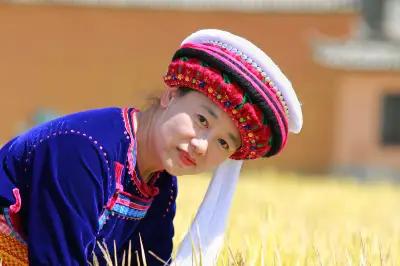
If you want the most authentic Xizhou baba (flatbread), of course you go to Xizhou Ancient Town! Compared to other ancient towns, Xizhou preserves the strongest Bai ethnic flavor. The corner building near the east gate and the golden rice fields outside the village are great photo spots, very Instagrammable. Yan Family Court is a classic Bai courtyard layout with “three rooms and one screen wall” and “four courtyards and five sky wells.” A note: there’s also a “knockoff” attraction in Xizhou called Yan Family Residence, where you can watch ethnic shows and taste “Three Courses Tea.” Many drivers will take you straight there—it’s actually just a silver shop renovated 20 years ago. Be sure to distinguish!
Butterfly Spring ★★★
Butterfly Spring is close to Xizhou, definitely a must-see for older generations, famous from the old film “Five Golden Flowers.” One highlight is the clear blue-green spring water, another is various butterflies and butterfly specimens. The area is small; stopping by on the way is fine, but making a special trip is unnecessary.
Chongsheng Temple Three Pagodas ★★★★
Chongsheng Temple is not only scenic but also majestic. It was the royal temple of the Dali Kingdom, and reportedly nine emperors became monks here. The Three Pagodas are historical relics: the main pagoda dates to the Tang dynasty, the two smaller ones to the Song. In the reflection pond, you can see lovely reflections of the three ancient pagodas. The temple itself was rebuilt, the “Tianlong Temple” in Jin Yong’s novel Demi-Gods and Semi-Devils. It stretches from the mountain foot upward, grand and resplendent, worth a visit.
Tianlong Babu Film City ★★
This is a large film set built for the 2003 TV series “Demi-Gods and Semi-Devils” (Hu Jun version), later used by other productions. The set is huge, with daily shows like acrobatics, throwing embroidered balls, and retro shadow puppetry. But overall it’s a bit run-down. If you dress up in costume, you can get some great shots!
Shaxi Ancient Town ★★★★
If not for the winding journey, I’d give Shaxi five stars. From Dali Bus Station it’s a 3-hour drive, or 2 hours by chartered car. Perhaps because of poor access, tourists aren’t overwhelming. The town is small—20 minutes to circle—but quaint, serene, and preserving the most original look of a Tea Horse Road town. A day trip isn’t worth it; better to stay a few days and soak up the tranquility.
Jizu Mountain ★★★
Jizu Mountain is a famous Buddhist holy site, with many pilgrims, ancient relics, and temples, plus beautiful mountain scenery. From Dali Ancient Town, it’s a 2-hour bus ride. Devout believers might visit or even stay overnight. For ordinary tourists, it’s not recommended—why not just go to Cangshan? Daydreaming by Erhai is nicer, isn’t it? Why endure 4 hours round-trip bumping?
Wase Town ★★★
Wase Town on the east shore is a must-stop during the lake circuit. About 20 meters offshore lies a tiny islet with a Guanyin Pavilion called Little Putuo. You can take a boat over, or just snap photos from shore. On sunny days, with Cangshan and Erhai as backdrop, the lone islet and pavilion look fantastical and beautiful. When flocks of seagulls fly by, the scene is even more stunning.
All About the Lake Circuit
Should you circle the lake?
Before coming to Dali, almost every guide talked about the lake circuit. But after truly experiencing Dali, I feel circling is just a form, not essential.
Many posts compare Dali’s lakeside road to California’s Highway 1—I bet those people haven’t been on Highway 1. Without exaggeration, Highway 1 has mountains on one side and the Pacific on the other! No matter how pretty Erhai is, it’s an inland lake; the majestic scenery is totally different. Still, the lakeside road is indeed lovely, with a gentle elegance on a fine day, but that’s really only from Dali Ancient Town to Wase. From Wase to Shuanglang, though still by the water, the road gets bumpy, and the views aren’t as good. The west-side road from Shuanglang to Dali Ancient Town doesn’t run along the lake at all, and with ongoing repairs, the conditions aren’t great. So if you just want to enjoy the joy of driving between mountain and sea, the east section alone is enough.
How to circle the lake?
You can rent a car, charter a car, ride a scooter, or if you’re fit enough, even cycle or walk. The scooter option may seem cool, but many friends advised against it for safety reasons, and I don’t recommend it. Renting a car or chartering depends largely on your driving skills. Renting a Smart or Beetle in Dali isn’t expensive—stylish and great for photos! But we ended up hiring a car with driver. First, our family of three with luggage would be cramped in a Smart or Beetle, plus safety concerns for the child in the back. Second, the rainy season roads were terrible, especially from Wase to Xizhou—full of potholes. Driving yourself wouldn’t be comfortable; scraping the undercarriage would be a hassle. It was safer to have a local driver who knows the roads.
What are the highlights along the lake circuit?
Before setting off, I specifically looked up some attraction maps, but they proved almost useless. Many so-called “off-the-beaten-path” photo spots were either inaccessible due to rain, closed for renovation, or just roadside photo bases—somewhat disappointing.
The more conventional spots are along the east shore, where you can just pull over and snap nice photos. However... though many cars park on the roadside, it’s actually illegal—if the police show up, you’ll definitely get a ticket. Then there’s the Ideal Land on the east shore (reportedly closed to visitors now), Little Putuo and Wase Pier in Wase (pier under renovation), Shuanglang Ancient Town, Xizhou and Butterfly Spring, Haishe Park (park under renovation), and then, Dali Ancient Town.
If time is tight, it might be worth doing the lake circuit, hitting both Shuanglang and Xizhou in a day and enjoying the scenery along the way. But for a relaxed itinerary like mine—two days on the east shore, two in Shuanglang, three in the ancient town—the circuit isn’t necessary. I’d already seen the scenery along the way.
Dali Accommodation Recommendations:
In Dali, who would want to stay in a hotel?! Guesthouses are the best choice!
Guesthouses of all prices and styles feature not just Cangshan and Erhai views, but also moons, alpacas, seaside swings, sky mirrors... Only what you haven’t imagined, nothing Dali guesthouses can’t deliver!
Because I fell in love with Tinghuatang during my last trip to Lijiang—their guesthouses in both Lijiang Ancient Town and Shuhe were so beautiful I wanted to stay, with super attentive service—I purposely chose Tinghuatang this time in Dali.
Tinghuatang has three properties in Dali: the Erhai Tianjing branch on the east shore, the Shuanglang branch, and the Dali Ancient Town branch. Each has a distinct style, all beautiful.
Tinghuatang Dali Tianjing is ideal for ladies who love photos. There’s a pool, a glass boat, sky mirror, internet-famous moon, and various pretty settings, with complimentary costumes and props. You can get heaps of gorgeous shots without leaving the property! Plus, there’s an in-house photographer. Especially handy in the rainy season: if the sky clears, go out and shoot; if it rains, retreat to your room. So thoughtful!
The Tinghua Island Sea View Garden Inn in Shuanglang is right on Erhai’s shore. You can face the sea and swing while enjoying breakfast, or dress up in traditional clothing and play a melody by the water. It just opened recently, with beautifully decorated rooms and high-tech facilities. Waking to draw back the curtains and face Erhai, spring warmth and blossoms—this is the best way to start a Dali day.
Tinghuatang Dali Ancient Town is at the foot of Cangshan, just across the road from the town. It features a signature “Tinghuatang style” garden, with colorful blossoms clustered like a tropical adventure. The guesthouse has a unique Moroccan cave style: cream walls, carved white windows, irregular designs, full of vintage charm—every corner stunning.
Beijing—Dali.
The first glimpse of Erhai stirred a little excitement in me, even though clouds foretold rain.
As a child who grew up by the sea, Erhai was hardly a “sea” to me—you could see the opposite shore in a glance. But compared with the ocean’s crashing waves and vastness, Erhai’s serene beauty still captivates, gentle as a woman from the south.
Staying at Tinghuatang on the east shore, when the weather occasionally cleared, I could glimpse Cangshan’s majestic form emerging from the mist; alas, only for a moment. Idly nestling in the guesthouse, those warm and lovely nooks provided ways to pass the time—taking photos when the light was good, coaxing our lively little one. The greatest joy of family travel is the memories we create together.
Erhai isn’t a sea, but it’s more beautiful than any sea. Rather than scrambling for scenery along the lake circuit, better to find a guesthouse you like and just sip tea and daydream by Erhai.
Tinghuatang, graced with Erhai views, was a place I’d long desired. The Tianjing branch sits beside Little Putuo on the east shore; open your window to the sea, with flowers blooming through the seasons. Its Bai-style exterior, whitewashed walls and natural wood interiors, novel and understated luxury, show harmony between man and nature.
Every corner of Tinghuatang holds a surprise. The first floor has a sea-view café and restaurant; second floor, the lobby and outdoor pool; third, a “sky mirror” rooftop terrace; fifth, a lovely rooftop garden. Glass boat, white table, sky mirror, internet-famous moon—all the iconic photo elements without leaving the property. Tinghuatang thoughtfully provides multiple sets of clothing, and you can book the house photographer to freeze every beautiful moment. Though Dali was drizzly these days, catching a few minutes of sun for photos was precious.
Each room has a lovely name. Staying in “City in the Sky,” you feel the beauty of being awakened by sunlight. Floor-to-ceiling windows let you see the azure Erhai from bed. Open the window, the scent of flowers wafts in—here you can enjoy Dali’s artistic vibe to the fullest. High-quality facilities, butler-style attentive service, every detail warms the heart as always. Welcome fruit and evening soup, warm smiles from staff, a butler on call—a sense of being at home.
Breakfast is a feast for eyes and palate: a nine-grid Bai-style meal plus a steaming bowl of beef rice noodles, waking your taste buds and starting a beautiful day under Cangshan and Erhai.
Next time in Yunnan, I’ll again choose a Tinghuatang guesthouse, slow down, drink tea and chat with my love, play with the child, and idle away time cocooned in lovely scenery.
Address: Dali Huandong East Road, Tinghuatang Sea View Garden Inn (Dali Erhai Tianjing Branch)
Price: from 500 yuan/night
Another day peering out the window waiting for the rain to stop. The guesthouse manager, seeing our boredom, offered to drive us around.
We didn’t go far, just a dozen kilometers north and south of Wase Town, but it was arguably the best stretch of Erhai. Though the weather switched between sun and rain, couples taking wedding photos lined the lakeside, so the little one and I turned it into a game: “count the brides”—one counting white dresses, the other counting other colors. In the end, white definitely suited Erhai better.
Surrounded by mountains on three sides and facing the sea, Wase overlooks the screen-like Cangshan to the west towards Dali Ancient Town, and to the east the Buddhist holy site Jizu Mountain faintly peeping its golden summit. Like a natural armchair cradled by mountains and water, its prime location makes it the main base for tourists on the east shore.
This beautiful little fishing village boasts the most authentic Bai ancient architecture and gatehouses, and is one of the best-preserved areas for Bai folk culture in the Dali region. Most residents are Bai people wearing traditional dress, and their architecture, customs, marriage, diet are rich in local flavor. Compared with Shuanglang, Xizhou, and Dali Ancient Town, it’s more pristine, simple, and tranquil.
Of course, with the prime lakeside scenery and the influx of visitors, many well-equipped, chic guesthouses have popped up along the coast, like the Tinghuatang we stayed in. Overall, Wase Town still offers great value—dining and lodging are relatively affordable.
Winter seagulls that arrive punctually add liveliness to Wase, while summer’s Wase Waterway draws crowds. The famous Little Putuo of Erhai is also here. Some 20 meters offshore floats a solitary square reef, like a golden seal on the water. Legend says it’s the sea-taming seal left by Guanyin when opening the Dali plain, to calm the waves and protect fishermen. So in the Ming dynasty, fishermen built a Guanyin Pavilion on it: two-story, with a Buddha on the first floor and Guanyin on the second. The pavilion is small and exquisite, shrouded in mystery. Odd rocks and trees grow from the crevices, forming a natural bonsai. You can take a boat over, but most visitors just snap photos from the shore. On a sunny day, with Cangshan and Erhai as backdrop, the reef and pavilion stand eerily beautiful.
Wase residents traditionally lived by fishing, so the seaside woods are dotted with rusted iron boats—these immovable props are common in Erhai wedding photos, full of character even in casual shots. There are also many trees growing in the lake, roots twisted, with an uncanny beauty. I had many photo ideas, but after a week of rain the water level was high, making approach difficult. Maybe next time.
From the east shore to Shuanglang, another day of drizzle.
Shuanglang is the kind of old town I love, one main street from north to south, impossible to get lost. Every intersecting lane ends in Erhai, with white walls and grey tiles.
Find a café by the sea, sit and slowly finish your drink with a view. There’s even a cute unexpected guest. In Shuanglang, sunshine is most precious, time is cheapest.
Encountering Dali’s rainy season, though without blue sky and white clouds as backdrop, luckily there’s a room with a view, a guesthouse where you can face Erhai and daydream. Such time deserves to be idled away unhurriedly!
The newly opened Tinghua Island is on Shuanglang’s main street. Through a quiet lane, by the azure Erhai, hides this secret gem! Nearly 200 square meters of seaside garden built right over the water, like a secluded resort island. A canopy of white birch branches, gauze drapes fluttering in the breeze, romantic and relaxing everywhere. The garden is packed with photo corners: a large swing, infinity pool, Moroccan-style afternoon tea by the sea, white boho sea-view café... It’s said that just after opening, lots of ladies flocked here for photos.
The interior design is Nordic minimalism, with lighting and sofas by renowned designers, exuding understated luxury. The most popular room is “Star Picking 270° Panoramic Hanging Bed Room.” The pink ins-princess style is so dreamy it captured the little one’s heart the moment the door opened. Huge windows bring the Erhai beauty inside, plus a bathtub with sea view—experiencing Shuanglang’s best without leaving the room. The biggest surprise is all the smart devices: voice-controlled lights and curtains, it can tell stories and sing nursery rhymes to the child, like an extra smart butler. Even the hair dryer is a Dyson! Hats off to the boss!
I must also praise the butlers—their looks could debut in a boy band, and each is courteous, attentive, and meticulous. From luggage handling to daily breakfast and fruit plates, everything was perfectly arranged. With the hotel’s treasure views and treasure butlers, ladies, book your flights and head to Shuanglang now!
Address: No. 279-1, Shuanglang Village, Dali
Price: from 1000 yuan/night
We’ve gotten used to Dali’s rainy season, and used to being drenched even with an umbrella. When the rain came down hardest, we ducked into a seaside café for a hot coffee.
This café-cum-bookshop called “Erhai Awakening” not only had picture books perfect for the little one, but also a loudly crackling fireplace. A hot cocoa, a small pastry, we took off her wet coat and socks and dried them by the fire. The resident little teddy bear dog kept running over to charm us, enjoying the attention, giving the child her first taste of “petting a dog.” Only I, the clumsy mom, accidentally scorched her socks, giving off a weird burnt-sweet smell.
Clearly a bit of joy mixed with a touch of awkwardness and mess, yet it’s my most unforgettable memory of Dali. “Erhai Awakening” was definitely a small blessing in the rainy season.
Dali’s best scenery is in Cang’er, and Cang’er’s best is in Shuanglang.
This little fishing village by Erhai, pressed against the rippling water with distant views of Cangshan’s nineteen peaks, gathers the essence of all Cang’er beauty: the sky’s clarity and variety, the water’s purity and spirit, an unworldly simplicity and peace, and also the worldly laid-back charm.
Water brings spirit. Whether it’s Shuhe with a stream running through, or Shuanglang sleeping by the sea, both match my dreams of a perfect old town. One main road from north to south, you’ll never get lost; every lane ends at Erhai, with white walls and grey tiles.
Some might say Shuanglang is over-commercialized, with restaurants, bars, and shops lining the streets, like a replica of Lijiang. Though I dislike the nightlife of music and lights along the lake, I can’t help loving the quiet moments by the sea with a breeze and coffee. I treasure the simplicity and nature, but can’t stand decay and backwardness. Shuanglang strikes a balance—locals fishing beside colorful graffiti walls, that’s the collision of tradition and commerce.
In Shuanglang, sunshine is most precious, time is cheapest. Regrettably, I set aside two full days for Shuanglang, waking and sleeping by Erhai, idling away time, yet still didn’t get sun. No regret though: maybe because of the rain, only a few strollers were about, the slate paths gleaming wet, the town shrouded in mist like an ink wash painting. The little one held an umbrella to shield a flower from rain, ignoring her own soaked clothes. I wished time could slow down, to keep her innocent, carefree joy a little longer.
Shuanglang’s main sights are Yuji Island and Nanzhao Customs Island. Yuji is actually a peninsula, connected by Yuji Bridge to the old town, walkable. Dancer Yang Liping’s houses are here: “Moon Palace” is her private residence, “Sun Palace” for entertaining guests. Though pretty, they feel too artificial; better to wander over to the Golden Dragon Cave. Nanzhao is a separate island; a 5-minute boat from the south pier. But it’s small with little to see, so not necessary.
A thousand people see a thousand Shuanglangs. For me, in this laid-back seaside town, basking in warm sun, sipping coffee, daydreaming—that’s the moment worth freezing.
Shuanglang—Dali Ancient Town, today only half the lake circuit.
It wasn’t really a circuit; more like renting a car to the ancient town, stopping along the way. The best of Erhai is on the east shore; the whole west-side road doesn’t touch the lake. I might as well have been circling loneliness.
The lake circuit I had long anticipated should have been sunny, breezy, our family of three in sunglasses driving a snazzy car, carefree along Erhai. Not like this: non-stop heavy rain, felt more like “swimming” the lake than circling it. When we reached the ancient town, we were soaked through.
And the maps and guides I’d specially researched online? Completely useless! Those so-called “photo spots” were either flooded, closed for renovation, or just roadside photo bases with a few props roped off and charging fees. Really soured the mood. The only relief: thank goodness we chose a hired car instead of driving ourselves, or it would’ve been even more frustrating.
Piecing together what barely counted as a full circle, the conclusion: the essence of Erhai scenery is indeed on the east shore! And those beautiful shots you see online require serious agility to achieve.
Let me walk you through the “traps” and beauties along the lake circuit road~
East Shore Road: Every snap is picture-perfect, so cars park randomly and wedding shoots abound. Stopping here is actually illegal; police won’t hesitate to ticket you!
Ideal Land: Went viral as “China’s Santorini,” but reportedly now fenced off, the white walls painted ochre, no longer the beauty in photos.
Little Putuo: Along East Shore Road, the easiest spot to access and photograph.
Wase Pier: Closed; flooded season, no entry allowed.
Cliff Shoal: Probably the most Highway-1-like spot along the east shore. Getting good photos means climbing down to the base—some risk involved.
East Shore Dead Tree: A uniquely shaped tree by an abandoned water station. It photographs beautifully, but totally impassable during high water.
Sea & Life: A guesthouse and café in Shuanglang, probably the original seaside photo base—white tables, glass doorframes, etc. Now you’ll find similar setups in any café in Shuanglang.
Shuanglang Ancient Town: Worth spending a whole day experiencing, not just breezing through.
Hongshan Temple Roadside Photo Point: Roped-off white tables charging fees, overlooks Shuanglang.
Haixi Village, Haixi Water Station, Haixi Dead Tree: Entire road blocked for renovation.
White Bus: Fenced-in photo base charging fees; such spots are a dime a dozen on the west shore, and there’s more than one white bus. On a sunny day, just pick your favorite and pay to shoot—but entry fees are usually 30-50 yuan per person, not great value.
Xizhou Ancient Town: Worth visiting, but because I loved it so much, I wanted to set aside a full day to explore, so didn’t linger. The rice fields outside town were the most delightful surprise—a golden patch with classic Bai houses as backdrop. With blue sky and white clouds it’d be perfect. It beats all the fenced-off photo bases. The best things in life are free.
Haishe Park, Couple Tree: Under renovation.
Corridor Bridge: Also under renovation. We climbed the wall to get in, but the bridge itself was nearly impossible to scale—only managed a couple of shots by the lake.
Gusheng Village: President Xi visited Dali here, so it’s worth a look. A picture-perfect, overly tidy new village: white walls, grey tiles of Bai houses, smooth slate paths, well-preserved old bridges, trees, and opera stage—a beautiful rural scroll. A stroll in the ecological woods by the lake offers rare leisure.
Yang Liping Grand Theater: A stunning building; even if you don’t catch a show, it’s worth a photo stop.
What’s more beautiful than the poet Hai Zi’s “facing the sea, with spring blossoms”? Perhaps it’s Tinghuatang’s Dali Ancient Town branch: “A guesthouse, at the foot of Cangshan, facing Erhai, with flowers blooming all seasons.”
In Dali, flowers bloom year-round. Tucked just across the road from the ancient town, Tinghuatang hides a secret garden straight out of Alice in Wonderland. Roses, daisies, hydrangeas, violets, agaves, plump succulents, and ivy creeping up the eaves—every plant is lovingly tended by the owner, with white walls and green lawns as vivid backdrops. Props and cozy nooks scatter the garden: a table and chairs here, a stone fireplace, a rocking horse, adding romance and childlike fun. The little one played hide-and-seek among the flower paths or rolled on the grass, communing with nature’s joy.
The guesthouse has a unique Moroccan cave style, predominantly blue and white. Grey-white walls, carved white windows, vintage decor, irregular arched lines softening the space—every turn reveals a small surprise. Rooms come in various styles. “Petal Sea” has an entire wall of floor-to-ceiling windows, making the room bright and open. Sitting by the window and daydreaming is a pleasure, taking in the serene Erhai and bustling ancient town, the drifting clouds and blooming flowers.
In the morning, sitting in the ground-floor restaurant, holding a steaming bowl of rice noodles, looking out at spring colors filling the garden—that brief joy of pausing on a busy journey, that elusive peace and composure in a hectic life: perhaps this is the meaning of vacation.
Address: No. 131 Shimen Village, Dali Town, Tinghuatang Garden Inn (Dali Ancient Town Branch)
Price: from 500 yuan/night
A whole day for Dali Ancient Town still didn’t feel like enough.
I’ve traveled Yunnan quite thoroughly: Kunming, Lijiang, Dali, Xishuangbanna, Tengchong, spending good time in each. But when it comes to tourism standards and scenic area management, Xishuangbanna is the most satisfactory, while Dali nearly rivals Lijiang in being both commercial and chaotic.
Not to mention the potholed lake circuit roads and various closed-off sections under repair, which ruin the visitor experience. The most off-putting part is Dali Ancient Town itself. On the road into town, every few meters someone asks if you want a ride to nearby places, claiming it’s a great deal, almost wanting to bundle you into the car. Inside the town, near crowded spots, middle-aged women chase you: “Miss, want some braids? Let’s fix the little one’s hair!” The thing is, you have to refuse at least five times before they leave you alone. And you know the catch: they say 10 yuan for 6 colored strings, but each braid needs 2 strings—so it costs more than you think.
Our vain little girl actually loved getting colorful braids, and I had promised she could. But after being pestered so many times, even the usually shy child got angry, hands on her hips, huffing: “No! No! No braiding!” Then she turned to me, frustrated: “Mommy, can’t they understand me?” I asked her, “Do you still want the colored braids?” She said, “I don’t want them at all anymore...”
I truly hope Dali can properly address these unhealthy trends. Dali is beautiful, the ancient town is beautiful; I just hope these shadows under the sun don’t tarnish the beauty in travelers’ hearts.
Dali Ancient Town, unlike other ancient towns in Yunnan, as the former capital of the Nanzhao and Dali kingdoms, carries an air of stately grandeur.
Looking into its history, since the Nanzhao king Yimouxun moved the capital to Yangjume City in 779 AD, Dali Ancient Town has over 1,200 years of history. As the largest capital in Southeast Asia from the 8th to 12th century, it was grand in scale, culturally advanced, economically prosperous, and a center of economic, cultural, and religious exchange in Asia. “A river skirts Cangshan, Cangshan embraces the old town.” Facing the rippling Erhai to the east, backed by evergreen Cangshan to the west, it absorbs all of Cangshan’s beauty and Erhai’s softness, destined to be a unique, enduring ancient town.
Wandering its narrow, aged streets feels like stepping through a time tunnel back thousands of years. A few plants hang densely or sparsely from the city walls, stubbornly green, adding a weathered sense to the mottled walls. Strolling, the lanes are like slow-flowing rivers, with generations calling this old town home, flowing with the music of history and the life of the Bai people.
Dali Ancient Town is neatly squared, with corner towers and gate towers on each side. West Gate faces Cangshan, also called “Cangshan Gate,” inscribed “Dianyun Gongji.” East Gate to Erhai, “Erhai Gate,” inscribed “Yu’er Yincang.” North Gate faces the Chongsheng Temple Three Pagodas, “Three Pagodas Gate” or “Anyuan Gate.” South Gate is the chief of the four, first built over 600 years ago in the Ming Hongwu era. Its majestic tower has flying eaves and carved beams, a typical ancient palatial building, bearing the plaque “Land of Literature.” The bold characters “Da Li” on the gate were written by Guo Moruo when the gate was restored. The South Gate is not only a symbol of the town, but also the most photographed “standard portrait” in films and TV.
Entering through South Gate, Fuxing Road runs straight to North Gate, a bustling market street with shops shoulder to shoulder. Among the lanes, old residences still show traces of the past: courtyards with flowers and trees, birdsong, and gurgling outdoor streams. “One well for three households, a few pots of flowers per family” persists. The “Wuhua Tower,” echoing with the South Gate, with carved beams and flying eaves, was originally where kings received ministers and distinguished guests. Rebuilt several times after fires and wars, its magnificent royal aura still stands out under the hazy sky.
If the four gates and tower write the town’s weighty history, then walking into Foreigner Street immerses you in a different vibe. This unique pedestrian street is lively yet quiet, trendy yet rustic. In the bustle, a sense of ease and tranquility lingers in the air. The streets are still lined with Bai-style “three rooms and one screen wall, four courtyards and five sky wells” buildings, now housing varied coffee shops, Western restaurants, bars, eateries. Aromas of food float, especially lively at night.
The old town records the changes of time: the incense-filled Puxian Temple, restored Dali Confucian Temple, century-old Dali Christian Church, graceful Yu’er Park, the People’s Heroes Monument—each freezes a moment in the long river of history, evoking reflection.
For me, the biggest surprise was the “Bed Sheet Factory Art District” hidden inside the old town. This art space converted from a disused bed sheet factory retains the 90s industrial architecture, with artistic design touches, feeling retro and modern. The modest space houses bookstores, galleries, coffee shops, a small theater, and indie clothing stores, gathering independent artists from various fields. The collision of contemporary thought and historical old town sparks creative fire.
After long hours exploring the ancient town, I didn’t want to leave. Let the stone paths extend underfoot, let time slip through my fingers. I wanted only to absorb the town’s unique ease and warmth deep into my heart.
Dali’s weather is as changeable as a child’s face.
On the way to Xizhou we were lucky to see the sun, but in a blink the sky clouded over. By afternoon at Chongsheng Temple, the rain was drizzling non-stop. Another “go out clean, come home soaked” day.
I had only planned to wander Xizhou Ancient Town. Attractions like Yan Family Residence, overpriced and over-commercialized, usually don’t interest me. But thinking of the little one at my side, bored of ancient towns after days of accompanying me, the song-and-dance show and making Xizhou baba unexpectedly suited her. So I went along. Lucky, apart from being pushed into a silver shop for a loop at the end, there were no other turn-offs. Still a fun time.
But after strolling the town, we realized we’d been tricked? The driver took us to “Yan Family Residence - Houlu,” while the authentic Yan Family Court was elsewhere. The “traps” of Dali tourism are astounding!
In the northwest corner of Dali lies a thousand-year-old town surviving from the Nanzhao kingdom. Backed by Cangshan to the west, facing Erhai to the east, it is stately yet delicate—this is Xizhou Ancient Town, which the writer Lao She called a “miracle.”
This town, steeped in ethnic flavor and historical culture, is the hometown of the film “Five Golden Flowers.” Without Dali Ancient Town’s noise or Shuanglang’s artsiness, it holds more of the weathered marks of a thousand years.
Xizhou is small, with Square Street at its center, four main streets radiating outward, clustering most key protected and historic residences. Almost every old town in western Yunnan has a Square Street—a kind of central plaza serving as market, trade, and social space. Xizhou’s Square Street is famous throughout western Yunnan; it’s said that in Xizhou’s history, the square came first, then the town. At its center stands a tall stone archway, “Timing Fang,” erected in the Ming dynasty when several locals passed the imperial exams. Anyone who earned a degree could have their name carved on it. On the east and west sides are some day-in, day-out snack and sundry stalls; along the four streets are traditional shops selling goods and local products, complete and dazzling.
Bai folk residences are a Xizhou hallmark, with distinctive, rich ethnic characteristics in culture, architecture, and style. Over 99 well-preserved residences from the Ming, Qing, and early Republic periods still stand, with Yan Family Court by Square Street as the prime example.
The grand Yan Family Court consists of two “four courtyards five sky wells” units and one “three rooms one screen wall” unit, connected by a “galloping horse corner tower” with corridors upstairs and down linking all rooms. Xizhou dwellings pay great attention to interior decorative arts: colorful paintings on eaves, gatehouses, screen walls, gables are gorgeous and exquisite, fully displaying the Bai people’s architectural talent and artistic creativity. Though weathered by time, these carved beams, overlapping brackets, and upturned eaves still retain their former splendor.
The most distinctive landmark among Xizhou dwellings is the corner building in the north. Its corner location, commercial-outside residential-inside concept, Chinese-Western hybrid design, and curved exterior follow Bai traditions while absorbing Western influences. The inner round outer square courtyard leaves a miraculous building for Xizhou.
Speaking of Xizhou’s cultural customs, two things stand out: tie-dye, Three Courses Tea, and Xizhou baba, all of which you can experience at Yan Family Residence.
Tie-dye uses pure white cotton or silk as base, with dot patterns printed and hand-tied, then repeatedly cold-dyed with indigo. After rinsing and flattening, blue-and-white patterns emerge, with whimsical motifs that machine printing can’t replicate.
Yan Family Court has a small performance hall for the Bai “Three Courses Tea” greeting ritual and song-and-dance show. The first tea: coarse, bitter tea leaves roasted in a small clay pot, steeped with boiling water—fragrant but harsh, called “bitterness tea.” The second: added brown sugar, rushan cheese, walnuts, sesame seeds—sweet and tasty, “sweet tea.” The third: honey and a few Sichuan peppercorns, sweet yet bitter, with a numbing note—the “aftertaste tea.” Bitter, sweet, then aftertaste, the ritual aims to teach the truth and essence of life: “only through hardship can one rise above.”
Xizhou baba uses fermented wheat flour mixed with lard and alkaline water, with sweet or savory fillings. Sweet: brown sugar and bean paste; savory: ham or pepper-salt scallions. Baked on both sides in a hanging oven, it’s crispy, fragrant, oily but not greasy, flaky but not dry. Every baba shop near Square Street claims to be the most authentic. Though it’s hard to tell the genuine from the knockoff, all are tasty. For the little one, the best was the one she made herself!
Everyone knows Dali’s four unique attractions: Xiaguan wind, Shangguan flowers, Cangshan snow, Erhai moon. But not many know there are also Three Pagodas.
Chongsheng Temple Three Pagodas sit about one kilometer northwest of Dali Ancient Town, at the foot of Cangshan by Erhai. Not only scenic but magnificent, this was the royal temple of the Dali Kingdom, where nine emperors consecutively became monks. This is exactly the “Tianlong Temple” in Jin Yong’s martial arts novel, and among those nine emperors were the prototype of Duan Yu—the sixteenth king Duan Zhengyan—and Duan Yu’s father, the fifteenth king Duan Zhengchun.
Legend says Chongsheng Temple was built during the Nanzhao period. It was famous for the Three Pagodas, the Nanzhao Jianji Giant Bell, the Rain Bronze Guanyin Statue, the Three Saints Golden Statue, and the plaque “Buddha Capital.” Unfortunately, the temple and the other four treasures were destroyed in wars and natural disasters over the ages; only the Three Pagodas have stood unshaken for a millennium.
The pagodas consist of one large and two small. The central Qianxun Pagoda was built in the Tang dynasty, elegantly shaped and also called “Wenbi Pagoda,” 69 meters tall with 16 stories. The two smaller pagodas, built in the Song dynasty, are 42 meters each, 10 stories. The pagodas were built not only for Buddhist enlightenment but also because ancient Dali was a “marshy water-plagued land.” An ancient text records: “Tradition holds that dragons respect pagodas but fear rocs. Dali was once a dragon marsh, so these were set to subdue them.” Hence the phrase: “Chongsheng Three Pagodas eternally guard the mountains and rivers.”
The current Chongsheng Temple was rebuilt after 2000, climbing the mountain slope, majestic and resplendent from foot to peak. Worth seeing: the re-cast Nanzhao Giant Bell, the rebuilt Rain Bronze Guanyin Hall, the Main Hall modeled after the Hall of Supreme Harmony in Beijing’s Forbidden City, the Nine-Dragon Bathing Prince fountain before the Acuoye Guanyin Pavilion, and at the highest point, Wanghai Tower overlooking Erhai and Dali Ancient Town.
For photos with the pagodas, the best angle is the “Three Pagodas Reflection Pool” behind them. A small pool mirrors all three towers, merging reality and reflection, dreamlike and fantastical—perhaps the most stunning scene under Cangshan.
Address: Dali Ancient Town north suburb, Chongsheng Temple Three Pagodas Cultural Tourism Area
Hours: May 1–Oct 31, 07:10–19:00 (last entry 18:00); Nov 1–Apr 30, 07:30–18:30 (last entry 17:30)
Tickets: 75 yuan for adults; free for children under 1.2m and seniors over 70; half price for students, under 18, and seniors 60-69.
On-site transport: Round-trip sightseeing cart 35 yuan/person, 8:00–18:00 (Chongsheng Temple is large; climbing to the top takes about 1 hour; elderly and children recommended to take cart)
Yes, the very day we left Dali, the rainy season ended!
On the way to the airport, blue sky, white clouds, and long-missed sunshine made Cangshan and Erhai look especially graceful and beautiful.
Hmph! What’s the use of being angry? Goodbye! Dali, I will come back again!
Travelogue Contents
1. Foreword & Photo Highlights
2. Dali Travel Guide
3. Day 1, October 18, 2020
4. Tinghuatang Sea View Garden Inn (Dali Erhai Tianjing Branch)
5. Day 2, October 19, 2020
6. Nine Parts Beauty in Wase, Erhai
7. Day 3, October 20, 2020
8. Tinghua Island Sea View Garden Inn, Dali
9. Day 4, October 21, 2020
10. Shuanglang Ancient Town
11. Day 5, October 22, 2020
12. Erhai Lake Circuit Tour
13. Tinghuatang Garden Inn (Dali Ancient Town Branch)
14. Day 6, October 23, 2020
15. Dali Ancient Town
16. Day 7, October 24, 2020
17. Xizhou Ancient Town
18. Chongsheng Temple Three Pagodas
19. Day 8, October 25, 2020
20. About the Author
Travel Info | Hotel Index | Guide Index | Flight Ticket Index | Website Navigation | Trip Index | Cruise Index | Corporate Travel Index | Affiliate Cooperation | Distribution Alliance | Friendly Links | Corporate Gift Card Purchase | Insurance Agent | Agent Cooperation | Hotel Partner | Destination & Scenic Spot Cooperation | More Affiliate Cooperation | About Ctrip | About Ctrip | Ctrip Highlights | Contact Us | Join Us | User Agreement | Privacy Policy | Business License | Security Center | Ctrip Content Center | Intellectual Property | Trip.com Group | Algorithm Disclosure