After the Misty Rain of Dali, a Beautiful Encounter at Mengdie Zhuang
They say Dali is where poetry and distant dreams dwell, and this time I truly felt it. The journey began with my longtime friend’s enthusiastic recommendation. Watching her describe her Dali honeymoon with such animation, I started to harbor a special anticipation for Dali. When this short break came, I bought my ticket and set off for Dali!
Before arriving, I booked my hotel online—Meili Xiangyue · Mengdie Zhuang Hotel. As soon as my plane landed and I stepped out of the airport, I saw the butler standing by the car. He immediately came over to open the door for me. Sitting in the hotel’s private car, the butler chatted with me warmly the whole time, sharing interesting stories about Dali’s culture. I felt so welcomed.
The hotel is located at the north gate of Dali Ancient Town, with a view over the entire Cangshan Mountain. The location is excellent—just a three-minute walk to Dali Ancient Town, practically right at your doorstep. It’s also close to other attractions; the Three Pagodas of Chongsheng Temple is only about a five-minute walk away.
Arriving at the hotel, I was greeted by its exterior and the surrounding landscape. The hotel is embraced by Cangshan Mountain. Looking out, vast swathes of green stretched before me, deeply soothing. In the distance, clouds and mist wreathed Cangshan, and the Three Pagodas stood serenely. It was a hotel that captured tranquility amidst the bustle.
The entrance features a path steeped in ceremony. Right at the start stands a wooden plaque inscribed with “Mengdie Zhuang,” which I heard was personally written by Master Nan Huai-Chin. Wooden pillars line both sides of the path. Inside, the lobby has marble floors—understated yet textured. The front desk attendant helped me with check-in, and my private butler took my luggage and went over the three-day itinerary with me. This is Mengdie Zhuang’s signature service: one room, one car, one butler. Each room comes with a personal butler and a private car, which can be used free of charge within a 30-kilometer radius of the hotel. The hotel also offers personalized itinerary planning, tailoring tour routes to my preferences.
This was a key reason I chose this hotel. After reading many guest reviews, I was confident Mengdie Zhuang would arrange a carefree trip for me.
I stayed in the Cangshan Garden Private Courtyard King Room. It was spacious, and stepping out I found a private wooden pavilion. Sipping tea in that pavilion—such comfort!
My absolute favorite was the bathtub, set beside a large window that framed the natural scenery like a painting. Soaking there, I could wash away all the fatigue of travel.
After settling in, seeing there was still daylight, I called the butler to ask if there were any nice spots nearby for a stroll and photos. He immediately recommended “The Most Beautiful Road.” We clicked on the idea and drove off!
The road stretched long, with a strong sense of spatial depth. The backdrop seemed to merge into every photo. Traffic was light when we went, but if you ever step onto the road to take photos, do be extremely careful!
Early next morning, the butler drove me to Xizhou Ancient Town, about a 20-minute ride from the hotel. We walked to a T-shaped intersection where the lanes narrowed, lined with shops that looked steeped in years. The town’s hues and atmosphere became ancient and mysterious.
We continued on to a street the butler called Sifang Street, the town’s living heart, with its temple and opera stage. Many grand courtyard mansions, all ancient structures, are scattered here.
I bought a local snack, Xizhou baba, to eat while wandering. It was delicious. Xizhou has many tie-dye workshops—right up my alley. Affordable and beautifully patterned. I chose several silk scarves to bring back for family and friends.
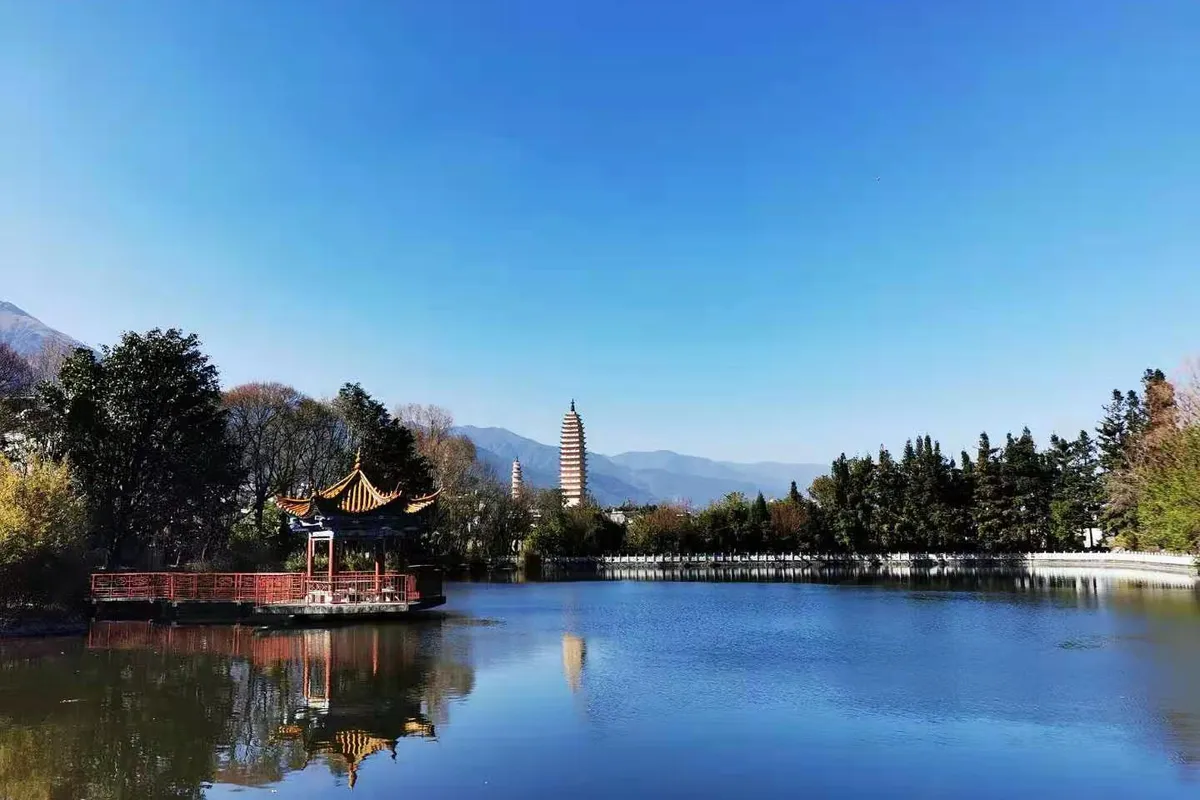
Back at the hotel after Xizhou, with daylight still lingering, the butler suggested I visit the Three Pagodas Reflection Park nearby. It was only about a 13-minute walk. The park, built in the 1980s, centers on a large pond, surrounded by pergolas, marble tables and stools, and a marble balustrade. A small stream encircles the pond. The weather was clear that day, and I saw many visitors capturing the reflection of the three pagodas. In the turquoise mirror, blue sky, white clouds, and pagodas complemented each other perfectly—breathtaking!
“Moon reflects on Cangshan snow, Xiaguan wind blows over Shangguan flowers.” This poetic line captures the essence of Dali Ancient Town. Nestled between the majestic Cangshan and the graceful Erhai Lake, the town elevates nostalgia with its sturdy walls and aged wooden houses.
Meili Xiangyue · Mengdie Zhuang Hotel is very close to Dali Ancient Town. After breakfast, the butler walked with me there. We strolled along streets paved with bluestone, past shops brimming with goods—exquisitely carved jade and Bai ethnic tie-dye among them, each piece a masterpiece. The South Gate is the largest, and I heard the characters “Dali” above it are from Guo Moruo’s calligraphy. Walking these antique streets, I soaked in the ancient culture and artistic vibes.
Back from the old town, with a free afternoon, I slipped into the hotel’s Pure Bar. I ordered some delicate pastries and a cup of coffee, leafed through a magazine, and basked in the warm sunlight. That’s how a leisurely afternoon slipped by.
On my last day, the butler accompanied me to the shore of Erhai Lake. We arrived to a faint gray mist—the lingering hazy beauty of the previous night’s drizzle. Standing by the lake, a soft breeze stirred the water into gentle ripples, seagulls flitted up and down, and profound tranquility reigned all around. As the sun climbed over the hills, the lakeside turned vivid, and a thousand rays of light unfolded a gorgeous landscape painting before my eyes.
After Erhai, I packed my bags back in my room, still deeply attached to this land. Wandering around Mengdie Zhuang, I noticed how meticulously designed and landscaped it was—greenery everywhere, white walls and dark-tiled roofs, little bridges over flowing streams. It’s super photogenic. I later changed into Republic-era attire—a qipao, holding an oil-paper umbrella—and took leisurely, elegant photos with the butler, capturing that vintage charm.
It was time to head home, but Mengdie Zhuang’s “one room, one car, one butler” service continued. The butler drove me to the airport. I was thoroughly satisfied with his itinerary planning over these days. This journey let me experience the profound beauty shaped by the passage of time in Dali. Just as my friend had said, the sunshine was warm, time moved slowly, and everything felt serenely perfect.