A Seven-Day Self-Drive Journey Through Lijiang and Dali
Long have I yearned for Lijiang on the southern frontier, where the year feels forever spring. In late spring, the air is warm with clouds; the land stands remote, lit by a generous moon. This longing has long filled my heart, a devout wish.
When the gentle spring breeze stirs and all creation comes alive, I took my wife to Lijiang. We wandered the ancient streets, unhurried and at ease, experiencing a culture distinct from our own. Natural wonders like Jade Dragon Snow Mountain, Shangri-La, Lugu Lake, and Cangshan-Erhai are like gliding clouds and clustering shadows, but they were not what I sought, nor did my tired feet need them this trip; I left them off the itinerary. Ruili was in lockdown due to the pandemic, so visitors to Yunnan had dwindled. But shops and the mountain town's scenery remained unchanged, so our journey was relaxed and free, like swimming in a river without fish or exploring a deep, silent forest. Only from the start, I developed mouth ulcers and could taste nothing, so I feasted on scenery but missed the cuisine.
After landing, we first headed to Shuhe Ancient Town, choosing it for its secluded quiet and authentic old-world charm. It was noon, and the innkeeper accompanied us to a Dai family restaurant near "Flying Flowers Touch the Water." Trees spread blossoms, their fragrance floating everywhere. No knives or chopsticks were used; we ate meat, fish, grains, and tubers with our hands. A meal for two cost 120 yuan, ample enough for three.
Shuhe nestles in a mountain hollow: roads paved with rough stones, walls of solid timber, roofs of layered tiles. Houses are scattered, irregular in form. Green trees and emerald vines drape the paths. This remote spot sees few far-off visitors; only water runs endlessly through the streets. Doors are shaded by green cypress, homes lean against blue hills. Mountains and streams scatter jade petals, and in the courtyards, trees bear red seeds. Pine whispers in the woods, spring water tones on the rocks, misty light over the grass, cloud reflections in the water's heart. Few tourists stroll, but sunlight still filters through the shadows, birds are rarely heard, yet plants show no sign of fading. Nature here is humble, never competing. "Plowing clouds and fishing the moon"—a reclusive life to envy. Staying long, a deep, sea-like tranquility grows, and a hazy moon climbs to the window. At the town's center lies a linked pond, surrounded by pavilions, inns, and restaurants, with Chinese catalpa and wisteria on both sides. Leaning in the sun, gazing at fish and birds, the water and trees shine clear; suddenly I felt the joy of the fish at Hao River, a sense of oneness with all things.
The next day we rented a car, all expenses around 200 yuan per day. Our first stop was Wenhai, a mountain reservoir that supplies local drinking water. Access is forbidden, so we took photos from afar and returned. On the way, we visited Fuguo Monastery, a Tibetan Buddhist temple of great solemnity. Flower vases held immortal blossoms, brocade trees shone around the treasure hall; incense burners sent fragrant clouds into the clear sky.
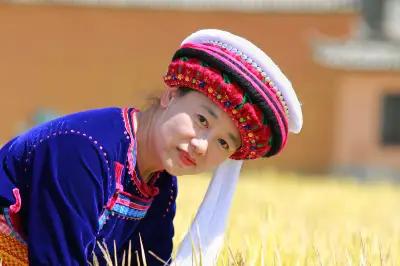
Second stop was Baisha Ancient Town, the origin place of the Naxi people, with old houses in decay. Commercial influence hasn't much touched it; the rustic simplicity of farm life is still plain. At lunch, the shopkeeper just buried herself in her phone or stared blankly, answering only one out of three questions. We dressed in Naxi costumes for fun, swaggering through the streets, trying to pass for locals. Later, a policeman checking vehicles saw my outfit and waved us through. I'm not sure whether I had successfully pretended to be a local chief, or if he saw through my disguise. It reminded me of a time in an Arab country when, wearing a headscarf, sunglasses, leather sandals, and a robe, I was recognized—a crowd gathered, shouting and laughing, and I never knew what gave me away.
Third stop was Xuehao Village, recently renamed Yuhu Village, and later I wondered if they were two separate places. The village sits near the snow mountain, wind from the ridge biting cold; the lower part bustles, the upper part is eerie. Village women persistently urged us to ride horses, their faces sullen when we refused, muttering under their breaths. Houses are built of mountain stones; life is still and bleak, with crumbling walls. The villagers seemed dazed. Ancient books speak of the "people of Emperor Fuxi's time" who lived secluded, drumming their bellies in song, but now I'm not so sure. After long years of custom, they turn vague and indifferent, almost like lumps of earth.
Early next morning we drove to Shigu Town, home to the First Bend of the Yangtze, a tiny town, empty as a valley, desolate and endless. A few historic sites were locked, demanding permits; the half-deaf guard asked for various checks and registrations, so annoying that we gave up and looked elsewhere. The First Bend itself was mild and ordinary.
On the way back to Lijiang, we chanced upon the Tea Horse Road, where three streams meet. Locals call it Maojin Land or Sangu Water. Entry was 40 yuan, shuttle cart 50. The able-bodied can walk instead of ride. Winding down the mountain, visitors were few. Clear springs ran through twisting gullies, ancient trees leaned against deep cliffs. The woods were dense and dark, white ribbons of waterfalls plunged, emerald lakes mirrored the scene, and mist and rosy clouds formed a world of their own. Strolling by the water, I felt the reclusive spirit of gathering ferns on West Mountain.
We reached a Naxi ethnic style garden, but it was large and dusk approached, so we didn't go in. Passing Yufeng Temple, the near gate was locked, forcing a detour through shops and a long walk to a far entrance. Hawkers pestered us nonstop. At the gate, a nun refused entry without 17 yuan cash; mobile payment required submitting an ID for verification, otherwise she waved us off. All enlightenment lost, I flared up and stormed away.
Next day we set out for Dali. First, we passed through Shaxi Ancient Town, the mountain road treacherous with nine switchbacks. The old town crouched beneath a massive cliff, road clinging to the mountain, shore alongside a stream, with forests, springs, white clouds, and a clean breeze. White houses with simple gates hid from the world.
Then we passed Xizhou Ancient Town, near Dali. It bustled with people yet kept its ancient charm. Authentic and true, pure yet tolerant. Though prosperous, it remained detached and serene.
By mid-afternoon we reached Dali. Looking at Dali Old Town from a Lijiang perspective, its architecture is neat and uniform, tone consistent, emphasizing rules, order, and grandeur, lacking freedom, vitality, and imagination. But compared to the imperial cities of the Han, it still appears delicate and beautiful. Crowds thronged, flowers cast dense shadows. Our guesthouse was modern, with whitewashed walls and stone floors, lush with plants.
Next morning before heading home, we visited the Three Pagodas of Chongsheng Temple. The temple was majestic and splendid, with uneven pines and bamboos. Precious halls were magnificent, thrones soaring. Buddha pavilions rose beyond the clouds, monks' quarters stood silent under the moon. Rosy clouds drifted around the towering stupas, dark trees shaded serene scripture repositories. I wondered where the inspiration for the fictional duel between the Duan monk and Jiumozhi arose.
Returning via Shuanglang, the old town lies near Erhai Lake. Clouds float atop steep peaks, and the turquoise waters hold a fairy aura. Old and new houses blend beautifully. High-walled estates had square and round ponds; spring water tinkled like broken jade, earth clotted like piled gold. The wind blossomed white plum flowers, spring broke red begonia blooms.
At noon we dined beside Erhai Lake, a sumptuous but good-value meal. In the evening we settled into Dayan Ancient Town. The next day we returned the car and strolled at leisure, resting heart in Dayan. Dayan is the premier among old towns, none surpass it. Inside is the Mu Mansion, built when the Naxi paid homage to the Han. Descendants of the Qiang, they also revered Confucius. Palaces opened with lofty purple aura; wind blew under the eaves, phoenix tiles flying to the blue sky. In the sunny parts of the mansion, clouds lifted and the distant snow mountain appeared, high, cold, and pure, as if dwelling in caves, sleeping in snow and clouds. Rare flowers and trees, old and layered, cast thick shadows that blocked the sun. The dove tree was in bloom, its white flowers like doves about to take flight. This garden was the furthest point the explorer Xu Xiake ever reached; he had spent all his money, his servants had fled, he was destitute, and the Naxi chieftain gave him funds to return. In the garden, Chinese roses grew as a forest, blooming all over the treetops, fragrance overflowing; the pepper road was intensely aromatic. Tamarix bloomed, hanging like clusters of bells.
Outside the mansion, the old town spread: scattered trees and distant level forests, hills appearing; flowing water winding around houses. Upturned eaves brushed the clouds, painted in bright colors on light pigments. Buildings rose unevenly, stacked in rows. A river runs through the town north to south, with halls on both sides, flying bridges spanning the water, mixed trees shading the banks. Running water circles everywhere, high mountains face each other. Paths are laid with colored stones, strange flowers bloom along the edges; balustrades carved with railings, exotic plants grow beyond them. Rose trellises reflected by the Peony Pavilion; hibiscus terraces linked to the Peony Garden. Throngs of goods in the streets, thousands of households buzzing with business. Exotic flowers spread brocade outside doors, jade grasses waft fragrance by the bridges—flowers vying in beauty, grasses contending in fragrance.
Lijiang leans against steep mountains to the north, high roofs soaring, hanging eaves riding the void. Gazing down at the forests, mist drifts below; water and land are peaceful, a true refuge. When dusk falls, the Milky Way appears, the sky dustless. When the sun sinks behind the ridge, a myriad lights shine. Jewels cannot be collected, sunset glow beyond grasp—layer upon layer of splendor, intricate and exquisite. Dayan roars with noise at night: singing from taverns, joy spilling from flower towers. Though the pandemic had reduced crowds and prices dropped accordingly, still the streets were full of music and drums, moonlit windows and fragrant breezes in every home. This trip gave us both empty, convenient travel and vibrant, prosperous scenes. We went home content and happy.