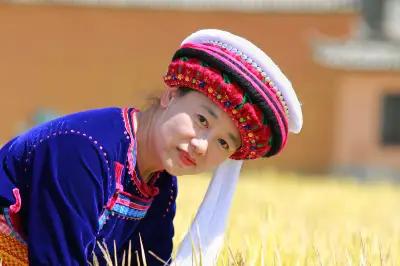
Under Shimen Pass, the Melody of Wind Chimes, Admiring a Magnificent Dali Scene
When mentioning Dali in Yunnan, many people first think of the Duan Dynasty's Six Meridian Sword; the ancient city of Dali where 'water encircles Cangshan, Cangshan embraces the city'; the romantic and picturesque Cangshan snow and Erhai moon.
However, among the four scenes of Dali's 'wind, flowers, snow, moon', the first two described by Mr. Cao Jinghua—Shangguang flowers and Xiaguan wind—are not as famous as the latter two. As the 'back garden of Dali' rarely visited by tourists—Shimen Pass in the Cangshan Grand Canyon—might be the hidden gem we should discover this holiday. And Yunnan, where flowers bloom all year round, allows me to catch the tail of spring in this late spring season and become a 'flower admirer' once again.
The Dali Cangshan Shimen Pass Tourist Resort is a national 4A-level scenic spot, located in Yangbi County, Cangshan West Town, Dali Prefecture. Shimen Pass was historically a crucial pass on the famous Tea Horse Road, Bonan Ancient Road, Salt and Rice Ancient Road, and the Burma Road. It features ancient temples, pagodas, cliff paintings, plank roads, and a blend of Buddhist, Taoist, and Islamic cultures on one mountain.
Yangbi has a long history and splendid culture. As early as the Neolithic Age, ancestors lived and multiplied here. In ancient texts, Yangbi was recorded as 'Yangbei', one of the birthplaces of the Nanzhao Kingdom. It is a habitat and cradle for the Yi and many other indigenous ethnic minorities. The ancient Cangshan cliff paintings here are called 'the source of Cangshan-Erhai culture' by historians.
This off-the-beaten-path sanctuary, known as Dali's back garden, not only hides a fairy-tale meadow, but I arrived just in time for the opening of the first Wind Chime Festival. Oil-paper umbrellas under the corridor and wind chimes under the eaves swayed in the wind, creating a scene so beautiful it felt like a fairyland!
Day 1: Shimen Pass Bonfire Party Area – Star Moon Photo Spot – Local Inn
Day 2: Shimen Pass Food City – Sun Moon Lake – Deadwood Fortress – Glass Walkway – Cloud Village (Yunshang Village)
Food: Sun Moon Lake Restaurant, Shimen Pass Food City
Accommodation: Fokuo Mountain Residence (Fokuo Shanju)
Travel-worn, heading to the bonfire and hot springs at Shimen Pass
Our first stop at Shimen Pass was encountering the bonfire party at Shimen Pass Food City.
After a little over an hour's drive from the airport, we arrived at the Fokuo Mountain Residence Hotel at Shimen Pass.
The hotel environment is elegant, with exquisite wooden furniture, soft sofas, quiet music, and warm sunshine that is very comfortable. It's a rare moment of contentment—sipping coffee, reading a book, daydreaming, savoring tranquility amidst the time warp. Or take a leisurely stroll; perhaps when you inadvertently turn around, you'll meet a smiling local greeting you warmly.
After settling in and opening the door, the simple and cozy interior welcomed us. Beige sheets exude warmth, soft to the touch, soothing every inch of skin, making you want to lie down and have a good sleep.
Since it was still early, my friends and I went to the Sun Moon Lake Restaurant for dinner. Having been to Dali a few times before, I usually just grab some snacks. But this time, it had been a while since I had local Dali specialties. Exquisitely plated dishes were served one after another, immediately catching everyone's eyes. They had local charm without losing a touch of refinement—quite stylish.
As the sky darkened, we strolled along the roadside after dinner, and my girlfriends and I were all eagerly awaiting the much-anticipated bonfire party. Flowers and plants grew freely along the path, and occasionally a few new buds peeking out added a little charm to early spring in Dali.
When you come to Shimen Pass, how can you not try the hot springs? Just a few steps up from below, you'll find the open-air hot spring. Fed by a natural sulfur-carbonate mixed spring from 600 meters beneath the Cangshan Mountains, you can enjoy the view of Cangshan while soaking in the hot spring—so relaxing!
As the ancient saying goes, 'The spring water is hot and clear; its immortal source comes from cinnabar. Foam under the sun, thick under the moon, it brims with ethereal fluid; tiny waves ripple like tinkling jade.' In the hustle and bustle of today, it's harder for people to find a moment that truly lets their souls rest. Perhaps often, the purpose of travel is not to find a specific place, but to discover oneself in the journey. After a spontaneous trip, why not explore the 'philosophy of life' in the warm spring water? After a nice meal and a good soak, isn't this what they mean by 'enjoy life while you can'?
When night falls, red lanterns glow, reflecting on the entire pool, making it even more leisurely and pleasant.
If you've ever been curious about the Torch Festival, come experience the daily ethnic atmosphere of Dali at the bonfire party here. A bonfire is lit every evening at Shimen Pass Food City.
Bonfire, barbecue, dancing... The twinkling stars in the night sky and the carefree laughter of the local lads and lasses make you feel like you're in a dream. The stuffiness and stress of city life are swept away in the whirling and leaping.
In a trance, you feel drawn into ancient times. Perhaps our ancestors gathered around the fire as well, under its protection, murmuring prayers for favorable weather and freedom from disasters in the coming year, their warm and intimate eyes fixed on the blazing flames. The crackling sparks could be heard, and from their throats came the ritual songs passed down through generations... This was the spark of human civilization that suddenly flared in the boundless darkness, growing stronger and spreading. The sparks and stars above merged, and through the purification and unity of spirit and body, humanity flourished endlessly.
This closeness to fire is related to the primitive worship of ethnic minorities. Many minorities in Yunnan regard fire as a god. The Yi, Bai, Naxi, Lahu, and other ethnic groups all have their own Torch Festival. It is an ancient holiday known as the 'Carnival of the East.' It also has another name I prefer—'Star Return Festival'.
During the Torch Festival, people eat roasted meat, light pine branches to create flames, and run around the fire with torches, praying to ward off pests and diseases and for a bountiful harvest. Enthusiastic crowds gather torches into bonfires, and thousands dance the 'Big Three-stringed' dance around the fire.
There's also a trendy Star Moon photo spot nearby, all within the same area, about a 5-minute walk. It's perfect for ladies to dance with the stars and moon. Don't forget to snap a couple of ethereal photos to take home!
With Cangshan as a backdrop, the 'big heart' created by the two mountains and lights becomes the most beautiful ornament in the night scene.
When the blurred light strips blend with the real stone-paved paths, they soften the sharp edges and curves of concrete and steel. Every inconspicuous corner hides a unique romantic charm of Dali.
In the Village Above the Clouds, Encounter a Treasure-like Sea of Flowers
Tao Yuanming once described a utopian paradise: 'The land is flat and spacious, houses are neatly arranged, with fertile fields, beautiful pools, mulberry and bamboo groves. Paths crisscross, and the sounds of chickens and dogs can be heard. People come and go, men and women dressed in clothes like outsiders. The elderly and children all live joyously.' Whether the Peach Blossom Spring exists only in Tao's ideal or in reality, only he knows. But the 'Walnut Paradise' beyond this world is none other than the small village deep in Shimen Pass—the Village Above the Clouds (Yunshang Village).
Located in Guangming Village, Yangbi County, Cangshan West Town, Dali, it sits deep on the western slope of Cangshan at over 2000 meters altitude, hence the name 'Village Above the Clouds'. Looking up, you see rolling clouds; looking down, the vast human world. The village and mountains are filled with ancient walnut trees, rooted at the foot of Cangshan, growing silently for decades or even centuries.
The oldest walnut tree at the village entrance has probably been growing for several hundred or even a thousand years. Perhaps it started standing guard here before Guangming Village even existed. Through countless dawns and dusks, in the endless cycle of sunrises and moonsets, it has lived as the village's deity and a symbol of its rings. The layered moss on its ancient, mottled branches is proof.
This poetically named village not only boasts thousands of acres of walnut groves and a thousand-year-old walnut king, but also a wide variety of flowers—four themed gardens for spring, summer, autumn, and winter. In the spring garden, there are plume flowers and anemones; summer garden has bigleaf hydrangeas, panicle hydrangeas, and tree hydrangeas; autumn garden has ginkgo and salvia; winter garden is full of alpine rhododendrons and Yunnan camellias. Each season offers its unique scenery.
As you slowly climb the steps in the Village Above the Clouds, what you see besides the lush green walnut trees are all kinds of flowers vying in beauty under the shade. Pansies with their own charm; hydrangeas with large, shy, dew-kissed buds; irises in intoxicating blue; white, holy anemones; graceful purple charming flowers... Along the walk, watching these flowers described in books bloom with the most vibrant vitality, the joy is indescribable. But what I can't forget most are the roses here.
It's not yet summer, but now is the perfect time for roses to bloom in full glory. Roses of all colors gather together, as if you're in a dreamy fairy tale—so beautiful!
Shakespeare once said, 'A rose by any other name would smell as sweet.' Surrounded by the sea of flowers, you enjoy not only visual pleasure but also a feast for the nose. The exquisite scent of roses pervades everywhere; the noble and lingering fragrance wraps around your entire body. When you leave, even your memories seem filled with the perfume.
Roses of various colors bloom proudly and demurely along the road. Which one is the Little Prince's rose? Perhaps your rose is also here, waiting to meet you.
Unexpected Joy: Stumbling Upon a Ghibli-esque Fairy-tale Meadow
When we left the Village Above the Clouds, we stumbled upon a meadow straight out of a Studio Ghibli film.
The lush green grass paired with big, fluffy white clouds in the blue sky—you feel like you can reach out and touch your childhood visions, instantly transporting you back to the Miyazaki style of 'The Wind Rises'. Let the scent of grass heal your joys and sorrows, and recharge yourself well!
You can bring an easel and a white umbrella and become a manga character; or bring a picnic blanket and have a romantic date with spring!
Shimen Bell Sounds: This Holiday's Most Anticipated Immersive Sound Experience
I wonder what you think of wind chimes? I really love them. With a simple structure, they let the wind whisper secrets it has long buried. In ancient times, people hung wind chimes to hear the 'wind blowing jade tinkling' sound, using it as a warning to oneself, to calm the mind, or to pray for peace.
This time, we happened to be here for the opening of the first Wind Chime Festival at Dali Cangshan Shimen Pass. Along the way, oil-paper umbrellas in various colors gently swayed on the beams and racks, along with the short strips of wind chimes hanging from the eaves. The gathered chimes created a song like a valley melody, composing its own music as the wind changed, draping the upcoming summer with a layer of cool gauze. Perhaps this scene is fitting for a red dress and a jug of wine, drinking and chatting in the breeze; or tilting your head to enjoy the gentle morning sunshine. I wonder if the hanging oil-paper umbrellas will someday welcome a lilac-like lady?
Yu Guangzhong once wrote such beautiful lines in 'Wind Chimes': 'Just because my heart is a wind chime, high and low / Ding-dong, ding-dong-dong / Rising and falling / Knocking on a person's name.'
Xiaguan wind blows on Shangguan flowers. Although we couldn't go to Xiaguan Longwei Pass to experience Dali's wind this trip, the crisp sound from the gently swaying wind chimes seems to narrate Dali's splendid culture and glory over thousands of years. The past is gone, a fleeting dream; the emperor's hegemony has long passed like a river flowing east, but the bell sound remains as clear and pure as it was back then.
Tip: The Wind Chime Festival runs until the end of June. If you want to go, remember to plan ahead!
Heaven-Opened Shimen: Precipitous, Magnificent, and Blessed
Before entering the pass, there's a vermilion Fuyuan Bridge (Fortune Bridge). Don't forget to walk across it to absorb some of Shimen Pass's auspicious energy. Behind it are the two opposing gates of Cangshan—great for stunning photos on clear days!
Crossing the vermilion Fuyuan Bridge, what comes into view are two towering peaks facing each other, majestic and grand, as if a heavenly gate set by immortals for their celestial garden, revealing only a V-shaped gorge. Hence the name 'Shimen Pass', meaning 'Heaven-Opened Stone Gate'.
Standing at the entrance of Shimen Pass and looking up, the slanted peaks reach into the clouds, leaving only a narrow slit. The huge peaks stand across like gate-guarding generals, exuding an aura of 'one man guarding the pass, ten thousand unable to breach.' Looking up at the top, the azure sky looks like a jade belt held up by green mountains, making you pause and feel the greatness of nature and the insignificance of humanity.
A local gentry of the Qing Dynasty, Yang Younan, wrote a poem: 'Shimen leans against Diancang's bend, steep walls lush, arranged like screens. Craggy twin peaks rise like pillars, jagged and varied, screens unfold. Wild birds fly through forests with difficulty; mountain monks circle the path as if returning.'
Poet Xing Zixuan of the Republic of China era also sighed when visiting Shimen Pass: 'Upon returning, wildflowers are fragrant; warm breezes caress my clothes. Don't say the scenery of your homeland is beautiful; Shimen's beauty surpasses all in southern Yunnan.'
The great conqueror Kublai Khan once assembled a special army here, crossed Shimen Pass to attack and destroy the Dali Kingdom, causing it to abandon the city and flee. We don't know how many comings and goings these two peaks have witnessed, or how many shifts in time. While the ancients mostly couldn't explore deeper due to the perilous terrain, today we can safely enjoy the full view—what a fortunate thing.
Sun Moon Lake Light, Resting in the Deadwood Fortress among Trees
The first stop inside Shimen Pass is Sun Moon Lake—'The sun in the sky is like the moon, the moon in the sky is like the sun, why are they the same? Love the day, love the night too...' This place is perfect for traveling couples. The azure ripples and fish that seem to have no support add a touch of tenderness to the twin peaks, like a pair of codependent lovers gazing at each other from afar. The vanishing point of the lake extends to the gorge opening, forming a line with the blue sky. The gentle lines become the best backdrop, and the sides of the bridge are great for placing Instagram-worthy flowers and fruits for photos. No filters needed—what you see is a high-quality, unedited masterpiece.
As an untouched 'virgin land', Shimen Pass is sparsely populated, perfect for intimate whispers between lovers. Let the green mountains and clear waters be your eternal witness!
Continuing forward, past the Wudao Water Service Area, you reach the Deadwood Fortress. As the name suggests, the structures are shaped like huge dead logs lying on the ground. Upon entering, a giant branch holds a waterfall, forming a 'waterfall gate' that blends perfectly with nature. Even when taking panoramic photos of the landscape from afar, human presence doesn't feel too intrusive in the jungle.
Inside the Deadwood Fortress, there's a frame covered with vines and hung with red ribbons for blessings, gently swaying in the breeze. Occasionally, a local leads a cow leisurely by, creating a truly relaxing holiday scene.
Inside the deadwood, there are tables and chairs for visitors to rest, as well as small shops offering drinks and snacks. It's perfect for reorganizing and resting before continuing the journey. Shuttling between the deadwood feels like an adventure, especially when looking out through light gaps at the 'clear spring flowing over stones' and listening to the birds and the rustling of walnut trees outside. It's so delightful, making you want to take a break in the lazy afternoon, your heart filled with an inexplicable peace and quiet.
Review of the Glass Walkway: Above the Rainbow in Colorful Yunnan
After leaving the Deadwood Fortress, we crossed Longevity Valley (Wanshou Gu) and came to a fork. The left path leads to a resting pavilion where you can get up close to the Seven Waterfalls, which cascade down like from a fairy's celestial jug, splashing layer upon layer onto the rocks. Or you can take the right path and gradually approach and experience it along the journey.
Along the way, poetic names like 'Mist-locked Shimen', 'Evening Bell of Fu Guo', 'Clear Empty Valley', 'Orchids by Cliffs', 'Xia Ke Forgets to Return' come to life in the most vivid way at Shimen Pass. The clear flowing water washes away your weariness; the water plays joyfully with the rocks, and along with birdsong, it creates a wonderful concerto. Vines climb the cliffs, and the scenery changes with every step. There are waterfalls with the force of 'sky falls, spring straight down a thousand feet', the legendary Fairy's Clothes-Drying Stone, Slippery Pool, jagged rocks, rising mist, roaring valleys, and branches from both sides reaching out wildly as if to embrace each other. Every spot has scenery beautiful enough to be a desktop wallpaper.
The Shimen Sky Ladder Ancient Plank Road climbs straight up through the walls, winding and twisting for 1550 meters, including an 82-meter glass walkway, 12 meters longer than the famous one in Zhangjiajie.
Walking amidst the clouds, your hands touch rugged, uneven rocks, and beneath your feet flows the clear stream like a white ribbon winding through the gorge. Distant birdsong comes and goes, and white clouds swirl unpredictably, like a light veil slowly climbing the rocks, then suddenly vanishing, as if tugged by an invisible hand. You can't help but exclaim, 'People walk in the mountains, and the scenery shifts in the clouds.'
Moreover, the side rails of the plank road are also made of glass, giving you the most thrilling all-round hanging experience, while also being perfect for snapping beautiful photos to capture the moment. Why not take a crazy walk here and taste the freedom of 'treading on waves lightly'?
The 82 meters still leave you wanting more. Parents can bring their kids here to test their courage. Adventure lovers definitely shouldn't miss this, the only high-altitude glass walkway in southwest China. If you have a slight fear of heights, no worries—the glass section is only at the very top. You can take an alternative path down the mountain midway, so your itinerary won't be affected.
Shimen Pass also has a unique feature: the 'thought it was a scenic spot but it turned out to be a restroom' style of original, magical toilet. Every so often along the journey, there's a brilliantly camouflaged restroom waiting for you to 'discover'. It's like a little Easter egg in your trip. Who knew restrooms could be this fun?
The karst cave restroom: when you're walking along the stream in the gorge admiring the scenery, if you suddenly spot a cave by the water, you needn't wonder why there's no sign explaining what scenic spot this is—it's definitely the karst cave restroom!
Built into the mountain, the interior is illuminated with stunning lights on the rock walls, making it incredibly dreamy. Every minute makes you feel like you've gotten your money's worth, and it's definitely a 'must-visit' Instagram-worthy toilet!
Travel Tips
1. Tickets + Activities (High Altitude Walkway + Glass Walkway): Adults 118 RMB/person, Students 58 RMB/person.
2. Opening hours: 8:30–17:00
3. Walking route: Fuyuan Bridge – Dragon King Temple – Heaven-Opened Shimen – Hefeng Pavilion – Sun Moon Lake – Wudao Water Service Area – Deadwood Fortress – Longevity Valley – Seven Waterfalls – Rainbow Bridge – Rainbow Glass Viewing Platform – High Altitude Glass Walkway
4. Transportation:
Taxi: About 100 RMB from Xiaguan, about 130–140 RMB from Dali Ancient Town.
Self-drive: Search “Shimen Pass” on Amap, about 1 hour from Dali Ancient Town.
Bus: Round trip 50 RMB/person, one-way 25 RMB/person.
Departure times from starting points:
· Dali Ancient Town to Shimen Pass: 08:30 (1st bus), 09:30 (2nd), 10:30 (3rd), 11:30 (4th);
· Xiaguan to Shimen Pass: 09:00 (1st), 10:00 (2nd), 11:00 (3rd), 12:00 (4th);
Return buses from the scenic area: Shimen Pass to Xiaguan, Dali Ancient Town: 14:30 (1st), 15:30 (2nd), 16:30 (3rd), 17:30 (4th)
5. Clothing advice
The temperature in the mountains varies greatly; it's recommended to bring a light down jacket or coat to avoid catching a cold.
6. Other tips
Yunnan has a tradition of eating flowers. Bring some flower cakes home for friends and family, and try the delightful fragrance that lingers in your mouth—it's wonderful.