Go to Dali, Gaze at Erhai Lake, and Seek a Long-Missed Romantic Charm
Go to Dali, seek a romantic interlude.
This is a belated travel diary, yet it tells of a place that boasts different stunning views in every season, so it’s never too late to read. Dali is exactly the kind of place you can encounter unexpectedly at any time. This time, I came solely for Dali to fulfill a long-awaited promise: to experience a long-missed romantic charm by the shores of Erhai Lake. If there's one place I never tire of revisiting, it has to be Dali. If Lijiang is Yunnan's city of love affairs, Dali is the city of healing. I still remember seven years ago, as a naive young girl, my first trip to Yunnan brought me to Dali Ancient Town. The unique Bai-style houses and the aroma of grilled cheese wafting from the town left a deep impression on me. After that, I passed through Dali briefly one more time, and I knew I would return again.
A few must-do things in Dali:
1. Stroll along Xingsheng Bridge and capture a touch of British style. This bridge lies in Xiaguan, in downtown Dali – just navigate straight to it.
2. Stand beneath the yellow walls of Xizhou Ancient Town and admire the timeworn Bai-style dwellings.
3. Watch the sunset at Longkan Wharf and see Erhai's most beautiful curve.
4. Ride a scooter around the eastern shore of Erhai and soak up the romantic moments.
5. Stay at Tinghua Tang by Erhai Lake, enjoy flowers blooming and fading, and watch clouds drift across the sky.
When in Dali, a visit to Dali Ancient Town is essential. Every time I come, I wander through it. Here you’ll find not only ancient Bai houses and relics but also modern, refreshing city touches. The interplay of these styles makes Dali Ancient Town one of Dali's icons. Even though the town has become increasingly commercialized, countless visitors still flock here.
The history of Dali Ancient Town dates back to the Tang Dynasty’s Tianbao era. Over more than 500 years during the Tang and Song dynasties, it was Yunnan’s political, economic, and cultural center. It is one of China’s first 24 historic-cultural cities, carrying Dali’s historical, religious, and ethnic heritage, and remains one of the country’s best-preserved ancient towns.
The town overflows with ethnic charm. The main streets are lined with souvenir shops and can get crowded, but the sprawling town has many quiet alleys. Wandering aimlessly along the ancient, weathered lanes, watching clouds chase the sun and breezes rustle green treetops, you’ll hear distant music floating from old streets – it’s a world away from the city’s hustle, everything effortlessly serene.
Both sides of the streets are packed with eateries, from Yunnan specialty foods to artsy milk tea shops and bars. You’ll need to judge the flavors yourself – some tiny authentic spots are excellent, but you might occasionally hit a tourist-trap dud.
In the ancient town, you’ll see many antique relics: old city gates, academies, and temples. The most famous gate tower is Wuhua Tower, the tallest structure in the town. Originally the guesthouse of the Nanzhao king, it was grand in scale and style. However, the original tower was tragically burned down during wars; the current one is a reconstruction on the same site, far less imposing than before.
Beyond its varied architecture, Dali Ancient Town also has tranquil, quiet paths and artsy little shops. Compared to the bustling main streets, these offer more peace and less noise. Strolling here, watching flowers bloom and sipping fragrant coffee, feels utterly pleasant. No wonder so many people love traveling here – it blends ethnic charm with a slow pace of life.
With the shimmering Erhai Lake to the east and the green Dali Ancient Town to the west, a remarkable scene unfolds: water encircles Cangshan Mountain, and the mountain embraces the town. This millennium-old town, having undergone careful restoration, brims with texture and a fresh, artistic vibe that draws many visitors.
Most imagine Dali as a place full of romance and old-world charm, but do you know? Dali also has a surprisingly cosmopolitan look. TV variety shows popularized the Santorini-like Ideal Land in Dali, and there’s more than one European-style Insta-famous spot. Besides Ideal Land, Xingsheng Bridge has become a must-visit for many. The hit TV drama Rattle also filmed scenes here.
Xingsheng Bridge sits in Xiaguan, close to downtown Dali and next to Erhai Park, reachable even by scooter from the ancient town. Drawn by an online photo, I came specifically to see this bridge. My first impression: relaxed, chic, and clean—perfect for a seaside stroll while slowly appreciating the magnificent bridge. Though its design feels a bit out of sync with Dali’s vibe, that hasn’t stopped it from becoming an Insta-hotspot.
The bridge, 235 meters long, opened to traffic in 2008 with six lanes, making it one of the wider roads downtown. Upon completion, it became a landmark structure and a stunning sight over Erhai Lake.
Although the bridge looks very Western in style, it is in fact thoroughly Bai: the white bridge surface and columns are classic Bai design. One could say this is a unique bridge with minority features that can’t be replicated anywhere in the world. Spanning Erhai Lake, it is especially magnificent.
Xingsheng Bridge is the longest-span, most time-consuming, and most heavily invested bridge in Dali’s history—truly splendid and grand. Many visitors come to photograph it from the bridge itself, but the view from the adjacent Erhai Park is also stunning. Newlyweds often choose this bridge for wedding photos.
Below the bridge, the waters of Erhai ripple, and seagulls cooperatively gather in groups by the shore or soar across the sky. At this bridge, you can feel the unhurried pace of Dali and even the whole Erhai Lake. Now, Xingsheng Bridge has become a vital city landmark, alongside Dali Ancient Town and Xizhou Ancient Town. Looking out at Erhai from the bridge, the scenery is breathtaking.
Through the lens, the bridge exudes an exotic atmosphere—a must-see spot for tourists. But for locals, it’s a leisurely park full of everyday life. They come to Erhai Park to stroll, relax, or fish, watching seagulls skim over the lake.
Stand beneath the yellow walls of Xizhou Ancient Town and admire the timeworn Bai-style dwellings.
Xizhou Ancient Town is not large; compared to Dali Ancient Town, it’s very small. Dali’s tourism is mature, and Xizhou has gradually become a popular Insta-spot. As a trending destination, Xizhou has its own character: it’s a cultural ancient town that preserves Bai heritage, the place where the Bai people have lived for generations, and it continues to carry forward their culture.
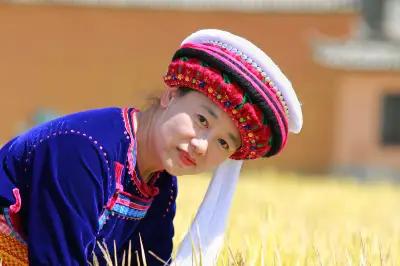
The buildings here are uniquely Bai-style. Walking through the town, you’ll see many locals dressed in traditional ethnic clothing. Notably, Xizhou’s geographic and cultural environment is exceptional; it was once the original financial and cultural hub of Dali. Thanks to this advantageous location, Xizhou’s people have been able to pass down their culture.
The Bai people are not only master carvers but also have the most mature tie-dye techniques in Dali. In the ancient town, many stalls sell small souvenirs and tie-dyed fabrics in various patterns. These exquisite fabrics, with their intricate textures, embody the Bai people’s history and culture. Most notably, Bai tie-dye has been recognized as an intangible cultural heritage.
The Bai architecture truly stands out, with well-preserved buildings from various periods such as the Ming Dynasty and the Republican era. As you enjoy the Bai scenery, you’ll also see many small, time-honored shops selling local specialty foods. The commercial vibe here is quite strong.
The ancient street is steeped in history. Walking along, looking at Bai houses, this kind of classic, serene setting gives a feeling of peaceful, gentle time. At a quiet spot, a small shop named Bai Girl, I paused. I just wanted to quietly soak in the tranquility.
I was drawn to a yellow wall of a Bai building, next to a huge field of rapeseed flowers. Crowds of people were taking photos by the wall and in the flower field—this is the very Insta-famous spot.
The vast rapeseed field was full of people snapping pictures, but visitors were respectful and didn’t trample the flowers.
I think the most artistic spot for photos is exactly this yellow wall. Standing by the wall and capturing the image with the rapeseed field, you bring together the Bai architecture, the flowers, and yourself—a scene full of atmosphere and beauty.
Dali has so many ancient towns; everyone visits Dali Ancient Town, but Xizhou isn’t as well-known. Yet plenty of tourists come. We arrived in the morning, when it wasn’t crowded, which was actually better for photos.
The Bai people here live a leisurely, slow-paced life every day. Many elderly residents sit together chatting rather than staring at phones, watching the tourists come and go. This kind of idyllic life is what I long for. The town has many iconic buildings, like the 70-Tree Building and the Yang Family Mansion, worth a visit. Though this Bai cultural town has lost some of its former bustle, its heritage continues, extending that past prosperity into the present.
I’ve been to Dali more than once, and my love for this land is deep. For me, this city is full of fun and beautiful spots. Many people do not visit Dali just once; they return again and again to enjoy the locals’ leisurely, contented slow life. In Dali, whether wandering through an ancient town marked by the traces of time or along country paths, you can feel that romantic atmosphere. Different places in Dali give me different feelings, but Shuanglang Ancient Town lets me sense that peaceful, quiet life—it’s also a very livable place.
The residents of Shuanglang are Bai people. It’s a Bai town on the eastern shore of Erhai, with views of both Cangshan Mountain and Erhai Lake. Its location is superb: hills on three sides and water on the fourth, evoking the classic scene of a small bridge over a flowing stream. The town’s architecture preserves distinctive Bai style. Dali is a city of sentiment, and Shuanglang is where sentiment spreads. Many visitors come to Shuanglang to experience Dali’s local customs.
Shuanglang keeps Bai buildings from various periods, but unlike other ancient towns where you marvel at the architecture’s enduring splendor, here I was more captivated by the locals’ self-sufficient, unhurried pace of life. I didn’t feel the city’s noise; instead, I felt the comfort of a slow life—once here, I didn’t want to leave.
I think the locals truly love life and their slow rhythm. You can see it in every corner’s details. Each household has its own aesthetic and ideas for decoration. Potted plants and greenery add immense beauty, and walking through such a serene place deepened my interest—this kind of contented life is my ideal.
The commercial atmosphere here is still quite present. You can taste authentic Dali cuisine, learn about Bai culture, and browse all kinds of souvenirs. Local specialties like fried cheese, sea-vegetable soup, hand-pulled flatbread, and griddle tofu are available from street vendors—no need to go to a restaurant.
The town also houses the famous dancer Yang Liping’s Sun Palace and Moon Palace; it’s a treat to experience her artistic space.
There are plenty of resting spots. If you’re tired, you can sit down in any nook and then continue your journey. Though you can see beautiful Cangshan and Erhai, what attracts me most is the peaceful, gentle life. Locals often gather in open spaces to eat and chat, filling the air with the warmth of everyday life.
Shuanglang is a place well-suited for living. You can admire the scenery of Cangshan and Erhai, watch clouds drift on sunny days, and every slowed-down moment feels leisurely.
As everyone knows, Dali is a treasure trove for Instagram-worthy photos. Many once-hidden small spots are now being discovered. In the past, the hottest places were the ancient town, Cangshan Mountain, and Erhai Lake… Now, there are more off-the-beaten-path attractions. For example, just across from Dali Ancient Town is a recently famous Insta-famous curve, located at Longkan Ancient Ferry, rich in ethnic minority flavor.
To experience the beauty of Erhai, besides Shuanglang, Erhai Park, and Caicun Pier, Longkan Wharf is also a hidden gem. Longkan Wharf lies in Longkan Village, a natural village in Dali Town and a typical Bai settlement, neighboring Shangmo Village, Ximen Village, Caicun, and Xiajiyi Village. Nestled by mountains and water, with blue skies and clear waters, it was also a filming location for the movie Heart’s Blossom, the plane tree inn.
Longkan Ancient Village is one of the small villages closest to Dali Ancient Town by Erhai Lake. In the evening at Longkan Wharf, after the ferry has finished its day and the tour groups have gone, few people remain on the pier. On a clear day, sitting by Erhai and watching the sunset is a uniquely beautiful pleasure. In Dali, at Erhai, in Longkan, there’s a kind of life called freedom—not far from the hubbub of the world, yet very close to an idyllic paradise. One step out leads to neon lights and revelry; one step back brings pastoral songs.
The curve at Longkan Wharf is what made it go viral. To the left lies the deep blue Erhai, to the right typical Bai houses, with metasequoia trees dotting the lake—a beautiful picture. A gentle curve traces the lakeshore, and the evening glow on the coastal path turns this bend into the village’s loveliest sight.
Because the seaside area at Longkan Wharf is lined with boutique hotels, in the evening, visitors come out to stroll or jog along the curve—no vehicles are allowed, only bicycles, so it’s very safe for walking and jogging. The scenery by the wharf is beautiful, making it a perfect place for a walk. Evening visitors often outnumber daytime ones as the sea breeze brings a refreshing coolness.
Now, Longkan Wharf has been renovated differently from before, using peach-blossom-wood outdoor bamboo railings to create a semi-open seaside boardwalk. This ensures visitor safety while letting us get as close as possible to feel the breadth and grandeur of Erhai.
Longkan Wharf is arguably the most rustic and natural of all Dali’s attractions. Here you can feel the tranquility and depth of the country fields and Erhai Lake. Not overdeveloped, it retains the unique charm of an ethnic minority village and allows you to take in the stunning Erhai views, leaving you deeply enchanted by this Insta-curve.
There’s also a round archway at the wharf. Looking through it toward Erhai, you can see Luoquan Pagoda opposite and occasional boats passing by. Inside and outside the screen wall, just a step apart, are two different worlds: one is poetry and the far horizon, the other the simple joys of life. Daydreaming or taking photos here is a lovely way to while away the time.
The ancient town, Cangshan, Erhai—these romantic elements make Dali my favorite place to stay in Yunnan. Sometimes doing nothing, just gazing at Erhai Lake, feels so comfortable.
Looking back at this sweep of Erhai, I finally encountered it under a clear sky. The deep blue lake made up for earlier regrets.
So how do you enjoy Erhai? For young people, the way is to rent an electric scooter and circle the lake. The coastal road is very well built, smooth and easy to drive, even for novice drivers. Especially when you see one cool convertible after another with handsome guys and pretty girls standing inside, no wonder I kept wondering why there were no young people in the ancient town—they’re all here.
Many come to Erhai to take gorgeous Instagram-worthy photos. Probably within the last couple of years, a spot on Erhai was discovered by photographers and turned Insta-famous: Wase’s Luwo Mountain, also known as Cliff Shoal. You need to take a small mountain path down. Below, there are many photo elements: a cave, an abandoned window frame.
Once someone made this spot go viral, countless people rushed to replicate the same photo. There’s usually a queue by the window frame, and with people constantly arriving, you can only snap a couple of quick shots—the experience isn’t great.
Actually, just taking photos by Erhai Lake is already stunning. Speeding along the coastal road, you can stop whenever you like and snap away, completely free.
Riding an e-scooter along the eastern Erhai road is the most comfortable. Speeding down this endless coastal highway under the vast sky, you feel an openness you can never sense in the city. The breeze scatters my thoughts but makes me enjoy the present moment even more.
Leaving Erhai means leaving Dali. It’s not an end, but a beginning. I’ll definitely come back to romantic Dali again.
China has many places associated with Putuo, like Putuo Temple and Putuo Island, and in Dali, there’s Little Putuo Island. It lies in the eastern part of Erhai Lake. Legend says that when Guanyin created the Dali basin, she dropped a sea-pacifying seal into Erhai, which became this small island to calm the waves and protect fishermen. So fishermen built a Guanyin Pavilion on the island to honor her.
The island’s shape and pavilion resemble the Putuo Mountain in the South Sea from myth, hence the name Little Putuo. The fishing village east of the island is called Haiyin Village. When the sun sets over Erhai, Little Putuo, set against the backdrop of Cangshan, becomes the most beautiful sight on the lake.
Little Putuo can be called a pocket-sized island in Erhai, with a circumference of only about 200 meters, entirely made of limestone and shaped like a round seal—hence the alternate name Haiyin (Sea Seal). The pavilion was built during the Chongzhen reign of the Ming Dynasty, funded by local fishermen. It’s a two-story structure with a hip-and-gable roof, housing a statue of Guanyin. Locals also call it Guanyin Pavilion.
The best times to visit Little Putuo are early morning and evening. At dawn, mist drifts above the lake, and Little Putuo appears and disappears, like a palace on the moon. Climbing onto the island, you can see one of the classic eight scenes of Erhai: Mist Around Putuo, with swirling fog like pure white gauze. In the evening, seagulls fly to the waters near Little Putuo, some leisurely drifting, some circling overhead, adding lively vitality to the serene Erhai scene.
In China, every city has at least one temple. Whether in a developed metropolis or a remote village, there’s always a temple for worshippers to visit. But in everyone’s mind, temples are filled with incense smoke and solemnity. However, on Cangshan Mountain in Dali, Yunnan, there is a very interesting temple. Here, no one burns incense, and the temple is spotlessly clean, yet it’s unexpectedly decorated with many different kinds of fresh flowers, with colorful potted plants even arranged in specially designed ways.
This romantic temple is Jizhao Nunnery in Dali, Yunnan. It feels more like a garden than a temple. Though the grounds are small, flowers are planted everywhere. Whether along the paths or under the eaves, there are blooms and succulents of all colors. If it weren’t for the statues of Buddha and Bodhisattvas, you might truly think you were in a garden rather than a temple. Jizhao Nunnery is praised as China’s most artistic nunnery, without the solemnity of typical temples or swirling incense. It’s more like a personal courtyard where one casually arranges plants and flowers.
Jizhao Nunnery was first built in the early Ming Dynasty, then rebuilt during the Republican period after being destroyed. The temple is surrounded by a variety of plants, the air fresh and subtly elegant. Besides flowers, you’ll notice one distinct feature: there are an enormous number of succulents, the most numerous plants here. Thanks to its excellent geographical position, Jizhao Nunnery receives ample sunlight, and Yunnan’s large diurnal temperature range provides ideal growing conditions, so the succulents are plump and healthy.
It’s said there are over 200 types of succulents in the nunnery, each differing in species, size, color, and form—like visiting a succulent exposition. On the ground are potted succulents, and hanging from the beams are seasonal Yunnan flowers. Many tourists come specifically to see these flowers and succulents. Keep in mind the nunnery is perched halfway up the mountain; you need to drive and then walk a bit further. Despite the trouble, visitors still stream in endlessly.
With no incense burning, the air and environment here are excellent. The whole temple is spotlessly clean, yet it retains a temple’s dignity and meticulousness. Towering old trees and ubiquitous flowers and plants give it a lush, green feel. People call it China’s most beautiful and romantic temple. You might ask, why isn’t there the typical scene of worshippers burning incense?
Jizhao Nunnery is actually a Buddhist nunnery. A nun there once said that the Buddha lacks nothing and cares not for incense but for a sincere heart. So they don’t follow conventional rituals; naturally, no incense is burned. However, for visitors who’ve come from afar, there is a room designated for burning incense. If you wish, you can worship there, but group incense burning is discouraged—hence the extraordinary cleanliness.
Additionally, since the temple is in the mountains, with abundant plants around and nearby forests, burning incense could easily cause fires or mountain fires, which is very dangerous, so it’s unsuitable. Surprisingly, the buildings and designs in Jizhao Nunnery were all crafted by the nuns themselves. They collected stones and wood everywhere to build room after room, using only natural materials or reclaimed items, which gives the nunnery such a sense of history.
The flowers and trees you now see didn’t appear overnight; they were planted and nurtured over many years. Decades of cultivation created this garden-like temple environment, so full of life on Cangshan. Initially just the nuns’ personal hobby, the flowers now draw large crowds of tourists who not only pay respects but also come to see this unique nunnery. Some women even want to stay and live at the temple after visiting.
At Jizhao Nunnery, you can not only admire flowers; the vegetarian meal here is also outstanding. Many come specifically for the self-service buffet at 20 yuan per person. Although it’s similar to home cooking, the ingredients are carefully chosen, and the seasoning emphasizes less salt, less oil, and no MSG or other additives, allowing you to taste the ingredients’ natural flavors. Without heavy seasonings, the meal still has its own character, so hundreds queue up daily for the vegetarian fare.
I remember my first stay at Tinghua Tang was during a trip to Lijiang four years ago. As soon as I entered the courtyard, I was captivated by the flowers everywhere. Four years flew by, and this time I came to Dali, I again chose Tinghua Tang, a holiday stay among blossoms. Coincidentally, the Erhai Tianjing branch in Wase directly faces Erhai Lake—open the window and the lake’s beauty fills your eyes.
The day before check-in, the butler added me on WeChat. She was incredibly thoughtful and thorough, ready to answer questions about sights, routes, and food—a true personal assistant. Parking spots are right by the entrance and across the street, very convenient, especially for those driving to Erhai. I booked a sea-view room; during off-peak seasons, booking a week in advance is fine. The sea-view room faces Erhai directly, with an entire wall of floor-to-ceiling windows that bring the lake’s beauty into the room.
Of course, what I love most are the design details at Tinghua Tang—perfect for girls who love taking photos. It’s no exaggeration to say the homestay is packed with photogenic elements; a casual snap can look like a professional shot. From the infinity pool to the mirror of the sky, from the sea of flowers in the courtyard to the sky within reach on the rooftop, you could spend an entire day just taking pictures here.
They say people come to Dali and Erhai mainly to take photos, and taking photos at Tinghua Tang definitely becomes one of my top sources of great shots on this trip.
My favorite is the circular outdoor bed with the deep blue Erhai visible through the round opening. With a wide-angle lens, you can capture stunning, breathtaking images from this bed, and with heart-shaped pillows and ins-style magazines, it’s an instant masterpiece.
The rooftop terrace is another great shooting spot. Bohemian-style rugs and pillows add a touch of exoticism, while the blue sky behind seems close enough to touch. It’s quite sunny, but nothing matters more than getting the photo.
Sometimes just a simple blue sky as the background gives the photo an inherent storybook feel.
Those daring enough can stand at the edge of the terrace, using flowers as foreground, to capture a seamless blend of sea and sky.
There’s an infinity pool on the second floor with several circular open-air seating pods in the middle. If you can’t easily shoot in the pool, you can use these pods with Erhai and the sky as the backdrop for gorgeous pictures.
The biggest surprise is that you can actually take photos reminiscent of the sky mirror effect—something usually requiring a trip to Bolivia’s Salar de Uyuni. On the large rooftop platform, there’s a full-length mirror floor where you can strike various poses. The blue sky reflects on the mirror, and lying on it naturally creates that dreamy sky-mirror effect.
You can try different poses on the mirror surface for dramatic results.
The most fun part is that the platform has more than one large floor mirror; there’s also a mirror mounted on a wall that creates reflections in four directions—so creative! Unleash your imagination on Tinghua Tang’s sky mirror, and you’ll definitely capture unique, stunning portraits of Dali.
But don’t do it at high noon; the sun heats the mirror until it’s scorching, so hot you can’t even step on it.
Tinghua Tang also has its traditional small courtyard filled with flowers and a little hanging chair, bursting with freshness. Wearing a white dress for photos here is perfect.
The common areas are very spacious in an elegant log-cabin style. The moment you step in, you’ll fall in love with that natural feel mingled with homely warmth.
Every design detail in the homestay shows thoughtfulness, from the large furniture pieces to the small decorations, all enhancing the aesthetic. No wonder it’s so often fully booked.
The sea-view room itself is huge. In front of the window, there’s a sofa lounger and a bathtub. Soaking in the tub while watching the evening glow over Erhai must be incredibly beautiful. In Dali, there’s no need to rush between sights; simply watching the waves lap on Erhai from the window is enough.
Tinghua Tang doesn’t have many rooms, but each is crafted with excellence. The seating and work areas are completely separated, and with the addition of a smart speaker, you can work and rest seamlessly. Spacious, clean, and infused with a rustic natural charm, falling asleep in such a room is the perfect end to any day.
Dali—a place I return to every year. On this early morning, I drove along Erhai toward the airport, witnessing the sunrise over the lake. I could never forget it, as if it didn’t want me to leave. Lingering at the airport, I hesitated to enter the departure lounge, just wanting to etch Dali’s mountains into my memory once more. I once dreamed of wandering the world with a sword, seeing all its splendor. Dali is the faraway place I can’t forget. Perhaps at some moment in the future, I’ll long to return here once again, to live that slow, distant life.