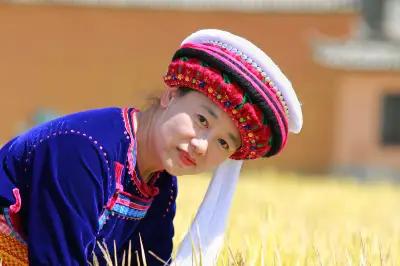
Journey to Western Yunnan, the Land of Colorful Clouds 2021
Yunnan Province, abbreviated as Dian, has one explanation for its name as 'the Land of Colorful Clouds'. Located in the southwestern border of China, Yunnan is one of the provinces with the longest borderlines, bordering Myanmar, Laos, and Vietnam. China has 56 ethnic groups, and Yunnan has 25, making it the province with the most ethnic minorities in China. I once traveled to Yunnan with colleagues in 2010, and the comfortable climate, picturesque scenery, diverse ethnic customs, and tempting cuisine left a deep impression on me. If we take Kunming, the capital of Yunnan, as the center, there are great places to visit in eastern, southern, western, and northern Yunnan, so one trip to Yunnan is not enough. At a class reunion in 2019, an old classmate suggested a trip to western Yunnan, and we immediately responded, planning to set off after the Spring Festival of the following year. Unexpectedly, a sudden and global pandemic in the Spring Festival of 2020 disrupted our plans. The trip was postponed again and again until this year, in May 2021, we finally made it. We planned to complete this trip by renting a car and self-driving. The itinerary started from Kunming, passed through Mojiang, Lincang, Tengchong, Dali, Shangri-La, Lijiang, Yuanmou, and then returned to Kunming, totaling 18 days.
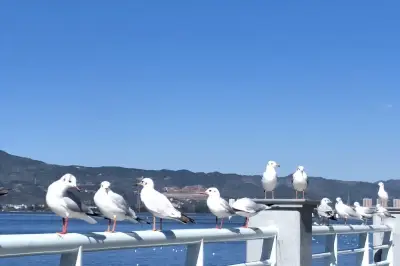
D1: On May 3, 2021, the four of us (my mother, my aunt, my wife, and I) took the latest wide-body Boeing 787 of China Eastern Airlines from Shanghai Hongqiao Airport to Kunming. The wider seats and legroom made the 3-hour journey more comfortable. The high-tech dimmable windows without sunshades also provided more fun to pass the time. Around 4:00 p.m., we arrived at Kunming Changshui Airport on time. Then a staff member from the car rental company picked us up and took us to the car rental center parking lot near the airport. After completing the rental procedures, we drove directly to the Dianchi Haigang Dam. The timing was perfect. Although there were no black-headed gulls in May, it was quite enjoyable to blow the gentle breeze, watch the sunset, and leisurely wait for the darkness to fall by the lake. After sunset, it gradually darkened. After dinner at Old Dian Ethnic Village Restaurant with strong Yunnan ethnic characteristics, we checked into the Atour Hotel on Chunrong Street, Kunming Municipal Government.
D2: After breakfast, we set off to the Luchong Scenic Area of Fuxian Lake, which is 50 kilometers from Kunming and belongs to Yuxi City. Since it was the May Day holiday, I thought Fuxian Lake was a relatively niche scenic spot among Yunnan's many classic attractions. I had originally expected not to encounter a large number of tourists, but it turned out that I underestimated the enthusiasm of the masses for tourism. Due to the global pandemic, with overseas travel still closed, domestic scenic spots were overcrowded during the short holiday. The entrance to the scenic area had a long line of cars, and parking spaces were extremely hard to find. After a test of patience queuing and searching, we finally found a parking space in a remote corner.
The vast lake, with waves hitting the beach, really gave a feeling of being at the seaside.
The unique fishing tools have now turned into unique photo backgrounds.
After lunch, we drove along the expressway for more than 3 hours, covering 250 kilometers, and arrived at Mojiang County, the only Hani Autonomous County in China. Before entering the city, we visited the Tropic of Cancer Marker Park.
Standing at the highest point in the park, you can clearly see the Tropic of Cancer passing through the city.
This is also the famous hometown of twins. There are over a thousand pairs of twins in the entire Mojiang County. Every year, the International Twins Festival and Hani Sun Festival are held here. After checking into the Mojiang Gemini Star Hotel, we had a Hani-style dinner at the Mojiang Hani Family Restaurant.
D3: After breakfast, we set off for Lincang. Driving along the newly opened Tianhou Expressway for 250 kilometers, the journey took 3 hours. At noon, we arrived at Wende Yutang in Lincang City, a restaurant that amazed us. We didn't expect to find such a stylish restaurant in a small county town.
The decoration style was as literary as the name. A light rain fell during the meal, and in the misty rain, I even felt a hint of Jiangnan flavor.
After the meal, we leisurely drank tea in this pleasant environment before setting off on the road to the Shuangjiang Yunding Nest Tea Manor Hotel. The hotel is located on a tea mountain in Shuangjiang County, 90 kilometers from Lincang City. After turning onto a 10-kilometer winding mountain road from G214 National Highway, we arrived at the hotel around 3:30 p.m. This was also the meeting point agreed with my classmates. The four of them flew from Shanghai to Pu'er, then passed through Jinggu and arrived here this afternoon to join us, officially starting our western Yunnan trip. The first group photo after the victorious reunion.
The hotel is located in a high mountain tea garden shrouded in clouds and mist, full of greenery, like a fairyland.
Spacious and grand guest rooms with large balconies offering great views.
Strolling along the mountain trails through the tea garden, standing among the layers of green tea plants like waves, the air is fresh, as if in a paradise.
D4: In the early morning, we woke up to the crowing of roosters and the crisp chirping of birds. The morning glow filled the sky.
After breakfast, we set out for Cangyuan as originally planned. Unexpectedly, halfway, we were stopped at a highway checkpoint entering Cangyuan. It turned out that the Mengding Port on the China-Myanmar border is located in Cangyuan County. Due to epidemic prevention and control, a pass was required to enter and exit Cangyuan County. There was no choice but to turn back. We returned to Shuangjiang around noon and found a Wa-style restaurant – Walai Manor for lunch.
During the meal, after discussing with our companions, we decided to visit the Shuangjiang Ten-Thousand-Mu Wild Ancient Tea Tree Garden in the afternoon. After driving through a rough 20-kilometer unpaved winding mountain dirt road, we finally arrived at the tea garden deep in the mountains. However, the tea garden was not a scenic spot open to the public, but a protected area. After a lot of pleading with the management and handing over all fire sources, the management finally agreed to let us enter. After passing the checkpoint, we continued on the rugged mountain road and soon reached the observation tower. To visit the thousand-year-old ancient tea trees, we would need to hike about 3 kilometers through the primeval forest. Considering safety and physical strength, we finally decided to give up. So we climbed the observation tower to enjoy the panoramic view. The beautiful scenery was like a painting, making the trip worthwhile.
Let's take a group photo as a souvenir, haha!
Descending the dusty winding mountain dirt road, we had dinner at the Jinshui Lou Restaurant in Mengku Town and then returned to the hotel.
D5: After breakfast, we left the Yunding Nest Tea Manor Hotel for Tengchong, a total distance of 466 kilometers. Since the Tianhou Expressway was not fully open, we had to alternate between expressways and national highways. Before arriving in Tengchong, we passed the super project on the Baoteng Expressway – the Longjiang Special Bridge.
The bottomless canyon under the bridge.
Around 6 p.m., we arrived at our destination for the day: Heshun Ancient Town in Tengchong, and checked into the Xiangzhu Tingyunshu Guanhu Inn.
Antique decoration style, large floor-to-ceiling windows presenting the beautiful scenery at any time.
As it got dark, we had dinner at a restaurant next to the inn.
D6: Early morning, the ancient town in the dawn light was quiet and soft, making people feel peaceful and comfortable.
In the morning, we went to the Qinghai Zhongzhai Simola Wa Village in Tengchong. The entire village was surrounded by green mountains, with murmuring springs and fresh air. It fully matches the meaning of Simola in Wa language: a place of happiness.
In the afternoon, we came to the most famous scenic spot in Tengchong: the Tengchong Rehai Scenic Area (Hot Sea).
As soon as we entered the scenic area, the smell of sulfur hit us. Hot springs emitting steam appeared in various forms before our eyes.
Walking along the boardwalk, we could feel the heat through our shoes, experiencing the wonder of nature all the way.
The most famous and spectacular is the Big Boiling Pot, where we boiled eggs by the pot.
Finally, we enjoyed a comfortable hot spring bath in the Yugou Bathhouse in the scenic area.
In the evening, we returned to the ancient town for dinner at Cundaguan Private Chef Restaurant. An amazing dinner! Delicious food that must be booked in advance! No menu; the landlady arranged the dishes according to the day's ingredients and number of diners. We all walked in weak with hunger and walked out full. The best meal of the trip, without a doubt!
D7: Accommodation: Xiangzhu Tingyunshu Guanhu Inn
The beautiful Yeya Lake beside the inn.
After breakfast, invited by a tea factory friend of our companions, we visited a tea garden and tea factory deep in the mountains, including thousand-year-old and hundred-year-old ancient tea trees. At noon, a Tengchong friend of our companions treated us to lunch at the Xidong Compound.
The entire Xidong Compound covers 18 mu (about 1.2 hectares). The owner was the Dong family, a famous and noble family in Tengchong. The Dong family was philanthropic, having donated three fighter planes during the Anti-Japanese War, helped build the Yunnan-Burma Road, and donated money and supplies to support the Chinese Expeditionary Force. After the victory of the war, they also donated to build the National Cemetery to commemorate the fallen Chinese Expeditionary Force soldiers. Today, Xidong Compound has become a free tourist attraction integrating jade, cuisine, and ancient village preservation.
After lunch, we visited the Western Yunnan Anti-Japanese War Memorial Hall and the National Cemetery.
A natural waterfall in Tengchong city: Dieshuihe Waterfall.
We strolled around the ancient town before and after dinner.
D8: Today we are leaving Heshun Ancient Town. Early in the morning, a light rain began to drizzle. The ancient town in the misty rain was exceptionally fresh, giving us a different experience of the ancient town. Following the planned itinerary, we set off in the rain to Yuanxiang Qihualing. When we entered the scenic area, the rain stopped – lucky us! The purple Verbena flower sea was so beautiful!
Large patches of roses emitting a pleasant fragrance. The freshly made rose flower cakes were fragrant and delicious, the best rose cakes I have ever tasted, none!
We climbed to a high observation deck to overlook the volcanic columnar jointing called the "God Pillar" by the Ruili River.
At noon, relying on the powerful internet, we found a restaurant on the road to Beihai Wetland: Beihai Yipinyuan Farmhouse Cuisine. The super delicious copper pot rice was fragrant. After a full meal, we arrived at the Beihai Wetland.
Large floating meadows covered the water surface.
We rowed a boat on the lake.
Groups of waterbirds either flew high or played in the water, presenting a harmonious natural scene.
Tonight is the last night in Tengchong. We splurged and checked into the Bodu Hot Spring Hotel. Soaking in the hot spring pool on the guest room balcony, overlooking the volcanoes under the sunset, it can only be described as "blissful"!
D9: After enjoying a hearty buffet breakfast at the hotel, we drove away from Tengchong to our next destination: Dali Ancient City. After more than 5 hours of driving, we arrived in the afternoon at the hotel near the Erhai Gate of Dali Ancient City: Fengxue Gucheng Dali Ancient City Manhua Store. After checking in, we strolled around the ancient city, tasted snacks, bought local specialties, and took it easy.
Too scared to eat! (referring to something scary, maybe fried insects?)
D10: The snow of Cangshan and the moon of Erhai are two iconic attractions of Dali. In the morning, we took the Ximatan Cableway to climb Cangshan. The upper station of the cableway is at an altitude of 3,900 meters. After getting off the cableway, we had to walk about 1,300 meters of stairs up and down to reach the Ximatan viewing platform. While we were struggling to move forward, taking breaks every few steps, we heard returning tourists say that Ximatan had no water and the alpine azaleas had not yet bloomed. I really wanted to give up and go back, but in my opinion, the meaning of travel is not only about seeing unknown beautiful scenery, but about the process of traveling and keeping all these memories forever in our minds!
Finally, we reached the highest viewing platform.
The dry, waterless Ximatan.
Overlooking Dali Ancient City and Erhai Lake from the cable car.
After descending and having lunch, we visited Dali's famous Chongsheng Temple and the Three Pagodas.
The reflection of the three pagodas in the Yingying Pool was like an oil painting.
The main central pagoda: Qianxun Pagoda.
Chongsheng Temple backed by Cangshan.
During dinner, we suddenly noticed the top of Cangshan was covered with white clouds, making it look like a snow-capped mountain, stunningly beautiful!
D11: Yesterday we visited Cangshan, so today must be Erhai. After breakfast, we drove north along the west bank of Erhai. The first stop was Panxi Village, a popular online celebrity spot. Everywhere were photographers with cameras and tourists in bright colors posing. Under the blue sky and white clouds, the rippling Erhai Lake was breathtaking. Any casual shot looked like a masterpiece!
At noon, we stopped at Xizhou Ancient Town and had lunch at Hanlin Restaurant, a restaurant set in a traditional Bai ethnic old mansion.
After lunch, we took a horse carriage to truly experience "viewing flowers while riding a horse" (a phrase meaning a quick glance) while touring the ancient town.
In the afternoon, we arrived at Shanshui Haijing Inn in Shuanglang Ancient Town on the east bank of Erhai. The inn was built by the lake. Sitting on the beautiful viewing balcony of the guest room, listening to the waves of Erhai, looking at Cangshan under the blue sky and white clouds on the opposite shore, it was pure enjoyment!
The crepuscular rays (Jesus light) were a rare sight for me living in a city. Due to photography skills and equipment limitations, witnessing the crepuscular rays in person was even more stunning!
Because of the thick clouds, we didn't enjoy the beautiful sunset, but the sunset through the clouds was also pretty, hehe!
D12: Today is the 12th day of our trip. Tomorrow, our companions will end their journey and return to Shanghai, while the four of us will continue our western Yunnan trip, heading to Shangri-La! Today was mainly for rest. We slept in naturally in the morning. After breakfast, we drank tea, cracked melon seeds, chatted, and spaced out on the balcony. At noon, while looking for food in Shuanglang Ancient Town, we passed by the famous Yang Liping Sun Palace in the ancient town. It didn't require a ticket, but you had to consume something to enter, which felt like a rip-off, so we decisively gave up. After lunch, we drove south along the east bank of Erhai to continue our tour around the lake.
Doesn't it feel like being at the seaside?
Various photo-shooting vehicles were seen everywhere along the road, automatically forming convoys.
We checked in at the so-called "Santorini" of Dali. It was actually a hotel and commercial complex, officially named Dali Lixiang Bang, a popular online check-in spot. The photos were nice, but I wasn't interested in such man-made attractions.
On the way back, when passing Xiaoputuo, we encountered crepuscular rays again.
In the evening, we had dinner at Laidi Zhujia Fan in Shuanglang Ancient Town with our companions, sharing the last meal of this trip.
D13: Early in the morning, we got up and said goodbye to our companions. The four of us set off for Shangri-La. On the way, we first went to the First Bend of the Yangtze River in Shigu Town. Honestly, standing on the viewing platform by the river, I didn't feel any shock.
The drone took off, providing a god's perspective! The shocking "hairpin bend" of the Yangtze River!
Driving along G214 National Highway, shortly after passing Tiger Leaping Gorge Town, we entered the newly built but not yet fully opened Lixiang Expressway to Shangri-La. Once the Lixiang Expressway is fully open, the driving time from Lijiang to Shangri-La will be reduced from the original 5-6 hours to about 2 hours, and the road conditions will also improve dramatically. Reaching Shangri-La will no longer be a difficult task! Thanks to the expressway, we arrived smoothly and early at Dukezong Ancient Town. We checked into a very Tibetan-style hotel in the ancient town: Feifan Hotel.
After a short rest, we went to Songzanlin Monastery, the largest Tibetan Buddhist monastery in Yunnan Province, known as the Little Potala Palace.
The entire monastery was built on the mountain, with steep and high stairs leading to the main hall.
Next, we went to Napahai Lake. I don't know whether to call it a lake or a grassland, as it is a seasonal natural lake. From late summer to early autumn, due to rainwater and melting snow, the lake expands; from late autumn to early summer the following year, the water recedes, exposing large meadows, turning into a grassland. Amazing nature!
We drove along the lake road, stopping now and then, half lake half grassland.
Herd of sheep, yaks, and horses on the grassland.
Back in the ancient town for dinner: Tibetan-style yak meat hot pot.
Beside the Moonlight Square in the ancient town is Daguishan Mountain, on top of which stands the world's largest prayer wheel, a Guinness World Record holder.
Dukezong Ancient Town is at an altitude of 3,300 meters. It was already mid-May, but after sunset, it was extremely cold with chilling winds. When we left Shuanglang Ancient Town in the morning, we were wearing short sleeves, but here we changed to long sleeves and added a windbreaker, yet still couldn't withstand the cold. After walking around for a while, we couldn't take it anymore and had to flee back to the hotel. The floor heating in the room was so warm. In the square, Tibetan compatriots were dancing and singing, braving the cold.
D14: There is a classic scenic area in Shangri-La: Pudacuo National Park. The name alone makes it sound classic, but during the itinerary planning before the trip, many reviews were not kind to this classic park. Since we only had one day in Shangri-La, we finally chose a newly developed scenic area: Balagzong Scenic Area. Because the story behind this scenic area deeply attracted me, and in the end, it proved our choice was right. The establishment of Balagzong Scenic Area originated from road building. Bala Village, a remote paradise deep in the mountains that was not even on maps before 2008, had a story of a villager named Sina Dingzhu. At the age of 8, his left eye was injured by iron filings from blacksmithing. Since there was no road in Bala Village, it took 5 days to reach the nearest hospital in Shangri-La County. Delayed treatment caused Sina Dingzhu to lose sight in his left eye. Seven years later, at 15, Sina Dingzhu decided to leave the mountains. Through hard work and diligence, he accumulated tens of millions of assets after more than a decade. But instead of enjoying a comfortable life, he resolutely returned to his poor and isolated hometown. He went from being a multimillionaire to being deeply in debt, spending over ten years building a 60-kilometer "sky road" for his hometown. He used this road to develop tourism, lifting his hometown out of poverty. He is known as the contemporary "Foolish Old Man" of the Tibetans. The scenic area features sightseeing boardwalks, glass viewing platforms, and many buildings reflecting Tibetan religion and culture. The entire area combines snow-capped mountains, canyons, rivers, grasslands, and forests. It is an absolutely beautiful scenic area worth visiting.
Reinforced concrete sheds along the mountain road to prevent falling rocks.
The sacred Batala Yong Stupa.
Looking up at the Gezong Snow Mountain.
Overlooking the Shangri-La Grand Canyon.
The historic Bala Village.
On the balcony of a house in Bala Village, looking up at the holy Gezong Snow Mountain.
The boardwalk built on the cliff leading to the viewing platform.
The suspended glass viewing platform.
Shangri-La Grand Canyon.
Near the entrance of the scenic area, there grew a thousand-year-old Bodhi tree on the cliffside. The most magical thing was that the tree had grown a branch shaped like a hand, firmly grasping the rock face. Amazing nature!
D15: Today we set off on the return journey to Kunming. Originally planned to start from Dukezong Ancient Town, take the East Ring Road through Baishuitai to Tiger Leaping Gorge, then to Lijiang Ancient Town, not taking the same route. But the hotel staff told us that many sections of this route were under repair, very bumpy, and prone to traffic jams. After consideration, we decided to abandon this route and instead take the newly built but not yet fully open Lixiang Expressway directly to the Upper Tiger Leaping Gorge scenic area. Before even entering the scenic area, the loud roar filled our ears. We took an electric escalator down to the viewing platform by the river. The Tiger Leaping Rock in the middle of the river split the water, creating a majestic and thunderous torrent.
Ten years ago when I first visited Yunnan, I had been to Tiger Leaping Gorge, but on the opposite side belonging to Lijiang's scenic area. That scenic area is now closed.
On the way to Dali, two newly built bridges spanned the canyon. The blue one ahead was a railway bridge under construction, and the red cable-stayed one behind was the Jinsha River Bridge of the Lixiang Expressway.
In the afternoon, we arrived at Lijiang Ancient Town. We checked into the Lijiang Chengyi Qiyi Inn inside the south gate. During the drive, the distant Yulong Snow Mountain was always faintly visible, accompanying us. It was magnificent. Unfortunately, I was driving and couldn't stop on the expressway to take photos, which was a pity. Since I had visited Lijiang on my previous trip to Yunnan, this time I treated Lijiang as a transit point.
We visited the Mu Palace in the ancient town.
The landmark of the ancient town: the Big Waterwheel.
D16: Today we travel from Lijiang back to Kunming, which is the longest driving distance (550 km) of this trip. Passing through Huaping County, we saw fruit trees covered with white bags all over the mountains. When we got closer, we found they were mangoes! Along the roadside, there were many sheds built by fruit farmers to sell mangoes. We stopped and tasted various varieties of mangoes, which were fragrant and sweet, extremely delicious! Before evening, we arrived at Yuanmou Wumao Tulin (Earth Forest), a very niche scenic spot. The scenic area was large, but almost empty. Standing on the highest viewing platform, we overlooked the entire earth forest, which was spectacular. Then stepping down, we saw it up close, like a huge group of sculptures of various shapes, allowing our imagination to run wild. We had to marvel at the uncanny workmanship of nature. This was an excellent scenic spot for photography; any shot looked like a masterpiece. I don't know if it's because few people know about it or other reasons, but such a beautiful spot had no visitors. What a pity for this wonderful scenery.
D17: We arrived in Kunming last night after 8 p.m. We simply had the famous Yunnan snack – Cross-Bridge Rice Noodles as dinner, and then checked into the Meihao Lijing Kunming Gaoxin Hotel. At noon today, we had lunch at the popular Huixiang Xilou restaurant by Cuihu Lake. Before lunch, we visited the Yunnan Army Military Academy, where Marshal Zhu De and Marshal Ye Jianying graduated. It was one of the earliest modern military academies in China at that time.
In the afternoon, we visited the last scenic spot of this trip: the famous Stone Forest, embarking on a journey to find Ashima.
In the evening, we had our last dinner of this Yunnan trip at the Airuochun Restaurant near the Golden Horse and Jade Rooster Square. We had the Steamed Pot Chicken again, which I had been thinking about since my first trip to Yunnan ten years ago. It was still delicious!
D18: Around 3 p.m. today, we safely landed at Hongqiao Airport on a China Eastern flight. The journey to Western Yunnan, the Land of Colorful Clouds, came to a perfect end.
On this trip, we flew from Shanghai to Kunming on May 3, rented a car and self-drove through Mojiang, Shuangjiang, Lincang, Tengchong, Dali, Shangri-La, Lijiang, and returned to Kunming, covering a total of 3,100 kilometers in 18 days. We left our footprints on high mountains and canyons, snow-capped mountains and grasslands, large rivers and lakes, the top of Cangshan, and the banks of Erhai. We tasted the specialty cuisines of many ethnic minorities including Hani, Wa, Dai, Tibetan, and Naxi. We stayed in Heshun Ancient Town in Tengchong, Dali Ancient City, Shuanglang Ancient Town on Erhai, Dukezong Ancient Town in Shangri-La, and Dayan Ancient Town in Lijiang, experiencing the local customs of various ethnic groups. With family and companions, we had a joyful journey full of memories.