My Ideal Place on Earth – Dali
Traveling north and south, seeing all corners of the land, only Dali feels like a true paradise. Every year I long to stay in Dali for a while. This time, I drove to Yunnan with friends and stayed around Dali Old Town and Erhai Lake, spending days facing the lake with blooming flowers and warm spring. Instead of rushing to check in at every spot, I simply wandered leisurely, stayed in a beautiful accommodation, visited a few lesser-known scenic spots I hadn't been to before, and enjoyed an ideal vacation.
Xizhou Town is located north of Dali Old Town, bordering Erhai Lake to the east and leaning against Cangshan Mountain to the west. It boasts the largest and finest cluster of Bai-style residential buildings. However, after traveling through many ancient towns, I felt a bit indifferent to them, so I just strolled casually, checking out some photogenic corners and rice fields.
The iconic round-cornered building in Xizhou, a protected Bai-style ancient courtyard, is a must-visit. You can search for “Turn Tower (Yang Ruxuan’s Residence)” on the map. But it is extremely crowded; you need to come early to take photos without people in the frame.
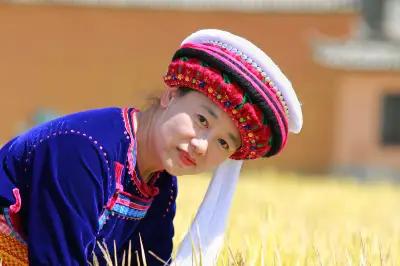
However, the rice fields combined with the yellow wall of Xilinyuan were a pleasant surprise. This is another signature symbol of Xizhou. From March to April, it's rapeseed flowers; April and May, wheat fields; June, rice paddies; and around September, the rice turns yellow. So every season brings a surprise. The gentle breeze in the rice fields, paired with blue skies and white clouds, is incredibly healing. You could film an entire summer movie here.
There are paths through the rice fields; please don't trample them. The yellow wall paired with the fields looks best; you can adjust the proportion of the wall and people by standing farther or closer. Turning the camera to the Bai-style buildings on the other side also makes a unique backdrop. There are many cafes around the fields where you can sit and rest, enjoying the breeze over the rice paddies – a special experience.
Erhai Lake might be the place that requires the least planning. Just slowly circle it, and you will always discover new scenery. I've been many times, but the sights along Erhai are still inexhaustible.
Note that the ring road on the west side of Erhai has been converted into a pedestrian/bicycle path since 2020; no cars are allowed. This road is now called “Erhai West Coast Ecological Corridor,” stretching 46 km from Dali Prefecture Maternal and Child Health Hospital to Taoyuan Pier, passing through Sansheng Island, Longkan Pier, Caicun Pier, Majiuyi, Panxi S-bend, Haishe Wetland Park, and Taoyuan Pier.
Only bicycles or scenic sightseeing cars (or walking) are allowed on this road. There are shared bicycles available. If you are driving, you must park in a lot near the corridor, then walk a section and turn back. However, during peak season, parking lots near the corridor at popular spots are often full.
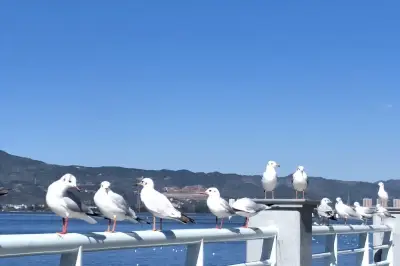
Finally, we drove near Haishe Park, got out, and walked slowly. Honestly, the scenery along the corridor is beautiful everywhere, with many bends, so there's no need to specifically go to Panxi just to snap a couple of photos. Sit by Erhai, watch the water slowly change, and observe light and shadow shifting on the distant mountains. Take out the chicken feet you bought in the old town and enjoy a unique afternoon tea.
During our trip to Yunnan, we saw tie-dye shops everywhere. We heard there is a tie-dye village near Xizhou – Zhoucheng Village – where you can experience the technique yourself. Even if you don't participate, the village's tie-dye museum and workshops are free to visit. This time, we mainly visited the Dali Puzhen Bai Tie-dye Museum, mainly because it's the first one at the village entrance, spacious and rich in content. We stayed until closing time.
Upon entering, you see a typical Bai-style courtyard with three rooms and one screen wall. Several tie-dye cloths are stretched across the yard, casting flowing shadows under sunlight and wind, like a movie scene.
Inside is the tie-dye experience hall, where several large dye vats sit, giving off a faint herbal scent. The blue of tie-dye comes from the stems and leaves of indigo plants, which are put into wooden vats with lime or alkali. After the dye settles, it forms indigo mud – a pure, natural, additive-free dye.
The natural dye produces wastewater that does not pollute the environment and also repels mosquitoes and insects, with anti-inflammatory and health benefits. The whole workshop is very rustic: blue-stained wooden barrels, various dyed cloths, and wooden racks sit quietly in the slanted sunlight. Several Bai women work quietly nearby, creating a scene like a beautiful indigo tie-dye ink painting.
If you want to experience tie-dye, you can book in advance or ask staff directly. Usually, you can dye simple items like T-shirts or skirts, creating your own handmade tie-dye work. If you don't want to participate, you can also explore the museum, which has many tie-dye artworks and explanations to appreciate. We arrived close to closing time, so the venue was very quiet, with only slanted sunlight shifting slowly among the layered dyed fabrics.
If you only visit and take photos, it's free. To personally experience the tie-dye process, contact the workshop staff directly; the cost is negotiable, or you can book online in advance.
After visiting the tie-dye museum, you can also wander around Zhoucheng Village. Almost every household here practices tie-dye. You can buy a piece casually on the street; it's more refined and cheaper than in Xizhou. The street stalls are separated by tie-dye cloth, giving a very rustic feel.
📍Detailed address: No. 61, Yunnan-Tibet Highway, Zhoucheng Village, Dali City, Dali Bai Autonomous Prefecture, Yunnan Province. 🚇Self-drive or taxi: 👉Self-drive around Erhai: The Zhoucheng tie-dye workshop on the west side of Dali is a must-visit. 👉Taxi: Dali Old Town to Zhoucheng Village is 25 km, fare about 45–55 yuan, about 30 minutes.
The most surprising discovery this time in Dali was the art café on the mountaintop – the Chicken Nest Café. Hidden on a hillside, it offers a panoramic view of Shuanglang from above if you're tired of the traditional old town. Rather than just a café, I think it's a little utopia on the hillside, full of artistic decorations, with a thatched “chicken nest” style that has a primitive beauty. Every corner has details worth pondering.
The owner of this earthen house café is independent artist Shen Jianwen. He moved from Shanghai to Dali in 2008 and combined local farmers' earth houses with craftsmanship to build an artistic chicken nest with thatch. Later, when director Yang was filming the movie “Volcano,” the crew remodeled it, giving it a highly designed feel. By chance, Mr. Shen began teaching Bai grandmothers to paint. These grandmothers never went to school; the youngest is 60, the oldest 87. If you're lucky, you can see a few of them painting in the upstairs studio. Their artworks and café merchandise are open for sale.
The café has several sections: you can sit inside the “chicken nest” and view Erhai through a long invisible glass wall, sit outside with a lamb sculpture overlooking the lake, or sit in the courtyard watching the grandmothers paint while daydreaming. There's always a beautiful moment waiting for you. The café specializes in coffee and rustic brunch, with prices similar to ordinary Dali cafés. Order a latte and afternoon tea, enjoy the breeze from Erhai, and soak in the wonderful sunshine.
Note: Although the Chicken Nest looks close to Shuanglang, you actually have to drive a long, steep mountain road. There is no public transport. It's recommended to drive yourself or hire a car. Novice drivers should not attempt it; I think it's even more terrifying than the Lining 72 bends from Lijiang to Lugu Lake.
📍Shop name: Dali Shuanglang Nong Min Hua She (Chicken Nest) Café 📍Address: Huoshan, Shuanglang Town, Township Road 043, Dali City 📍Business hours: 10:30–21:30 📍Average spending: around 50 yuan/person
When in Yunnan, you must stay at Tinghuatang at least once. Each one has stunning views, and you can capture the most beautiful photos in the public areas. This time we stayed at the Dali Erhai Tianjing branch in Wase Town on the east side of Erhai, facing the lake directly. It really feels like a spring day with blooming flowers facing the sea. The guesthouse has several public areas, each very photogenic – I was too busy taking pictures, haha.
The first floor has a swimming pool, a transparent boat, and sunken sofas, giving a feeling of being on vacation abroad.
The third floor has a “Sky Mirror,” creating perfect reflections with the blue sky.
The rooftop garden has two parts: one filled with daisies, the most romantic spot in the guesthouse, surrounded by flowers. There's also a carefully designed wooden cabin and many small corners. The other part is a rooftop tatami, where you can lie down and watch the sunset over Erhai, feeling free and relaxed.
The room has a large balcony with an amazing sea view. The room design is simple and elegant, with wooden floors and beige curtains, creating a very cozy atmosphere for the perfect Dali vacation.
Guesthouse: Tinghuatang Sea View Garden Inn (Dali Erhai Tianjing) 📍Address: No. 3 Chuandao, Haiyincun, Wase Town, Xiaoputuo Scenic Area
We also stayed one night in Dali Old Town, where you can leisurely shop, hold flowers and drink, or stop to listen to music, experiencing a slow artistic life without being just a passing traveler.
Wuhua Tower: Free to climb, offering distant views of Cangshan and Erhai. Especially at night, when the lights come on, many wandering singers perform – it's a landmark of Dali Old Town.
Bar Street: When in Dali, you must experience the dreamy bubble of the bars. Renmin Road is the home stage for resident singers, mostly folk and pop. People from all over gather here to drink and chat.
Renmin Road: The longest old street in Dali Old Town. Strolling along it, you can fully enjoy Dali's lazy slow pace.