Yihe Yunxi Jinshidi | Stay in a Unique Hotel, Experience Dali Differently, and Make Others Envious
When it comes to Dali, it's hard to break free from the cliché of 'wind, flowers, snow, and moonlight.' Cangshan Mountain and Erhai Lake seem like inevitable tourist destinations. Visiting Dali Old Town, paying homage to the Three Pagodas of Chongsheng Temple, or watching seagulls by Erhai Lake.
But today, I want you to get to know another Dali through the background of an 'old internet celebrity.' This old internet celebrity is Duan Yu—yes, Duan Yu (Duan Zhengyan), the protagonist of Demi-Gods and Semi-Devils—who was the 16th emperor of the Dali Kingdom. His ancestor Duan Siping founded the Dali Kingdom after defeating the Nanzhao Kingdom and establishing it on the same site. Today, we are going to Nanzhao, the predecessor of the Dali Kingdom.
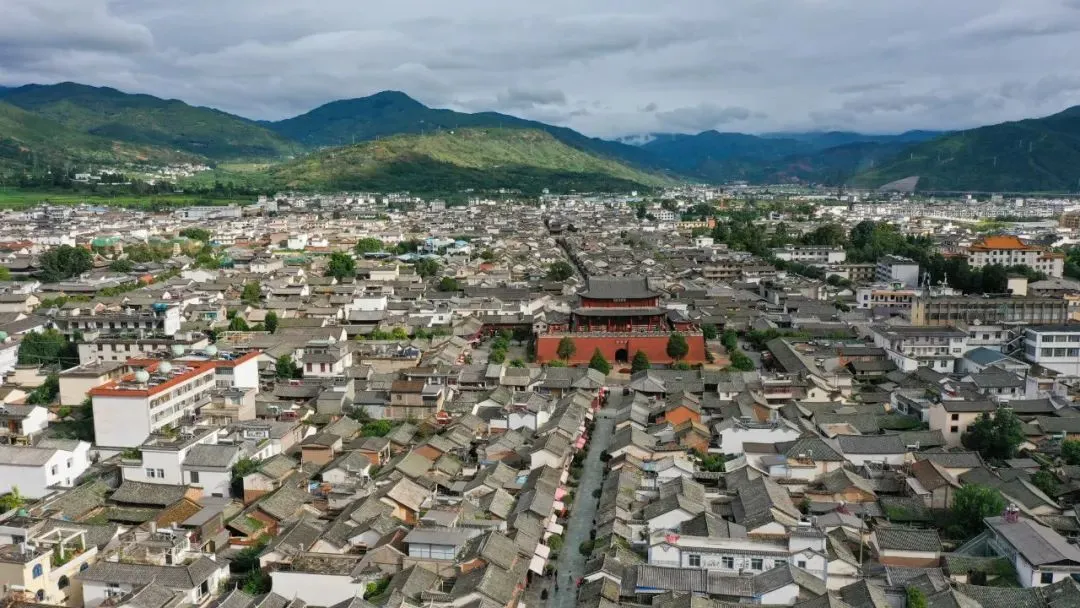
Now, the Nanzhao Kingdom is long gone, leaving only 'Nanzhao Town' in the present world. Today's 'Nanzhao Town' is the seat of Weishan Yi and Hui Autonomous County in the Dali Bai Autonomous Prefecture, and the famous Weishan Ancient Town is located here. It is also the relic of where the Nanzhao capital once originated.
|Weishan Ancient Town Day and Night|
The ancient town centers on 'Gongchen Tower,' with a standard grid layout. The buildings on both sides of the north-south main axis retain the styles and forms of the Ming and Qing dynasties. In these buildings live the indigenous people of Weishan, who have lived here for generations. For that reason, Weishan Ancient Town is known as 'the last living ancient town in China.' Here, I smell little commercialism, only human warmth and authentic life. That alone is reason enough to visit.
The best way to immerse yourself in Weishan is to find a suitable place to stay, settle in, and slowly experience it through day, night, dawn, and dusk. Before 2021, there were only a few inns in this ancient town. This midsummer, the opening of the Dali Yihe Yunxi Jinshidi Cultural Boutique Hotel gave those in the know the perfect haven in this ancient town.
I think it's necessary to talk about the name of this boutique hotel, because even before I checked in, I had to use all my brainpower to barely remember it. But if you break it down, you can remember it easily while gaining a bit more understanding.
Yihe is the brand management side of the hotel. This is the first hotel managed by the Yihe brand since it left its birthplace, Nanjing. The Yihe brand, which rose to fame with the Nanjing Yihe Mansion • Relais & Châteaux, is now a model of new national brands. Looking back at my stays at Yihe, I know that dreaming in the most 'Jinling-flavored' hotel can be so satisfying! You'll understand that I genuinely love this brand from the bottom of my heart.
|Four Yihe hotels in Nanjing|
Yunxi is a hotel brand carefully crafted by the owner couple, Mr. and Mrs. Yang. It is full of cultural atmosphere and represents the owners' expectations for the hotel's future. Perhaps soon we will encounter this new brand at other destinations. Jinshidi refers to the ancient courtyard where the hotel is located, which was renovated from the former residence of Zhao Guotai, a jinshi (metropolitan graduate) who passed the palace examination in the 18th year of Guangxu (1892).
4+1 Courtyards
Spring, Summer, Autumn, Winter: Scenery Changes with Every Step
The hotel entrance on North Street is unremarkable, easy to miss, for this old house built in the winter of 1895. From the time the Yang couple purchased it to the moment Yihe Yunxi Jinshidi appeared dazzlingly before the world, it took a full seven years of polishing. During this time, Master Chen Yifeng, chief architect of the China Architecture Design Institute, personally took three years to design the circulation and exterior, followed by interior design by Mr. Zhang Guangde of the Hong Kong BHD team, who designed for Aman.
|Rest area by the entrance, facing North Street|
The five-entry Chinese courtyard encloses four gardens named 'Spring, Summer, Autumn, Winter,' linking the hotel's seasonal beauty throughout the year.
|Aerial view of the four courtyards|
The first courtyard you encounter upon entering is the 'Winter' courtyard. Quiet bamboo groves outline the welcome path. The path is paved with stone millstones and roof tiles, and bubbling springs emerge from three pieces of volcanic rock transported from Zhangzhou, as if injecting new vitality into the old house.
Passing through Winter courtyard, you arrive at the hotel lobby. The exterior retains the ancient traditional residential structure with a century-old hand-painted wall, but the space under the sloping roof has been completely renovated. The same gold bricks used in the Forbidden City's imperial kilns extend to the next courtyard, while the check-in counter on both sides is designed for sitting service.
After tasting the welcome tea and receiving the wooden key with a sensor chip wrapped in Yi tie-dye cloth, touch the hollow wooden wall assembled with mortise and tenon joints. An immersive journey into Nanzhao life officially begins.
Stepping over this threshold, you see the 'Summer' pool—Jixi Courtyard. The name 'Jixi' comes from the Book of Songs • King Wen, meaning brightness, as if facing the direct sunlight of summer.
It is called the Summer Pool because it is the only courtyard with a waterscape among the four seasonal courtyards. A towering ancient tree, a humble black pine, and a shallow pool reflect the blue sky of Weishan, instantly calming the mind.
On the other side of the Summer Pool is Yousu Hall. Like 'Jixi,' 'Yousu' also comes from the Book of Songs. This is the hotel's café.
Yunnan is China's largest coffee-producing region. Here, you can taste an authentic freshly ground small-bean coffee, paired with a local specialty ru fan scone, making for a very Yunnan-style afternoon tea. This small café became my favorite spot in the hotel for killing time.
Passing through Yousu Hall, you enter the 'Spring' courtyard—Feifang Courtyard, the largest and most varied of the four seasonal courtyards.
In Spring courtyard, there is lush greenery and a dry landscape with stone paths and moss. I already began to fantasize about next spring, when cherry blossoms will fill Feifang Courtyard in full bloom. On the north side of the courtyard stands the only new modern building in the hotel, Tingyu Tower (which houses a gym). This white hollow building reminded me of I.M. Pei's glass pyramid at the Louvre—both jarring and harmonious, a unique landscape.
The 'Autumn' courtyard—Ruyi Courtyard, is the deepest courtyard in the hotel. There is a tall persimmon tree in the yard, which will surely be beautiful when it bears fruit in autumn.
However, you cannot go directly from Spring to Autumn; you must pass through the ancient tree courtyard 'Luming Garden' on the south side of the main building axis. That's why I call it '4+1' courtyards.
|Overlook of Luming Garden|
Luming Garden surprised me greatly! Though not large, it incorporates many traditional Chinese garden landscaping techniques, even blending modern craftsmanship, presenting completely different looks by day and night.
Lotus pond and koi, screen wall and white wall, stone bridge and rockery—the Zhinuan Pavilion built by the water breaks conventions by using jade as material with embedded lighting. Thus, at night, Luming Garden gains another kind of beauty from the translucent Zhinuan Pavilion.
Three century-old trees and an ancient well that still produces water are preserved in Luming Garden. Preserving the essence is the best kind of protection.
The hotel's only restaurant is also in this courtyard, with a sunken semi-open design by the water, offering a unique charm.
16 Rooms
Each Room Unique, Dreaming Back to Nanzhao
As I walked through the seasonal courtyards, I also scanned all the guest rooms. On a floor area of 1,300 square meters, the hotel has only 16 rooms distributed around the 'Spring, Summer, Autumn' courtyards. Each room is a courtyard-view room, and due to the corridor-style layout, most rooms can enjoy views of two courtyards simultaneously.
At the culture-focused Yihe Yunxi Jinshidi, each room is given a name, mostly from ancient texts like the Book of Songs and Hanfeizi, all revolving around the theme of achieving scholarly honors. Based on differences in size, view, etc., they are divided into four main room types, cleverly placed in Jixi, Feifang, and Ruyi courtyards. The rooms in the first two courtyards completely preserve the original architectural layout of the Jinshidi old house. Ruyi Courtyard is a newly built imitation ancient courtyard.
The most numerous room type is the Garden View Deluxe Room, distributed across all three courtyards, ranging from 33 to 42 square meters. The most distinctive room is Qingyou on the first floor of Feifang Courtyard.
This is the only room in the hotel adjacent to water. Opening three antique window panels, you get a full view of the lotus pond and koi. Or, simply sit on the leather chair at the doorstep and gaze at the scenery of Feifang Courtyard—very relaxing.
Xingjian and Yinyuan on the second floor of Ruyi Courtyard are two different Garden View Deluxe Rooms. Xingjian is a twin room with a small terrace facing Autumn courtyard.
Yinyuan is a king room with an island-style bedroom layout, facing two courtyards on each side, full of vacation vibes.
Ruyi Courtyard has two Garden View Feature Suites: Zhuoshi on the first floor and Gongyu on the second floor, each 46 square meters with an open-plan suite layout and a living and leisure area.
|Left: Autumn courtyard view from Gongyu; Right: Autumn courtyard view from Gongyu|
|Left: Gongyu bedroom; Right: Gongyu living space|
The smallest rooms are the Tatami Courtyard Rooms on the first floor of Ruyi Courtyard: one king and one twin, each with courtyard access, sharing one living room, and can be connected as a Family Twin Suite to meet family needs. As mentioned, Ruyi Courtyard is a newly built courtyard and the only one that can be completely independent. Thus, the eight rooms in this courtyard, together with the downstairs Guanzhi Hall multi-function room, form the Ruyi Meeting Suite, which can fully meet the personalized needs of small business groups.
But my favorite room type is the Fuquan Suite Zhenlin on the second floor of Feifang Courtyard. This suite also showcases many meticulous details in the hotel's interior design.
This suite boasts a spacious 63 square meters, with a flip-TV cabinet subtly separating the living and sleeping areas. On both sides of the bedroom are wooden windows with views: west to Feifang, east to Ruyi—enjoying both spring and autumn in one room. The original mortise and tenon ceiling is preserved, and the all-wood structure gives a sense of stability from tradition. Barefoot on the wooden floor, the occasional creak tells the story of over a century of history.
The bathroom is also generous, with a bathtub by the window. The hardware fittings are vintage silver-toned to match, not jarring. Kohler classic smart toilets are standard in all rooms, and the suite is equipped with a Dyson hairdryer.
I must mention the hotel's chosen amenities, 'Da Fu Da Gui,' a collaboration between Yihe and the national skincare brand Jianzhi. They are very Chinese-style, containing extracts of clove, cinnamon, ginger, patchouli, etc. They are very moisturizing and comfortable to use, with a somewhat intoxicating scent. After washing, a faint herbal fragrance lingers on the skin—truly unique.
It may be hard to imagine that this room, full of traditional Chinese flavor, is also equipped with much modern technology. All rooms have underfloor heating, as well as air conditioning and fresh air dual-circulation systems, perfectly meeting today's health-conscious lifestyle. The touch panels are quite advanced, controlling air conditioning and lighting, and even allowing precise percentage control of the curtain lift—truly meticulous.
More convenience facilities blend East and West, from Chinese tea sets to Western capsule coffee machines, and even liquor if you wish. The minibar drinks and snacks are complimentary (which even includes Chu Cheng orange juice!), and there's a free turndown sweet soup at night. Every aspect is thoughtfully taken care of.
In the room design, you'll see a recurring symbol: from bathroom decor to chandelier patterns, even the room number plate. This symbol is the hotel's custom logo, derived from a national-level protected ancient building in Weishan (to be introduced later). One could say this element is almost imprinted in every corner of the hotel's soft design. If you don't believe me, scroll back through the photos: window grilles, café, Tingyu Tower, even the hollow wooden wall—it's everywhere.
N Delicacies
One Restaurant, Infinite Possibilities
Speaking of food, I have to mention Weishan's cuisine. Unlike other parts of Yunnan, Weishan is a hub of gastronomy. Residents of different ethnicities and historical origins have thrived here, bringing a myriad of local foods. So for the hotel to establish itself here, dining is crucial. As mentioned earlier, the hotel's only restaurant, Qiongyan Hall, is located in Luming Garden. Though small, it has a grand vision.
The Yihe brand's pursuit of dining quality is evident. Nanjing Yihe Mansion is one of the few hotels in China that is a member of Relais & Châteaux, known for its cuisine, and its Wanguochun Chinese Restaurant is a regular on the Black Pearl list. I understand that Yihe Yunxi Jinshidi Hotel also intends to apply for Relais & Châteaux membership, showing its confidence in dining quality. The young head chef, Master Liang, born in the 1990s and a local of Weishan, knows how to present local specialty ingredients in a refined way to gourmands.
|Chef Liang returning to the hotel in the morning holding fresh pumpkin flowers|
For main meals, there are two excellent choices: Qionglin Banquet and Sandishui Feast.
If you are a small group, the former is a good option: a few small dishes featuring local ingredients, great value. The so-called Qionglin Banquet refers to the feast held after the palace examination for new jinshi, which is both fitting and auspicious. Ingredients are seasonal local specialties: ru fan, hebao beans, ba meat, and so on. Of course, in summer, mushrooms are a must—how about some top-grade matsutake sashimi?
Qionglin Banquet (partial dishes)
If you have a larger group, don't miss the Sandishui Feast. Sandishui is a representative of the highest banquet level in Baoshan, a neighbor of Weishan. A full Sandishui Feast consists of three parts and is rarely available in its entirety. But at Yihe Yunxi Jinshidi, this tradition is transformed into a feast before your eyes.
The first water is appetizers: cold dishes, sweet soups, etc. I tasted the Nanzhao Four Cold Dishes led by cold-water rainbow trout, and sweet wine rice balls with ru fan. Among them, the must-try Weishan sauce grasshoppers—though they look and sound daunting—are so crispy and flavorful that I couldn't stop eating. The fried matsutake from Mount Langwo with Tibetan old butter fully released the mushroom's aroma, leaving a lasting aftertaste.
The second water is the Eight Big Bowls: local specialty main dishes. Yihe Yunxi presents them in layers: soup, meat, mushrooms, fish, vegetables, offering refined Weishan famous dishes, almost every dish a combination of local and specialty ingredients. The soup is a steam pot of blood pigeon with morel mushrooms and wild kudzu root, very nourishing. Steamed Tibetan fragrant pork ham with fresh galangal highlights the pure meaty aroma; lamb stewed with hebao beans turns the essence into a soft, glutinous bite. Two meat dishes, each exquisite.
The mushroom stars are termite mushroom and matsutake, with Tacheng ham drawing out the termite mushroom's fragrance; the matsutake is accompanied by the famous Wanguochun dish chrysanthemum tofu. The fish dish pairs mushrooms with wild yellow catfish; wrapping fresh shrimp in Weishan ersi are interesting attempts. The final local specialty vegetarian dish, grilled hairy tofu, looks like street food but is paired with black truffle, reaching a climax.
The third and final water is the closing light refreshments: one sweet, one savory, complementing each other. The savory is handmade rice noodles in mushroom soup; the sweet is local specialty fruit 'Xianguo Laodie' (prickly pear cactus fruit) mixed with old yogurt. Xianguo Laodie is truly unique, with high nutritional value, its sweet fragrance blending with yogurt, and the distinctive seeds, ending this amazing culinary journey.
Of course, don't forget to try the breakfast here. It's a set menu with a choice of mains—you can taste authentic ersi, green pea small cakes, hot oil powder, and other local snacks.
If you think that's all the hotel's dining has to offer, you're naive. A good hotel not only excels at in-house cuisine but also provides exclusive off-site dining experiences for guests. In this regard, the benchmark of resort hotels, Aman, has always been strong. I never expected to have a similar surprise in Weishan. The following dishes are from a farm stay called Xinyi.
After the hotel's half-day tour of Weibao Mountain, we were famished and led by our butler to this farm stay at the base of the mountain. I thought we would just try some ordinary farm dishes, but the hotel staff were already there waiting. Later I learned that the chef is still the same, but the hotel had improved and guided the dishes, provided exclusive tableware, and arranged the plating to hotel standards, resulting in high-standard, delicious farm fare. The environment was also pleasant; after the meal we could pick seasonal fruits from the orchard—truly delightful.
Multiple Experiences
Concierge Recommendations: Measuring Weishan
Weishan is not big. A three-day, two-night stay at the hotel will give you a general sense of the place. But to truly understand this national historical and cultural city, you need more time to savor it slowly. Also, don't underestimate the power of the hotel's concierge—they might add more surprises to your itinerary.
Take the hotel's exclusive concierge car for a night tour of Weishan Ancient Town, quickly grasping the city's layout. This relaxed journey allowed me to quickly get to know the place, making deeper exploration more targeted.
Yi Ethnic Costume Experience
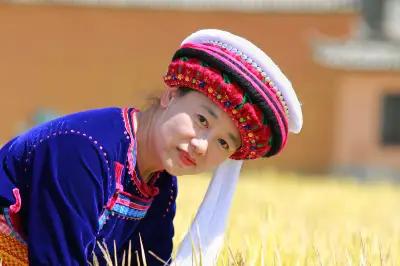
As one of the main cradles of the Yi people, in this Yi and Hui autonomous county of Weishan, many Yi customs are still preserved. So why not try on a set of Yi costumes and show off? The hotel provides full sets of costumes and accessories for guests, both men's and women's!
Dali's tie-dye technique became a national intangible cultural heritage in 2006. South Street, south of Xinggong Tower in Weishan Ancient Town, is Tie-dye Street, just a three-to-five-minute walk from the hotel. Naturally, it should not be missed.
This experience workshop is a carefully selected partner of the hotel. The owner and family are very nice, teaching hands-on, even helping with complex steps to ensure I made a decent piece. Look at this hand towel with 'a bright moon rising from the sea'—not bad, right?
Customized Museum Tour of the Ancient Town
Weishan Ancient Town has multiple national key cultural relic protection units and several museums worth visiting for a deeper understanding. The hotel offers a customized museum tour led by a butler to places like the Nanzhao Museum, Wenhua Academy, and Liang Xiaojie Courtyard Residence Museum. The butlers are Weishan experts; chatting and listening to their explanations on the go truly enriched my experience.
|Aerial view of Nanzhao Museum panorama|
During the visit, I lamented that the history of Nanzhao has yet to find irrefutable evidence from artifacts—but this also makes Weishan a 'lost beauty,' perhaps a different kind of fulfillment.
|Two main buildings of Nanzhao Museum|
For visitors, discovering unique local marks in ancient architecture or feeling ancient craftsmen's ingenious wooden structures is the greatest reward of this trip.
But I actually found a treasure in the Yuhuang Pavilion and Wenhua Academy complex: a familiar pattern on the window grilles that turned out to be the origin of the hotel's logo! This cultural connection may well embody the unique charm of this hotel.
Half-Day Tour of Weibao Mountain
Leaving Weishan Ancient Town, a 15-minute drive took me to the famous Taoist mountain, Weibao Mountain, south of the city. From the Tang Dynasty, Taoist temples were built here, and it is also a sacred place for the Yi people to worship their ancestors. Today it is one of the four great Taoist mountains in China. The half-day tour mainly covers the front mountain, including temples like Wenchang Palace, Qingxia Temple, and Sanhuang Temple, all worth savoring. On the way back, you can ask the butler to take you to Xinyi for a special farm meal (reservation required).
Half-Day Tour of Donglianhua Village
If you book the hotel's Dali Airport transfer, you can enjoy a free tour of Donglianhua Village. This Hui village lies halfway between Dali city and Weishan county. Thanks to the Ma family brothers' caravan trade, Donglianhua flourished, earning the nickname 'Little Paris.' Today, the village's Caravan Museum is worth visiting, and the tour includes tasting local special noodles—I must say, this was my first time trying this Hui dish; its bold umami was captivating.
Of course, I recommend spending more time slowly walking and feeling this living ancient town. You might find, like I did, an unforgettable snack shop (for example, my favorite local breakfast place, Su Laoyi Yigu Noodles, very close to the hotel—'yigu mian' means a single noodle, surprisingly pleasing in both appearance and taste!), or even play chess and chat with locals... That's the life of Weishan.
Promise me—I'll be waiting for you in Weishan, waiting for you at Yihe Yunxi!