Yunnan Resumes Cross-Province Tourism: Please Receive 12 Love Letters from Dali
December 15, Yunnan Province resumes cross-province tourism! Dear, hey! Long time no see, I’ve missed you so much. You heard right, Dali has been missing you for a long, long time. I’ve written you twelve love letters. Let’s read them one by one.
Ancient Capital, Sacred Cangshan-Erhai
The first love letter is for you who love the lakeside.
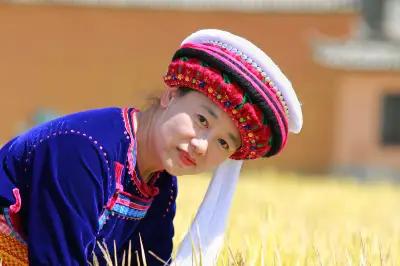
“Cangshan is a timeless ink painting without brush; Erhai is an eternal zither without strings.” Within Dali City, Cangshan and Erhai form a perfect pair. The Dali Ancient City, Chongsheng Temple Three Pagodas, Butterfly Spring and other renowned sights are celebrated at home and abroad. The ancient town charms of Shuanglang and Xizhou have made a huge splash. The natural spectacles of wind, flowers, snow and moonlight are long famous worldwide. Bai ethnic costumes, Bai tie-dye, clay sculpture, dough figurines, Jiama prints, embroidery and other travel souvenirs dazzle the eye. Traditional delicacies like Bai-style raw pork, rushan cheese, and the Three-Course Tea make countless foodies drool…
Ancient Nanzhao Capital, Origin of the Honghe River
The second love letter is for the seasoned foodie in you.
Weishan is a vital piece of the Greater Shangri-La international tourism zone. In the western Yunnan region, tucked beside Cangshan and Erhai, Weishan is a truly “living” ancient city – the Weishan Ancient Town. Weishan is famous for its antiquated, serene, unique and picturesque Weibao Mountain, the majestic Honghe River, and the charming overseas Chinese village of Donglianhua. … Weishan has long been hailed as “Snack Paradise, Culinary Capital of Nanzhao.” Its Paorou stewed rice noodles and Guojiang rice noodles are renowned far and wide. Local specialties like Nanzhao One Noodle, green bean mini cakes, and cold bean jelly are well loved near and far. Time-honored treats such as candied fruits, pickles, and air-dried beef leave an endless aftertaste…
Hometown of A Peng, Land of Woodcarving
The third love letter is for you who love culture and humanities.
Jianchuan boasts a long history and splendid culture. It is an important birthplace of Yunnan’s “Bronze Culture” and “Rice-Farming Culture,” and a “Treasure Trove of Chinese Bai Culture.” The Jianchuan Ancient City has a profound cultural lineage. Shibao Mountain is endlessly intriguing, Jian Lake is as beautiful as a painting, and Shaxi Ancient Town is gracefully timeless. The ingenious Jianchuan craftsmen, across a thousand years, have strung together cultural memories of “wood, clay, stone, and cloth.” Jianchuan woodcarving has been handed down for millennia, the pottery made from clay by Haiwei Creek displays myriad forms, and the stone carving skills have been esteemed since the Tang Dynasty…
Famous City on the Ancient Roads, Hometown of Chinese Walnuts
The fourth love letter is for you who adore nature.
Yangbi is a key town on the Bonan Road and the Tea Horse Road – a truly deserved “Famous City on the Ancient Roads.” Yangbi features the Stone Gate Pass that has stood since ancient times, the stunningly magnificent snowscape of Cangshan, the gentle yet fierce “Sounds of River Joy,” the uniquely beautiful solitary pine on Xiuling Peak, the solemn and serene Fuguang Temple evening bell, and vast thousands of acres of walnut orchards blanketing the hills. The traditional Torch Festival and the “China Dali Yangbi Walnut Festival” and other events attract visitors from everywhere. The intangible cultural heritage Jijie embroidery is a unique cultural treasure of the Yi ancestors…
Origin of Yunnan, Land of Auspicious Clouds
The fifth love letter is for you who love colorful clouds.
When auspicious clouds descend, they are breathtakingly beautiful. Xiangyun is known as the “Land of Auspicious Clouds.” Here you’ll find Yunnan Yi, the post station that still retains the original name of Yunnan; the ancient yet still vibrant Xiangyun Ancient City; the lush peaks of Shuimu Mountain; Qinghua Cave, reputed as the “Number One Wonder Cave in Western Yunnan”; and the memorials honoring revolutionary martyrs Wang Fusheng and Wang Desan, plus the home of martyr Wang Xiaoda – countless heroic and glorious red memories. Xiangyun was a key political, economic and cultural center in the history of western Yunnan. Xiangyun earthenware pots are exported to Southeast Asia, while straw hats, enamel silverware, tofu, pickled chili sauce, and crude alkali are famous far and wide. Xiangyun malt sugar is a must-have when entertaining guests.
Land of Flowing Streams and Festive Lanterns
The sixth love letter is for you who love to sing.
“The moon shines bright and clear, I think of my lover deep in the mountain. My love, like the moon, walks across the sky; the little stream flows softly at the foot of the hill.” This folk song, “Flowing Stream,” born in Midu, is called the “Oriental Serenade” by Western music circles. Not just “Flowing Stream” – Midu is famed as the “Home of Colorful Lanterns,” “Land of Mountain Songs,” and “Land of Folk Songs.” Songs like “Midu Mountain Song,” “Ten Sisters,” and “Embroidering a Purse” are universally beloved. All this is tied to Midu’s unique traditional culture. Midu also has the “Heavenly Bridge,” an unparalleled scene and the world’s number one bridge; Wuben Village, acclaimed as a “paradise hidden from the world”; and Wenjie Ancient Post Station, a crucial rest stop on the Southern Silk Road…
Wonderful Jizu Mountain, Ancient Charm of Binchuan
The seventh love letter is for you who love fruits.
Apart from the famous Buddhist sacred site Jizu Mountain, which is celebrated throughout South and Southeast Asia, Binchuan also offers the Baiyangcun Neolithic ruins, the Wenwu Temple in Zhoucheng, the thousand-year Bai cultural gem – Ju Village, and the Daying Guanyin Pavilion – all sites with profound history, rich content, and beautiful scenery. Binchuan is a blessed land. Besides specialties like Haishao fish, it is the renowned home of fruits. Grapes, citrus, peaches, apples and more are abundant and wonderfully flavorful.
Millennium Bonan, Flavor of Yongping
The eighth love letter is for you who love ancient road culture.
Nestled between the Bonan Mountain and Yuntai Mountain branches of the Yunling range, Yongping is dotted with numerous cultural relics and historic sites such as Beidou Pu and Tianjin Pu, all well-renowned. There’s the ecological paradise Baotai Mountain, the famous “Western Hills Evening Green” and “Yongping Morning Mist,” and the gem-like Dajian Pond … Walk the Bonan Road again, explore the ancient post stations of the Southwest Silk Road, and in Qudong Ancient Town, savor a series of Yongping specialties like Braised Chicken, Preserved Goose, and Mushroom Black Bean Chili.
Humanistic Nuodeng, Taiji Landscape
The ninth love letter is for you who love traveling.
Yunlong is rich in tourism resources, with numerous sights including Nuodeng Ancient Village, the naturally formed Taiji Diagram, Tianchi Lake, Hutou Mountain, Baofeng Ancient Town, and more. Stepping into Yunlong is like entering a travel paradise hidden deep in clouds and mist. Yunlong’s array of regional cuisines includes Nuodeng Ham, Wujing Tofu Sausage, Yunlong Steamed Eight-Treasure Rice, and Jellied Meat – too many to count.
Source of Erhai Lake, Land of Hot Springs
The tenth love letter is for you who enjoy life.
Eryuan is a key stop along the golden tourism route of northwest Yunnan: Dali – Lijiang – Shangri-La. It is known as the “Land of Dairy Cows,” “Land of Hot Springs,” and “Land of Plum Fruits.” Eryuan’s West Lake is like “a lotus rising from clear water, with natural, unadorned grace.” Eryuan’s Cibi Lake makes one wonder, “Who says the Thousand Scenic Spots of Erhe are the best? The source here is even more limpid.” In Eryuan’s Fengyu Town, “fertile fields stretch on, valleys fold into villages… The Peach Blossom Spring, though long lost, still leaves this hidden gem – a great wonder indeed.” “Hot springs every three steps, pools every four; steaming mist like a fairyland.” Today, Eryuan has formed a hot-spring culture tourism pattern led by the Dali Geothermal Kingdom and Xiashankou Putuo Spring, supplemented by the three major areas of Eryuan County town, Niujie Township, and Yousuo Town.
Millennium Silver Capital, Dreamy Waterside Land
The eleventh love letter is for you who love water towns.
Heqing has a long, glorious cultural history and has been praised since ancient times as a “Famous Land of Literature.” It is a shining pearl on the plateau of northwest Yunnan. Xinhua Village, where every home has a spring and every household gurgles with flowing water; the Caohai Wetlands, where migratory birds flock in winter and spring, and lotuses bloom in summer and autumn; the Dragon Pool scenery that glows with morning rays at dawn and wondrous moonlight at night; the Yunhe Ancient Town, founded in the Ming Dynasty with rich architectural relics… Heqing County abounds in tourism resources, with delicacies like Copper Pot Rice, Liver Wind-Blow, and the Seven Dishes of Qifeng, as well as the famous Heqing liquor and Xinhua Village silverware.
Boundless Mountains and Waters, Land of Tiaocai
The twelfth love letter is for you who love cherry blossoms.
Nanjian has been an important passage on the Tibetan-Yunnan Tea Horse Road since the Tang and Song dynasties. Here stand majestic Wuliang Mountain and the Wuliang Mountain Grand Scenic Area centered around the “Three Valleys”: Sakura Valley, Medicine Valley, and Tibetan Tea Valley. Each year from late November to mid-December, when the cherry blossoms are in full bloom, Wuliang Mountain Sakura Valley becomes “the first place in China where spring arrives.” With rugged boldness, Yi men perform the ancient Nanjian Tiaocai dance to perfection, taking it to the British Royal Court and onto the CCTV Spring Festival Gala stage – earning Nanjian the title of “China’s Art Town of Folk Tiaocai.”
In the days when we couldn’t meet, I missed you to the extreme, longing for our time in Dali. Now that Yunnan has resumed cross-province tourism, let’s meet again!