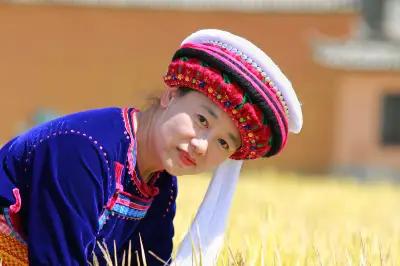
Yunnan: South of the Colorful Clouds, Lasting Memories – A 15-Day Journey in Yunnan
In July 2021, I spent half a month traveling with my parents through Kunming, Dali, Lijiang, Shangri-La, and Xishuangbanna in Yunnan. The overall pace was very comfortable and we covered all the iconic sights. I spent two weeks planning everything online—booking day tours, hotels, and flights—and the trip went off without a hitch. Due to the pandemic, even though it was the peak summer holiday season, tourist spots were relatively uncrowded, making the experience very pleasant. Inn prices and meals in the old towns were great value. The total cost (including transport, accommodation, tours, chartered car, taxis, and local specialties/fruits) came to about 7,800 RMB per person. It was a semi‑independent trip: I joined no‑shopping small group tours when needed, and also arranged private car hires. The itinerary wasn’t rushed, rather relaxed, yet we managed to experience nearly everything worth seeing and doing. Yunnan has beautiful scenery and wonderful people—I’ll definitely go back. (Note: In July 2021, the passenger railway to Xishuangbanna hadn’t opened yet, so we flew in and out of Xishuangbanna. Now that the railway is in service, traveling to Xishuangbanna is more affordable and convenient.) Since there was no direct flight from my hometown to Kunming, I arrived in Tianjin the day before. We departed Tianjin in the morning and landed at Kunming Airport around 1:30 pm. Then we took a taxi to our pre‑booked hotel downtown, arriving at about 3 pm. (Many hotels and inns in Yunnan have triple rooms, which is great for family travel. The hotel I booked in Kunming was a triple with two bedrooms, offering both privacy and togetherness, and it was reasonably priced.) Before dusk, we took a taxi to Dianchi. You can feed pigeons here and take photos at the “mirror of the sky” spot (10 RMB/person). Yunnan has so many stunning sights that Dianchi felt a bit less impressive in comparison.
The next day was a pre‑booked day tour. The Stone Forest is extremely famous and a must‑see. But if you only visit the Stone Forest, you’d return quite early, so I chose a combo of Stone Forest + Jiuxiang. It proved well worth it—Jiuxiang’s underground river was astonishing (photos can’t capture the effect), the surging water made me feel tiny. The karst caves are also worth visiting; they are completely different from the Silver Cave I saw in Guilin. These caves are huge—the Lion Hall alone is over 10,000 square meters with a single intact roof slab. At Jiuxiang you can also do a short rafting ride through a narrow gorge waterway, with a boatman steering, so you can just enjoy the scenery and take pictures. We were back in the city around 6–7 pm. That evening we ate at Qiao Xiang Yuan Crossing‑the‑Bridge Noodles; I’d recommend just ordering the simplest classic bowl—it tasted great! (Whenever I travel with my parents, I love booking local no‑shopping day tours, and occasionally two‑day tours for longer distances. It’s hassle‑free and cost‑effective, but you must read reviews carefully to choose good products—don’t be tempted by cheap shopping tours.)
After breakfast, we took a high‑speed train to Dali. Right outside the railway station, you’ll see a tourist shuttle bus stop that goes directly to Dali Ancient Town—very convenient. Dali’s tourist transport system is excellent; there are shuttle buses connecting the city station, various Dali attractions, and even Lijiang. You can check schedules and buy tickets online under “Dali Travel Service.” However, in the ancient town area you need to pinpoint the correct boarding point (there’s more than one) and allow extra time to avoid going to the wrong stop. From the drop‑off point in Dali Ancient Town we walked about 10 minutes to our pre‑booked inn, located near the South Gate. I recommend staying near the South Gate for easy access to dining, transport, and sightseeing. After a short rest, we took a ride‑hailing car to Xizhou Ancient Town in the afternoon. I’ve been to countless old towns across China, but Xizhou stands out with its wheat fields—vast and lush green, my mother absolutely loved it. There are narrow paths through the fields where you can walk in and take fantastic photos. We spent about two hours there. Back to the ancient town by ride‑hailing, then strolled around, finally had dinner outside the South Gate and returned to the inn.
We got up early and took a taxi to the North Gate morning market to buy breakfast and blueberries. The blueberries were incredibly cheap, fresh, and delicious—picked and sold right there by local villagers. The market was full of locals selling vegetables, fruit, and flowers. The early morning air in the ancient town was crisp and refreshing; if you have time, it’s worth a stroll for the atmosphere. After breakfast we went to Cangshan Mountain. We took the aforementioned shuttle bus (you can buy Cangshan cable car tickets online, which include a return shuttle bus ticket). The bus makes a stop where you can rent a down jacket (30 RMB/piece at that time, much cheaper than on the mountain; the jacket is waterproof like a raincoat) and an oxygen bottle, completely optional. I recommend renting a jacket because the weather on the mountain can be totally different from below. On the day we went, it was sunny at the foot but foggy and eventually poured rain at the summit—very cold. (Because of the fog, we saw almost nothing at the top; that was a regret of this trip.) Alternatively, you can wear warm clothes/windbreaker and decide about renting after checking conditions at the top, but definitely wear comfortable shoes—there are many steps to climb on Cangshan. There are three cableways up Cangshan; the longest and most scenic is the Ximatan Cableway, which takes you to the summit. It’s also the most expensive. I chose this one and recommend it if your physical condition allows. However, this cableway may close when winds are strong on the mountain; when closed, it only goes down, not up, so check the weather before booking online. Although we didn’t see Ximatan due to fog, when the cable car dipped below the clouds we got a panoramic view of Dali Ancient Town and Erhai Lake—absolutely stunning!
Around 3 pm we took a taxi to our inn in Shuanglang Ancient Town—a pre‑booked lake‑view room in a great location. The room had a large balcony with floor‑to‑ceiling windows, and outside was a spacious terrace with loungers where you could sit, feel the breeze, and enjoy the lake view. The balcony literally overlooked Erhai Lake. My parents loved this room; after several days on the move we were a bit tired, so it was perfect to relax in this comfortable setting and savor the slow travel moments. Shuanglang has many inns like this; I highly recommend staying here if you want to truly experience Erhai.
Having already visited Xizhou and Dali town, today’s Erhai itinerary started from Shuanglang Ancient Town along the eastern shore, ending at Dali Railway Station. Since I was traveling with my parents, I didn’t rent a car (or consider cycling—even on a future solo trip I’d skip cycling or e‑biking because Yunnan’s UV rays are extremely strong and sunburn is a real risk; sun protection is a must here). I had arranged a private driver online in advance at 450 RMB/day, coordinating the pickup time and route the day before. The driver not only drove but also acted as our amateur photographer—while not professional, he was better than most casual shooters and gave us all the photos he took. He was a local who knew every photo‑worthy spot. This day was one of the most worthwhile; we moved at a slow pace, stopping here and there, mainly to capture nice family photos. We set off at 10:30 am and arrived at Dali Railway Station around 5 pm. My parents took a high‑speed train to Lijiang while I, due to a temporary matter, had to take a train back to Kunming for a short while.
I had also pre‑booked the Lijiang inn and arranged with the owner (for an extra fee) for a car to pick my parents up at Lijiang Railway Station and bring them to the inn. The inn was near Zhongyi Market, making it easy to go in and out of the ancient town and to specify the pickup point when joining local day tours. The Zhongyi Market has a lively night market with loads of food; we went there almost every night in Lijiang. There were also many fruit vendors selling fresh, cheap fruit.
I didn’t go to Lugu Lake and have no first‑hand experience, so there are no pictures here. My parents joined a small group day tour I had booked online; they said the scenery was also quite nice.
We had no scheduled plans this day, just wandered around Lijiang Ancient Town, resting at the inn when tired, finding a nice restaurant to taste local specialties when hungry. Life in Lijiang was truly pleasant.
The first stop was Tiger Leaping Gorge. I had been to Hukou Waterfall before, but Tiger Leaping Gorge felt even more awe‑inspiring and has a different style. Reaching the viewing platform requires climbing many steps; if you don’t want to climb, you can buy a ticket and take the elevator. The second stop was Pudacuo National Park. As a national park, it’s all about forests and lakes. You can explore by boat or on foot; most people walk, but taking a boat likely offers a different perspective. Along the boardwalk we saw cute little squirrels. The third stop was the evening chieftain’s feast, essentially a small hotpot. Plenty of meat was served, but the vegetable choices were limited to potatoes and cabbage—understandable on the plateau. Some may find it not to their taste, but the point is to experience local customs and the lively atmosphere. In good weather there would be an outdoor bonfire party, but it rained that day, so only indoor activities took place. Our Shangri‑La accommodation was a loft suite in a courtyard‑style hotel with strong Tibetan character; very memorable, comfortable, and satisfying. It’s a good idea to bring some anti‑altitude sickness medicine for Shangri‑La, usually taken before bed, as it’s at high altitude.
The second day of the two‑day tour didn’t have major sights. In the morning we went horseback riding—an optional activity that almost all online tours include. It’s best not to carry a bag while riding, and avoid wearing skirts as they might spook the horses. If you’re nervous, someone will lead the horse. Yunnan horses are a smaller breed, different from the ones I rode in Inner Mongolia. At noon we had lunch at the guide’s home, tasting butter tea, highland barley, yak jerky, etc.—really tasty. You could buy saffron, notoginseng, and other medicinal herbs there, with no forced purchase. We returned to Lijiang in the afternoon. Compared with Dali and Lijiang, I felt Shangri‑La was slightly less interesting. If your travel time is limited, you can save it for a future trip. If you have enough time, it’s worth going since Shangri‑La is so well‑known; visit it so you won’t have regrets.
For Jade Dragon Snow Mountain, I joined a 5‑person group tour online, with a choice of early or late departure. We chose early and were among the first to take the cable car up. There weren’t many people on the mountain, but in late July there’s no snow, only glaciers. You have to climb many steps on Jade Dragon Snow Mountain—go slowly and take plenty of oxygen. We were lucky: the weather was decent on the way up and we saw the glaciers; later, when the later groups arrived, fog set in and visibility was so low that it was hard to see anything. The mountain weather is unpredictable; visiting Yunnan requires a bit of luck. Jade Dragon Snow Mountain was also my dad’s and my favorite spot. After descending by cable car, we followed the crowd and took a shuttle to Blue Moon Valley. I had visited Jiuzhaigou with my parents years ago, and Blue Moon Valley resembled it somewhat, with blue‑green water.
Lijiang has two shows: Impression Lijiang and The Romance of Lijiang. In the past, I always watched such local performances during my travels, but they never left a deep impression. After doing some online research, I chose Impression Lijiang this time. Impression Lijiang is the only daytime outdoor live‑action show. On clear days, Jade Dragon Snow Mountain forms a natural backdrop right behind the stage. The performers are not professional actors but villagers from nearby ethnic groups, so the performance feels very authentic and primeval. There are no stage lights or elaborate sets—just the blue sky, the snow mountain, and the people who live on this land, using their most ancient, traditional, and simple ways to tell their history, life, and stories. I absolutely loved this show; it made a huge impact on me personally. During the second half of the show it poured rain, but the performers were so dedicated—they continued in their traditional costumes (which must have been heavy when wet) and performed seriously until the end. I suggest that everyone going to the show grab a free raincoat at the entrance, because Yunnan’s weather is fickle, umbrellas are not allowed during the performance, and a raincoat will keep you from getting soaked and prevent you from having to leave halfway.
We rested in the morning, then after lunch took a taxi to the airport and flew to Xishuangbanna. Our inn was in Gaozhuang Xishuangjing, very close to the Starlight Night Market, just a few minutes’ walk. The environment was nice and quiet. (Xishuangbanna has a tropical climate, lush vegetation, and lots of insects—I saw many geckos there, and as a northerner not used to them, it was a bit creepy.)
In July, Dali and Lijiang required a long‑sleeved jacket and long pants in the morning and evening, but Xishuangbanna was typically tropical and hard for a northerner like me to adjust to. It was muggy and hot; we took a taxi to Manting Park, where you needed to pause for a rest after walking a short while. Manting Park, once the royal garden of the Dai king, is rich in ethnic character. It’s a very representative city attraction combining architecture, plants, temples, and even elephant shows. After entering Manting Park, there’s a small gate leading to Zongfo Temple; after visiting, you can return to the park with the same ticket. Our ride‑hailing driver said that unless you’re a believer, after seeing Zongfo Temple you can skip the Grand Buddha Temple. The Starlight Night Market is extremely lively, with food, amusements, souvenirs, and many vendors selling Dai clothing—be sure to bargain. At the night market, focus on the experience and don’t be easily swayed by street touts for travel photography. If you want photos, do your research online beforehand, choose a reputable shop and photographer, or look at their costumes and sample shots at various storefronts (which are everywhere) to compare before deciding. The Big Golden Pagoda is also at the night market. Every evening in Xishuangbanna, I would come here to stroll and soak in the atmosphere—it was so pleasant.
That day I booked a no‑shopping day tour; most fellow travelers were parents with kids. Inside we saw elephants, lizards, and butterflies. There was a little surprise: after I left the butterfly house, a butterfly landed on my hat and didn’t fly away for over half an hour—a small travel delight. Viewing wild elephants involves walking along a boardwalk or taking a cable car. Nobody in our group took the cable car; strolling through the forest was very pleasant, and you could turn back anytime when tired. One family with a child went on a “rainforest elephant herding” experience where you can walk up close with a mother elephant and her baby in the forest—worth checking out if interested. We were unlucky and didn’t see any wild elephants, only the park’s elephant show. The heat killed our appetite, so we skipped the group lunch and ordered food on our own while watching the show; the prices were reasonable and the taste fine.
Besides elephants, Xishuangbanna is also about peacocks. The peacock flying show is the signature attraction of the Virgin Forest Park. It was the first time in my life to see so many peacocks and the first time to see them actually fly. The park also has a small water‑splashing activity; we didn’t join in but just watched from the side, yet we still felt the joy and hospitality. After the tour, my mother and I went to a photography studio I had pre‑selected online. Actually, the photo poses and angles were pretty standardized and over quickly, but the results were good—they gave us all the digital files plus ten retouched images as a memento.
I’m not particularly interested in plants, but since I was here, I had to visit the tropical botanical garden. The garden environment was lovely with all kinds of novel tree species, but what stands out in my memory now is the Victoria amazonica—it can hold a person’s weight, so children or lightweight women can sit on it for photos. That day our group had many kids; I heard you can also take children on a night tour of the garden, which would be a different experience. At noon, we flew back to Beijing.
Travelogue Contents
1. Foreword
2. Day 1: Tianjin – Kunming
3. Day 2: Stone Forest – Jiuxiang
4. Day 3: Kunming – Dali (Xizhou Ancient Town)
5. Day 4: Cangshan – Shuanglang Ancient Town
6. Day 5: Erhai Lake Tour (Private Car) – Lijiang
7. Day 6: Lugu Lake
8. Day 7: Lijiang Ancient Town
9. Days 8–9: Two‑Day Shangri‑La Tour
10. Day 10: Jade Dragon Snow Mountain – Blue Moon Valley – Impression Lijiang
11. Day 11: Lijiang – Xishuangbanna
12. Day 12: Manting Park
13. Day 13: Wild Elephant Valley, Xishuangbanna Virgin Forest Park
14. Day 14: Xishuangbanna Tropical Botanical Garden
15. Day 15: Return Journey, Xishuangbanna – Beijing
Travel Information
Hotel Index
Guide Index
Flight Index
Site Navigation
Tour Index
Cruise Index
Corporate Travel Index
Partnership & Cooperation
Affiliate Program
Links
Corporate Gift Card Purchase
Insurance Agency
Agent Cooperation
Hotel Franchise
Destination & Scenic Spot Cooperation
More Partnerships
About Ctrip
About Ctrip
Ctrip Hot Topics
Contact Us
Careers
User Agreement
Privacy Policy
Business License
Security Center
Ctrip Content Center
Intellectual Property
Trip.com Group
Algorithm Disclosure