How Many of the 'Instagram-Worthy Spots' Scattered on Dali's Cangshan Mountain, by the Ancient City, and Along Erhai Lake Have You Been To?
“Wind, flowers, snow, and moonlight, carefree in Dali” is the best and most accurate summary of Dali, as well as a praise of it.
Dali's beauty is everywhere, giving rise to endless scenery, which in turn forms one attraction after another. These attractions continuously draw crowds, creating “Instagram-worthy spots.”
In my view, the term “Instagram-worthy spot” affirms a place's popularity and foot traffic, so it is not a derogatory term.
Dali's Instagram-worthy spots are widely distributed—on Cangshan Mountain, beside the ancient city, and along the shores of Erhai Lake, they can be seen everywhere.
The word “Nanzhao”—how many people first think of it from “Chinese Paladin”? And how many have developed a strong interest in its mystery?
When the term “Nanzhao” is linked with its geographical location—Dali—does it stir a bit of excitement in your heart? Because it refers to the poetry and distant lands that most people yearn for.
Nanzhao Customs Island is located on Erhai Lake, on the west shore in the town of Shuanglang, separated from Shuanglang by a strip of water. Nanzhao Customs Island, Shuanglang Town, and Xiao Putuo together paint the phantom of Erhai Lake's scenery.
When strolling through Shuanglang Town, you can catch a glimpse of Nanzhao Customs Island from any vantage point, giving the impression that Nanzhao Customs Island and Shuanglang are like twin sisters, growing up together.
The styles of Shuanglang Town and Nanzhao Customs Island have long merged. Shuanglang's artistic and romantic characteristics have been passed on to Nanzhao Customs Island, while the island's tranquil and simple features have been absorbed and integrated by Shuanglang.
The trees on Nanzhao Customs Island form a natural barrier, blocking those who only want to see the entire island from the shore. Seen from the shore, the island is completely shaded by trees, blurring the line between reality and illusion, adding a sense of ethereality.
Taking a speedboat to the island's pier, the outlines and shadows of every scene and object gradually come into focus...
The entire island is surrounded by water, with dense buildings, crisscrossing paths, and lush forests and blooming flowers complementing each other.
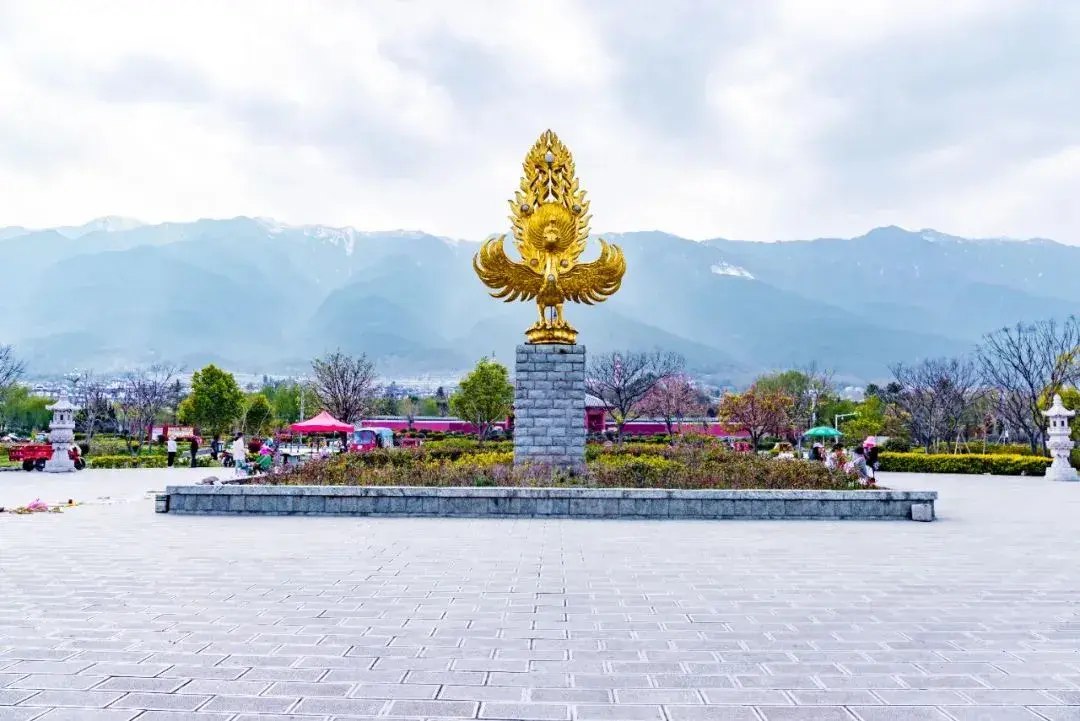
Nanzhao Customs Island centers around the Main God Square and the Nanzhao Palace, with the beach, the Erhai Moon Viewing Terrace, and the Shamu Group Sculptures arranged around it.
Without the ferry, this place would feel like another version of a secluded paradise—a world apart. The islanders live by fishing; those on the island do not want to leave, and outsiders cannot come in.
I think Nanzhao Customs Island has garnered such high popularity precisely because it fulfills people's longing for freedom and a heavenly paradise on earth!
Xizhou Ancient Town, one of the four famous towns of Dali.
The ancient town sits in the wilderness between Cangshan Mountain and Erhai Lake, close to Erhai, so it encompasses fishing village, Erhai, wilderness, ancient town, and green mountain scenery.
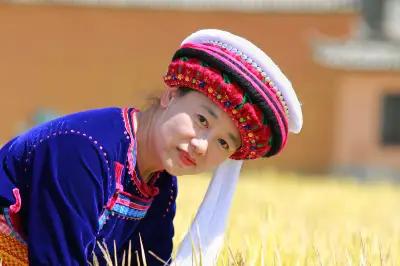
As a pure Bai ethnic ancient village, it has had a name since the Ming and Qing dynasties, gradually evolving from a small village into a sizable ancient town.
Entering Xizhou, you find a labyrinth of interlaced paths, with buildings blending modern and Ming-Qing antique styles standing in rows. Every household has a small courtyard filled with various flowers.
Xizhou Ancient Town is not far from the bustle, but closer to tranquility. It is like a hermit who hides amidst the city; the daily lives of its people embody the comfort many dream of.
The ancient town boasts convenient transportation, comfortable living, and a rich cultural atmosphere. Various handmade art and craft shops are scattered throughout, making it feel like an “art town”!
The Heavenly Dragon Eight Tribes Film Studio is a film base built in the style of the Dali Kingdom period, so it is both a scenic spot and a filming location.
The film studio is located at the foot of Cangshan Mountain, at the end of March Street, just a few kilometers from Dali Ancient City, making it a must-visit for many touring Dali.
The film studio is surrounded by tall “ancient city walls,” and you must enter through a distinctive gate to appreciate its charm.
The film studio's name, “The Heavenly Dragon Eight Tribes,” originates from Buddhist culture, referring to eight mythological beings, among which we are most familiar with Asura, Garuda, and Kinnara, as these names appear more or less in “Journey to the West.”
Entering the film studio, you will find three parallel main streets, each ending at an important landmark building.
Dali Street ends at the main gate of the film studio and the Dali Kingdom palace complex; Daliang Street houses the Duan Family Embroidery Building and a side gate; another street is the martial arts costume exhibition area, with specialty shops interspersed, forming the vast Heavenly Dragon Eight Tribes Film Studio complex.
Due to its stark contrast with surrounding architecture, coupled with its mystery and enclosed nature, the film studio attracts a large number of visitors.
People come here to trace the footprints of film and TV dramas, imagine the appearance of the Dali Kingdom, experience imperial majesty at the palace, participate in a clever marriage proposal at the Duan Family Embroidery Building, and fully immerse themselves in the charm of Dali from a thousand years ago!
If “Xima Pool” did not appear together with Cangshan Mountain, I think people's expectations for it might diminish.
But when Cangshan and Xima Pool are mentioned together, attention shifts back to the summit of Cangshan.
Most people are not unfamiliar with Cangshan, but they seem to have little impression of Xima Pool. Located at the summit of Cangshan, Xima Pool is an ice-eroded lake.
Legend has it that when Kublai Khan campaigned against Dali in the south, he took a detour here and camped to wash his horses, hence the name. Another version says the pool was a water conservancy project built during the Nanzhao period.
Regardless of its origin or purpose, just looking at Xima Pool, its breathtakingly stunning beauty is already unforgettable!
As the highest-altitude lake on Cangshan, it requires a cable car ride and one transfer to reach. Xima Pool's beauty can be viewed in two parts: the cable car stage and the summit flat area centered around the “pool.”
The cable car stage offers the beauty of the Cangshan forest sea and the treacherous peaks and ravines. The cable car takes you through the three-dimensional depth of Cangshan, letting you see crisscrossing gullies and rolling mist.
Once at the open area at the summit, you can leave the cable car and explore on your own. At that point, the feeling of reaching out to touch the sky becomes even more pronounced!
The Xima Pool scenic area centers on the “pool,” with a boardwalk connecting the entire touring zone. This is where the details of Cangshan's scenery are displayed: sharp steep peaks, verdant fir trees, and ethereal wildflowers—details of Cangshan that were unclear from the cable car are presented here in another form.
Cangshan Xima Pool is sometimes dreamy, sometimes cool and elegant, sometimes gentle; its charm is multifaceted—perhaps this is why people are so captivated by it.
Dali is both a landscape city and a city of classical culture, as well as an ethnic minority cultural park. Its characteristics have spawned a large number of “Instagram-worthy spots,” and these attractions remain popular, drawing group after group of people!
Editor: Yijing from Yue Yunnan
Photos: Taken by Yue Yunnan
Note: Please indicate the source when reprinting this article. Images are not to be used for commercial purposes without permission.