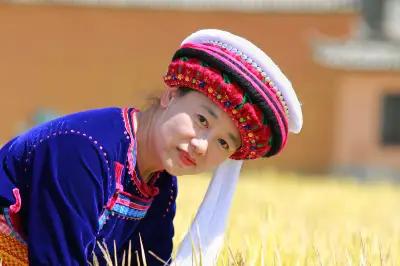
Dali Travelogue: A Leisurely Soul Chasing Clouds, Snow, Mountains, Waters, and Flowers—All for Romance and Relaxation!
Dali, a city that haunts one's dreams.
Dali is also a place that truly stands out; its uniqueness endows it with spirituality, elegance, and romance—a timeless elegance and romance.
Dali is an Eden on earth, with endless green mountains, clear waters, and flowers, an ever-vibrant urban atmosphere, and a pervasive sense of gentle ease.
Dali is like a natural dream-making paradise, drawing everyone who comes here into a shared dream...
Leisurely wandering through the streets and alleys of the city and countryside, be a romantic idler, seeking the Dali of your imagination—chasing clouds, chasing snow, chasing mountains, chasing waters, chasing flowers.
The clouds of Dali hold a unique status; their legend spread throughout Dali long ago, earning a renown rivaling that of Cangshan.
In Dali, chasing clouds is a romantic and leisurely pursuit; every day of the year you can watch the clouds, admire them, photograph them—365 days, each day different—that's Dali's clouds.
Clouds like the "Waiting-for-Husband Cloud" and "Jade Belt Cloud" showcase their ever-changing forms. Along the edges of Cangshan and over Erhai Lake, clouds surge and wisps drift like light smoke, like gossamer, appearing and disappearing without a trace.
On a clear morning, clouds are ethereal and dreamlike, as if barely there; at sunny noon, they cluster into one puff after another, drifting in the sky and morphing into countless shapes with the wind; at dusk, clouds are brief yet brilliant, gathering in the sunset glow and soon vanishing.
The clouds of Dali, in all their variety, never pause for any person; those who love them can only chase after their fleeting forms, yet they do so willingly, perfectly echoing the saying: "The favored ones have no fear, while the unattainable keeps one yearning."
Best spots for chasing clouds: Erhai Lake, Cangshan, Nanzhao Fengqing Island, Longkan Wharf.
The snow of Dali has been renowned for centuries, one of the city's signature sights.
Cangshan's snow adds endless romance to Dali, a romance that locals seem long accustomed to.
In Dali, snow on Cangshan is an auspicious sign and a limited-edition scenery of the winter and spring seasons.
In deep winter, the nineteen peaks of Cangshan are blanketed in white, a sight that makes Cangshan's other name, Diancang Mountain, even more memorable.
The hundred-li Diancang, wrapped in silver, exudes a natural solemnity; under the sunlight it sparkles with tiny, dazzling diamond-like lights, giving Cangshan the sacred aura of a snow mountain.
From afar, amid the vast whiteness, dots of dark brown peek through, sparse yet striking enough.
Take the cable car up Cangshan to the snow-covered area—Ximatan. The all-encompassing pure white and the firs standing in the snowdrifts are stunning at first sight.
Ximatan is the best place for chasing snow; if gazing at Cangshan snow from afar is about appreciating its artistic conception, then visiting Ximatan means experiencing the grandeur and mystery of Cangshan's snow.
At the summit, above the snow line white dominates, while below the snow line lies a dense, light-blocking forest. With just a line separating the two landscapes, one cannot help but marvel at Cangshan's wonder.
The snow scenery at Ximatan is utterly unique—hard to describe—feeling both lively and majestic. It's not the heroic vastness of a thousand miles of ice and ten thousand miles of drifting snow, but the joy it brings is even stronger.
Alpine snowscapes are more beautiful than those on flatlands; the undulating mountains affect snow depth, so some areas are evenly white, while elsewhere white is mixed with other hues, giving Ximatan's snow scene extra colors.
By balmy March, while snow still lingers on Cangshan's peak, the forest below the snow line has turned green again. You'll see traces of white on the summit while the mountainside is lush and verdant—a simultaneous display that feels supremely romantic.
Snow-chasing spots: by Erhai Lake, Cangshan Ximatan.
Dali's mountains and waters are its most immediate scenery, its eternal guardians, protecting its favorable weather and keeping its green hills and clear waters.
In Dali, Erhai Lake is an unmissable urban sight; it nourished the city, and the city in turn spares no effort to protect it.
After centuries of development, Erhai has become one with the city; to see Dali, you must see Erhai.
Erhai is not a sea, but a rather large plateau lake. Its shape resembles an ear, hence the name "Er" (ear). Where there's water, there are villages, so Erhai's shores are dotted with small fishing villages, now all spots for enjoying lake scenery.
The azure waters of Erhai reflect the deep blue sky; shadowy green mountains and magical plays of light and clouds complement each other, turning Erhai into a fairyland.
Ethereal clouds drift across the horizon, waves lap the shore. If you take a boat, you'll see a scene as if countless stars had fallen into Erhai, sparkling like ripples of light.
The farther the boat goes, the blurrier the city high-rises become, eventually turning into a mere backdrop; the once towering Cangshan peaks merge into one continuous range stretching to both sides.
As the boat glides along, gentle breezes ripple the calm surface of Erhai, kicking up a long wake. Looking toward the lake's edge, in places Bai-style small houses ring the shore, and waterside visitors splash and play.
Cangshan, Dali's other guardian, is also the city's support—spiritually and geographically.
Why so?
Because Dali's geographical position is with its back to Cangshan and facing Erhai, making it easy to defend and hard to attack. It has repeatedly escaped the ravages of war, thus preserving Dali's harmonious, peaceful idyllic life.
Cangshan is not just to be revered, but also to be explored. Climbing Cangshan is a must-do in Dali, and the scenery is truly outstanding, well worth the visit.
Cangshan has nineteen peaks and eighteen streams, each a breathtaking wonder, with different vistas on each peak. To take in the views, you must rely on the cableways; Cangshan has three: the Gantong Cableway, the Cangshan Ximatan Grand Cableway, and the Zhonghe Cableway.
Whichever you choose, you'll catch the grace, majesty, steepness, and vastness of Cangshan all at once.
Take the Gantong Cableway to check in at "the most artistic temple"—Gantong Temple—and experience the deepness of Cangshan Grand Canyon, the clarity and coolness of Qingbi Stream, and feel how "time flies in the mountains while a thousand years pass in the bustling world."
Choose the Cangshan Ximatan Grand Cableway, and you'll encounter the most precipitous Cangshan, the magical Seven Dragon Maidens Pool, the most magnificent alpine glacial lake scenery, and the most spirited sea of rhododendron flowers.
Dali's mountains and waters soothe the soul, letting you forget your troubles for a while!
Places to enjoy mountains and waters: Erhai Park, Shuanglang, Xiaoputuo, Nanzhao Fengqing Island, Longkan Wharf, Panxi S-bend, Qingbi Stream, Jade Belt Cloud Tour Road, Cangshan Ximatan, Zhonghe Temple.
Dali's flowers bloom with unrestrained beauty, so mesmerizing you can't forget them—from spring to winter, flowers are everywhere!
Flowers bloom in the bright and radiant sunshine, on the dark green rolling mountain peaks, in the boundless fields, by the waters reflecting the sky, and in the bustling deep lanes of the ancient town...
Dali is a mountain city, a water city, and also a flower city.
In Dali, whether wild or cultivated, flowers are unforgettable, leaving you joyful every time.
Time in Dali is slow and long, perfect for lazy days, and flowers become the romantic touch to those leisurely days.
In spring, cherry blossoms bloom in the streets and alleys, and across the fields, scattering petals everywhere; a splash of pink greets the eye, delighting the heart.
People step out into the spring breeze, venturing into the splendid spring scenery for outings, flower-viewing, and picnics, savoring the tranquility and peace.
In summer, against the green backdrop, flowers bloom more charming and brilliant. Cangshan's rhododendrons blossom on cue, and lotus ponds and flower estates in the countryside reach their most vibrant moment.
Flowers everywhere invite you to play—especially Cangshan Ximatan, because its blooming season is short and occurs above 3,000 meters altitude, making it a must-see.
The rhododendrons at Ximatan grow naturally; undisturbed, they are distributed uniquely. The most beautiful ones bloom around the pool, turning the whole Ximatan into a "flower sea" of rhododendrons.
Chrysanthemums in autumn, plum blossoms in winter—Dali's flowers are everywhere, from spring and summer through autumn and winter, spanning all four seasons, giving the city endless floral hues.
Best flower-chasing spots: Cangshan Ximatan, Dali countryside, Dali Ancient Town.
In Dali, slow down, take it easy, live unhurriedly. Chase clouds, snow, mountains, waters, flowers, and you'll discover that Dali's romance and charm reside in the cycles of the four seasons, hidden in the landscapes of mountains and waters.
Wander amid such scenery, feel every sight with your heart, slip joyfully into a dream in Dali's embrace—at that moment, nothing is hard to let go of!
Editor: Yue Yunnan, Yijing
Photos: taken by Yue Yunnan.
Note: Please credit the source when republishing this article; unauthorized commercial use of the images is prohibited.