In Love with Dali
‘Meet Yourself’ has put Dali back in the spotlight. Its calming, picturesque scenes made me want to browse my private photo library. Flipping through the pictures, each one brought back happy memories. My previous impression of Dali: a street full of the gamey smell of rushan (milk fan), a not-so-large lake, a bone-chilling boat ride, and a Duan King’s Palace I didn’t make it into despite a last-minute sprint…
I returned to Dali for our anniversary trip in December. Aimlessly browsing online recommendations, I was captivated by the endless stretches of pink winter cherry blossoms on Wuliang Mountain. With Shuanglang’s skyrocketing popularity in mind, I thought, why not head to Dali? No itinerary, no plan—leaving the little one behind, we set off with a mix of excitement and nervousness. The flight landed in Kunming after 11 p.m. Due to a late hotel pickup, we didn’t get to bed until 2 a.m. Knowing we had to be up at 6 to catch a bus, then transfer to the metro and train, I simply slept in my clothes. In hindsight, I regretted not booking the airport hotel—it was really affordable and would have saved hassle and given us proper rest. With the high-speed train, getting anywhere is easy. The ride from Kunming to Dali took just two hours. After exiting the station, we hopped on a shared electric scooter and went to find food first. The golden ginkgo trees lining the roads under the blue sky lifted our spirits. For local snacks, head to a market. Following the GPS, we scootered to the nearest one. There were plenty of local treats—the baijiang tofu (crispy fried tofu with a soft center) was excellent, but I passed on the erkuai (rice cake). I also bought a roasted corn with no seasoning whatsoever, which became my go-to snack for the next few days.
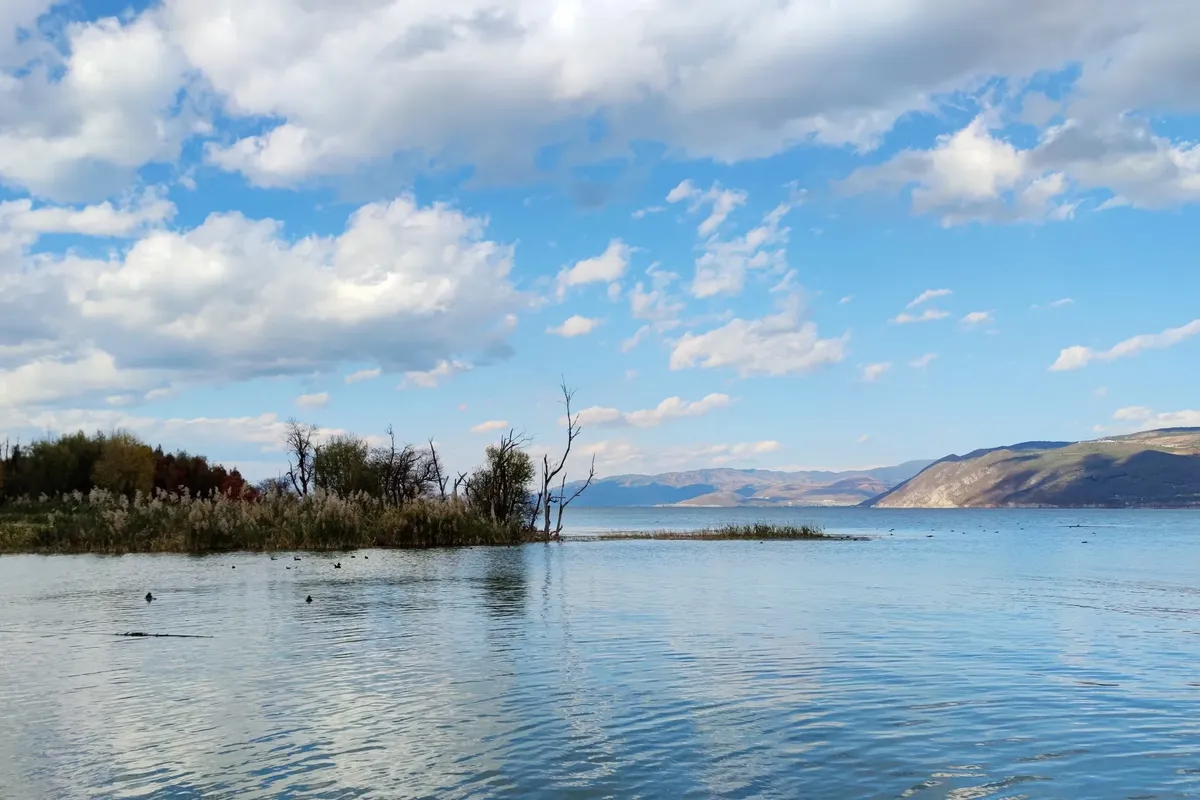
Caicun Village. There's a distance from Dali city to the ancient town, so we returned the scooter and took a bus. About an hour later, we arrived at our booked Haiyao Inn, right on time for check-in. The inn is in Caicun by Erhai Lake. Thanks to the pandemic, tourists were scarce, and a lake-view room for just over 200 yuan a night is something I can only dream of now. Lying on the big bed, watching the ripples on Erhai and clouds drifting by outside the window, my heart settled into a profound calm—this is what a vacation should feel like. Yunnan’s sky has never let me down; every random shot is a keeper. Just beyond the inn was Erhai, with an open view and wild ducks paddling playfully on the lake.
Early morning, I lay in bed waiting for the sunrise. The lakeside path was deserted, completely silent. The golden rim atop the distant mountain gradually sharpened, but the peak was so tall that by the time the sun appeared, it was already slightly blinding. As the sun rose higher, the tranquil lake came back to life. Today we planned to wander the ancient town. Buses run from Caicun Pier to the old town, quite convenient. On the way to the pier, we passed a grove of dawn redwoods, looking especially crimson against the blue sky. Trumpet vines are a common sight in Dali; orange-red blossoms creep over fences and walls. I loved them so much I bought a few plants online to grow at home, but after years, not a single bud—disappointing!
Dali Ancient Town. After breakfast, we walked to the March Street market. It buzzed with energy—vendors selling snacks, fruits, fresh flowers, local specialties, clothing, everything under the sun. Along the road, a shop displayed hairy tofu neatly on racks. Up close, tiny black specks smaller than sesame seeds dotted them, fuzzy and rather cute, but I wasn’t brave enough to try. The Instagram-famous road in front of Dali University stretches straight down to Erhai Lake, drawing crowds for photos. The traffic police reminded us to stay safe. Most buildings here feature upturned eaves, with blue and white carved beams and painted pillars, incredibly ornate—not just in parks but also on ordinary homes. Chatting with a local, I learned it’s customary: even if the interior can’t be done up nicely, the façade must look beautiful. I think that custom could use some updating. Ginkgo trees are everywhere in the old town, at their peak golden beauty. I wondered whether the fallen leaves on the paths were deliberately left, like our bauhinia petals, to add a touch of romance. As night fell, the ancient town gate shone magnificently under the landscape lighting. We had a cured pork rib hotpot dinner—distinctive, lightly processed with a ham-like flavor but not as tough. A live band played at the small bar opposite, and the music was so good we lingered until 9 p.m. The last bus back to Caicun was at 7 p.m., so after strolling the night market, we had to take a Didi.
Chongsheng Temple and Three Pagodas. During the pandemic, ticket prices were super cheap. With nothing pressing to do, we took a bus from the old town. Inside the park, we wandered aimlessly, occasionally eavesdropping on tour guides’ anecdotes—contentment indeed. The heavily weathered stone balustrades reminded us of the centuries they’ve witnessed. Tired from walking, I sat on a temple bench, watching people come and go at the gate, lazily basking in the sun, warm and almost nodding off.
East Ring Road Route. Without a fixed itinerary, this map became our guide. We split the lake loop into two days: one day riding an electric scooter north along the West Ring Road from Caicun Pier to Majiuyi, Haishe, Xizhou, then back to Longkan Pier for dinner. The next day, we rented a car to drive via Shuanglang, stay overnight near Xiao Putuo, and finally return the car at Dali station. Early morning, we set off on the rented scooter towards Xizhou. The lakeside road was under construction, so the stretch from Caicun to Majiuyi forced us onto the main road, dusty and scary with large trucks whizzing past. Luckily it wasn’t far; once at Majiuyi, we quickly ducked back into the village. There, a fence had birds perched on each post—one per post, so adorable! We passed through village after village, across green and golden fields. Winding our way, we steered the scooter back to the lake, enjoying the freedom of wandering the lanes—little knowing we’d pay for this carefree detour on the way back. The boardwalks occasionally offered small surprises: a fleeting squirrel, and a beautiful bird I couldn’t name. Erhai’s water quality has improved noticeably after a period of restoration. We spotted some pumping stations filtering the lake water, and in places the shore was so clear you could see the stones beneath.
Arriving in Xizhou around lunchtime, we went for a yak hotpot. The small eatery sat in a private courtyard, with a distinctive black clay pot. The 135-yuan set meal was a great deal—steak and slices of marinated beef tenderloin. As soon as the lid was lifted, the aroma of beef bone broth hit us, and we dug in so eagerly I completely forgot to take photos. In the old town, there's a commercial street where we bought souvenirs like flower cakes. I stumbled upon something new: butterfly pea flower jam. Scoop a spoonful into water, and you get a blue-purple drink, tangy-sweet and refreshing. You can take a horse carriage ride; the poor white horse looked grubby. There were also braiding stalls—an older sister swiftly wove colorful threads into my hair with impressive skill, surviving two washes without falling out. Leaving Xizhou, we headed back along the West Ring Road. The sun hid behind thick clouds. Many empty houses along the way were up for rent—if only we could have one! Returning to Longkan Pier, we could see across the lake to downtown Dali. After dinner, we continued the journey back. The scooter was almost out of juice, crawling along. Staring at the brightly lit ancient town across the way while our path was pitch-dark, I silently prayed we’d make it back to the inn—the consequence of our free-roaming since morning.
Today, we’d drive the rented car for the second half of the lake loop. Many fancy vehicles were available, but the one on the right, the vintage-looking car, was ours. This little Benz Smart cost 160 yuan a day, with fully manual windows—thankfully it had air conditioning. Mr. Feng said it wasn’t as comfortable as our own little E-car, though I heard plenty of E-cars are now available for rent in Dali. Passing through the ‘Non-Dual Dharma Gate’, we headed toward Shuanglang. We passed Butterfly Spring. After Shangguan Town, entering the East Ring Road, the scenery shifted. The distant Cangshan Mountains formed the backdrop for Erhai. Gazing north from the east side, the lake stretched beyond sight, truly resembling a sea. We soon reached Shuanglang, which felt deserted due to the pandemic. Many shops were closed, and the local stage was taken over by villagers relaxing. Look at these little flowers—like little girls dancing in skirts. And the large datura flowers covering a whole tree. Shuanglang has become highly commercialized, with shops and restaurants lining both sides and guesthouses right by the lake, so we decided to stroll around, have lunch, and leave. The most famous spot is Yang Liping’s Moon Palace, partially open to visitors for free. The path inside is narrow, almost a single lane—you’d have to turn sideways if two people met. A small bird stood on a wooden post, unmoving like a decoration.
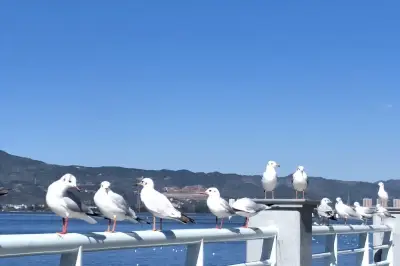
After lunch, we drove on. The sun gradually approached Cangshan, its light glittering on the lake surface, a bit dazzling yet hard to look away from. Xiao Putuo. Siberian red-billed gulls winter here. Many people watched by the lake, and they were unafraid. At a sudden gesture, the lake erupted with movement. The sun slowly dipped behind Cangshan, and the birds vanished in an instant. The afterglow turned Cangshan golden, and Erhai returned to calm. As the sun set, the last day of our trip ended. This journey made me fall in love with Dali. Perhaps it was the new way of traveling I fell for—unhurried, free, with no must-see places or must-do things, just following my heart.
Postscript: The winter cherry blossoms we’d planned to see were already past their peak when we arrived, and the distance was far, so we skipped them—a reason to return.
Finally, I’ll borrow a line I saw on the road: ‘Closed for now, see you in the jianghu!’