Going to the Windy Place: A 2024 Beijing to Dali May Day Travelogue
Borrowing a day before and after to piece together a May Day holiday, not planning a trip felt like doing a disservice to the country's thoughtful holiday arrangement. Deeply moved by the scenery in the drama 'Meet Yourself', I also wanted to relax for five days by the Cangshan Mountain and Erhai Lake. So, I booked flights and hotels early, and on the morning of May 1st (very early indeed), the whole family set off.
DAY01 May 1st Beijing – Dali
【Transport】Home – Capital Airport T2, ride-hailing car ¥110
Air China CA1441 06:25-10:25, adult ticket ¥2,730/person, child ticket ¥1,340/person, total ¥6,800
Dali Airport – Shuanglang Ancient Town (North Entrance), ride-hailing car ¥100
Shuanglang Ancient Town – Fengqing Island round-trip ferry, adult ¥70/person, child ¥35/person, total ¥175
【Sightseeing】Shuanglang Ancient Town, Fengqing Island
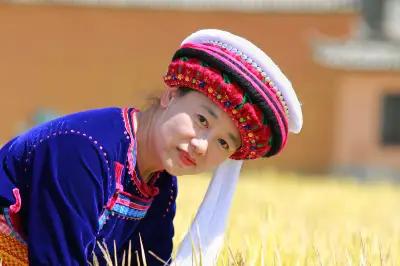
Shuanglang Ancient Town: Located in the northeast of Dali City, about 20 km from Dali Ancient City. It was founded in the Tang Dynasty and has a long history and culture. The ancient buildings in the town are well-preserved, such as Yuji Island and Jinbang Temple, all worth visiting. You can feel a strong historical and cultural atmosphere here and appreciate the charm of Bai ethnic culture. Shuanglang Ancient Town is nestled between mountains and water, boasting unique natural scenery. Surrounded by the beauty of Erhai Lake, Cangshan Mountain, and Yuji Island, it forms a unique landscape. Hence the saying: 'The best scenery in Dali is at Cangshan and Erhai, and the best of that scenery is in Shuanglang.'
Dali Nanzhao Fengqing Island: One of the three islands in Erhai Lake, located in the golden area of the Cang'er National Scenic Area—Shuanglang Township at the southeastern end of Eryuan County. The island is surrounded by water, with the famous Buddhist holy land Jizu Mountain to the east, Shibao Mountain to the north, Dali to the south, and facing Cangshan Mountain and Erhai Lake to the west, taking full advantage of its exceptional tourism resources.
【Food】Breakfast: airplane meal; Lunch: farmhouse cuisine at Shuanglang Fisherman's Courtyard ¥146; Dinner: free afternoon tea at Ningfu Sea Lodge + grilled chicken platter ¥60
【Accommodation】Dali Ningfu Sea Lodge two-bedroom suite ¥1,752/night
【Comments】There are only four direct flights from Beijing to Dali, and two of them depart from Daxing Airport. To avoid wasting the day, the only suitable option was the 6:00 a.m. flight, so we had to catch up on sleep on the plane.
I booked the guesthouse on Ctrip; it had high ratings, with a waterfront café, a private shoreline, and on the rooftop terrace a 'sky mirror' and a small pool—basically you could get a great photoshoot without going out. Guests also receive a complimentary travel photography service with five digital images. I booked the room in early March, and by the May Day period the price had already clearly increased, basically doubled.
Earlier, after searching for Dali travel tips on a certain app, I was recommended a shop for the round-Erhai sightseeing bus, and I learned about the three-day unlimited pass in advance. On the day of arrival, I purchased a next-day-activation three-day Erhai unlimited ride pass for ¥118 per person. Over the following days, it proved very convenient.
Outside vehicles are not allowed into Shuanglang Ancient Town, so the ride-hailing car could only drop us at the entrance. The guesthouse butler met us at the town entrance. The guesthouse was very close to the north entrance, with the sightseeing bus station diagonally opposite. The ancient town has just one main street, and it didn't take long to stroll from north to south. After settling our luggage, we walked from the guesthouse to the pier, stopping for lunch at a restaurant the butler had recommended.
On Fengqing Island, the exhibition at the front part of the temporary palace was worth a look, but the subsequent hall for silverware appraisal and the sales hall for jade, jewelry, gold, and silver were the usual tourist traps. Fortunately, there was no forced consumption.
DAY02 May 2nd Dali
【Transport】Shuanglang Ancient Town (North Entrance) – Dali Ancient City (South Gate), ride-hailing car ¥131
Dali Ancient City sightseeing bus – tourist bus unlimited card
Dali Ancient City (South Gate) – Chongsheng Temple Three Pagodas Scenic Area round trip, tourist bus unlimited card
Dali Ancient City – Shuanglang Ancient Town, tourist bus unlimited card
【Sightseeing】Dali Ancient City, Chongsheng Temple Three Pagodas Scenic Area (ticket: adult ¥73/person; child ¥37/person)
Dali Ancient City: The ancient city faces the rippling Erhai Lake to the east and leans against the eternally green Cangshan Mountain to the west, forming a city layout of 'one water winding around Cangshan, and Cangshan embracing the city.' It has a 1,200-year construction history dating back to 779 AD when Nanzhao King Yimouxun moved the capital to Yangjumi City. The existing Dali Ancient City was rebuilt in the early Ming Dynasty on the base of Yangjumi City. The city is square, with four gates, each with a gate tower above and a defending wall below, and three streams from north to south serving as natural barriers; the outer wall is brick. Inside, five main streets run from south to north and eight lanes from west to east, forming a chessboard layout. The streets of Dali Ancient City still maintain the Ming-Qing grid pattern, known for its nine streets and eighteen lanes. The two city gate towers standing opposite each other have been restored. A main street runs from south to north through the city, with deep lanes and alleys crisscrossing from west to east; all houses have uniform gray-tiled roofs and cobblestone walls, showcasing Dali's simplicity, elegance, and charm.
Chongsheng Temple Three Pagodas Scenic Area: Covering 1,000 mu (about 165 acres), it is divided into two parts: the front area centered on the three pagodas, including the pagodas, the Nanzhao Jianji Great Bell, and the Rain Copper Guanyin Hall; the rear area is Chongsheng Temple, acclaimed as the first Han Buddhist temple. The towering three pagodas—the central large one called Qianxun Pagoda, with an actual height of 69.13 meters, was built during the Tang Dynasty Nanzhao period (833–840 AD). It is a square, multi-eaved hollow brick pagoda with 16 tiers, and a wooden staircase spirals upward inside. The pagoda body is spindle-shaped with smooth lines, a typical Tang architectural style. The two smaller pagodas to the north and south are conical in outline, typical of the Song Dynasty architectural style, constructed during the Dali Kingdom under Duan Zhengyan and Duan Zhengxing (1108–1172 AD). The two small pagodas are 97 meters apart, each 42.19 meters high, octagonal pavilion-style 10-tier brick pagodas. Each tier has brackets, flat seats, and shrine-like niches in varying shapes; the bodies are carved with reliefs of Buddhas, lotus flowers, vases, each level different. Both small pagodas are 70 meters from the large one, forming an isosceles triangle. Historically, Chongsheng Temple was founded in the Tang Dynasty Kaiyuan era and expanded over generations, reaching its peak during the Song Dynasty Dali Kingdom. Historical records say that at its height, the temple 'covered seven li (about 3.5 km), with 890 rooms, 11,400 Buddha statues, using 40,550 hu (a unit of measure) of copper, including three pavilions, seven towers, nine halls, and a hundred chambers'—showing its immense scale. Because Buddhism flourished greatly during the Dali Kingdom, it was also called 'the Wonderful Fragrant Buddhist Kingdom.' Nine of the 22 kings of Dali became monks at Chongsheng Temple. At that time, the temple was the Buddhist cultural center of the entire Dali Kingdom and even Southeast Asia, thus hailed as 'the Buddha Capital.'
【Food】Breakfast: guesthouse breakfast; Lunch: Mengziyuan Cross-Bridge Rice Noodles ¥118; Dinner: Dicos + Bawang Tea Lady ¥160
【Accommodation】Dali Ningfu Sea Lodge two-bedroom suite ¥1,752/night
【Comments】The sightseeing buses, whether east or west line, all depart from Dali Ancient City in the morning. This meant that at the Shuanglang Ancient Town station, the first east and west line buses departed at 11:00 and 11:30, so these days we usually traveled by ride-hailing car. If the sightseeing bus had a starting point for each line on both east and west sides, it would be much more convenient.
Today was cloudy with light rain, and Dali Ancient City was shoulder to shoulder with visitors; the main streets were already extremely crowded. Fortunately, we first took the sightseeing bus for a loop, so we got a rough idea of the main spots. The ancient city felt heavily commercialized—somewhat disappointing—I probably won't return. I imagine that after nightfall, with small taverns opening their doors, it would have a different atmosphere, but since we weren't staying overnight, we wouldn't experience it.
In the afternoon drizzle, there were unexpectedly few visitors at Chongsheng Temple. The red walls, yellow tiles, green lamps, and ancient Buddha statues shrouded in fine rain felt incomparably solemn and sacred.
Because of traffic jams, it took three hours to get back from Dali Ancient City to Shuanglang Ancient Town, but starting from Shanhaiwan Hotel, the road was all lakeside. Along this route, the beautiful scenery of Santorini-like Ideal Land, Luoquan Peninsula, and Wenbi Village came into full view, lifting our spirits, so the jam didn't feel too grueling.
DAY03 May 3rd Dali
【Transport】Shuanglang Ancient Town (North Entrance) – Xizhou Ancient Town, ride-hailing car ¥71
Xizhou Ancient Town – Butterfly Spring, tourist bus unlimited card
Butterfly Spring – Shuanglang Ancient Town, tourist bus unlimited card
【Sightseeing】Xizhou Ancient Town, Butterfly Spring Scenic Area (ticket: adult ¥38/person; child ¥20/person)
Xizhou Ancient Town: A historic town with profound cultural heritage under Dali City. It boasts a superior location, with Erhai Lake to the east and Cangshan Mountain to the west. During the Sui and Tang dynasties, it was called 'Dali City,' one of the 'ten strategic points' of the Nanzhao period and an important Bai ethnic settlement. There are over 15,000 Bai-style residential buildings from the Ming, Qing, and Republican periods, with rich variety, earning Xizhou the name 'Museum of Bai Ethnic Architecture.' Hundreds of courtyard houses, with their simple elegance and exquisite craftsmanship, stand out in world architecture and add a significant chapter to Chinese architectural history. In June 2001, the Xizhou Bai ancient architectural complex was listed as a key national cultural relics protection unit.
Butterfly Spring Scenic Area: Butterfly Spring Park is located west of National Highway 214 in Dali, at the foot of Yunlong Peak—one of the nineteen peaks of the Cangshan range—nestled between Cangshan and Erhai. The park features the 'three wonders' of butterflies, spring, and trees. Main sights include Butterfly Spring, Dressing Pool, Five Dragon Pool, Antiphonal Singing Pool, Lover's Lake, Butterfly Museum, Butterfly World, Xu Xiake Sculpture, Sea-Viewing Pavilion, Spring-Viewing Pavilion, and Stone Archway. The area is full of clear, cool springs, butterflies coexisting with the springs, ancient trees providing shade, and clusters of flowers. Gurgling streams, towering old trees, fragrant flowers, and dancing butterflies make the air fresh and pleasant. Here, away from worldly noise and clamor, you can fully feel nature's purity, loftiness, and tranquility—a place where humans and nature exist in harmony, steeped in age-old arts and culture of butterflies, springs, trees, and ethnic customs.
【Food】Breakfast: guesthouse breakfast; Lunch: Suxiangyuan baba, stuffed tofu, Yinmi rice noodles, Bawang Tea Lady ¥300; Dinner: free afternoon tea at Ningfu Sea Lodge + takeout from Corner Time Light ¥120
【Accommodation】Dali Ningfu Sea Lodge two-bedroom suite ¥1,752/night
【Comments】Xizhou Ancient Town was slightly better than Dali Ancient City, with some quaint old dwellings. Yan Family Compound is a typical Bai-style building and worth a look. There were still a lot of visitors today. Don't take photos of the wind-swept wheat fields at the village entrance; be sure to walk further until you pass the small train tracks, where the crowds thin out. Sitting on the second floor of an internet-famous café, with distant mountains, nearby wheat waves, and a gentle breeze, was refreshing and delightful.
For younger generations who haven't seen the film 'Five Golden Flowers,' Butterfly Spring Scenic Area is hardly worth the time. At my age, it was just a quick check-in, reminiscing about the old black-and-white TV movies of my childhood.
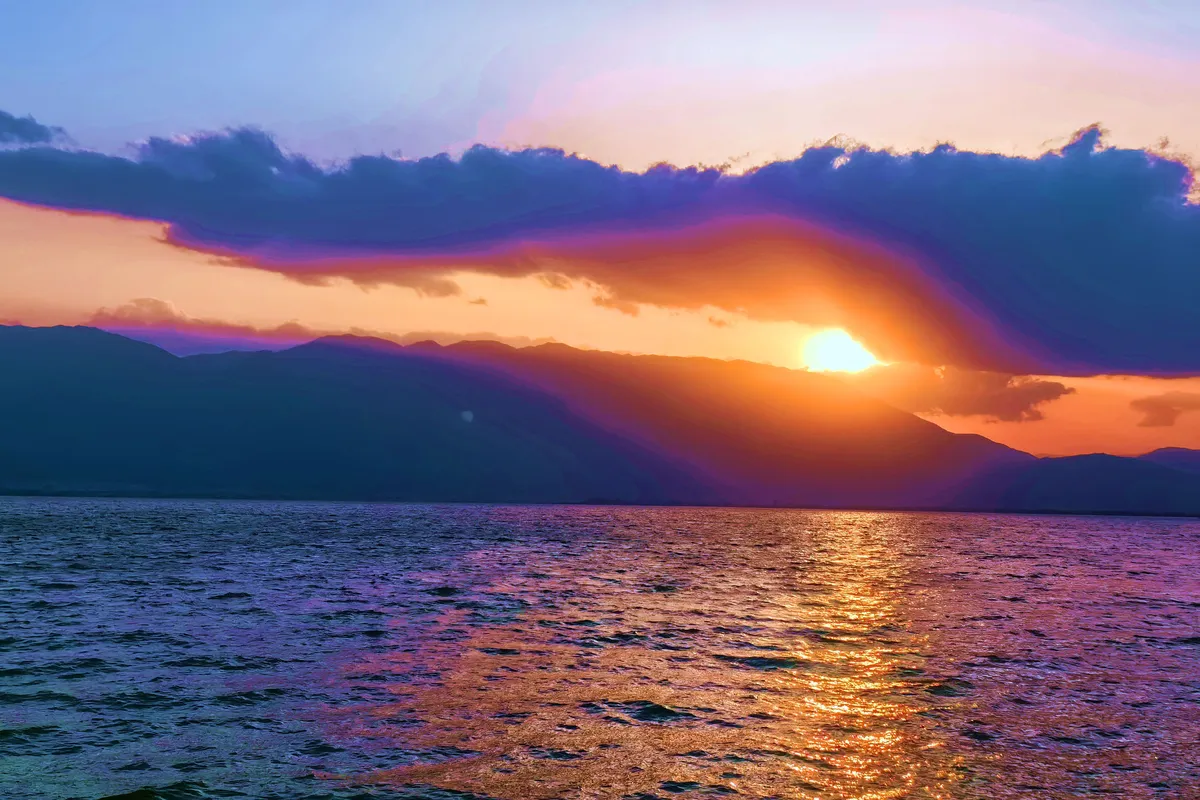
Our itinerary over these days was very relaxed. Except for being stuck in traffic on May 2nd, we lounged in the guesthouse's waterfront café and rooftop booths, enjoying afternoon tea while taking in the sunset scenery. The orange-red evening glow and the gradually receding blue sky blended into a breathtaking canvas before our eyes, sweeping away all physical and mental fatigue.
DAY04 May 4th Dali
【Transport】Shuanglang Ancient Town (North Entrance) – Wenbi Village, ride-hailing car ¥64
Wenbi Village – Xiaoputuo, tourist bus unlimited card
Xiaoputuo – Shuanglang Ancient Town, tourist bus unlimited card
【Sightseeing】Wenbi Village, Xiaoputuo
Wenbi Village: Located on East Ring Sea Road, in Haidong Town, this is a very quiet little village on the shore of Erhai Lake. The entire village sits on a hillside; from the top, you can overlook Cangshan Mountain and Erhai Lake. Tourists are generally few here, except for some wedding photoshoot clients, so it feels especially peaceful and serene. 'Sky City · Fruit Tree,' 'Flower Drunk Art Space,' and 'Sea Auditorium' are all ticket-charging Instagram-worthy spots; it's recommended to come here for photos, mainly preparing dresses.
Xiaoputuo: A tiny islet in Erhai Lake about twenty-odd meters from the shore. It was first built in the Ming Dynasty and renovated in 1982, a two-story pavilion; the first floor enshrines Tathagata Bodhisattva, the second floor Guanyin Bodhisattva. Its shape resembles a round seal, hence also called Haiyin (Sea Seal). The best time to visit Xiaoputuo is early morning, when mist curls over the lake, one of the 'Eight Scenes of Erhai'—'Misty Pu Tuo.'
【Food】Breakfast: guesthouse breakfast; Lunch: Qishan Yunnan Traditional Rice Noodles ¥160; Dinner: free afternoon tea at Ningfu Sea Lodge + takeout from Corner Time Light ¥60
【Accommodation】Dali Ningfu Sea Lodge two-bedroom suite ¥1,752/night
【Comments】The Rainbow Road in Wenbi Village is indeed a good place for photos, but since this trip was for zoning out, we didn't bring camera gear and could only take a few snapshots with our phones. Also note that the popular photo bases all charge per person.
The stop at Xiaoputuo needed only half an hour for sightseeing, and we waited another half hour at a roadside café for the bus. Fortunately, the café's second-floor terrace had good views, and the owner was chatty. Learning that a family-run guesthouse like his still charged over 1,000 yuan a night during May Day, I suddenly felt our Ningfu Sea Lodge wasn't that expensive after all.
DAY05 May 5th Dali – Beijing
【Transport】Shuanglang Ancient Town (North Entrance) – Dali Airport, ride-hailing car ¥114
Air China CA1500 09:30-13:25, adult ticket ¥2,730/person, child ticket ¥1,340/person, total ¥6,800
Home – Capital Airport T2, taxi ¥96
【Food】Breakfast: guesthouse packed breakfast; Lunch: airplane meal
【Comments】I had communicated with the butler that we were leaving early on the last day, so the night before they delivered a breakfast box that was quite abundant.
In total, this trip lasted five days and cost around ¥23,000, mainly for flights and accommodation. We didn't cram in too many sights; around Erhai Lake we checked off Shuanglang Ancient Town, Dali Ancient City, Chongsheng Temple Three Pagodas, Xizhou Ancient Town, Butterfly Spring, Wenbi Village, and Xiaoputuo. We didn't bring photo equipment and also skipped the complimentary travel photography. With two small suitcases and one backpack, the family of three slept in every day. Most afternoons were spent in cafés or on the terrace, taking in the sunset, emptying our minds, savoring the quiet passage of time, and enjoying the good life.
Life, perhaps, should be just like this.