Self-driving to Mount Wudang, Exploring the Source of the Han River!
Wudang Mountain State Guest Hotel is rated three-star, with complete facilities, a very new hotel, safe parking, responsible security, delicious food, and affordable prices. It is very close and easy to find from the Wudang Mountain expressway and scenic area. The front desk can book discounted tickets for the Wudang Mountain scenic area and also recommend many free, fun, and valuable attractions! All hotel staff are warm and thoughtful in service, giving guests a sense of safety and warmth!
The Danjiangkou Reservoir is the water source of the South-to-North Water Diversion Middle Route Project, a national first-level water source protection area, and was once the largest artificial freshwater lake in Asia. Located in the middle and upper reaches of the Han River (part of the Yangtze River basin), it covers a total area of 846 square kilometers, known as the 'Heavenly Pool of Asia' and serves as a natural water level regulator for the Han River. The average annual inflow of the Danjiangkou Reservoir is 39.48 billion cubic meters[1]. The water comes from the Han River (the upper part above Danjiangkou in southern Shaanxi and western Hubei, with an average annual inflow of 38.8 billion cubic meters[2]) and the Dan River, a tributary of the Han River (average annual about 0.82 billion cubic meters). After the heightening of the Danjiangkou Dam, the normal storage water level will rise from 157 meters to 170 meters, the storage capacity will increase from 17.45 billion cubic meters to 29.05 billion cubic meters, and the water area will reach 1,022.75 square kilometers. The South-to-North Water Diversion Middle Route Project will supply water to more than 20 large and medium-sized cities in four provinces and municipalities including Henan, Hebei, Beijing, and Tianjin. The first phase of the project will divert an average of 9.5 billion cubic meters annually, and the medium and long-term plan will divert up to 13 billion cubic meters annually, effectively alleviating the severe water shortage in northern China.
The Danjiangkou Reservoir is distributed between Danjiangkou City in Hubei Province and Xichuan County in Nanyang City, Henan Province, spanning the two provinces of Hubei and Henan. It consists of two parts: the Han River reservoir area in Hubei and the Dan River reservoir area in Henan[3].[4] Built in the late 1950s, the Danjiangkou Water Control Project is a large-scale water conservancy project for comprehensive development and management of the Han River basin. The Danjiangkou Reservoir was formed after the closure of the Danjiangkou Dam, which intercepted and stored the Han River. The widest part of the reservoir is near the submerged town of Liguanqiao, with an east-west width of over 20 kilometers; the narrowest part is near Guanfangtan, where the banks are less than 300 meters apart; the deepest point of the reservoir is at the provincial boundary river center under the terrace between Danjiangkou City, Hubei and Xichuan County, Henan, reaching over 80 meters deep.
The Danjiangkou Water Control Project consists of four parts: the Danjiangkou Dam, the Danjiangkou Hydropower Plant, a ship lift, and the heads of two irrigation diversion canals. The dam is 162 meters high, with a concrete dam height of 97 meters, a total length of 2,494 meters (including a concrete dam length of 1,141 meters), a designed storage water level of 157 meters, a corresponding storage capacity of 17.4 billion cubic meters, an average flood discharge capacity of 9,200 cubic meters per second, 6 installed generator units with a single unit capacity of 170,000 kilowatts, and an annual power generation of 4.5 billion kilowatt-hours. After upgrading, the ship lift of the Danjiangkou Dam can carry a 300-ton barge over the dam in one go. Located in the urban area of Danjiangkou City, Hubei Province, the dam heightening project started in September 2005 and after 8 years of construction, the dam 'grew' nearly 15 meters, from 162 meters to 176.6 meters. To ensure the smooth implementation of the South-to-North Water Diversion Middle Route Project, the dam will store water at 170 meters in the future, 13 meters higher than the previous storage level. The operation of the Danjiangkou Reservoir is managed by the Changjiang Water Resources Commission of the Ministry of Water Resources, and water administration is carried out by the Danjiangkou Water Control Project Management Bureau (Hanjiang Group). The two diversion canal heads are Taocha (the intake of the South-to-North Water Diversion Middle Route Project, with a design flow of 500 cubic meters per second) located in Jiuzhong Town, Xichuan County, Nanyang City, Henan Province, and the Qingquangou Tunnel (design flow of 100 cubic meters per second) in Hubei Province. This reservoir is currently one of the most multifunctional and efficient large-scale reservoirs in China, playing a huge role in flood control, power generation, navigation, irrigation, aquaculture, and tourism. The Danjiangkou Water Control Project was praised by Premier Zhou Enlai as one of the water conservancy projects in China that provides all five benefits.
The Taocha Canal Head Hub Project in Xichuan, Nanyang, which started construction on December 28, 2009, will become the water intake of the South-to-North Water Diversion Middle Route Project, known as the 'water tap'. The main structures include diversion channels, gravity dams, intake gates, stilling basins, power plant buildings, and management rooms. The water supply reaches four provinces and municipalities in northern China: Henan, Hebei, Beijing, and Tianjin, with a long-term annual water diversion of 13 billion cubic meters. For 25 consecutive years since the Danjiangkou Reservoir began monitoring data in 1987, the water quality in the reservoir area has been stable at or above the national Class II standard. According to the Danjiangkou Water Quality Monitoring Station of the China National Environmental Monitoring Centre, among the 28 water quality monitoring indicators in the Danjiangkou reservoir area of the South-to-North Water Diversion, most of the year they meet the national Class I standard, and only during the flood season do the total phosphorus and permanganate indicators fall to the national Class II standard, which is higher than the Class III water quality required for water diversion.
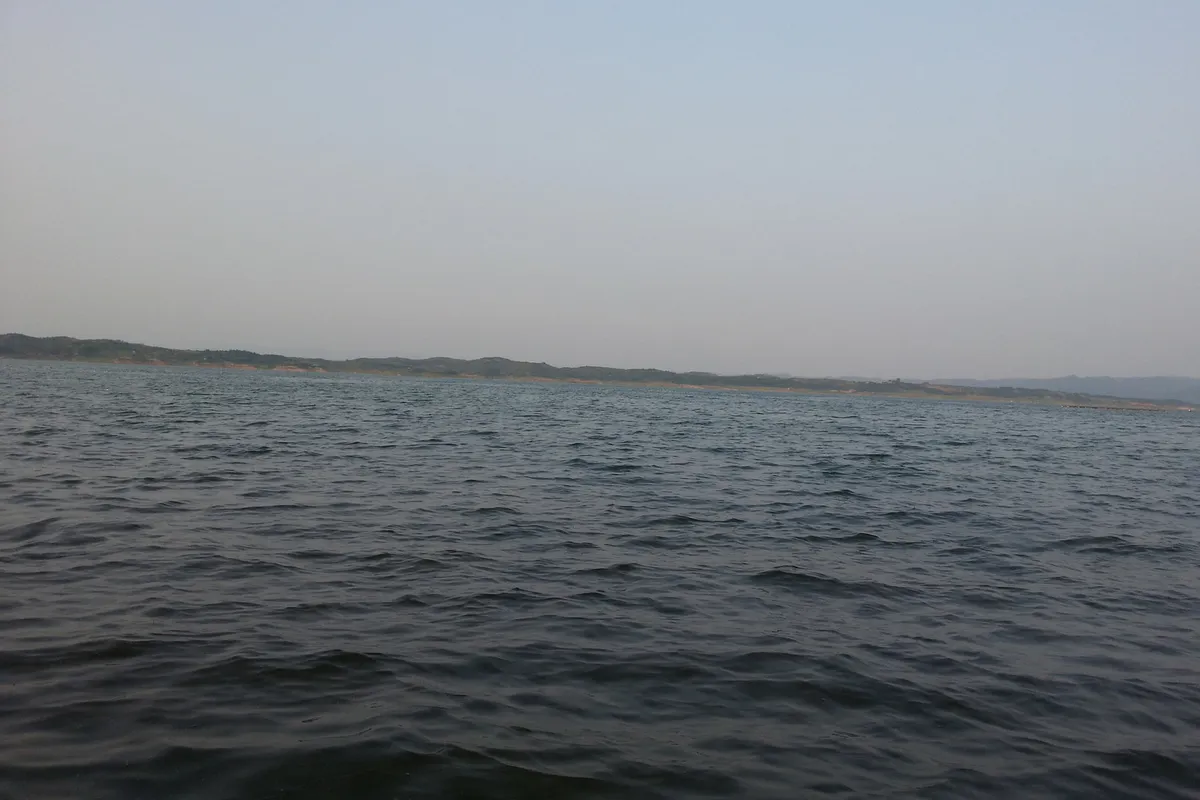
The Danjiangkou reservoir area is surrounded by mountains, with a pleasant climate, fresh air, and the highest amount of sunlight. The water near the Danjiangkou Dam is clear, the surface is wide and calm, giving the reservoir comprehensive benefits in flood control, power generation, irrigation, navigation, aquaculture, and tourism. The canal head of the national key project, the South-to-North Water Diversion large-scale project, is located at Taocha in Xichuan County, Nanyang City, Henan Province. Upon full completion, it will send the water of the Han River to North China at a flow rate of 500 cubic meters per second.
The natural scenery of the Danjiangkou Reservoir is the best place for tourism. There are well-connected waterways on the river and a self-contained road system within the reservoir area. From here, heading west through Jingziguan in Xichuan, Nanyang, Henan, you can reach Qin Chuan in Shaanxi; going south you can reach Jingchu in Hubei; going east and north you can enter the Nanyang Basin and the Central Plains. One waterway connects three provinces. The surface of the Danjiangkou Reservoir is vast with blue waves, the sky and water merge into one, the mountains are clear and the water is beautiful, picturesque, with unique and colorful strange mountains and rocks. Yachts and fishing boats sway on the green waves; people circle around the water, mountains move with people; people walk as if in a painting, mountains float as if on water. It is refreshing and endlessly enjoyable. Near Yankou, the reservoir has a narrow river stretch of dozens of miles, with strange peaks facing each other on both banks, steep cliffs, hanging wild vines, and mountains surrounding the water. This is the famous Danjiang 'Little Three Gorges' (Yunling Gorge, Taibai Gorge, Yankou Gorge), comparable to the Three Gorges of the Yangtze River and the Three Gorges of the Yellow River. On the Lion Mountain wall, there is a natural stone Buddha, 15 meters high, facing the river, looking straight ahead with a serene expression, sitting upright, quite similar to the majestic posture of the Leshan Giant Buddha. Its kind face is solemn and dignified, with hands clasped in front of the chest, as if blessing the tourists on boats.
The reservoir areas in Henan and Hubei have blue waves, towering mountains, lake and mountain scenery, and an endless horizon, with beautiful and charming natural scenery. It is becoming a tourist area integrating sightseeing, recuperation and vacation, water entertainment, and ecological viewing. The Dan River is one of the main tributaries of the Yangtze River system. The Danjiangkou Reservoir is the largest artificial reservoir in Asia and the source of water for the South-to-North Water Diversion Middle Route Project. The scenic area is located in the central and southern part of Xichuan County, bordering Danjiangkou City in Hubei to the south. The reservoir surface covers 1.16 million mu (about 773 square kilometers), of which 600,000 mu (about 400 square kilometers) is within Nanyang. The vast expanse of misty waves merges the water and sky. The banks are karst mountains with many large karst caves, containing stone pillars, stalactites, and stalagmites, creating a unique natural landscape. Yunling Gorge, Taibai Gorge, and Yankou Gorge are like winding galleries, known as the 'Little Three Gorges' of the Dan River. They are not only beautiful but also rare venues for water sports. There are numerous historical sites in the reservoir area, and it is also the ancient site of Danyang, the first capital of the Chu state. In particular, Xiangyan Temple is famous for its long history and beautiful environment in Hubei, Henan, and Shaanxi. In addition, there are the historic town of Jingziguan, the Xianghua tombs from the Qin and Han dynasties, and the Xianwanggang primitive village site.
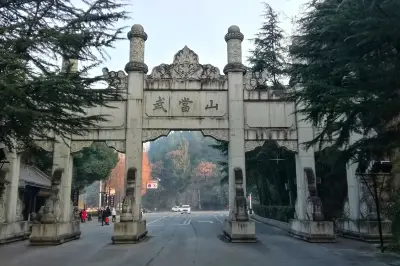
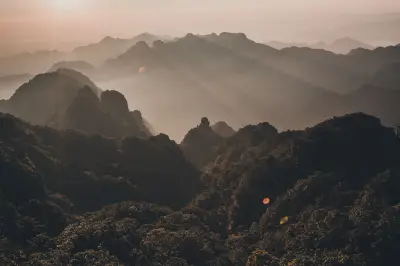
Danjiangkou City in Hubei Province is one of the birthplaces of Wudang culture. Mount Wudang within its territory is one of China's famous Taoist sacred sites, with a large-scale ancient building complex listed as a World Cultural Heritage site and a national scenic area. The Taiji Lake scenic area has beautiful scenery and an elegant environment. Danjiangkou also has the nationally famous 'living fossil of folk culture' - Wujiagou Story Village, and the first village of Han Chinese folk songs - Lvjiahe Folk Song Village. Danjiangkou City has developed multiple characteristic scenic spots. National AAAA-level scenic spots include Taiji Gorge Scenic Area and Jingle Palace, and there are also many AAA-level scenic spots such as Danjiangkou Dam, Songtao Villa, Little Pacific, First Drift of Wudang Gorge, Yinmeng Lake, South Divine Path of Wudang Mountain, Wuzhu Peak of Wudang Mountain, Wenbi Pagoda (Longshan Pagoda), and Junzhou Ancient Town (Junxian Town). The tourism center port of the Danjiangkou reservoir area is located in the suburbs of Danjiangkou City, Hubei Province, nestled by mountains and rivers with beautiful scenery. Yachts, a style street, and bays each have their own characteristics. It is expected to start trial operation on May 1, 2012. Danjiangkou City has a national forest park - Danjiangkou National Forest Park.
Xichuan County in Nanyang City, Henan Province, with the fame of being the water source and canal head of the South-to-North Water Diversion Middle Route Project and its long Central Plains history and culture, has promoted vigorous development of tourism economy. Xichuan has many ancient buildings, the most famous being the thousand-year-old ancient temple Xiangyan Temple and the three-border ancient town - the thousand-year-old Jingziguan. Xiangyan Temple: A national AAAA-level scenic spot, located among the mountains and lush green pines and cypresses on both sides of the Danjiangkou Reservoir, it is one of the 'Four Famous Temples' of Central China, known as 'Thousand Qing Xiangyan'. The existing buildings are from the Ming and Qing dynasties and are a national key cultural relics protection unit. The temple was first built in the Tang Dynasty, experienced several declines and revivals, and at its peak had over 470 ancient buildings (144 remain), with a total temple area of over 20,000 square meters. It has 17 large ancient buildings including a stone archway, mountain gate, Weituo Hall, passage hall, Mahavira Hall, Zhiyue Pavilion, Dharma Hall, and Sutra Depository. On both sides of the temple, there are auxiliary buildings such as the precept hall, walking hall, refectory, meditation hall, and upper and lower granaries. Jingziguan Ancient Building Complex: A national key cultural relics protection unit, located in the center of the famous historical and cultural town Jingguan Town. The ancient street is over five li long, divided into three parts: North Street, Middle Street, and South Street. The stone-paved street is clean and tidy. On both sides of the street, there are over 700 Qing Dynasty buildings, antique and elegant, simple and unadorned. It is the only well-preserved site in 13 provinces and cities of northern China, and is a provincial cultural relics protection unit. On the street, there are ancient building complexes such as the Shan-Shaan Guild Hall, Pinglang Palace, Yuwang Palace, Wanshou Palace, Mosque, City God Temple, ancient dock, and mountain gate, arranged in a harmonious and competitive brilliance. 'Jingziguan where the rooster crows in three provinces': The folk customs are simple, and it has high reputation both domestically and internationally. Despite going through many vicissitudes, it has always maintained its antique ancient town style. Key development projects include the Qing Dynasty Street, the 'One Foot in Three Provinces' Boundary Monument, Fahai Temple, and Luohan Cave. Dasi (Great Temple): Located near Zhongfenggou Village in Houshan, Jingguan Town, its Buddhist name is Fahai Zen Temple, a provincial cultural relics protection unit. The temple was first built in the second year of Yifeng of Emperor Gaozong of Tang (677 AD). It has eight existing ancient buildings, including the White Clothes Pavilion, Central Hall, Abbot's Room, Corridor Rooms, and Sutra Depository, totaling 29 rooms. The terrain is like a lotus platform, built against the mountain cliff, with a wonderful view. Pagoda Forest: Located around Xiangyan Temple, built during the Tang, Yuan, Ming, and Qing dynasties, it is the burial ground for monks of Xiangyan Temple, with over a hundred pagodas of various types remaining.
Within Xichuan County, there are undulating hills, crisscrossing rivers, and a complex terrain. The northwest connects to the Qinling mountain range's extension, Mount Wudang; the north connects to the southern foothills of the Funiu Mountains, a world geopark; the southwest lies the Sifeng Mountains. The mountains stretch continuously, with strange peaks stacked with green, and clear pools vying for brilliance. Nature and the ancients have created a unique scenic area in Xichuan, leaving endless joy and spiritual enjoyment for future generations. In ancient times, Nanyang Xichuan, an important town in the southwest of the Central Plains, was always a strategic battleground, leaving many precious cultural relics. Especially with the completion of the Danjiangkou Reservoir in the early 1970s, with its unique natural scenery, it added splendor to Xichuan. The historical sites along the Dan River are connected into a natural tourist area. Upstream of the Dan River is the ancient town of Jingziguan. The ancient street is over five li long, paved with stone slabs, with over 700 Qing Dynasty buildings well preserved, antique and elegant, simple and unadorned. Four li away from the town is the Dingyang site in Wucun, where legend says 'Bao Zheng sat in Dingyang'. On the street, there are over ten ancient buildings such as the Shaanxi Guild Hall, Pinglang Palace, Yuwang Palace, and Wanshou Palace. The great Tang poets Li Bai and Du Fu also visited this place, roaming and expressing their feelings. Houshan (Monkey Mountain) and Dasi (Great Temple) are among the eight famous scenic spots of Xichuan. Monkey Mountain is named because there is a large rock on the top resembling a monkey, with an ancient cypress next to it, looking like a monkey climbing a tree. Also, the connected and extended mountain peaks look like running monkeys. It is said that Sun Wukong once subdued demons here. Dasi sits on the middle peak of Monkey Mountain. In addition, there are the ancient ruins and tombs of Siwan, as well as Laohuling, Shuanghe Town, Little Three Gorges, Xiasi Pagoda Forest, Xiangyan Temple, Daquan Temple, Longshan, and Guandi Temple, totaling 35 major historic sites and tourist attractions.
Crisis of natural fish in the reservoir area: 1. Over the years, destructive fishing methods such as dynamite fishing, poison fishing, and electric fishing have often occurred, even becoming the basic means of survival and wealth for a few illegal fishermen. In the reservoir area of our city, dynamite and poison fishing are now rare, and electric fishing is relatively less common. However, these illegal fishing methods have never disappeared. Especially electric fishing, due to technological advances and the concealment of operations, makes supervision difficult. Nighttime dynamite and electric fishing occur not only in remote waters but also occasionally near urban areas. 2. Predatory fish originally in the open waters of the reservoir area, such as yellowcheek carp (also known as yellow diamond or water tiger), topmouth culter (also known as Erythroculter ilishaeformis), and snakehead (also known as northern snakehead or Channa argus), have a significant impact on the reservoir's fishery resources. In recent years, the introduction of small silverfish, which often survive by preying on the eggs of other fish, is also one of the harmful fish species to the reservoir's fishery resources. Although these fish are also iconic export products of the Danjiangkou Reservoir, it comes at the cost of excessive consumption of the reservoir's fishery resources, which is not worth the gain. In the future, stricter control over the introduction of new alien animal and plant species into the reservoir is needed.