The Grand Finale of My Self-Guided Tour: The Southern Forbidden City, Wudang's Far-Reaching Prestige
At 9:00 AM on June 21, 2021, I took a bus from Enshi to Wudang Mountain (ticket price 127 yuan).
Halfway, several local uncles boarded. I chatted with one of them, and he introduced the surrounding attractions, recommending Shennongjia to me. I decided to go to Shennongjia after Wudang Mountain. Around 3:00 PM, the bus passed the Danjiangkou Reservoir, the source of the South-to-North Water Diversion Project. The reservoir water was very clear, drinkable directly. The scenery of the reservoir area was beautiful, and I really wanted to visit. Half an hour later, the bus exited the Wudang Mountain Expressway toll station. I got off not far from the toll station, and the bus continued to its terminal, Shiyan.
Checking the navigation, I found that the hotel I booked online was right across the street (76 yuan per night).
After settling my luggage, I went for a walk on the street. Wudang Mountain city is a county-level unit. A single road serves both as a street and a main traffic artery. The street shops mainly deal in hotels, training uniforms, and swords.
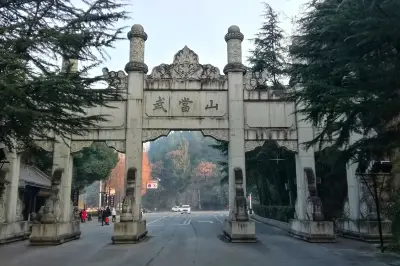
The next morning (June 22), at 7:00 AM, I had a bowl of noodles at the hotel (which also operates as a restaurant). In 4-5 minutes, I arrived at the main gate of the Wudang Mountain scenic area.
I queued with the crowd. Most people were carrying incense and candles, and there were quite a few locals, all of whom were there to offer incense at the Golden Hall.
At 7:30 AM, the gate opened. I went in and bought a ticket (ticket price 140 yuan, free for Guangxi residents—kudos!), but had to pay a scenic transport fee of 105 yuan (including 5 yuan for insurance).
Wudang Mountain is a national 5A-level scenic area and one of China's national scenic spots. The "Ancient Building Complex of Wudang Mountain" is listed as a UNESCO World Heritage Site.
After ticket inspection, I transferred to the scenic shuttle bus, then headed up the mountain, winding around. People got on and off along the way. It passed Mozhen Well (Millstone Needle Well), then to Prince Slope (a transfer point). Turning left leads to Qiongtai Central Temple, turning right leads to Purple Cloud Palace and Southern Cliff. Both sides lead up to the Golden Hall. From Qiongtai Central Temple, there is a cable car (about 1 hour), and from Southern Cliff, a walk (about 3 hours). I took the cable car up from Qiongtai Central Temple and walked down from Southern Cliff.
After more than an hour, I arrived at Qiongtai Central Temple (upper cable car entrance). I first visited Qiongtai Central Temple. Taoist priests were doing morning rituals. When they saw me taking photos, they told me to go up to the highest point for better views.
The Taoist temple is divided into Upper Temple, Middle Temple, and Lower Temple, originally built in the Yuan Dynasty.
I slowly walked up, feeling that the temple was truly ancient, with traces of history everywhere.
On the mountain opposite the temple, three large characters "第一山" (Number One Mountain) were carved.
After half an hour, I finished the tour of Qiongtai Central Temple and went to the cable car station to buy a ticket (90 yuan), taking the cable car up to the Golden Hall.
In just over 10 minutes, I reached the cable car exit, then started climbing to the summit. This section was steep, and in many places I had to grab iron chains to go up. Passing by Taihe Palace and Purple Forbidden City,
I arrived at the Golden Hall in about 20 minutes. To ascend the Golden Hall, I had to buy another ticket for 27 yuan, sold by a Taoist priest.
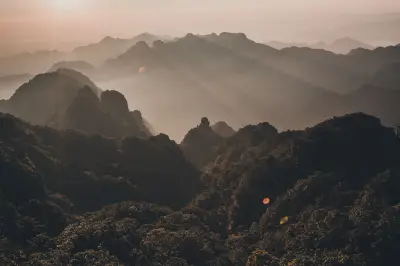
The Golden Hall is the highest point in the Wudang Mountain scenic area, offering panoramic views of the entire Wudang range.
The Golden Hall was first built in the Ming Dynasty and is the largest existing bronze structure in China. It stands 5.54 meters high, 4.40 meters wide, and 3.15 meters deep. It is a bronze-gilt, wood-imitation structure, with roof ridges decorated with immortal animals, vivid and lifelike. The foundation is a stone platform built of granite, surrounded by stone-carved railings, adding to its solemnity. It is a key national cultural heritage site.
It is said that the Golden Hall is struck by lightning several times each year. When struck, it shines with golden light, becoming more magnificent with each strike, yet the statues inside remain unharmed.
There is a gold block embedded in the Golden Hall, weighing 1 kilogram. According to legend, it was the leftover gold from the gilding process, embedded as a symbol of integrity. I walked around the hall several times but couldn't find it. I had to ask a master in a nearby small temple, who pointed out the general location, and eventually I found it.
There is another mysterious spot on the Golden Hall, very inconspicuous, built from the petrified fossils of the three great insects of Shennongjia. Its value is incalculable, and it is said to be worth several US states. I'll leave it for you to find.
I descended via another path, ending at Prince Slope.
Passing through Third Heaven Gate, Second Heaven Gate, and First Heaven Gate (these spots are easily missed), I went up and down along the trail. The trail was lined with many trees, birds chirping incessantly, and the air was fresh. Occasionally, people came up from Southern Cliff, mostly locals going to the Golden Hall to pray. Some had been walking for over 2 hours since morning. I felt they were tired but also admired their perseverance. Halfway down the mountain, I passed Chaotian Palace (Heaven-Facing Palace), then continued down to Yellow Dragon Cave, Langmei Shrine, etc. At 11:00 AM, I arrived at the Crow Ridge transfer point. It took me 2 and a half hours to descend from the Golden Hall. I was very tired. I actually took a wrong turn—from Langmei Shrine, turning left would have led directly to Southern Cliff, but I walked an extra few hundred meters, mostly uphill, making myself more tired.
After a short rest, I continued to Southern Cliff, climbing up and down, passing Crow Ridge, and finally reached Southern Cliff in half an hour.
Southern Cliff has many ancient buildings, dazzling to the eye, including ancient wells, palaces, Taoist rooms, pavilions, etc. Going further in, I reached the famous Dragon Head Incense Burner.
The Dragon Head Incense Burner is three meters long and 0.55 meters wide, stretching out over a sheer cliff of ten thousand zhang, with the dragon head directly facing the Golden Hall. Since it hangs over a bottomless abyss, those who burn incense on the dragon head had to crawl on the narrow dragon body to the head to light the incense, then crawl back. Any misstep would result in a shattered body. Since its completion in the Ming Dynasty, countless people have fallen from it. From the Qing Dynasty onward, climbing onto it was prohibited.
I returned to the Crow Ridge transfer point and found a restaurant for lunch. There are many restaurants here with moderate prices. I ordered one meat dish and one vegetable dish for just over 50 yuan.
After lunch, I took the shuttle bus and arrived at Purple Cloud Palace in about 10 minutes.
Purple Cloud Palace was first built in the Song Dynasty. A small river flows in front of the palace, with a stone bridge in the middle.
Ascending from below, there are Dragon and Tiger Hall, Stele Pavilion, Ten Directions Hall, Purple Cloud Grand Hall, and Parents Hall. On both sides, auxiliary rooms and buildings divide the complex into three courtyards, forming a group of halls and towers, row upon row, with distinct primary and secondary structures. Purple Cloud Palace is open as a religious activity site. Every year on the third day of the third lunar month, a large number of devotees gather here.
After an hour, I finished touring Purple Cloud Palace and continued to the transfer point to take the shuttle to the last stop—Prince Slope. Due to time constraints, I didn't get off at Carefree Valley or Dragon Spring Temple, especially Carefree Valley, which is mainly for recreation and suitable for leisure activities.
The shuttle arrived at the Prince Slope transfer point in about 20 minutes. It was 2:30 PM, and there weren't many visitors entering Prince Slope.
Crossing an ancient stone bridge, I entered Prince Slope. Every design element inside reflects the architect's thoughtful intention toward students' studies.
Climbing step by step, when I looked back, the path seemed flat and wide, without any steps visible. It was amazing—the implied meaning is that hard study leads to good results.
Along the way, there were many little monkeys, and many old monkeys carrying baby monkeys on their backs, which was very amusing.
Entering the mountain gate, there is a winding Yellow River Wall with nine bends and eighteen turns, symbolizing that to achieve success, one must undergo difficult and tortuous trials.
Another magical feature of this wall: if you speak softly at one end, it can be clearly heard at the other. Further in, there is a hall dedicated to Confucius. During the college entrance exam period, many students come specially to pray for good grades.
Climbing further up, I entered a room with a very special structure: the main beam used no nails, supported by twelve wooden columns, implying one should become a pillar of the state.
At the highest point of Prince Slope is the room where the prince studied. The room is about 7-8 square meters, with a large table and no windows on four sides. This reminded me of the idiom "Two ears not hearing things outside the window, only focusing on the sages' books." I felt how diligently the ancients studied.
Leaving Prince Slope, I took the shuttle back to the scenic area service center. It was 4:00 PM, and the shuttles stop running at 5:00 PM. The entire tour took 9 hours.
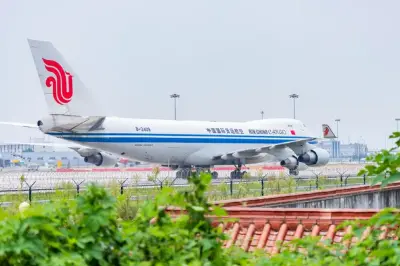
Back at the hotel, I opened Douyin and accidentally saw that roads in Shennongjia were under repair, making it impossible to reach Shennong Peak. I then checked the official Shennongjia website, and indeed there was a notice. As the saying goes, "If you haven't been to Shennong Peak, you haven't really visited Shennongjia." I had been away for over 20 days, so I decided to head back home. I booked a flight online from Wudang Mountain to Nanning at 5:10 AM on the 23rd.
In the evening, I specially tried the local "upturned-mouth fish" (Culter alburnus). The meat was tender and delicious.
The next day (June 23), I took the designated airport shuttle at noon and arrived at the VIP lounge. At 4:00 PM, the airport announced that the flight to Nanning was canceled due to aircraft maintenance. Passengers could rebook or get a refund. Damn—there were no flights to change to, so I waited. The airport bus took our group of over 20 people to Shiyan and arranged accommodation and meals. After dinner, I took a walk in downtown Shiyan. It felt like entering a car assembly workshop—the streets were lined with shops selling auto parts, countless numbers. I truly experienced being a citizen of a car kingdom.
On June 24, at 10:00 AM, the airport reported a make-up flight at 9:00 PM, but by 2:00 PM, it said it was uncertain. I decided not to wait, and instead took a detour to Yichang to fly to Nanning, and also visit the Three Gorges Dam along the way. At 4:30 PM, I boarded a train to Yichang, and after more than 5 hours, I arrived in Yichang.
The next day, I visited the Three Gorges Dam. Due to tight time and inconvenient transportation, the trip was very difficult, and I almost missed my flight. I won't go into details here.
At 4:00 PM, I finally boarded the flight from Three Gorges to Nanning, arriving home safely at 9:00 PM.
Summary: This solo trip lasted 24 days, spanning four provinces: Guangxi, Guizhou, Hunan, and Hubei. I visited attractions including Zunyi, Zhenyuan, Fanjing Mountain, Furong Town, Aizhai Bridge, Enshi, Wudang Mountain, and the Three Gorges Dam. The total cost was about 5,000 yuan.