Beijing - Kaifeng - Xiangyang - Danjiangkou - Wudangshan - Enshi - Shennongjia - Kaifeng - Beijing Self-Driving Tour
During the summer vacation of 2022, I made an appointment with several friends, four families with 6 adults and 6 children for a self-driving tour. After careful route planning and considering COVID-19 affected areas, we finally chose the route Henan Kaifeng - Hubei Xiangyang - Danjiangkou - Wudangshan - Shennongjia - Enshi. The expected itinerary was 12 days, nearly 4000 kilometers.
DAY 1 (July 29)
Departed from Beijing at 8 a.m., along Jingkai Expressway - Daguang Expressway, 670 kilometers, arrived in Kaifeng at 2:30 p.m. Previously inquired about Kaifeng's epidemic prevention and control policies, knowing that as long as the health code and travel code were both green, it was fine. So getting off the expressway in Kaifeng was smooth, the codes were checked and we entered Kaifeng smoothly. Below are some photos taken on the way and upon arrival;
Entering Kaifeng city, because the main purpose of this Kaifeng trip was to visit the Qingming Riverside Landscape Garden, we booked Atour Hotel Qingming Riverside Garden Branch through Ctrip, a double standard room with breakfast at 290 yuan per night (member price). Unexpectedly, the room was clean and spacious, and the breakfast was good, highly recommended.
After checking in, it was only a little past 3 p.m., so we decided to visit the Daliang Wuxia City (Grand Song Dynasty Martial Arts City) about 2 kilometers from the hotel. Leaving the hotel, we found that Kaifeng had even more shared electric scooters than Beijing, which were very convenient. We bought multi-ride cards, averaging a little over 1 yuan for a 15-minute ride (about 3 kilometers). Each of us rode one with our children and set off for Daliang Wuxia City. The ticket for one adult and one child was 87 yuan. After entering, we found it was a theme park based on the stories of the Water Margin characters, with performances guided by the park's narrator. We watched small scenes such as Li Kui trying a case, Wu Song blood spilling the Mandarin Duck Tower, and Lu Tisha pounding the town's West Gate. Personally, I found it mediocre, and the kids were not very interested either. When watching Wu Song fight Ximen Qing, my son said Wu Song was too fat... There was a relatively large-scale horse battle, "Three Attacks on the Zhu Family Manor", which was okay, but the horse arena smelled bad and it was hot, not very comfortable. When we reached a playground, the children finally got excited. There were rope nets, suspension bridges, and the kids and adults had a great time for over an hour. It was almost 6 p.m. before we reluctantly left under the urging of the adults. Overall, I think Daliang Wuxia City was just so-so. The only highlights were the "Three Attacks on the Zhu Family Manor" horse battle and the playground, which were barely worth watching or playing. Not highly recommended.
Leaving Daliang Wuxia City, we took electric scooters to the pre-booked Songyuan Steamed Soup Dumplings, said to be a time-honored brand, for dinner. Probably because we had been driving all day and only had simple meals at service stations, both adults and children ate heartily in the evening. The soup dumplings were quite good, but other dishes were average (I have a picky palate). Pictures tell the truth. On the way back, still by electric scooter, we passed by Xisi Night Market, which was just a few hundred meters long street of food stalls, with very simple dining conditions, incomparable to Beijing's Guijie. I heard there was also a Gulou Night Market, probably similar, not recommended.
Finally, one talented family among us contributed two sketches to commemorate today's visit to Daliang Wuxia City. Truly nice!
1. Daliang Wuxia City: If you have time, you can visit it. The "Three Attacks on the Zhu Family Manor" and the play area are okay, but the rest is average, not highly recommended.
2. Songyuan Steamed Soup Dumplings: Pretty good, worth a try. Kaifeng night markets are not recommended.
3. Atour Hotel Kaifeng Qingming Riverside Garden Branch: Worth staying, good value for money.
DAY 2 (July 30)
According to the original plan, after breakfast early (Atour's breakfast was quite good), we headed directly to the Qingming Riverside Landscape Garden. Because there was an event at the end of this month, primary school students who could recite the designated 8 Song Ci poems (Yu Meiren, Man Jiang Hong, Shui Diao Ge Tou, Shao Nian You, Qing Yu An, Yu Lin Ling, Die Lian Hua, Po Zhen Zi) could get a free ticket for the evening performance "Grand Song Dynasty Dream of East Capital" worth 249 yuan. The 4 accompanying primary school students had been reciting for 2 days, and finally their efforts paid off. They all passed and got free tickets. The park took the event seriously and recorded the whole process. Seeing my son wearing the uniform of a famous experimental school in Beijing, they asked in surprise if the school was very impressive. I thought to myself, of course. The adults bought tickets for 289 yuan (including the evening performance). After getting all the tickets, we decided to enter the park in the afternoon and watch the evening show, no need to stay the whole day. According to a friend who had been there before, the evening show was the highlight. Also, we did a nucleic acid test at the entrance (a daily or every-other-day necessity).
Then we went to visit Kaifeng Prefecture, still by electric scooter. The ticket for one adult and one child was 97 yuan, really not cheap. I think Beijing's scenic spot tickets are cheaper. The Summer Palace is only half this price, and that's an imperial garden. We hired a guide for 60 yuan, who explained for about an hour. We learned that the Kaifeng Prefecture was rebuilt on the original site by Kaifeng City Government in 1999. Kaifeng was equivalent to the capital of the Northern Song Dynasty. The Prefecture was the highest administrative organ of the capital. The Prefect was the highest official, with a total of 183 incumbents, including Kou Zhun, Bao Zheng, Ouyang Xiu, Fan Zhongyan, Su Shi, and Sima Guang. The Kaifeng Prefect was equivalent to today's Secretary of the Beijing Municipal Committee, a very high position. The Kaifeng Prefecture area was not large; we finished in less than 2 hours. Personally, if time permits, you can take a stroll; 2 hours is enough to understand the grandeur of the highest administrative office during the heyday of the Northern Song Dynasty and the many impressive Kaifeng Prefects, many of whom were famous figures.
Around noon, just as we left Kaifeng Prefecture, we received news that the Qingming Riverside Landscape Garden had been closed at noon. A tourist from Zhengzhou visited the garden on the 25th, returned to Zhengzhou, and was confirmed to have COVID-19 on the 28th. Everyone quickly gathered at the pre-booked Xingjia Potstickers Daliang Road branch. We quickly decided to check out and leave Kaifeng, heading directly to the next stop, Xiangyang. So we split up to contact the scenic spot and hotel for refunds and check-out (originally planned to enter the park in the afternoon and leave Kaifeng the next day). Fortunately, it went smoothly. No one had the mood to eat much; we just ordered some potstickers, costing a total of 273 yuan for 11 people. Then we hurried back to the hotel to check out and leave. Everyone moved quickly, and by 3 p.m. we were already on the expressway to Xiangyang, essentially a hasty escape.
Kaifeng is 440 kilometers from Xiangyang. The journey was uneventful, and we arrived at Xiangyang Lifeng Hotel around 7:30 p.m. (a temporary booking; we were 4 families, so we needed at least 4 standard rooms each time, which was hard to meet). Upon arrival, we found the hotel was old, facilities were worn out, 168 yuan per standard room. Anyway, we only stayed one night. Xiangyang's main attraction is Gulongzhong, which takes half a day. So we put up with it. After checking in, it was past 8 p.m. Xiangyang is not a big city, and many restaurants close before 9 p.m. We had heard that Xiangyang beef noodles were delicious, and everyone agreed. Finally, we found a place called "Qiaotou Chen Jia Beef Noodles", which had good reviews. Xiangyang also had shared electric scooters, and we rode for about 20 minutes. Surprisingly, there were many people even close to 9 p.m., queuing to order. The dining environment was a bit poor, but we decided to stay. We queued to order, each ordering separately. My son and I had one bowl of beef offal noodles and one bowl of beef noodles, plus a drink, totaling 39 yuan. Not expensive, but the taste was average. My son took a few bites and stopped. After eating, we returned to the hotel. The hotel was very poor; we unanimously decided to have breakfast and then check out to go to Gulongzhong, visit it, and then proceed to the next destination.
1. I believe everyone admires Lord Bao. If you have time, you can visit Kaifeng Prefecture; 1 hour is enough.
2. As for Xiangyang beef noodles, maybe I didn't find a place with a good environment, but Qiaotou Chen Jia had many customers. The taste was normal. You can explore more.
DAY 3 (July 31)
The hotel had no breakfast. Before sleeping last night, we decided to walk to a McDonald's about 1.5 km from the hotel for breakfast. Got up at 8 a.m., packed luggage into the car, checked out, and walked to McDonald's. Walking on Xiangyang's streets, the children were still excited, happy to have McDonald's for breakfast.
Set off for Gulongzhong Scenic Area, 19 km, half an hour drive. There was a combo ticket for one adult and one child at 118 yuan, but the requirement was that the child be under 1.4 meters. My son is 1.5 meters, so I bought an adult ticket for 82 yuan and a child ticket for 50 yuan (as a result, a friend bought two combo tickets and they didn't check at the gate, so I spent an extra 14 yuan). Today is Sunday, there were many tourists. No guides were available; after waiting about half an hour, we finally got a guide and started the tour. Longzhong is Zhuge Liang's hometown, and the place where Liu Bei visited the thatched cottage three times. The famous Longzhong Strategy originated here. Listening to the guide, we learned that Zhuge Liang was not a poor scholar; his relatives and friends were either officials or wealthy. Otherwise, no one would have recommended Zhuge Liang to Liu Bei, and there would have been no subsequent Three Kingdoms situation. This tells us that the people around you are really important. We saw the thatched cottage where Zhuge Liang once lived, the wax figures of the Longzhong Strategy, and even a stele with Chiang Kai-shek's inscription (it was said that during the Cultural Revolution, this stele was knocked down and fell face down on the ground, thus surviving to this day). Finally, we took a slide car to the top (round-trip slide car: 80 yuan per person, no child ticket). At the top, there was a tall tower - Tenglong Pavilion, ten stories high, each floor introducing Zhuge Liang's life. Ascending to the top, we had a panoramic view of the surrounding mountains. It was nice, but the weather was very hot. Coming down the tower, we took the slide car again. There was a driver in front controlling the speed of the fleet. We rode two per car following behind, forming a line like a little train. I had taken similar slide cars in Beijing at Mutianyu, Yanqi Lake, and Badachu, some with drivers controlling speed, so I didn't think much of it. But when it started moving, I found that the driver didn't control the speed at all; it was really fast, the fastest slide car I have ever ridden. It took about 5 minutes to slide down. The kids said it was as thrilling as a roller coaster and wanted to do it again, but due to time constraints, we declined. The visit ended around 2:30 p.m., spending about 4 hours at Gulongzhong.
We then went directly to the pre-booked restaurant "Zhangli Xiaoguan", located in a newly opened cultural and creative park on the outskirts of Xiangyang. The restaurant was in a trial operation, with a nice environment and exquisite dishes. The steamed sea bass, spicy chicken, and egg-fried rice were good, fresh and full of flavor, but a bit expensive. We spent nearly 800 yuan for 6 adults and 5 children. For Xiangyang, that was quite expensive, but the taste was indeed good. Recommended.
After eating, it was past 5 p.m., and we headed directly to the third stop, Danjiangkou. The reason we chose Danjiangkou as the third stop: first, we were going to Wudangshan, which was very close; second, Danjiangkou is the source of the Middle Route of the South-to-North Water Diversion Project. I live near the Summer Palace, and the terminus of the Middle Route is Tuanjie Lake in the Summer Palace, which has some commemorative significance; third, Danjiangkou Dam can be visited for a fee; fourth, there is a South-to-North Water Diversion Memorial Park in Danjiangkou that is said to be nice, where kids can learn. From Zhangli Xiaoguan to Danjiangkou Hantang Hotel (just booked in the morning, not expensive, 210 yuan per standard room) was 97 km. Navigation recommended Provincial Road 302, taking about 1.5 hours to reach the hotel. Since we finished eating close to 5 p.m., we decided not to have dinner together that evening.
The hotel was also old, but the facilities and cleanliness were better than Xiangyang Lifeng Hotel. We only stayed one night, so it was acceptable. From the hotel window, we could see the Han River. Everyone decided to take a walk along the riverbank. It was just a few minutes' walk to the river, where there was a Rainbow Bridge spanning the Han River, very eye-catching and beautiful. Walking on the bridge, people came and went, the temperature was pleasant, and it was very relaxing. Unknowingly, we walked several thousand more steps. Returned to the hotel to rest. Tomorrow we would visit Danjiangkou Dam and the South-to-North Water Diversion Memorial Park.
1. Gulongzhong is recommended. The slide car is highly recommended (thrilling).
2. Zhangli Xiaoguan is highly recommended. Both the dining environment and the taste of the dishes met my standards (I have some expertise in food evaluation).
DAY 4 (August 1)
In the morning, we had a simple breakfast at the hotel, then drove to the dam. Dam tickets: adult 65 yuan, child 40 yuan. We booked a guide in advance for 200 yuan, who led us to visit the exterior, interior open to the public, and the top of the dam, explaining its history. We learned that Chairman Mao instructed the construction of Danjiangkou Dam in 1958 for the South-to-North Water Diversion. We learned that the dam solved the transportation problems for three major projects: the construction of Shiyan's Second Automobile Factory, Xiangyang's arsenal, and another national project I forgot. We learned that the water from the Middle Route takes 15 days from Danjiangkou, Hubei, to the Summer Palace in Beijing. We learned the proportion of water usage: Henan 40%, Hebei 50%, Beijing only 10%. We saw the route of the South-to-North Water Diversion and many fish weighing dozens of jin near the flood discharge outlet (the guide said they are not seen every day). We saw the different materials and structures used in the initial construction and later expansion of the dam (it was really cold inside the dam; it was hot outside, so if you enter the dam from outside on a hot day, it is recommended to bring a jacket). At the top of the dam, we saw the ship lift (ships from upstream pass through the dam by being lifted onto a ship lift and then hoisted over the dam. Due to the narrow Han River channel and fishing bans upstream, no large ships have passed in recent years). When the dam was first completed and put into use, it ranked second among hydropower stations nationwide; now it ranks over 260th. On one side of the dam, we also saw Nongfu Spring's Danjiangkou bottling plant, which is a major taxpayer for Danjiangkou city.
After visiting the dam for about 2 hours, we prepared to go to the South-to-North Water Diversion Memorial Park. The guide advised us not to go, saying it just had miniature replicas of famous historical sites along the diversion route. My son immediately said he didn't want to go, but the other four kids wanted to go. So my son and I, along with another friend, didn't enter the park. We stayed in the car to choose a restaurant for lunch, finally selecting a fish restaurant called "Danjiang Fishing Village". We went there first to order. The restaurant was in the suburbs of Danjiangkou, similar to a Beijing farmhouse, with a large courtyard by the river and more than 10 private rooms. Among the dishes we ordered, there was a braised whole fish in a big pot and a braised chicken (a whole chicken). These two dishes were good; the rest were average. For 4 adults and 5 children, nine people, it cost 370 yuan, quite affordable.
After eating our fill, we set off for the next stop, Wudangshan. Both Danjiangkou and Wudangshan are under Shiyan City, 57 km apart, all provincial roads. However, the owner of our booked homestay in Wudangshan said that there was a place called Qian Islands Gallery on the way, with beautiful scenery. So we drove there directly. Arrived in less than half an hour. It had the style of Qiandao Lake in Zhejiang, almost no people, blue sky, white clouds, small islands, dead trees — the scenery was fantastic, as shown in the picture.
We played at Qian Islands Gallery for nearly 2 hours, then drove another 40 minutes to reach our booked Wudangshan Yishanju Smart Hotel. The hotel was on a newly built street about 1 km from the Wudangshan scenic area entrance, with many homestays on both sides. The room was moderate in size, equipped with Xiaodu voice control for curtains, lights, etc. Room price: 220 yuan per night, quite affordable. There was an elevator. The best part was a large rooftop on the 5th floor where we could dry clothes. Since we hadn't washed clothes in days, it was perfect to wash them all at once. I hung them on the rooftop and found that I had washed 17 pieces — we are a big family, haha. Between washing clothes and not feeling hungry, everyone went their separate ways, no group dinner. My son wanted instant noodles, so I went to a convenience store at the entrance to buy some ham sausages, etc. (prices were a bit high; later I learned that Wudangshan town was less than 2 km from our hotel, where there were restaurants and supermarkets). In the evening, after putting the kids to bed, the four leading ladies gathered in the hotel lobby to discuss how to visit Wudangshan.
There are two routes to the summit of Wudangshan: 1. Enter the scenic area, take a bus to Qiongtai (about an hour), then take a cable car from Qiongtai to the Golden Summit (the cable car terminal is still about 200 steps from the summit). This is relatively easy. 2. Enter the scenic area, take a bus to Nanyan Palace (about 50 minutes, passing by Prince Slope, Carefree Valley, Purple Cloud Temple, etc.), visit Nanyan Palace and then hike to the summit. The owner said it takes about 3 hours to hike from Nanyan Palace to the Golden Summit. The owner recommended a two-day itinerary.
We had booked the hotel in Wudangshan for two nights. Finally, everyone decided on the following plan: 1. On the first day, take the bus directly to Nanyan Palace, then hike to the summit. After reaching the summit, take the descending cable car to Qiongtai, then take the bus back to the hotel. Expected to take one day. 2. On the second day, take the bus to Nanyan Palace early, then take the bus back, visiting Purple Cloud Temple, Carefree Valley (under renovation, not open), and Prince Slope in turn. Finally, return to the entrance and go back to the hotel to check out and head to the next stop. Expected half a day. Once the direction was set, we felt settled, returned to our rooms to sleep, and recharge for tomorrow's climb.
1. If you are going to Wudangshan, since Danjiangkou is only about 50 km away, the dam is worth a visit. There are not many dams open to the public in China, and the dam has historical significance.
2. The Qian Islands Gallery on the way from Danjiangkou to Wudangshan is worth a visit. If you go in summer, bring a swimsuit and have a wild swim. The scenery is beautiful and almost no one is there.
DAY 5 (August 2)
In the morning, we had a simple breakfast at the hotel (10 yuan per adult, 5 yuan per child): porridge, steamed buns, boiled eggs, and pickles. Everyone ate heartily. After breakfast, the owner drove us to the scenic area entrance in a business car, just a few minutes' drive. Last night we had booked tickets on Ctrip: 217 yuan (including an audio guide for 35 yuan, ticket valid for 3 days; if you re-enter within 3 days, you need to pay an additional 20 yuan at the entrance). Children were free (seems to be under 12). At the entrance, they checked 48-hour nucleic acid test and green code. After entering the visitor hall, we waited for a guide (booked on Ctrip last night for 200 yuan). After waiting half an hour, the guide said they wouldn't take us because we weren't staying on the mountain (guides prefer guests who stay in Nanyan Palace homestays because they get commissions; we stayed at the foot of the mountain, so they would have to climb with us for little profit). Furious, we immediately complained at the service counter and demanded a refund (Ctrip guides are non-refundable). The service counter knew the situation and communicated with the platform, and eventually we got a refund.
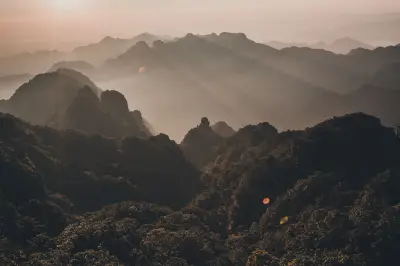
After handling this, we took the bus for about 45 minutes directly to Nanyan Palace. The road was winding and the driver drove fast. If you get carsick, prepare medicine in advance. Arriving at Nanyan Palace, we started climbing. It was really tiring. I had been to Wudangshan once in 2018, but I completely forgot how hard the climb was. Gradually, I dropped from the first echelon to the last. It was stairs all the way. A sedan chair bearer followed me all the way, apparently thinking I couldn't make it and would need a sedan chair. Little did he know that I would rather die than waste money, and I couldn't bear the shame! They swapped personnel and gave up halfway up the mountain. To be honest, I was so exhausted that I only focused on climbing and didn't enjoy the scenery. The first echelon, a classmate of my son, 10 years old, reached the platform below the Golden Summit in an hour and a half. Truly amazing. The second echelon took about two hours. I took two and a half hours. Anyway, reaching the top was a victory.
We rested on the platform for a while, the kids had some noodles, and I bought each of them a trendy Wudangshan popsicle, 25 yuan each, really expensive. After resting, around 2 p.m., we started to summit. Unexpectedly, it began to rain heavily, even with hail. We hurried to the top when the rain lightened a bit. After summiting, the rain got heavier. We took shelter in the Zhenwu Emperor Hall on the Golden Summit for about half an hour until the rain gradually subsided. Then another friend brought us raincoats bought below (their family had a baby under 2 years old, but the mother also brought the baby up alone; later she hired a sedan chair for 600 yuan to reach the summit. According to her, on the steeper steps, the sedan bearers dared not carry her, so she had to climb herself). With raincoats, we could worship on the Golden Summit, making the hard climb worthwhile. After the rain, the Golden Summit was shrouded in clouds and mist, like a fairyland. It was worth it. We burned the incense we brought (couldn't burn it in such heavy rain), completing the ritual.
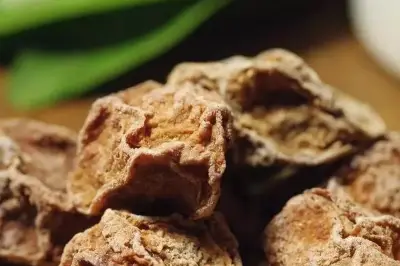
We took the cable car down. Cable car tickets: adult 80 yuan, child 40 yuan. Arrived at Qiongtai in less than 10 minutes. Everyone was exhausted. We didn't even visit Qiongtai; we took the bus directly back down. After coming out of the scenic area, there were many stalls. A kind of "gorgon fruit cake" (Qian Shi Gao) tasted quite good. We bargained to 10 yuan per box and bought 10 boxes (they became hard after a few days, so buy only a small amount and eat within two days). Back at the hotel, we found a restaurant nearby called "Feng Jia Xiaoguan" and had a simple meal, about 400 yuan. The taste was average. They also had braised chicken, but it wasn't as good as the one at Danjiang Fishing Village.
In the evening, we held a meeting to discuss the following itinerary. The original plan was to visit Nanyan Palace tomorrow and then head to Shennongjia. However, we found that there were no suitable hotels in Shennongjia — all fully booked. So we temporarily decided to change the plan: advance the last stop, Enshi, which was originally the farthest, then drive back from Enshi to Shennongjia, and then return to Beijing from Shennongjia. Finally, we booked 3 nights in Enshi and 3 nights in Shennongjia, with potential changes later.
1. When visiting Wudangshan, you must reach the Golden Summit. So if time is tight and you only have one day, take the bus to Qiongtai and the cable car up and down, saving time and energy. If you have two days, you can consider my itinerary to get a comprehensive understanding of the sacred Taoist mountain, which Emperor Yongle spared no expense to build with 300,000 soldiers.
2. For dining and shopping, go to Wudangshan town. The area is small, a 10-minute drive round trip.
3. The advantage of self-driving is flexibility, but during peak season, plan ahead, especially for multiple families.
DAY 6 (August 3)
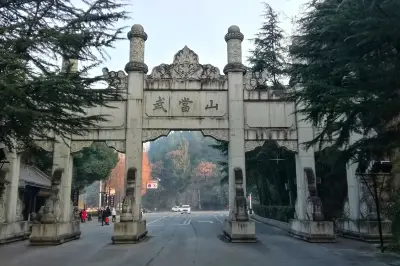
Since Enshi was more than 200 km farther than Shennongjia, everyone got up early today. We re-entered Wudangshan with a 20 yuan second-entry ticket, took the bus directly to Nanyan Palace. At Nanyan Palace, you must see the Dragon Head Incense, a stone beam extending about 3 meters into the void, carved with a coiled dragon, with an incense burner at the tip, known as the "Number One Incense in the World". Nanyan Palace is the most representative Taoist architectural complex among Wudangshan's nine palaces. After visiting Nanyan Palace, we took the bus to Purple Cloud Temple, which was similar to Nanyan Palace. Carefree Valley was not open. Due to time constraints and hot weather, we unanimously decided not to go to Prince Slope, but to return to the hotel for checkout and lunch, then leave as soon as possible. After lunch, we also needed to go to Wudangshan Hospital for nucleic acid testing.
Lunch was at the hotel; unexpectedly the food was quite good, increasing my rating of Yishanju. After lunch, we went to Wudangshan Hospital for nucleic acid tests, 16 yuan per person (it is said that paid tests get results faster).
After the tests, we left the city and got on the expressway at 4:30 p.m. The distance to our Enshi destination was about 440 km, with many mountain roads, estimated 6 hours. It looked like we would be driving at night.
Today, I'll talk about our itinerary in Enshi. The main attractions in Enshi are Dixin Valley, Grand Canyon, and Tenglong Cave. Tonight (3rd) we would arrive at Shitianwei Hotel in Gaoping Town, Jianshi County, where Dixin Valley is located. The next day (4th) we would visit Dixin Valley, taking most of the day. Then we would drive to the Grand Canyon, about 130 km, 2 hours, and stay at Fuyunge Homestay for 2 days (4th and 5th). Visiting the Grand Canyon would take a full day. On the 5th, we would leave the Grand Canyon for Tenglong Cave, about 40 km, expected to take 4 hours, then drive to the last stop Shennongjia, about 420 km, 6 hours, so the schedule was tight.
We arrived at Shitianwei Hotel in Enshi Dixin Valley around 10 p.m. Room price 296 yuan per night, including breakfast. There was a parking lot that could hold over 20 cars. The room was relatively clean. We quickly washed up and went to sleep.
1. Near Nanyan Palace in Wudangshan, you should take a look. Due to time, we only saw Nanyan Palace and Dragon Head Incense, not the rest. If you have time, you can carefully visit Purple Cloud Temple, Carefree Valley (with many monkeys), and Prince Slope.
DAY 7 (August 4)
Breakfast was simple; we missed Atour's breakfast. After breakfast, we went to Dixin Valley, arrived at the parking lot in less than 10 minutes. Then we booked tickets on Ctrip: 190 yuan per person, same price for adults and children, including scenic area ticket + shuttle bus + glass bridge + sky magic carpet + sightseeing elevator. Truly expensive. It is said to be a 4A scenic area, belonging to the alpine karst canyon landform, formed 250 million years ago in the Triassic period. Exploring the earth's heart, we'll see. Let's go!
Shortly after entering the scenic area, we reached the glass bridge. It was similar to glass walkways in some Beijing parks, nothing new. After the glass bridge, we entered the karst landform, with plank roads built on the cliffs. The cliffs were not high, with flowing water at the bottom. Some places had nice scenery. We passed by the "Heart-Stopping" suspended plank road where an accident occurred on July 22; it was closed. There were many people, not many steps, much less tiring than Wudangshan. We passed the famous heart-shaped water hole, where many people were taking photos. I also took one. Due to safety reasons, the rafting was not open, probably related to the accident. Further up was the sky magic carpet, which was actually a flat moving walkway between two peaks. I was a bit disappointed because we had been walking on cliffs near the bottom of the valley, so when it was time to exit the valley (i.e., leave the scenic area), there were two options: climb up or take the sightseeing elevator. Our tickets included the elevator, so we queued for a full 40 minutes to get on, which was even more disappointing. The elevator's exterior was dirty, and you couldn't take photos from inside. It took a few minutes to go up. One friend who didn't want to wait chose to climb, and it only took him 10 minutes. This elevator was a bit of a ripoff.
Exiting the scenic area, it was near noon. We found a random restaurant; food was average, like a farmhouse. After all, it was a small town. After eating, we drove to the Grand Canyon's booked hotel, about 2 hours. We had plenty of time, enjoying the scenery along the way. Arriving at the town near the Grand Canyon, we stocked up on snacks at the supermarket and went straight to the hotel.
Fuyunge Hotel was in the town near the Grand Canyon, 230 yuan per night for a standard room, including breakfast. When we arrived, we were surprised: the hotel was built on a hillside. The 3rd floor was ground level (actually the first floor). The only room left for me was on the 2nd floor (below ground level, actually the basement). The room was very small, with the only window facing the hotel's atrium, basically no daylight, and no elevator. We discussed and decided that another family and I would check out and rebook another hotel. Because it was a last-minute booking, the price was over 600 yuan, much more expensive, but the reviews were good. We checked out and headed to the new hotel - Enshi Guiyuan Resort Hotel. As it turned out, it was on the mountain, a half-hour drive. The environment was nice, with a large garden and a swimming pool, elevator, spacious room. The photo below shows the scenery from the room, which was beautiful. But for over 600 yuan, I personally think it was a bit pricey. Since we were here, we accepted it.
Rest well, prepare for tomorrow's Grand Canyon trip.
1. Dixin Valley: The glass bridge, magic carpet, and sightseeing elevator were not great experiences, not recommended. The primitive landform is okay, but the price is really not cheap. Not recommended.
2. For Grand Canyon hotels, be sure to ask which floor is the ground level and whether there is an elevator (many homestays in the Grand Canyon area have no elevator).
DAY 8 (August 5)
Today we agreed to meet at the scenic area entrance at 9 a.m., so we slept until we woke up naturally. After breakfast (slightly richer than previous hotel breakfasts), we went to the Grand Canyon visitor center to meet the other friends.
At the visitor center, we found a place for nucleic acid testing, so we did it to be safe.
Grand Canyon tickets: adult 265 yuan, child 110 yuan. Since we wanted to hike up and enjoy the scenery, we chose the full pass without the cable car. Not cheap, really expensive!!!
Enshi Grand Canyon mainly has two areas: Qixingzhai and Yunlong Ground Crack. In principle, one goes up and one goes down. Considering physical strength, we chose to visit the more challenging Qixingzhai first, and then decide whether to visit Yunlong Ground Crack on the way back.
Itinerary: Take the scenic area bus to the entrance of Qixingzhai, start climbing to Xiaoloumen, then Zhongloumen, then Daloumen. At Daloumen, take a 9-level escalator down. The hotel owner said the climb would take about 4-6 hours. Then visit the ground crack, estimated 2 hours.
Set off. Cliff plank road, One Incense Pillar, etc., as shown in the pictures. Truly spectacular, similar to yesterday's Dixin Valley landform but more grand. We started climbing at 10:30 a.m. and descended around 3:30 p.m., taking 5 hours. Then we entered the ground crack, descending all the way, very cool. Cliffs, waterfalls, huge rocks — some different scenery. It took less than 2 hours to reach the sightseeing elevator to exit the valley. After exiting the elevator, we walked along winding paths for almost an hour, adding several thousand more steps. It was really frustrating (we were extremely tired and didn't bother to ask; I suggest future visitors ask clearly if there are other ways out of the ground crack besides the elevator, otherwise this road is really maddening). On August 5, I topped my WeChat step ranking with 34,424 steps. I was exhausted, but the kids seemed to hold up.
Back at the hotel, we had a simple meal and slept, recharging for tomorrow's Tenglong Cave.
1. Personally, I think Dixin Valley and the Grand Canyon are somewhat repetitive. I suggest just visiting the Grand Canyon.
2. Grand Canyon is a 5A scenic area with spectacular landscapes, worthy of being compared to the Grand Canyon in the United States. Worth a visit, recommended.
3. Visiting both Qixingzhai and Yunlong Ground Crack in one day requires a certain level of physical fitness. Be prepared.
4. There is a cable car from Qixingzhai to Xiaoloumen, but then you miss the cliff plank road. This section took us only 1 hour; if physically fit, you can hike.
DAY 9 (August 6)
Tenglong Cave is about 40 km from the Grand Canyon scenic area, 1 hour drive. It is a 5A scenic area, the largest karst cave in China, seventh in the world. Some travel notes also mentioned Luyuanping scenic area. Later, locals told us it was just an ancient village developed into a scenic area in recent years, not much to see. So we didn't choose Luyuanping.
After breakfast, we checked out and headed directly to Tenglong Cave. There was a performance "Yishui Lichuan" at 12 p.m., and we hoped to catch it. Upon arriving near the Tenglong Cave visitor center, we were told there was no parking. There was a residential area next to the visitor center with underground parking. We quickly parked and rushed to the scenic area bus. On the way, we purchased tickets on the official account: adult 170 yuan, child 95 yuan. At the visitor center, we entered directly with ID cards, took the bus, entered the cave, and hurried to the performance venue. It was Yi-style, and we made it just in time. Watching a performance inside the cave was unique; it was cool and pleasant, and the show was good. There was also a laser show at 1 p.m., but we didn't have time. After exiting the cave, we saw an aerial rafting, 60 yuan per person. The kids all clamored to try it. It turned out to be a spiral water channel with a lifebuoy sliding down, very short distance. 60 yuan was a ripoff. After leaving the scenic area, we bought some snacks and headed directly to the next stop, Shennongjia. It was already 3 p.m. when we left. The distance to our booked hotel in Shennongjia was 420 km, estimated 6 hours. Probably night driving again.
Here I introduce Shennongjia. Shennongjia mainly has 6 scenic areas: Guanmen Mountain, Tiansheng Bridge, Shennong Altar in Muyu Town. Many travelers choose Muyu Town as their first stop. Shennongding Scenic Area's east gate is 13 km from Muyu Town. Crossing Shennongding and exiting from the west gate is about 40 km. After the west gate, a few kilometers away is Pingqian Ancient Town, where Dajiuhu Scenic Area is located. The last scenic area, Tianyan, is more than 50 km north of Muyu Town, a bit remote. In short, these 6 scenic areas represent Shennongjia. A combined ticket for all 6 is 269 yuan, half price for children, valid for 5 days, allowing re-entry to each scenic area. Except for Dajiuhu, Guanmen Mountain and Shennongding can be entered by private car. The scenic areas are large. Accordingly, we booked our hotel in Muyu Town for 3 nights, 507 yuan per night, no breakfast.
Afternoon drive: mountain roads, tunnels, mountain roads, tunnels, but the scenery was beautiful.
Finally, at 9:30 p.m., we got off the expressway and encountered the strictest check of nucleic acid tests and travel codes since leaving Beijing. Registration, nucleic acid tests, the whole thing took nearly an hour. Finally, we could head to the hotel. After another half-hour drive, we arrived at Muyu Town Youran Hotel. The room was clean but very small, less than 20 square meters. We checked in and it was almost 11 p.m. Went to bed quickly. Tomorrow morning we would discuss the specific itinerary.
1. Tenglong Cave is a 5A scenic area. The Yishui Lichuan performance is a must-see. I don't know about the laser show. There is an electric cart inside the cave. Overall, Tenglong Cave is recommended.
DAY 10 (August 7)
In the morning, we consulted the homestay owner and planned the following itinerary based on his suggestions:
1. Today (7th), visit Guanmen Mountain, Shennong Altar, and Tiansheng Bridge. Stay overnight in Muyu Town.
2. Tomorrow (8th), get up early, check out (the owner agreed to refund one night; now room prices are over 700 yuan, so the owner was happy to have us leave), go directly to Shennongding Scenic Area, cross Shennongding, and then stay in Pingqian Ancient Town.
3. On the 9th, visit Dajiuhu (the owner said half a day is enough), return at noon. That meant we needed to book another night in Pingqian Ancient Town.
With the plan set, we quickly booked a hotel in Pingqian Ancient Town: Honghua Hotel, 390 yuan per night.
Set off for Guanmen Mountain. At Guanmen Mountain, we just swiped our ID cards to enter by car. Driving up, there were many cars. Attractions were scattered along the road. If interested, we could park nearby and visit. At least it wasn't tiring. Right after entering, we found a place where kids could play in the water. The kids had a great time. Further up, there was a panda house with one dirty panda; a bear mountain with four skinny little bears. Overall, it was very boring.
After Guanmen Mountain, we went to Shennong Altar, a place to worship Shennong. There was a large statue of Shennong, nothing else. After that, it was past 2 p.m. We decided to go back to the hotel. Probably Tiansheng Bridge was similar. Better to stroll around Muyu Town and find a good place to eat.
We found a nice restaurant, as shown in the picture. The food was good.
The town had a large theater with a stage play "Shennongjia Mystery" in the evening. We initially wanted to watch it, but the children didn't want to. After dinner, we wandered around and returned to the hotel. After so many days, this was the first day we could go to bed early. Really tired!
1. Guanmen Mountain, Shennong Altar, and Tiansheng Bridge near Muyu Town: I think it's a stretch to include them among Shennongjia's six major scenic areas. Strongly not recommended.
2. Later, some friends said the stage play "Shennongjia Mystery" was quite good. Depends on your preference.
3. Muyu Town is relatively bustling. If time permits, you can consider staying one night. But those three scenic areas? Skip them.
DAY 11 (August 8)
In the morning, we headed directly to Shennongding Scenic Area. Arrived at the gate in less than half an hour. Again, swiped ID to enter by car. Driving up, it got cooler and cooler; we turned off the AC. It was like a different world compared to the foot of the mountain, very comfortable. At about 10 a.m., fog began to rise. Misty clouds surrounded the mountains; the camera couldn't capture its beauty. See pictures.
We passed by Golden Monkey Scenic Area, Shennong Valley, Big Footprint, Shennongding, and Banbiyan, as shown in the pictures. Truly a fairyland.
Later, I learned that there is a plank road from Shennong Valley down to the valley floor, then along the valley floor to Big Footprint, taking about 4 hours. At Big Footprint, I met a few tourists who started from Shennong Valley at 10 a.m. I saw them at Big Footprint after 1 p.m. I asked how it was down there, and they said at least it was more fairy-like than above. To each their own; I dreaded the 4-hour hike.
We entered the park around 10 a.m. and exited at 5 p.m., and there were still some spots we didn't visit. Really huge!!!
After exiting, within a few kilometers, 20 minutes later we arrived at Pingqian Ancient Town's Honghua Hotel. The room was relatively old but clean, no elevator. Luckily, we were on the 2nd floor. The owner was warm and honest. In the evening, we found a restaurant in town that was said to be good, but the food was really average. The signature fish dish was truly bad. There were many restaurants; you can explore more.
Let me also introduce Dajiuhu: a national wetland park, one of the few typical high-altitude wetlands in China. Nine lakes are arranged in sequence in the wetland, called Dajiuhu (Nine Great Lakes).
After dinner, we returned to the hotel and asked the owner which places in Dajiuhu were fun. The owner told us that if we could get up early, it's best to see the morning mist from 6-7 a.m. After 7:30, it's basically gone. Also, lakes 2, 5, and 9 were fun, plus the deer park. Half a day is enough.
We unanimously decided to set off at 6 a.m. to see the morning mist. Went to sleep quickly. Another decision: stay one more night in Pingqian Ancient Town, and leave calmly on the 10th. That way, we would have a full day to visit Dajiuhu, more than enough. The owner gave us a discounted renewal price of 300 yuan. A really honest owner.
1. Shennongding Scenic Area is highly recommended. If you enter early, consider walking the plank road between Shennong Valley and Big Footprint down to the valley floor.
2. Also, you can set up tents in the scenic area. There are large grasslands. Lying in a tent watching the blue sky and white clouds, cool and relaxed, sounds great.
DAY 12 (August 9)
Woke up at 5:30 a.m., but my son refused to get up. No choice, I left him at the hotel. The hotel was only a 5-minute drive from the scenic area entrance. Entered easily, took the bus (separate ticket: adult 70 yuan, child 35 yuan) directly to the inner area (only for early morning mist viewing; buses start at 5:30 a.m. to 7 a.m. to various lakes; at other times, the bus only goes to the entrance, then you transfer to a small train to each lake). When I saw the lake, mist was already rising. Wow, mountains in the distance, lake nearby, surrounded by layers of mist — incredibly fairy-like. The beauty of Shennongding couldn't be captured by a camera; here, words can't describe its fairyness, beauty, and wonder. See pictures.
Worried about my son at the hotel, I did a quick loop and went back alone. Because my son broke his promise (he agreed to get up early), I decided to punish him: no playing, only homework. He knew he was in the wrong and quietly did homework for several hours. In the afternoon, seeing his good behavior, I decided to take him back to Dajiuhu. The other friends had returned at 11 a.m.
My son and I entered the scenic area, took the bus for half an hour to the inner area, then transferred to the small train (for second entry that day, pay an additional 20 yuan with the same day's ticket). We visited each lake in turn. Each lake had a station, we could get on and off freely. We walked a bit, rode the train a bit, visited Lakes 2 and 5, and the deer park. Finally, we arrived at Lake 9, climbed to the top of the hill to watch the sunset. It was a different scenery from the morning mist.
1. Dajiuhu definitely ranks first among Shennongjia's six major scenic areas. Highly recommended.
2. Be sure to see the morning mist; get off at Lake 2.
3. Don't get nucleic acid tests done in Pingqian Ancient Town; it takes 48 hours for results.
Thus ended our visit to Shennongjia. I heard that Tianyan Scenic Area only has swallow nests, probably boring, so we skipped it. We spent 3 days and 4 nights in Shennongjia. Personally, Shennongding and Dajiuhu are highly recommended; other places can be skipped. You could even stay in Pingqian Ancient Town for 3 days and thoroughly explore these two scenic areas. That would be a worthy visit to this natural oxygen bar and most comfortable temperature resort. Find a good hotel; the owner of my hotel was nice, but the hardware was lacking.
DAY 13 (August 10)
Returning from Dajiuhu to Beijing was 1350 km. We heard that the epidemic in Kaifeng was under control, and the Qingming Riverside Landscape Garden had reopened. So we decided to visit Kaifeng again on the way back. We booked the same Atour Hotel Qingming Riverside Garden Branch for 2 nights, 271 yuan per night (member price), including breakfast. From Dajiuhu to Atour was 720 km, estimated 10 hours. So after breakfast early, we set off at 8:30 a.m., crossed Shennongding again, scenery still beautiful, drove north all the way to Kaifeng. Finally, after 11 hours, we arrived at the Kaifeng Atour Hotel. Again, we rode electric scooters to Songyuan to taste their new dish "stone-grilled beef tenderloin". Pictures tell the truth. The kids ate heartily again. All four families reunited in Kaifeng. We decided to enter the park tomorrow afternoon. Tomorrow morning, we would sleep in, have breakfast, and let the kids do homework.
1. An 11-hour drive is really tiring for the driver. When I arrived at the hotel and washed my hands, my hands looked deformed. So if time permits, try to shorten the daily driving time.
DAY 14 (August 11)
Woke up naturally at 8:30 a.m. Haven't slept so comfortably in a long time. After breakfast, the kids did homework, practiced bamboo flute — time to do something serious! I slipped out to get a haircut, 38 yuan, much cheaper than Beijing.
At noon, we ordered from Huangjia Old Restaurant, which was quite good. If you come to Kaifeng, you can try it.
Entered the park in the afternoon. Due to the previous epidemic impact, admission was free before the 12th; just make a reservation. However, the evening performance "Dream of East Capital" cost 299 yuan. It was really hot today. The various small attractions in the park had performances at different times and locations, but because admission was free and the weather was hot, everywhere was crowded. We weren't very interested. The kids found a water play area and had a great time. We adults were happy to watch them and wandered where it was less crowded, taking photos and eating snacks. Soon it was 8 p.m., the time for the evening performance. We took our seats; the place was packed.
At 8:10 p.m., the performance began. A water stage show with huge realistic sets, gorgeous costumes, running through the entire show with the 8 classic Song Ci poems (the same ones my son recited on the 30th; the event only lasted until the end of July). Chanting or singing, it was like a vivid Qingming Riverside Scroll depicting the prosperity of the Eastern Capital of the Song Dynasty. The whole show lasted 70 minutes. I think the 299 yuan ticket was worth it just for this performance. Highly recommended.
After the show, the kids played in the park until after 10 p.m., until the park closed. We walked back to the hotel in less than 20 minutes. Rest well; tomorrow we return to Beijing, over 600 km.
1. Qingming Riverside Landscape Garden is worth a visit, especially the evening Dream of East Capital performance. Highly recommended.
DAY 15 (August 12)
After breakfast, we set off for Beijing at 9 a.m. Uneventful journey. At the Beijing entry checkpoint, we waited in line for 1 hour. Finally, just swiped ID cards, checked nucleic acid test, a brief inquiry, and we were allowed in. It was Friday, so we hit the evening rush hour. Arrived home after 6 p.m. Thus concluded our first ultra-long, ultra-distance self-driving tour of 15 days and 4000 km. Looking forward to the next trip.
1. If any friends want to travel to Kaifeng, Xiangyang, Wudangshan, Enshi Grand Canyon, or Shennongjia, I believe reading my travel notes will make you feel more at ease.
2. Traveling with multiple friends, clear division of labor: itinerary, hotel, restaurant, bargaining, child care, education — each takes their role, helping each other. Definitely many benefits.
3. During peak season, book hotels several days in advance, especially for large groups.
4. When traveling during the epidemic, it's best to get tested every day. Otherwise, if test results are delayed, it can affect your itinerary (you can get tested at expressway exits).
5. Finally, some might ask: how much did 15 days cost? Our car traveled 3930 km in total, expressway tolls 1680 yuan, fuel 3800 yuan, scenic area tickets (one adult one child) 2600 yuan, accommodation 5000 yuan, meals and shopping about 3600 yuan, total 16,680 yuan.