The Autumn Colors of Jiangnan: So intoxicating, you'll be mesmerized without a drop of wine
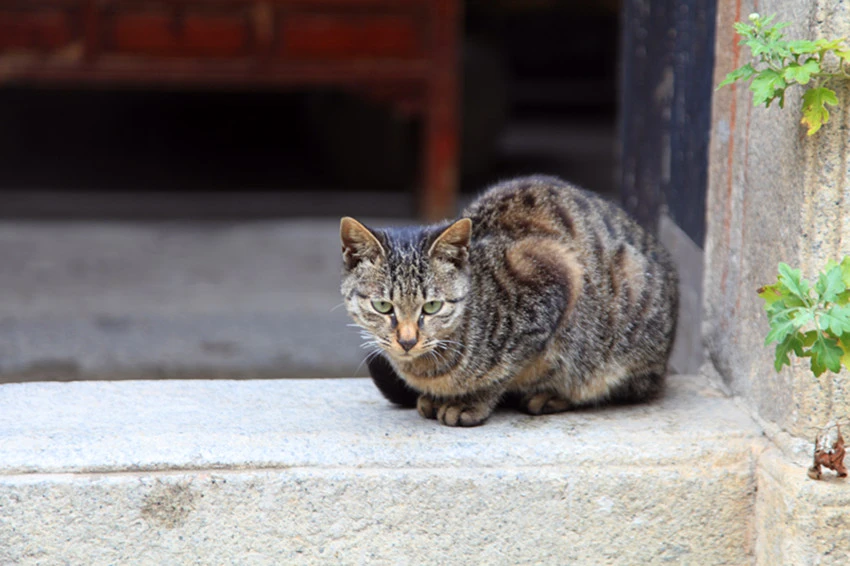
Inscription: Spring has its flowers, autumn its moon—truly the best seasons in the human world. The ancients all said spring and autumn are the finest times on earth. So in this sweltering summer heat, I long for the coolness of autumn. Under the steady cool breeze of the air conditioner, I sit at my desk at home and write down the title of this article: "The Autumn Colors of Jiangnan: So intoxicating, you'll be mesmerized without a drop of wine." I miss the beauty that the cool autumn brought me. My itinerary: Day 1: Fly from Shijiazhuang to Hangzhou, then take a bus from Hangzhou to Hongcun and stay at Hongcun Youth Hostel (60 yuan/night, WiFi). Wander around Hongcun and Tacun village, breathe the refreshing rain-washed air, enjoy the local food, stay at the hostel and play with their cats. Day 2: Farewell Hongcun, return to Hangzhou, then go to Shaoxing and stay at a youth hostel (50 yuan/night, WiFi). Day 3: Leave Shaoxing, visit Hangzhou's West Lake, savor delicious food, and stay at a West Lake express hotel (120 yuan/night, no WiFi).
Amidst the persistent drizzle, in the deep night rain, I arrived at Hongcun in southern Anhui. For travelers, constant rain is hardly a pleasant weather, yet for the amorous foothills of Huangshan (Yellow Mountain), it is actually a luxury. The rainy weather here always conjures up a reverie of stepping into a fairyland. On this late autumn day, nine years later, I visited Hongcun once again, like calling on an old friend I hadn't seen for ages—so heartfelt and tender, without reserve or distance. At ten in the evening, the sky was dim; Hongcun had sunk into a pure, tranquil slumber. My mind drifted, weightless, and as I tread softly, I melted into Hongcun's embrace, for I didn't want to disturb its dreams in this fine, silent rain. Yet a conflicting impulse urged me to dream alongside it. Walking on the narrow flagstone paths, stealing glances at the ancient Huizhou-style architecture, suddenly a flash of insight struck me—in that very instant, I clearly saw the dazzling starry sky of a dynasty a hundred years ago.
"How to make you meet me / At my most beautiful moment. / For this, I have prayed before the Buddha for five hundred years, / begging him to grant us a karmic connection. / So the Buddha turned me into a tree, / growing beside the path you must take." These exquisitely phrased words pluck at the tender strings of the heart. How astonishingly beautiful must that tree be? To untangle the pangs of lovesick longing and seek the serene beauty of autumn: Tacun, a place that has lately unveiled its mysterious veil like a demure maiden—what is it that draws the world's gaze? So, in autumn, at Tacun, at your most beautiful moment, I met you.
Blue bricks, black tiles, plank bridges, and simple homes—the ancient culture of Confucian merchants must still linger here. I was convinced of it. Even before arriving, I had silently pondered this thought a thousand times. I stubbornly believe that to truly visit a place, you must seek something invisible and intangible, something that can only be sensed. Only then is it complete.
Tacun village nestles beside Hongcun, the most beautiful village in Chinese paintings. Hongcun takes water as its soul, breathtakingly beautiful; Tacun uses nature as its backdrop, painting a picture of quiet beauty with seasonal brushes. Its charm lies in the rustic fragrance of the countryside, in the paths winding through the fields, where every tree carries memory and preserves history. We need not search deliberately—it simply stands before you.
Tacun, backed by Huangdui Mountain, the southwestern offshoot of towering Huangshan, overlooks the rippling Ten-Li Qishu Lake in the distance. Two or three dozen ancient dwellings with whitewashed walls, black tiles, and flying eaves are built into the hillside, layered and staggered. Seen from afar, they resemble a giant pagoda hidden among the valleys, screened by dense foliage.
Walking into the ancient woods, green shade covers the eyes and grass carpets the ground. Though there are no stone benches or chairs, the crisscrossing roots on the ground serve as perfect natural resting spots. In this tranquility, you can surely sense the timeless harmony and fresh, pristine beauty of Tacun.
Tacun is a place where you need to wander with your own footsteps along the field paths. In this ethereal, silent world, only the sound of footsteps and breathing remains. You can sing aloud and pour out your heart in this rich golden autumn.
On a morning after rain, the fine drizzle of Jiangnan finally paused its soft song. I, who had been pent up for a whole day and night, felt my spirits soar. I set off north from Hongcun to visit you—Tacun, I’m coming, at your most beautiful moment.
Walking along the ridges and dirt paths trod by villagers, breathing in the long-missed rustic scent, every step reveals a new scene. Are my eyes and body connecting with paradise?
If I didn’t tell you this is autumn’s beauty, would you believe it? It resembles the blossoming splendor of spring—could this really be the quiet grace of autumn?
Pastoral scenery, a pastoral world—even the crowing roosters and laying hens seem intoxicated by it.
A song from my childhood comes to mind: "Walking on the country lane, an old cow returns from grazing, singing; a smile on my face, I hum a rural tune, letting my thoughts fly in the evening breeze."
Shaoxing is a famous historical and cultural city in China, the hometown of Mr. Lu Xun and Premier Zhou Enlai. The city is small but very distinctive, still retaining the flavor of a Jiangnan water town. The quintessential foodie icons here are stinky tofu and yellow wine. Explore history, sip yellow wine, discuss the past and present, listen to love stories, and witness the brilliance of literati and poets. Like most people, I first came to know Shaoxing from the essays written by Lu Xun in primary school textbooks. Those textbooks are filled with Shaoxing’s shadows: "From Hundred Plant Garden to Sanwei Study," "Village Opera," "My Old Home," "Preface to the Orchid Pavilion," "Coming Home"... This autumn, let’s follow the textbooks, rekindle childhood memories, and roam through the Shaoxing of those lessons!
Downtown Shaoxing boasts many renowned sights. Its unique water-town charm and rich local culture draw waves of visitors eager to "catch a glimpse of her beauty." The most famous are probably Lu Xun’s Former Residence and the Sanwei Study; his masterpiece "From Hundred Plant Garden to Sanwei Study" fills everyone with longing to see these places.
Lu Xun’s Hometown in Shaoxing is the early home and living place of the great thinker, writer, and revolutionary Lu Xun. It is the best-preserved historical block downtown, rich in cultural significance and classic water-town style, located on Lu Xun Middle Road. After years of conservation and restoration, it not only recreates the original settings of Lu Xun’s residence, ancestral home, Sanwei Study, and Baicao Garden but also unlocks areas never before publicly shown, such as the western wing of the ancestral home and recently restored sites: the Zhou Family New Gate, Shou Family Gate, Tugu Temple, and Lu Xun’s Scenery Garden—a cluster of ancient dwellings and relics tied to Lu Xun.
Shaoxing is an ancient city of Taimen (traditional courtyard gates), each one hiding a story. It is like a weighty tome, every page recording rich memories. Over twenty articles in elementary school textbooks are related to Shaoxing.
Yellow wine is one of the world’s three ancient alcoholic brews. It originated in China and is unique to it—truly in a league of its own. Yellow wine is produced in many places and comes in many varieties. Famous ones include Shaoxing Jiafan wine, Fujian Old Wine, Jiujiang Fenggang wine, Danyang Fenggang wine, Wuxi Huiquan wine, Guangdong Pearl Red Wine, Shandong Jimo Old Wine, Lanling Meijiu, Qinyang Black Rice Wine, Shanghai Old Wine, and Dalian Yellow Wine. However, unanimously recognized by China’s brewing circles and most popular in domestic and international markets, the wine that best represents the overall character of Chinese yellow wine is Shaoxing wine.
This is the authentic place to decode Lu Xun’s works, savor the scenes he described, and feel the real atmosphere of his life. A narrow bluestone path is flanked by whitewashed walls and black tiles, bamboo-slat Taimen gates. Lu Xun’s ancestral home, his residence, Baicao Garden, Sanwei Study, the Shou Family Gate, Tugu Temple, his Scenery Garden, and the Xianheng Hotel are interspersed along the way. A small river flows past the front of Lu Xun’s former residence, black-awning boats rocking gently on the water. This scene inevitably recalls settings from Lu Xun’s writings. Carefully preserved and restored, Lu Xun’s Hometown has become a three-dimensional place to interpret the great modern Chinese literary giant—a "town treasure" of Shaoxing.
Shaoxing has been home to many famous scholars since ancient times. In these narrow alleys, we can find many characters and typical settings we used to know only from books, hear intriguing anecdotes, and see delightful details—things you’d probably never find in a classroom.
Sanwei Study is a celebrated private school from the late Qing dynasty in Shaoxing city, located at No. 11 Douchang Fang. It is a small three-bay flower hall, originally the study of the Shou family. Facing west, it borders a stream to the north and looks across the water at the Zhou Family Old Gate. Lu Xun studied here from age 12 to 17. When I stepped into the study, I felt not the slightest strangeness. Above the center hangs a horizontal plaque reading "Sanwei Study" in bold characters, said to be inscribed by the famous Qing calligrapher Liang Tongshu. On both sides are a pair of couplets: the first line, "The greatest joy is silent, only filial piety and brotherly love," and the second, "The richest flavor comes from poetry and books." Beneath the plaque is the "Pine and Deer Painting" that Lu Xun described as a replacement for the portrait of Confucius.
Shen Garden is on Lu Xun Middle Road, less than 200 meters from Lu Xun’s Hometown. With a history of over 800 years, it has endured the vicissitudes of time and still remains celebrated, all because of a timeless story—a tear-jerking poem "Phoenix Hairpin" by the famous poet Lu You. When Guo Moruo visited Shen Garden, he wrote "Visiting Shen Garden." The three characters "Shen's Garden" on the gate lintel we see today were inscribed by Guo Moruo back then. Today, following the textbook, we come to Shen Garden to soak in the poetic and artistic charm of this Jiangnan garden. Lu You lived at a time when the country suffered large-scale invasions by the Jin soldiers. The small Southern Song court, content with a precarious hold on a corner of the land, was willing to compromise; the appeasement faction held sway, and the national crisis was grave. Lu You was gifted from childhood, writing poetry and prose at twelve, and nourished by his family’s patriotic spirit, he set his ambition to serve the country early on. Suppressed by the compromising powers, his calls to recover the Central Plains and reform corrupt policies went unheeded. Yet he never wavered. On his deathbed, still devoted to national reunification, he composed the poem "To My Sons," instructing them: "Though I know that after death all is emptiness, I still grieve that our country is not yet united. When the Imperial Army recovers the Central Plains, do not forget to tell your father at the family sacrifice."
Shen Garden harbors the poignant love story of Lu You and Tang Wan. Legend has it that Lu You first married Tang Wan, and they were deeply in love, but they were forced to divorce. In 1151, the two met unexpectedly at Shen Garden. Overcome with sadness, Lu You wrote the lyric "Phoenix Hairpin" on the wall, expressing the agony of separation. Tang Wan saw it and replied with a matching verse, her words heart-wrenchingly sorrowful; soon after, she died in depression. In his later years, Lu You visited Shen Garden several times, composing poems to express his feelings. In 1192, he revisited the garden and wrote another poem, which says: "South of the Yuji Temple there is a small Shen family garden; forty years ago I inscribed a short lyric on a stone, reading it now fills me with melancholy." Lu You grieved intensely over this, and later composed many more poems about Shen Garden, including the famous lines: "Under the Heartbreak Bridge, the spring water is green; once a startled swan cast its reflection there." Thus Shen Garden gained tremendous renown.
As years passed, the walls lost their original luster, mottled with age. Tree shadows falling on them make the place feel even more secluded. Only the two echoing "Phoenix Hairpin" poems silently tell that tragic story. This is a deep, unspoken, suffocating love. And yet, in the midst of tears, Tang Wan could, in a sense, be considered fortunate. After all, to be sincerely mourned by others for so many years after death—isn’t that a kind of happiness?
Shen Garden embodies the characteristics of Song-dynasty gardens. The southern section contains exhibition halls totaling over 600 square meters, including Anfeng Hall and Wuguan Hall. Wuguan Hall mainly displays replicas of Lu You’s calligraphy and stone inscriptions and rubbings. Anfeng Hall provides a detailed introduction to Lu You’s tumultuous life and his relationship with Shen Garden from several aspects: sincere patriotism, diligent governance and love for the people, achievements as a great poet, his glorious accomplishments, the landscapes of Kuaiji and Jinghu, his engagement with society, his deep bond with his birthplace, his marital tragedy and lifelong regret, the vicissitudes of time, and the garden’s eternal fame.
Post-visit reflections: Shaoxing is like an immortal masterpiece, open to different interpretations by different people, and it is in this interpretation that endless aesthetic enjoyment arises.
Highlights: 1. The place where Wang Xizhi wrote "Preface to the Orchid Pavilion"—an exceptionally elegant Jiangnan garden. 2. The Imperial Stele Pavilion, where you can see the treasure of the pavilion, the "Ancestor-Grandson Stele"—works of both Emperors Kangxi and Qianlong, grandfather and grandson, carved on the same tablet, unique in all of China. The Orchid Pavilion is located at the foot of Lanzhu Mountain, about 13 kilometers southwest of Shaoxing's ancient city. It became famous because Wang Xizhi and other scholars held an elegant gathering here and produced the renowned "Preface to the Orchid Pavilion." The site is not large, but lush trees shade pavilions and towers, with a winding stream flowing through—a classic Jiangnan garden, utterly refined. Key scenic structures include the Goose Pool Tablet, Orchid Pavilion Tablet, Floating Wine Cups along the Winding Stream, Floating Cup Pavilion, Imperial Stele Pavilion, Youjun Shrine, and the Calligraphy Museum. Shortly after the ticket check, you’ll see a stone tablet inscribed with the cursive characters "Goose Pool." Legend has it that "Goose" was written by Wang Xizhi, elegant and graceful, while "Pool" was written more boldly and uninhibitedly by his son Wang Xianzhi—hence the tablet is called the "Father-Son Tablet." Almost every visitor stops to take a photo here. Tradition says Wang Xizhi was fond of geese, and today a few white geese are still kept in the Goose Pool.
This place is famous because of Wang Xizhi, though it’s a bit far from downtown Shaoxing. If you’re lucky, you might see people in period costume reenacting the winding stream party, composing poetry and drinking wine. Time passes peacefully, lotus flowers are in full bloom.
Public transport: From the Passenger Transport Center, take bus 3a to Lanting Scenic Area stop, or bus 3b or 3c to Lanting Village Committee stop.
Wang Xizhi left his footprints here. Visiting the Orchid Pavilion, you can feel the atmosphere of floating wine cups along the winding water and sitting on the ground. The Orchid Pavilion is famous because of Wang Xizhi, yet it never loses its own beauty.
Youjun Shrine is a memorial hall dedicated to Wang Xizhi. Surrounded by a lotus pond on all four sides, it was built during the Kangxi reign. Here, you can see various imitation versions of the "Preface to the Orchid Pavilion." Further west, you’ll find the Imperial Stele Pavilion. The front of the stele bears the full text of the "Preface to the Orchid Pavilion" copied by Emperor Kangxi, and the back features a seven-character regulated poem, "Impromptu Poem on the Orchid Pavilion," composed by Emperor Qianlong during his visit. Since emperors of two generations are inscribed on one stele, it is also called the "Ancestor-Grandson Stele." Two generations of emperors on a single tablet—this is unique in China and the Orchid Pavilion's most treasured artifact.
Heaven above has paradise; on earth, Suzhou and Hangzhou. But the most beautiful scenery lies in your heart, and Hangzhou is exactly that kind of world. People say: West Lake's landscape remains unchanged—refreshing in the morning, leisurely in the afternoon, enchanting at night. The beauty of West Lake lies in its mood, just like a landscape painting, with you wandering inside the picture. The phrase "as lively as a rabbit, as still as a maiden" might be the best description of West Lake. On fine days, it is always bustling and colorful. The Su Causeway, adorned with red blossoms and green willows, teems with visitors. In summer, the vast lotus ponds, stretching green to the horizon, send forth waves of delightful fragrance. By Hupao Spring, the tinkling water is perfect for making tea—nothing more pleasant. Lingyin Temple, filled with pilgrims, carries wafts of incense smoke. Every now and then, a red bicycle flashes along the streets or mountain roads, exuding the vibrant energy unique to this tourist city. On rainy days, West Lake reveals a different charm, like an unrolled scroll painting where the continuous rain and mist dye the hills, water, embankments, and bridges with a wash of pale ink. The silhouette on Broken Bridge, holding an umbrella and gazing afar, seems like Lady White Snake waiting for Xu Xian. The Southern and Northern Peaks loom faintly in the misty haze, dreamlike. The Evening Bell at Nanping Hill resonates distantly through the rain curtain, while Leifeng Pagoda, set against the sunset and lake’s shimmer, remains as mysterious as the legend.
West Lake’s beauty lies not only in its hills and water, but also in the cultural heritage it carries. So West Lake is a poem, a painting, and even more, a collection of touching tales. Whether you’ve lived here for years or are just passing through, you can’t help but be enchanted by this incomparable scenery.
Free scenery, and even after seeing it many times, it’s still quite wonderful.
This is a place where you need to make a reservation and take a number just to eat—its fame is astonishing. If you want a delicious meal of local specialties, you must be swift, accurate, and decisive to fulfill a foodie’s wishes.


