Summer Rafting Bliss: Tonglu Shanwanwan, East China's Steepest Rapids
Tonglu, only two hours by car from Hangzhou city center, seems to have turned into a go-to weekend retreat for Hangzhou residents.
The Fuchun River flows through Tonglu, sculpting its clear waters and verdant hills. Peaceful Tonglu is the perfect place to flee the urban clamor and soak in cool, refreshing air.
There are many ways to enjoy Tonglu – quietly watching clouds gather and scatter from a sleepy village, catching sunrise and sunset, or feeling the thrill of the Fuchun River’s rapids rushing between the mountains.
Shanwanwan Rafting was one of the destinations on this Tonglu trip.
Tonglu has quite a few rafting spots, but Shanwanwan stands out with its big drops and fast currents, always a favorite.
Getting from downtown Hangzhou to Tonglu is very convenient: high-speed trains zip directly from Hangzhou East Station to Tonglu Station in mere tens of minutes.
Shanwanwan itself lies in Fenshui Village, Tonglu.
The name Shanwanwan is rather intriguing. The road to Shanwanwan winds through many curves, but all are smoothly paved with concrete. Though mountainous, the ride is quite comfortable, and arriving at Shanwanwan feels like venturing deep into the hills.
Fenshui is a small village, built against the mountains and nestled by the water. We arrived just after rain had cleared the sky; mist clung to the peaks, giving the place an otherworldly, fairyland aura.
Strolling through the village, even the dogs and ducks on the road showed no fear of passersby. Watching a duck family parade along the riverbank was a delightful, childlike moment.
Of course, the main goal here was the Shanwanwan rafting.
Rafting is an exhilarating sport. It burns plenty of energy and calories, giving your body a real workout. At the same time, challenging the surging river tests your courage and pushes you to face difficulties head-on.
Shanwanwan boasts the highest drop in East China, so every summer, crowds flock here for the rafting. Especially on weekends, the river is dotted with inflatable rafts, injecting liveliness and bustle into the serene Tonglu and the tranquil Fuchun River.
Shanwanwan Rafting sits on the upper reaches of the Fuchun River, blessed with abundant, clean water. Dams and storage pools regulate water levels so that regardless of rainy or dry seasons, the river stays at an ideal height, giving every visitor the best possible rafting experience.
At the visitor center, electric carts shuttle you to the launch point – super convenient. The whole rafting course is 3.5 kilometers long, with a total drop of 208 meters from start to finish. Completing the full run takes about an hour.
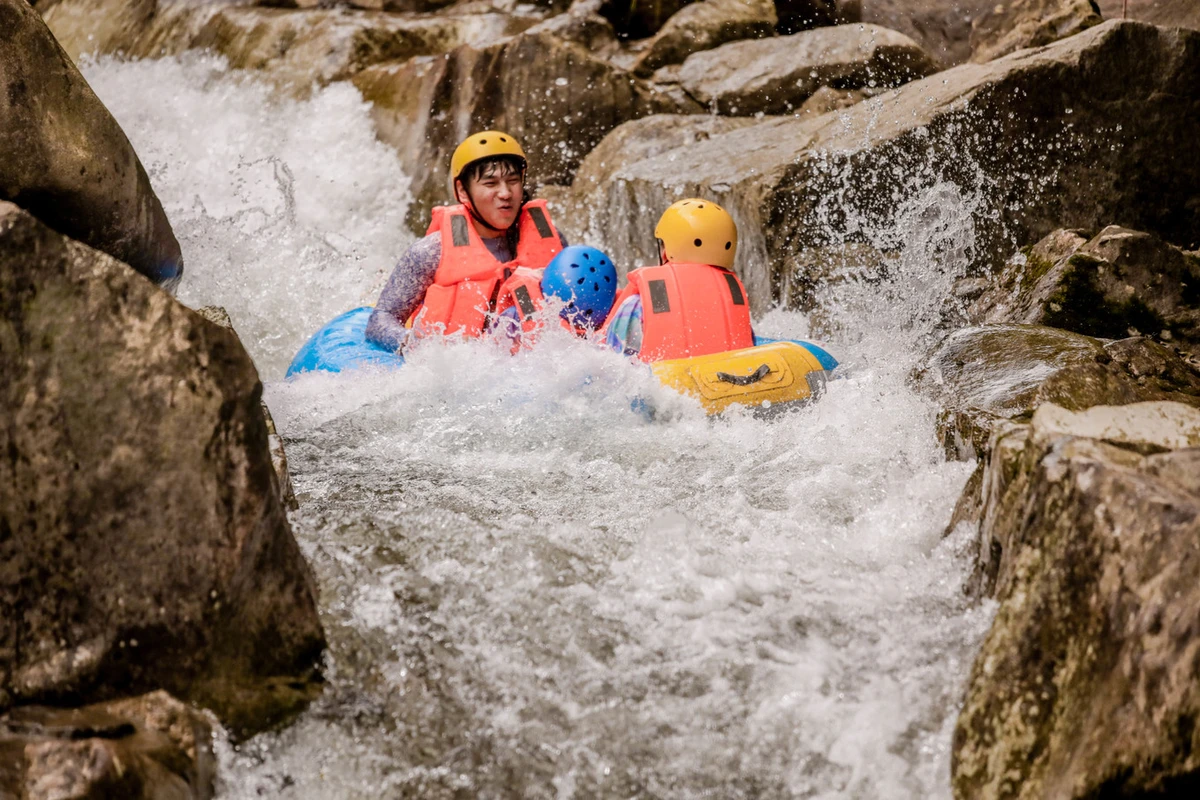
At the starting point, staff help you into a life jacket and helmet, ensuring absolute safety throughout. Once properly geared up, you board your inflatable raft, and the thrilling ride begins! If it’s a weekend, the flotilla of rafts creates a magnificent scene as they all set off at once.
The upper half of the course is fast and fiercely exciting.
Here, you rush down the river, encountering countless sharp turns. Rounding each bend, the raft suddenly accelerates, dialing up the adrenaline. The power of East China’s steepest rapids is on full display!
The extreme speed, plus the centrifugal force on the bends, elicits constant screams of delight.
As you descend, the water gradually calms. Gliding through gentle stretches, the river is so clear you can see the pebbles on the bottom and the underwater plants. An occasional splash of water on your face, icy cold, dissolves the summer heat and stuffiness.
In this section, take in the scenery on both banks, watch the crystal-clear water slapping the shore and throwing up white froth. The beautiful landscape relaxes and soothes the soul.
Several wide pools along the way invite full-scale water fights with other rafters – drenching each other with the chilly river brings endless laughter.
When you reach the finish, the satisfaction and joy of conquering the rapids fill you with pride and happiness.
Beyond the wild river course, there’s also fun glass slide rafting to try.
A glass chute has been built on the hillside. Water rushes down the slide; you sit in an inflatable ring, put on a raincoat, and slide from the top.
It’s less intense than the river rafting – more like going down a giant slick water slide.
The smooth glass, combined with the flowing water, speeds up the ring quite a bit, adding plenty of excitement.
As the ring slips around the curves, centrifugal force gives you that thrilling feeling again.
Best of all, as long as you wear a raincoat, you won’t get your clothes wet – no need to change into a swimsuit.
Through the transparent glass, you can admire the green trees on both sides and see the river flowing below the slide, making it a wonderful viewing experience as well.
If the Bubu Jingxin (Thrilling Steps) bridge seems too intense, the glass bridge next door is a fine alternative.
The glass bridge also spans a gorge between two mountains, with valley views unfolding as you walk.
Underfoot, you see the Fuchun River racing past, the green woods and hills.
Walking on the glass bridge isn’t as hair-raising as the Bubu Jingxin, but you still get the thrill of viewing the landscape from mid-air. If you come after rain, mist swirls around, as if the bridge were suspended among clouds – crossing it feels like walking through a fairyland.
The Bubu Jingxin is a set of iron cables slung across the mountain, with wooden planks placed every half meter.
With the help of staff, you buckle into a safety harness and embrace the thrill and fun of the Bubu Jingxin.
Stepping onto the chain bridge, the swaying sensation is intensely exciting. Both sides and below are open air; every step, each plank, truly lives up to the name “thrilling steps.”
When the bridge is crowded, it sways even more wildly, and helping each other reach the far end is a touching part of the experience.
Rain or shine, you can always enjoy the exciting rafting at Shanwanwan, with clear water flowing peacefully through the river.
The reason Shanwanwan maintains a steady water level is a reservoir upstream that can store or release water, easily adjusting the river’s height.
Besides storing water and generating hydroelectric power, the reservoir is also worth a visit.
Built on the mountainside, it sends water plunging down with a majestic feel, reminiscent of “flying straight down three thousand feet.”
I’ve always believed that tasting local cuisine is an essential part of traveling anywhere.
Local dishes use ingredients from the area; even if shipped elsewhere, they rarely taste as fresh. And each place has its own cooking methods, creating the sense that every land has its own unique flavors.
Tonglu is no exception. If Hangzhou cuisine often carries a sweet impression, the food in Tonglu upends that expectation. Perhaps because the Fuchun River valley is humid, the dishes here lean toward spicy, bolder, and more appetite-awakening.
Free-range chicken: Almost every household in the village raises chickens that roam free, foraging in the mountains and by the river. This lifestyle produces firm, succulent meat with a naturally sweet taste. It’s delicious simply served as white-cut chicken to highlight its freshness, or braised.
River fish: The Fuchun River teems with all kinds of freshwater delicacies. The fish here is tender and delicate. Pan-fried and then coated in a rich sauce, the texture stays silky while the sauce infuses deep flavor.
Dried bamboo shoots: Spring bamboo shoots after rain – Zhejiang has many bamboo groves, and in spring and summer, fresh shoots are abundant. Tender and sweet, they are sun-dried to preserve them. When ready to eat, they’re rehydrated, transforming back into a fresh delicacy. Whether braised with pork belly or simmered with vegetables, they add a wonderful savoriness.
Other small plates are just as delicious. No rare delicacies, just simple mountain ingredients, yet they carry the distinct, wonderful flavors of Tonglu.
In Fenshui Village, there are no luxury hotels, but staying in a local guesthouse is a great choice.
Fenshui is blessed with clear waters and lush mountains; every breath feels infused with negative oxygen ions, almost sweet on the tongue.
Guesthouses are renovated from residents’ homes, some newly built, with very good conditions. Rooms are fully equipped, making for a comfortable stay.
Many have large top-floor terraces where you can gaze at the distant green hills and river, watch clouds form and dissipate above the mountains, and simply zone out – a small piece of happiness.
Immersed in that oxygen-rich air, sleep at night becomes especially deep and sweet.
In history, Hui merchants traveled far and wide, forging their own legends.
Whether they left footprints here remains uncertain, but walking along the old Hui Merchants’ Trail gives you a feel for the path they once trod.
The trail winds through the mountains and takes over an hour to traverse. Deep and secluded, even in summer it’s never oppressively hot.
It passes cliffs and crosses a suspension bridge, revealing new vistas – an enjoyable adventure.
To make the walk easier, the trail is paved with stone slabs or wooden boards, turning a natural barrier into a smooth path.
In the serene water towns of Jiangnan, tranquil Tonglu holds endless beauty. Whether it’s the silently flowing Fuchun River or the quiet villages, there’s moving scenery and flavors all its own. Here, gazing at the green mountains and clear water, admiring the graceful Fuchun – that is the very essence of Jiangnan.
Tips:
1. Shanwanwan Rafting is several dozen kilometers from Tonglu High-Speed Rail Station; driving yourself is the most convenient option.
2. In the afternoon, water levels are higher and the rafting experience is even better.
3. There are many farmhouse restaurants near Shanwanwan, so no need to worry about food or accommodation.
4. Mosquitoes and bugs are plentiful; be sure to bring insect repellent.
5. At the rafting finish, there are showers and lockers. Bring a change of clothes.
6. Remember to buy water guns or scoops for water fights in advance – they aren’t sold at the launch point!
7. Rafts can hold one to three people; teaming up with friends makes it even more fun.


