October 2020 Self-Drive Travel Guide to Nanxi River, Yandang Mountain, Mount Putuo, Wuzhen and More in Zhejiang (Part 2)
Jiaxing-Haining-Tidal Bore Viewing Park-Qiantang River Tidal Bore
Wenzhou-Yongjia-Nanxi River-Rafting Dock
Wenzhou-Yongjia-Nanxi River-Furong Ancient Village
Wenzhou-Yueqing-Yandang Mountain-Fangdong Scenic Area
Ningbo-Downtown-Old Bund
Zhoushan-Mount Putuo-Main Gate & South Heavenly Gate Scenic Area-Main Gate
Zhoushan-Mount Putuo-Puji Temple Scenic Area
Zhoushan-Downtown-Zhoushan Museum
Ningbo-Yuyao-Hemudu Site
Ningbo-Cixi-Hangzhou Bay Cross-Sea Bridge-Sea and Sky Island
Ningbo-Cixi-Hangzhou Bay Cross-Sea Bridge
Jiaxing-Tongxiang-Wuzhen-East Gate Scenic Area
Jiaxing-Tongxiang-Wuzhen-West Gate Scenic Area
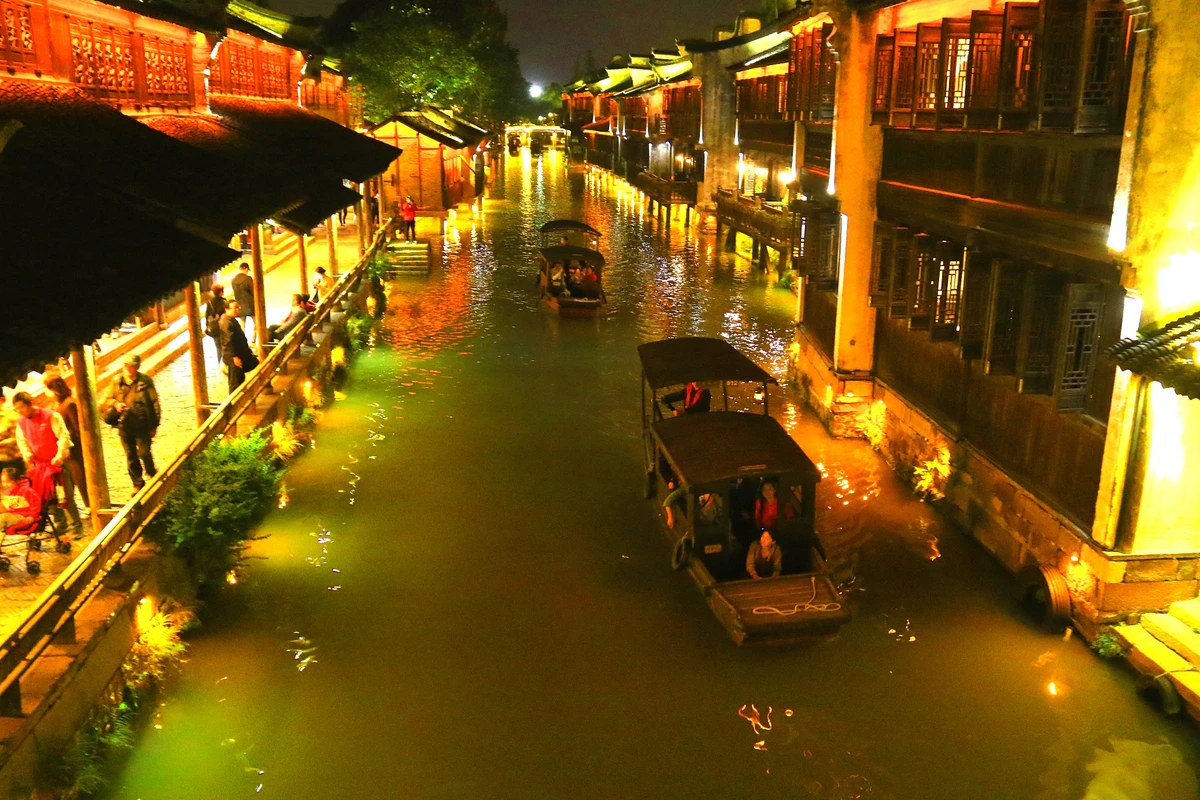
Jiaxing-Tongxiang-Wuzhen-West Gate Night View
Jiaxing-Tongxiang-Wuzhen-West Gate Night View
Jiaxing-Tongxiang-Shimen Town-Chrysanthemum Fragrance Garden
Jiaxing-Haining-Tidal Bore Viewing Park
Jiaxing-Haining-Tidal Bore Viewing Park-Qiantang River Tidal Bore
Zhejiang, located on the coast of the East China Sea, boasts a long history, picturesque landscapes, and a gathering of cultural talents. It has abundant water resources and a long coastline, beautiful and fertile Jiangnan water towns, and profound historical and cultural significance. Its mountains and rivers are charming, each displaying unique beauty that captivates visitors, making it a wonderful place to travel.
On October 7, we set off from Shantou in Guangdong Province and embarked on a 16-day self-drive journey through Zhejiang, visiting Nanxi River, Yandang Mountain, Tiantai Mountain, Xikou in Fenghua, downtown Ningbo, Zhoushan, Mount Putuo, the Hemudu Site in Yuyao, Wuzhen, the Qiantang River in Haining, and the ancient city of Shaoxing, covering a total of 3,260 kilometers. Although the trip was not long, we took in many of Zhejiang's beautiful sights along the way, leaving unforgettable and wonderful impressions.
Although the national highways were all congested ("red") during this year’s Mid-Autumn Festival and National Day holiday, and many places saw massive traffic jams, we were fortunate to depart on the 7th. Taking the G15 Shenyang–Haikou Expressway and others, we basically had smooth driving all the way. After a stop in Ningde, Fujian, we arrived smoothly at Nanxi River in Yongjia County, Wenzhou City, by noon on the 8th.
Nanxi River is located within Yongjia County, just over 20 kilometers from downtown Wenzhou. It is a national key scenic area and a global geopark. Nanxi River Scenic Area combines natural beauty with cultural landscapes, famed for its beautiful waters, peculiar rocks, numerous waterfalls, elegant forests, and ancient villages. It is a scenic area known for its picturesque landscapes of mountains, rivers, and farmlands.
Wenzhou-Yongjia-Nanxi River-Rafting Dock
Wenzhou-Yongjia-Nanxi River-Rafting Dock
Wenzhou-Yongjia-Nanxi River-Yantou Town (National Historic and Cultural Town)
Wenzhou-Yongjia-Nanxi River-Yongjia Academy Scenic Area
Wenzhou-Yongjia-Nanxi River-Shiwei Rock Scenic Area
Wenzhou-Yongjia-Nanxi River-Shiwei Rock Scenic Area
Wenzhou-Yongjia-Nanxi River-Lingshang Renjia
Wenzhou-Yongjia-Nanxi River-Furong Ancient Village
Here, we spent a little over a day and a half visiting Yantou Town (a National Historic and Cultural Town), Xiaogang Rafting Dock, Yongjia Academy, Lishui Ancient Street, Longwantang National Forest Park, Shiwuyan (Shiwei Rock), Lingshang Renjia, Shiziyan (Lion Rock), Yaxiaku, Taogong Cave, Cangpo Ancient Village, Furong Ancient Village, Guolutan, and other scenic spots. The sky was high, clouds were light, and the autumn breeze was refreshing. Overall, it felt quite good. However, perhaps due to less rainfall this year, many riverbeds had little water or had dried up entirely, which more or less affected the scenery—a slight pity.
1. Nanxi River Scenic Area is vast with scattered attractions, so self-driving is the best choice. Road conditions are good and parking is convenient.
2. Each attraction requires separate tickets, ranging from a few yuan to several tens of yuan, though some are free.
3. Good weather is key for enjoying such natural landscapes. On overcast or rainy days, most sights would lose their appeal.
Wenzhou-Yongjia-Nanxi River-Rafting Dock
Wenzhou-Yongjia-Nanxi River-Yongjia Academy Scenic Area
Wenzhou-Yongjia-Nanxi River-Lishui Ancient Street
Wenzhou-Yongjia-Nanxi River-Shiwei Rock Scenic Area
Wenzhou-Yongjia-Nanxi River-Shiwei Rock Scenic Area
Wenzhou-Yongjia-Nanxi River-Lingshang Renjia
Wenzhou-Yongjia-Nanxi River-Lion Rock Scenic Area
Wenzhou-Yongjia-Nanxi River-Yaxiaku Scenic Area
Wenzhou-Yongjia-Nanxi River-Cangpo Ancient Village
Wenzhou-Yongjia-Nanxi River-Cangpo Ancient Village
Wenzhou-Yongjia-Nanxi River-Lishui Ancient Street Night View
Wenzhou-Yongjia-Nanxi River-Guolutan
On the afternoon of October 10, we moved on to Yandang Mountain in Yueqing County, Wenzhou. Yandang Mountain was historically one of China’s three most famous mountains and is now a national key scenic area. It is renowned for its peaks, caves, rocks, and springs, and has long been praised as a 'famous mountain on the sea'.
Here, we also arranged a day and a half, leisurely visiting four scenic areas: Dalongqiu (Big Dragon Pool), Fangdong, Lingfeng, and Lingyan. The scenery was generally satisfactory, though far from as good as advertised—more famous in name than in reality.
1. Although the attractions are scattered, transportation within the scenic area is convenient. If you buy a shuttle bus ticket, the bus will take you to each spot. Additionally, this year due to the pandemic, self-driving cars were allowed to drive directly to the attractions, and all parking lots were free, which was both convenient and saved the cost of scenic bus tickets.
2. Again, because of low rainfall and the current dry season, the famously grand Dalongqiu waterfall was pitifully small, and Xiaolongqiu (Little Dragon Pool) was completely dry.
3. There are many homestays here, with a range of options from budget to upscale. We stayed in a homestay near the entrance of Dalongqiu Scenic Area, which was very convenient.
Wenzhou-Yueqing-Yandang Mountain-Dalongqiu Scenic Area
Wenzhou-Yueqing-Yandang Mountain-Dalongqiu Scenic Area
Wenzhou-Yueqing-Yandang Mountain-Fangdong Scenic Area
Wenzhou-Yueqing-Yandang Mountain-Lingfeng Scenic Area
Wenzhou-Yueqing-Yandang Mountain-Lingfeng Scenic Area
Wenzhou-Yueqing-Yandang Mountain-Lingyan Scenic Area
Wenzhou-Yueqing-Yandang Mountain-Lingyan Scenic Area
Wenzhou-Yueqing-Yandang Mountain-Lingfeng Scenic Area
On October 12, we spent half a day exploring Tiantai Mountain in Tiantai County, Taizhou City. It's said that there are no fewer than ten places in China called 'Tiantai Mountain,' but the most famous one is this Tiantai Mountain in Tiantai County, which is also a national key scenic area.
On the way to Tiantai Mountain, we stopped by to see the Nanping Lotus Terraces, which were just too ordinary. It's said that they were decent before, but in recent years, for various reasons, many fields are no longer cultivated. Without cultivation, the terraced fields naturally offer little scenic value.
The Tiantai Mountain National Scenic Area includes Qiongtai Immortal Valley, the Grand Waterfall, and Guoqing Temple, among others. The Grand Waterfall area was still under development. Due to a tight schedule, we just strolled around casually. The former residence of Ji Gong in the county town was quite nice.
Taizhou-Tiantai-Nanping Lotus Terraces
Taizhou-Tiantai-Nanping Lotus Terraces
Taizhou-Tiantai-Tiantai Mountain-Qiongtai Immortal Valley Scenic Area
Taizhou-Tiantai-Tiantai Mountain-Grand Waterfall Scenic Area
Taizhou-Tiantai-Ji Gong Former Residence
Taizhou-Tiantai-Ji Gong Former Residence
Taizhou-Tiantai-Tiantai Mountain-Guoqing Temple Scenic Area
Taizhou-Tiantai-Tiantai Mountain-Guoqing Temple-Sui Dynasty Plum Tree
On October 13, we arrived at Xikou Town in Fenghua District, Ningbo, mainly visiting Xuedou Mountain Scenic Area and the Former Residence of Chiang Kai-shek. Although Xikou-Xuedou Mountain is a national scenic area, Xuedou Mountain is primarily a place for Buddhist worship, and its scenery is only average. The Former Residence of Chiang Kai-shek, however, drew crowds thanks to its famous name. We spent just over half a day rushing through these two spots. I can't say it was good or bad—just treat it as learning a bit about the history of the Republic of China.
Ningbo-Fenghua-Xikou·Xuedou Mountain Scenic Area-Xuedou Mountain
Ningbo-Fenghua-Xikou·Xuedou Mountain Scenic Area-Xikou
Ningbo-Fenghua-Xikou·Xuedou Mountain Scenic Area-Xikou
On October 14, we traveled from Xikou via Ningbo to Zhujiajian in Zhoushan. Ningbo is a beautiful port city, a famous historical and cultural city, and a renowned tourist city. We had originally planned to stay for one or two nights, but due to changes in our itinerary, we just passed through. We focused on visiting two of its most famous spots: Tianyi Pavilion Museum and the Old Bund.
Tianyi Pavilion is situated by the Moon Lake Park in Ningbo. It is one of the oldest existing private libraries in China. After expansion and renovation over the centuries, it has become a beautifully arranged Jiangnan-style garden with rockeries, ponds, pavilions, and other features. Together with Moon Lake, it forms the Tianyi Pavilion–Moon Lake Scenic Area.
The Old Bund is located in downtown Ningbo, with a history 20 years older than Shanghai's Bund. Today, the Old Bund still preserves many beautiful old European-style buildings and is one of Ningbo's landmarks.
Both attractions have their own unique charm and are well worth a visit.
1. Tianyi Pavilion Museum requires an entrance ticket, while Moon Lake is a public leisure area with no ticket, and the Old Bund is also free.
2. If time permits, you should visit the Old Bund both during the day and at night, as the scenery, atmosphere, and feeling are quite different.
3. In recent years, several large-scale cross-sea bridges have been built from Ningbo to Zhoushan, making it much easier to reach Mount Putuo. This is a microcosm of the rapid modernization, especially in road and bridge construction, taking place across the country.
Ningbo-Downtown-Tianyi Pavilion·Moon Lake Scenic Area
Ningbo-Downtown-Tianyi Pavilion·Moon Lake Scenic Area
Ningbo-Downtown-Tianyi Pavilion·Moon Lake Scenic Area-Tianyi Pavilion
Ningbo-Downtown-Old Bund
Ningbo-Downtown-Old Bund
Ningbo-Downtown-Old Bund
Ningbo-Downtown-Old Bund
Ningbo-Downtown-Old Bund
On October 15, we specially arranged a full day to visit Mount Putuo and even stayed overnight on the mountain, so that we had ample time for sightseeing.
Mount Putuo is the bodhimanda of Guanyin Bodhisattva, reputed as the 'Buddhist Kingdom on the Sea and Sky.' The scenic area is rich in historical sites and tourism resources, including Buddhist cultural landscapes, mountain-and-sea vistas, historical military sites, and island fishing culture. It's a place neither tourists nor pilgrims want to miss.
After climbing ashore in the morning, we successively visited the Western Paradise Scenic Area (Two Turtles Listening to the Dharma Stone, Guanyin Ancient Cave, Pantuo Rock, Heart Character Stone); Puji Temple Scenic Area (Puji Chan Temple); Purple Bamboo Grove Scenic Area (Southern Sea Guanyin, Purple Bamboo Temple, the 'Refusing to Leave' Guanyin Temple); and the Main Gate & South Heavenly Gate Scenic Area (South Heavenly Gate, Coastal Archway, Main Gate). Starting around 9 a.m. and walking until night fell, we spent over eight hours with stops and recorded more than 30,000 steps on our phones—a truly exhausting day.
1. The nearest and most convenient access to Mount Putuo is the Wugongsi Wharf in Zhujiajian (also called Cihang Passenger Terminal), with many ferry departures and a journey of only about 15 minutes. The terminal has a large passenger center and several large parking lots, charging several tens of yuan per day for a car.
2. Zhujiajian is a town under Putuo District, Zhoushan City. Though it is one of the many islands of the Zhoushan Archipelago, it is connected to the mainland by bridges with good road conditions. Zhujiajian itself has several attractions and is a scenic area in its own right.
3. Hotels, homestays, and restaurants are everywhere in Zhujiajian, making food and lodging convenient. The seafood comes from the Zhoushan Islands fishing grounds and is fresh and delicious.
4. Mount Putuo is already a very mature tourist area, and food and lodging are quite convenient. However, prices are generally higher than outside, and they can surge sharply on weekends, especially during holidays; advance booking is necessary.
5. On the island, public buses are available, and you can use them for attractions that are farther apart.
On the morning of October 16, we returned from Mount Putuo to Zhujiajian. The weather was overcast with occasional light rain, so we just strolled around Daqingshan National Park and Nansha Scenic Area. We intended to visit the International Sand Sculpture Art Plaza (host of the China Zhoushan International Sand Sculpture Festival), but it happened that they were holding a beach concert that evening, and ticket prices had more than doubled, making it poor value. Coupled with the bad weather and the fatigue from the previous day's long walk, we decided it was better to go back to the hotel and rest.
Zhoushan-Mount Putuo-Main Gate & South Heavenly Gate Scenic Area-Main Gate
Zhoushan-Mount Putuo-Main Gate & South Heavenly Gate Scenic Area-Coastal Archway
Zhoushan-Mount Putuo-Western Paradise Scenic Area-Pantuo Rock
Zhoushan-Mount Putuo-Purple Bamboo Grove Scenic Area-Southern Sea Guanyin
Zhoushan-Mount Putuo-Puji Temple Scenic Area-Puji Temple
Zhoushan-Mount Putuo-Main Gate & South Heavenly Gate Scenic Area-South Heavenly Gate
Zhoushan-Mount Putuo-Purple Bamboo Grove Scenic Area-Refusing to Leave Guanyin Temple
Zhoushan-Mount Putuo-Main Gate & South Heavenly Gate Scenic Area-South Heavenly Gate
Zhoushan-Mount Putuo-Purple Bamboo Grove Scenic Area
Zhoushan-Mount Putuo-Main Gate & South Heavenly Gate Scenic Area-Wharf
On October 17, we left Zhujiajian and headed to Wuzhen in Tongxiang, Jiaxing. Along the way, we visited Shenjiamen Fishing Port in Zhoushan, the China Zhoushan International Aquatic Products City, and Zhoushan Museum; the Hemudu Site Museum in Yuyao; and the Hangzhou Bay Cross-Sea Bridge (which connects Cixi in Ningbo with Haiyan in Jiaxing) and the Sea and Sky Island (a mid-sea platform on the G15 Shenyang–Haikou Expressway). Unfortunately, when we were at the Sea and Sky Island's observation tower that afternoon, the weather was overcast, greatly diminishing the view.
1. The Hemudu Site Museum has a big reputation, but there isn't much to see nowadays. You could say it's fine for learning about history, but not so much for sightseeing.
2. The Hangzhou Bay Cross-Sea Bridge is 36 kilometers long. When it opened on May 1, 2008, it was the longest bay bridge in the country at that time—a masterpiece of Chinese bridge engineering.
3. The Sea and Sky Island (the mid-sea platform on the G15 Expressway) is located 1.7 kilometers south of the south shipping channel bridge of the Hangzhou Bay Bridge, about 18 kilometers from the southern shore. This mid-sea platform and observation tower combine bridge viewing, sea viewing, leisure, and shopping, and have been developed into a unique scenic area.
4. Upon entering the scenic area (full ticket 80 yuan, discount 65 yuan; parking 15 yuan), you can take an elevator directly to the observation gallery at the top of the tower. From a height of 120 meters, you can overlook the vast, rolling waves of Hangzhou Bay and the rainbow-like cross-sea bridge stretching into the distance—truly spectacular.
Zhoushan-Downtown-Shenjiamen Fishing Port
Zhoushan-Downtown-Shenjiamen Fishing Port
Zhoushan-Downtown-Shenjiamen Fishing Port
Zhoushan-Downtown-Zhoushan Museum
Ningbo-Yuyao-Hemudu Site Museum
Ningbo-Yuyao-Hemudu Site Museum
Ningbo-Yuyao-Hemudu Site Museum
Ningbo-Cixi-Hangzhou Bay Cross-Sea Bridge
Ningbo-Cixi-Hangzhou Bay Cross-Sea Bridge-Sea and Sky Island
Ningbo-Cixi-Hangzhou Bay Cross-Sea Bridge-Sea and Sky Island
On October 18, we spent the whole day visiting Wuzhen Scenic Area. In the morning: the East Gate Scenic Area, the Former Residence of Mao Dun, and Lin’s Shop; in the afternoon: the West Gate Scenic Area, the Beijing-Hangzhou Grand Canal, and a night tour of the West Gate.
Wuzhen is an ancient Jiangnan town in the northern suburbs of Tongxiang, with the main scenic area divided into the East Gate and West Gate. Here, small bridges cross flowing waters, blue bricks and gray tiles create an antique charm, and everywhere you feel a unique gentle and graceful atmosphere—truly the epitome of a Jiangnan water town.
This is a classic scenic area, well worth spending a day or two to slowly experience and savor.
1. Tickets can be bought separately for the East and West Gates, or a combo ticket at a discounted price. If you have enough time, it’s best to visit both areas and include a night tour of the West Gate. If time is limited, just visit the West Gate.
2. The scenic area is well managed—clean, tidy, and orderly. There are many restrooms with excellent facilities and hygiene, which deserve a thumbs-up.
3. Taking a ride on a sculling boat adds more charm and atmosphere; it’s a great choice, though a bit pricey.
Jiaxing-Tongxiang-Wuzhen-East Gate Scenic Area
Jiaxing-Tongxiang-Wuzhen-East Gate Scenic Area-Mao Dun Former Residence (Mao Dun Memorial)
Jiaxing-Tongxiang-Wuzhen-West Gate Scenic Area
Jiaxing-Tongxiang-Wuzhen-West Gate Scenic Area
Jiaxing-Tongxiang-Wuzhen-West Gate Scenic Area
Jiaxing-Tongxiang-Wuzhen-West Gate Scenic Area
Jiaxing-Tongxiang-Wuzhen-West Gate Scenic Area-Dye House
Jiaxing-Tongxiang-Wuzhen-West Gate Scenic Area-Wuzhen Post Office
Jiaxing-Tongxiang-Wuzhen-West Gate Night View
Jiaxing-Tongxiang-Wuzhen-West Gate Night View
Jiaxing-Tongxiang-Wuzhen-West Gate Night View
Jiaxing-Tongxiang-Wuzhen-West Gate Night View
Jiaxing-Tongxiang-Wuzhen-West Gate Night View
Jiaxing-Tongxiang-Wuzhen-West Gate Night View
Jiaxing-Tongxiang-Wuzhen-West Gate Night View
Jiaxing-Tongxiang-Wuzhen-Internet Light Expo Center
Jiaxing-Tongxiang-Wuzhen-Internet Light Expo Center
Wuzhen was the farthest point of our Zhejiang trip. After visiting Wuzhen Scenic Area, we started heading back on October 19, traveling from Wuzhen to Shaoxing. Along the way that day, we visited in succession: the Chrysanthemum Fragrance Garden at the white chrysanthemum planting base in Baimatang Village, Shimen Town, Tongxiang City; the ancient town of Yanguan in Haining, Jiaxing (a National Historic and Cultural Town); the Tidal Bore Viewing Park; the Qiantang River tidal bore; the Sea God Temple; the Confucian Academy; and Jin Yong Academy. What's especially worth mentioning is that it happened to be the big tidal bore day on the third day of the third lunar month. At around 1 p.m., we were extremely lucky to witness the magnificent, surging Qiantang River tidal bore—a straight-line tidal wave.
Tongxiang is the home of China's white chrysanthemums. After gathering information, we came to the Chrysanthemum Fragrance Garden at the planting base in Baimatang Village, Shimen Town. Unfortunately, we arrived a bit early; the chrysanthemums in the fields were just starting to bud, and full bloom would only come from late October to early November.
The Qiantang River tidal bore has been called a wonder of the world since ancient times, and Yanguan's Tidal Bore Viewing Park is a great place to watch it. The tidal wave is like thousands of white warhorses charging side by side, surging forward mightily; the sound is like mountains collapsing and the earth cracking, as if the ground were shaking. Su Dongpo once praised, 'The tidal bore on the eighteenth day of the eighth lunar month is the most spectacular sight under heaven.'
Every year, from the 13th to the 22nd of the eighth lunar month, the local 'Qianjiang Haining Tidal Bore Festival' is held, attracting tens of thousands of visitors from all over the country to watch the bore, with live coverage on CCTV. According to reports, this year on the 18th day of the eighth lunar month, as many as 160,000 people came to view the Qiantang River tidal bore.
1. Although Tongxiang is the hometown of China's white chrysanthemums, cultivation is now limited due to various factors, and large-scale planting is even rarer. The Chrysanthemum Fragrance Garden we visited in Baimatang Village, Shimen Town, has a planting area of nearly 200 mu, which is considered quite large.
2. The Qiantang River tidal bore can be seen in many places along the river between Haining, Jiaxing, and Hangzhou, a stretch of several tens of kilometers. The high tide period occurs from the first to the sixth and from the fifteenth to the twentieth of each lunar month, with the exact time of the bore varying each day.
3. The Tidal Bore Viewing Park, Sea God Temple, Confucian Academy, and Jin Yong Academy together form the Haining Yanguan Tidal Bore Scenic Area. Tickets can be purchased separately or as a combo. If you are short on time, just visit the Tidal Bore Viewing Park and watch the Qiantang River tidal bore; the other sights are average and can be skipped entirely.
Jiaxing-Tongxiang-Shimen Town-Chrysanthemum Fragrance Garden
Jiaxing-Tongxiang-Shimen Town-Chrysanthemum Fragrance Garden
Jiaxing-Haining-Tidal Bore Viewing Park-White Stone Terrace Square
Jiaxing-Haining-Tidal Bore Viewing Park-White Stone Terrace Square
Jiaxing-Haining-Tidal Bore Viewing Park-Zhan'ao Pagoda (Zhenhai Pagoda)
Jiaxing-Haining-Tidal Bore Viewing Park-Mao Zedong's Tidal Bore Poem Stele Pavilion
Jiaxing-Haining-Tidal Bore Viewing Park-Ancient Tree Planted by Emperor Qianlong
Jiaxing-Haining-Tidal Bore Viewing Park-Qiantang River Tidal Bore
Jiaxing-Haining-Tidal Bore Viewing Park-Qiantang River Tidal Bore
Jiaxing-Haining-Yanguan Tidal Bore Scenic Area-Sea God Temple
Jiaxing-Haining-Yanguan Tidal Bore Scenic Area-Confucian Academy
On October 20, we spent a full day in the ancient city of Shaoxing, visiting Keyan Scenic Area and the Orchid Pavilion Scenic Area, as well as Lu Xun’s Hometown Scenic Area: Lu Xun’s Ancestral Home, the Sanwei Study, Lu Xun Memorial Hall, Lu Xun’s Former Residence, and Shen Garden.
Ancient Shaoxing is famous as a water town, a town of bridges, a home of wine, a center of calligraphy, and a land of renowned scholars, acclaimed as an open-air historical museum. Its many historic sites carry countless stories of glory for later generations to admire and appreciate.
1. Keyan Scenic Area is bundled with Jiān Lake and Lu Town, and the ticket (including a boat ride) is somewhat pricey. Lu Xun’s Hometown is free; just present your ID to get a visitor pass and see the four spots: Lu Xun’s Ancestral Home, the Sanwei Study, the Lu Xun Memorial Hall, and Lu Xun’s Former Residence.
2. The Orchid Pavilion Scenic Area exudes profound historical and cultural depth. Visiting it, especially the Orchid Pavilion Calligraphy Museum, is very helpful and beneficial for understanding the 'Preface to the Poems Composed at the Orchid Pavilion' and the history of the great calligrapher Wang Xizhi.
After visiting Shaoxing, our itinerary for this Zhejiang self-drive trip was complete. Starting on October 21, we drove about 1,100 kilometers over two days, with an overnight stop in Fuqing, Fujian Province, and arrived safely back in Shantou on October 22, successfully concluding our Zhejiang self-drive journey.
1. The entire self-drive trip covered 3,260 kilometers. Besides highways, we also traveled on many county and township roads and roads between scenic spots. All roads, whether highways or others, were in excellent condition—we never encountered any unpaved gravel roads. Zhejiang has done a great job in this regard and is leading the way.
2. The 'toilet revolution' promoted from the top down in recent years has achieved visible phased results. Wherever we went, answering nature's call was truly convenient. Especially within scenic areas, restrooms were not only numerous but also very clean, some even provided with toilet paper, hot water, and rest areas.
3. This season is very pleasant for traveling, with temperatures mostly ranging between 15°C and 24°C, only slightly warmer around midday. It's a great season for outings and excursions.
4. Due to the impact of the pandemic in the first half of the year, tourism is still in a phase of recovery growth, so visitors were generally not very numerous at scenic spots. Without the usual overcrowding, the experience of sightseeing was much more comfortable.
Shaoxing-Downtown-Orchid Pavilion Scenic Area
Shaoxing-Downtown-Orchid Pavilion Scenic Area
Shaoxing-Downtown-Orchid Pavilion Scenic Area-Orchid Pavilion Calligraphy Museum
Shaoxing-Ancient City-Lu Xun's Hometown Scenic Area
Shaoxing-Ancient City-Lu Xun's Hometown Scenic Area-Lu Xun's Former Residence-Sanwei Study
Shaoxing-Ancient City-Lu Xun's Hometown Scenic Area-Lu Xun Memorial Hall
Shaoxing-Ancient City-Shen Garden
Shaoxing-Ancient City-Shen Garden


