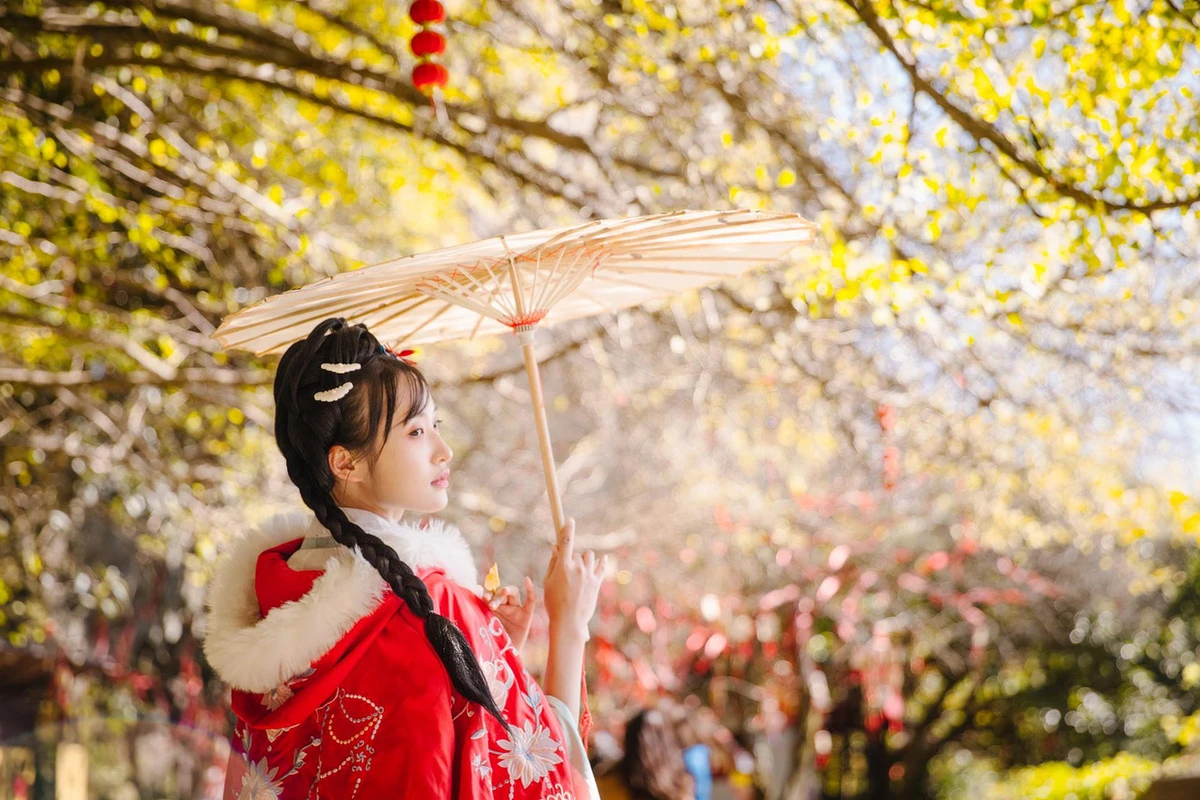
Autumn Colors in Jiangnan: Savoring Jiande's Enchanting Scroll
Stepping into the Dream of Jiangnan's Autumn Colors
Jiangnan—just two characters—embodies all her picturesque scenery.
In autumn, Jiangnan emerges from the gentle misty rain in ever richer hues: every streak of autumn red is imbued with poetic charm, every patch of orange-yellow tinged with artistic grace.
Having lived in Hangzhou for a long time, I grew tired of the ever-familiar tender West Lake and the vast Xixi Wetland, and increasingly missed Jiande, a beautiful little town—a hidden gem of Jiangnan.
Jiande's beauty lies in its green mountains and clear waters. The mountains are majestic and unrestrained, while the water is famously serene and lovely. It's late autumn, the weather is perfect—come with me to explore Xin'an River in Jiande.
Exploring Lingqi Cave: A Kaleidoscope of Karst Landscapes
Driving all the way to Lingqi Cave, surrounded by green mountains and shimmering blue waters, I felt a sense of ease and relaxation far from the hustle and bustle.
Millions of years ago, volcanic eruptions sculpted a rare and magnificent cave landscape here in Jiande—Lingqi Cave.
Lingqi Cave is located at Tiemao Mountain in Shiping Township, over 30 kilometers southwest of Jiande City. It is a cluster of splendid limestone caves, a classic example of karst topography, and a magnificent underground art palace.
At the entrance is a Koala Forest, an adrenaline challenge park in the pristine forest where children, teenagers, and adults can experience tree-top adventures—climbing, ziplining, bungee jumping... if you're bold enough, you can try them all!
The caves here are ancient, tranquil, and fantastical, with rich scenery. Currently open for visitors are three caves—Lingquan Cave at the mountain foot, Qingfeng Cave on the mountainside, and Aiyun Cave near the summit—along with Lingqi Bamboo Grove. Lingquan Cave is renowned for its water features, Qingfeng Cave for its refreshing breeze, Aiyun Cave for its enchanting clouds and mist, and the Lingqi Stone Forest for its lifelike human and animal rock formations that captivate the imagination.
Boarding a small boat and drifting along, rocking gently, we soon reached Lingquan Cave. The murmuring water, the babbling springs, and the leisurely sway of the boat made time slow down, adding to the serene elegance.
Disembarking inside the cave, I found a forest of bizarre stalactites and stalagmites. Passing through narrow and wide passages, I spotted a statue of a little white dragon standing by the shore, majestic and lifelike—left behind from the filming of 'Journey to the West' years ago.
After exiting Lingquan Cave, I climbed the steps and walked a short mountain path to the entrance of Qingfeng Cave. The lush greenery along the way was a delight. The unique geological structure makes it warm in winter and cool in summer, with a constant breeze. Outside, the sun blazed; inside, cool breezes welcomed me—a striking contrast that added mystery to this wonderland of 'six palaces and thirty-six scenes.' Inside the cave, you can also admire the different interpretations of 'wind' by calligraphers through the ages.
Of course, don't miss the 'Flying Magic Carpet' from Qingfeng Cave to Aiyun Cave! You sit in a row like cargo, then stand still as on a treadmill, and it whisks you straight from the foot of the mountain to the summit—fun and novel!
Continuing to Aiyun Cave, under colorful lights, the splendid stalactites appeared in myriad bizarre shapes—figures, beasts, flowers, birds, insects, fish—all forms of life etched by nature's masterful hand, half-dream, half-fairy. Some resembled giant lingzhi mushrooms; others looked like the sharp teeth of a monster, glaring hideously under the lights. In this labyrinthine underground palace, it felt as if I had stumbled into another psychedelic world, only brought back to reality by the cold, mottled cave walls at my fingertips.
If you're interested, you can take the slide down the mountain, enjoying the thrill of a natural outdoor roller coaster. Speeding down with shouts of joy, with lush trees lining the path and a refreshing breeze on your face—together with the green trees, blue sky, wondrous caves, graceful trees, verdant mountains, and clear waters, it forms a tranquil and serene scene of Lingqi.
Lingqi Cave Travel Tips:
1. Address: Tiemao Mountain, Shiping Township, over 30 km southwest of Jiande City, Zhejiang Province
2. Transportation: From Xin'an River, take the Hangzhou-Xin'anjiang-Jingdezhen Expressway (Hangxinjing Expressway), exit at Hangtou, turn right and go straight for 200 meters, then turn left to arrive (about 40 minutes). Or, from Xin'an River, follow the G320 national road and signs to the destination (about 45 minutes).
3. Tickets: 80 CNY/person; slide: 40 CNY/person
4. Opening hours: 7:30 – 16:00 (summer), 8:30 – 16:00 (winter)
Jiangqing Yuejinren: A Stunning Immersive Live Performance
I had heard of Jiande's famous show 'Jiangqing Yuejinren' long ago, and this time I was lucky to experience it up close. The hour-long performance left me longing for more!
The large-scale immersive real-scene performance 'Jiangqing Yuejinren' is inspired by the famous Chinese poem 'Overnight at Jiande River'. Using the artistic themes of 'river, moon, and people', it creates a series of major motifs, dividing the performance into five themed zones: 'Xin'an River', 'Eternal Moon', 'Cycle of Life', 'Roots and Nostalgia', and 'Past and Present Lives'. It presents Chinese aesthetic pursuits and multi-layered spiritual meanings.
Taking a boat ride at night, the Xin'an River's night scenery on both banks was enchanting.
Upon landing on Moon Isle, the first act—'The Beginning of the Chase'—began. The music alternated between fast and slow, accompanied by ethereal mist and lighting, creating a stunning effect. Up close, the performers even high-fived the audience, making the interaction fantastic.
Following the performers along, we encountered flying snow, fireworks, jungle dances, waterfall wire stunts—diverse forms and continuous surprises. There were not only crosstalk and dance related to Jiande's history, but also interactive quizzes with gifts and karaoke photo sessions, creating a strong atmosphere.
The most memorable was the final act: 'People: Past and Present Lives', depicting the romantic love of Jiande's 'Nine Surnames' fishermen. Amidst a waterfall, a pair of lovers danced in the air to the music. A vast five-colored glowing flower sea, a tunnel of light and mist, river views, rain curtains, trees, flocks of birds, battlefield flames, starry skies, thunder and lightning—all blended seamlessly with the performers and the natural surroundings, creating a breathtaking spectacle.
Daciyan: Weaving a Golden Jiangnan Dream
In late autumn, Daciyan has donned sumptuous new garments—rich reds and brocade-like yellows, layer upon layer, a stunning beauty.
On this trip to Jiande, apart from appreciating the charm of Xin'an River at night, I also wanted to see the most brilliant smile of Hangzhou's most beautiful ginkgo tree.
Daciyan lies 24 kilometers south of Jiande City, at an altitude of 586 meters. It is a tourist destination that perfectly blends Buddhist culture with exquisite landscapes. Because it enshrines Ksitigarbha Bodhisattva and is believed to have manifested divine signs, it's known as 'Little Jiuhua of Western Zhejiang'. Its cliff-hanging cave architecture also earns it the reputation of the 'Suspended Temple of Jiangnan'.
According to historical records, during the Dade era of the Yuan Dynasty, the founding patriarch Mo Ziyuan came here to practice in seclusion, carving a Buddha from stone and building a temple on the cliff. After over 700 years of expansion and improvement, it has gradually become the magnificent Daciyan Suspended Temple we see today.
The cable car ride takes about 8 minutes, offering panoramic views of green mountains, clear waters, blue skies, and white clouds. The clouds drift lazily, carrying time along as they pass, counting the visitors coming and going, and gazing upon the tranquil beauty. Shortly after alighting, you'll reach Qingyin Pavilion.
The buildings of Daciyan use caves as halls and are constructed against the cliffs. The mountain paths are narrow, the steps steep and crowded. Climbing up, it feels like a single warrior could hold the pass against ten thousand. Looking ahead, the exquisite Diwang Hall seems poised to soar into the sky. Looking outward, the cliffs beneath your feet seem about to crumble, and the mountain scenery and lakes are all visible—a glimpse of the suspended temple's grandeur and mystery.
As I climbed higher, I felt more deeply the tranquility and vastness of the sky. The winding paths meandered like a long dragon; walking here felt like strolling through the clouds, my body and mind infused with the lingering spiritual energy. Quickening my pace, at the end of the winding bluestone path was the suspended Dizangwang Hall, half embedded in the rock face and half cantilevered in the air. Marveling at its intricate craftsmanship, I couldn't help but admire the wisdom and skill of ancient builders.
Exiting the suspended temple and continuing forward, I looked up and saw a golden statue of Maitreya Buddha standing among the distant mountains. To reach it, one must take the 'Nine Heavens Cloud Path', which is actually 99 steps, also called the 'Centenary Cloud Ladder'. Climbing all 99 steps in one go symbolizes a wish for a long life of a hundred years.
Many devoted believers pray devoutly here, hanging up prayer plaques.
Walking further, the main peak of Daciyan itself is a natural standing Buddha, located to the left of Dizangwang Hall, facing visitors. Its outline is distinct, vividly lifelike, with clear facial features and a realistic form. The standing Buddha is about 147 meters tall, with a head 41 meters high and shoulders 60 meters wide, level with the mountain—truly, the mountain is a Buddha and the Buddha is a mountain. One can't help but marvel at the wonders of nature.
Every ancient tree, every peak, every corner pavilion, and every whiff of incense at Daciyan seems to emanate a spiritual aura. If you're in the mood, you can also visit the thousand-year-old king ginkgo tree. As the sky fills with yellow leaves and the ground is covered with golden fragments, the autumn feeling in your heart half turns into poetry, half into a letter, preserving the whole season.
Don't miss the glass skywalk here, suspended in the air with wide-open views. The layered mountain rocks and jagged cliffs, the beautiful forest scenery—all come into view. Standing quietly on the glass walkway for a while, you can not only enjoy the thrill of walking on clouds but also have a deep encounter with a sea of clouds.
Daciyan Travel Tips:
1. Address: Within Daciyan Scenic Area, Daciyan Town, Jiande City
2. Transportation: From Hangzhou West Long-Distance Bus Station, there are direct buses to Xin'an River (express every hour, regular bus every 20 minutes). If self-driving, take Hangxinjing Expressway, exit at Shouchang, turn left onto G320, then left onto G330 to arrive (about 20 minutes). From Xin'an River, follow G320 and then G330 to the destination (about 30 minutes).
3. Tickets: 85 CNY/person; cable car up: 50 CNY, down: 40 CNY; slide down: 30 CNY.
4. Opening hours: 7:30–16:00 (cable car operates until 15:00).
5. There is a cable car to the top; many visitors take the cable car up and walk down.
6. Some scenic spots are built on cliffs; you might encounter protruding rocks and tricky paths. Elderly visitors with mobility issues and those afraid of heights should assess the situation and choose accordingly.
Xinye Ancient Village: Embrace the Peaceful Seclusion of an Old Town
Xinye Ancient Village is located in Daciyan Town, southwest of Jiande. With its long history and exceptionally diverse architectural types, it has preserved over 230 Ming and Qing dynasty buildings, including towers, pavilions, ancestral halls, temples, bridges, halls, and rooms. It is hailed by architectural experts worldwide as an 'open-air museum of Chinese Ming and Qing architecture'. It's also the filming location for episode 8 of the hit variety show 'The Last Winner' and one of the filming sites for 'Where Are We Going, Dad? Season 2'.
Local people say that because the village takes Yuhua Mountain behind it as its main mountain, it is also called Yuhua Ye Clan, or simply Ye Village. During the Southern Song Dynasty, the ancestors of the Ye clan migrated here to escape warfare, and over generations have formed the large clan we see today. It is one of the best-preserved ancient bloodline settlement communities in Zhejiang Province, and reportedly the largest Ye clan village in China today.
Before even entering the village, I was captivated by the surrounding green trees, clear waters, ancient village, and distant mountains. Ancient trees, houses of varying heights, the setting sun over near and far mountains, mist like ribbons among the treetops, and water encircling the village like a bracelet. The towering ancient pagoda, white walls and black tiles, clear ponds, and murmuring streams—it felt as if the next step would lead directly into a timeless natural landscape painting.
Typical Hui-style buildings by the pond, in simple black and white tones, compose a tranquil, natural ink-wash melody.
Upon entering Xinye, one is greeted by mottled stone walls, whitewashed walls with black tiles, and the iconic horse-head gables of Hui-style architecture. In the quiet, winding alleys, with upturned eaves, white walls and black tiles, laid out in a dense, staggered rhythm, every brick, stone, and plant reveals the village's ancient history.
Villagers say that the entire settlement is ingeniously arranged according to the Five Elements and Nine Palaces layout, embodying the philosophy of harmony between heaven and humanity. The alleys and lanes, some as wide as 3 meters and others as narrow as 80 centimeters, number over a hundred layers upon layers. Visitors, if not guided by a local, can easily get lost in this labyrinth of streets.
Walking ahead, I reached Tuanyun Pagoda and Wenchang Pavilion, the most prominent landmarks of Xinye Ancient Village. Xinye's long-standing culture of farming and scholarship has always been under the guardianship of this pagoda and pavilion.
Tuanyun Pagoda stands at the water outlet southeast of Xinye Village. Built in the Ming Dynasty, it is the oldest building in the village and a tower of literary tradition, a treasure of the village. Its name comes from Zhuangzi's 'Free and Easy Wandering': 'Borne on the clouds, soaring up ninety thousand li.' It is elegant and dignified, tall and quaint.
Adjacent is Wenchang Pavilion, which in ancient times was the only private school in the area and today has been transformed into a local academy of Chinese studies. Wenchang Pavilion is a complementary building to the literary pagoda, both serving to pray for literary prosperity.
At the northern end of the village stands Youxu Hall, the main ancestral hall of the Yuhua Ye clan and the structural center of Xinye Village. These ancestral halls maintain the blood relationships and clan system, and generations of the Ye clan have thrived and settled under the protection of Xinye Ancient Village, continuing unbroken.
Interestingly, wandering through Xinye Ancient Village, you can not only relive the highlights of 'Where Are We Going, Dad?' and check in at many familiar scenes and old spots, but also experience the pastoral joy of a farming-scholarship life as if transported to another era.
Bring a few friends and shoot hoops at the basketball stand that Yao Ming dubbed 'the most rustic basketball hoop'. It's said that everyone who visits measures their height against his and takes a shot from where Yao shot. When tired, take a leisurely stroll along the village paths, feeling the simplicity and comfort of rural life—the mood of 'leisurely gazing upon the Southern Mountain' is hardly better than this.
Visit the Shuangmei Hall where Lu Yi and Beier stayed, with its front courtyard, back garden, little bridge over flowing water, and a small pond with koi fish swimming—all exuding grace and elegance.
Zhenyu and Feynman's Zuixianju is filled with the aroma of wine, with winding paths leading to secluded spots—a haven of leisurely elegance and romantic poetry. Here you can taste local homemade specialties like lotus seed wine and bayberry wine, leaving you with a lingering aftertaste and endless praise.
Xishan Ancestral Hall is the ancestral temple of the Ye clan and a witness to local history. The portraits and couplets on the pillars inside still tell visitors of the ancient village's former glory.
Leaving Xinye Ancient Village and walking along the still narrow bluestone path, it feels like stepping out of another world. The chanting of children studying seems to still echo faintly from the school, lingering among the ancient village, ancestral halls, pagodas, and halls. Jiande has so many places to explore—a hurried two days is far from enough. Given the chance, I would love to stay here longer.
I can't help thinking: Jiande, I will come back again.
Travel Guide for You
1. About Jiande
Jiande is located in the midwest of Zhejiang Province, situated at the midpoint of the golden tourist route linking Hangzhou, Fuchun River, Xin'an River, Qiandao Lake, and Huangshan. It is a famous beautiful and livable city and a tourist resort. The area spans the 'Two Rivers and One Lake' (Fuchun River, Xin'an River, Qiandao Lake), and is renowned worldwide for its picturesque scenery of 'extraordinary mountains and jade waters' and its rich cultural and historical sites. Since ancient times, it has been praised as a 'land of embroidered peaks and scenic hills, a home of mountains and waters'. Historically there were the 'Eight Scenic Spots of Yanling', and today there are the 'Ten Scenic Spots of Xin'an'.
2. About Accommodation
There are many star-rated hotels in Jiande, with high standards, complete facilities, and convenient transportation. We stayed at the Jinglan Xin'anjiang Su Resort Hotel, which has excellent surroundings and location.
3. About Food
Speaking of Jiande cuisine, it dates back to the ancient Yanzhou period. Even today, Jiande's cuisine is renowned in the surrounding area, irresistible to foodies. It's truly 'A Bite of Jiande': Qiandao Lake organic fish, delicious Yanzhou dried vegetable duck, farm-style meatballs, tofu buns, fragrant sticky rice cakes and savory glutinous rice balls, golden and tempting youfeiguo (fried glutinous rice cakes), and Yanzhou crispy cakes, among others.
If you love specialty snacks, don't forget to try the local top ten snacks: Jiande tofu pot, Shouchang fried rice noodles, Yanzhou crispy cake, Datong meatballs, Sanduo sticky rice cakes, Xinye water rice cake, Lianhua corn cakes, Meicheng hand-pulled noodles, Xiaobiao dumplings, and Jiande youfeiguo.


