Missing the 'New Year's Eve Dinner' of My Childhood
[ Dinner-mate ]
An electronic side dish, its buzz is its life.
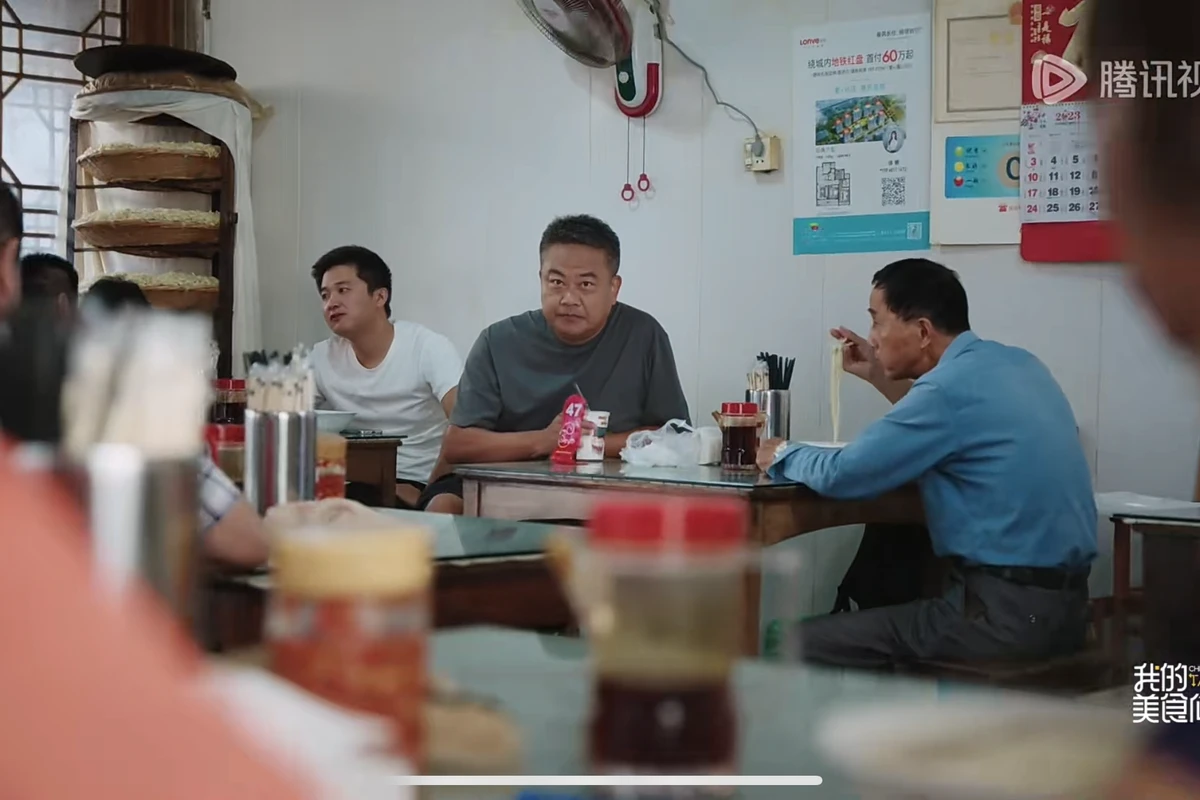
On New Year's Day, 'My Food Guide' definitely goes better with the holiday feast than the Spring Festival Gala.
Before the New Year, Ziqiu from 'Fashion Health' asked me to write a piece for urban workers about 'eating well.' It was a bit difficult for me. Because of my special job, I eat quite decent meals almost every day. I think everyone's definition of 'eating well' is different—on the surface, it's about eating at regular intervals, in proper amounts, and as healthily and balanced as possible. But on a deeper level?
On the night of the first day of the New Year, our family spent it with director Chen Xiaoqing's 'My Food Guide.' He said, 'River eel, sticky, creamy, glutinous—incredible.' At that moment, the tide of the Qiantang River was in my mouth. On the other side of that tide lay my childhood.
Actually, I can understand why some people call Hangzhou a 'culinary desert.' Chen Xiaoqing's dining buddy, 'Eyebrow Teacher' Mei Mao (a painter and gastronome), said that even something like braised bamboo shoots is bound to taste better at home. Indeed, Hangzhou has plenty of delicious food. But to truly enjoy a meal that locals eat, you really have to go home—or be willing to travel far and have friends in the know. The margins are small, profits are thin, ingredients are hard to find, and it takes a lot of effort. If I were the boss, I wouldn't do it either. And if it’s takeout or aimed at tourists, then forget it altogether.
But I don't mean that spending money on Hangzhou cuisine results in an obvious 'expensiveness.' Many northerners arriving in Hangzhou see it as the 'land of fish and rice,' yet while others feast on meat, here everything is swimming with tails. I don't know much about the Hangzhou of Su Dongpo's time—only the Hangzhou of my childhood. Back then, the fishing industry wasn't so developed; having Dongpo pork or white-cut chicken on the table meant someone was cooking seriously. On ordinary days, freshwater produce from the Jiaxing-Huzhou direction, coming via the canal routes, was more common at dinner. The famous West Lake vinegar fish was only found in restaurants, because at home cooking skills were generally limited. Smoked fish was actually a lazy cold dish, the kind grown-ups picked up in a plastic bag on the way home from work. River shrimp and eels had a touch of refinement. 'Shrimp and Eel Noodles' (Xia Bao Shan) was a clever, high-end noodle dish. When I was little, if someone in the family had a birthday and this noodle didn't appear, it wasn't a proper celebration. In a way, Hangzhou's noodles became world-famous because of this soulful combination. As for 'Pian Er Chuan' noodle soup, there was a folk joke in my childhood: it was called 'Pian Er Chuan' (Trick 'Em Chuan), meaning the invisible shreds of meat, bamboo shoots, and pickled mustard greens were just to fool the kids. You can see the vast difference in status.
When she was young, my mother was such a 'fancy-pants' that she even went to Shanghai to buy dress fabric. Though her cooking skills were far from great, she was incredibly picky. 'These noodles with pork kidney and pig intestines mixed in—they’re for men. I won’t eat them. I don’t do hard labor,' she’d say. Even though I disliked her attitude, I had to agree. When it comes to noodles, truly, Hangzhou women who have enjoyed life, even if they’ve given up carbs, if they still can’t let go of a bowl of noodles, it would be Shrimp and Eel Noodles. But the famous restaurant X Yuanguan is not what it used to be. The eels aren't the native eels of my childhood, and faced with throngs of tourists, there’s certainly no time to hand-peel river shrimp.
Every noodle lover has their own tastes. Yuan Mei loved the broth; even for a vegetarian noodle, he insisted, 'The day before, simmer the mushroom stems—called mushroom fluffy—to make a stock, then let it settle and clarify. The next day, boil fresh bamboo shoots into a stock, then cook the noodles in the two stocks combined.' Li Yu, on the other hand, loved the noodles themselves: 'Blend all things into the noodles, so the noodles carry the five flavors while the soup remains clear. That is eating noodles, not drinking soup.' Most Hangzhou people, however, love the toppings.
The freshly stir-fried toppings are the soul of Hangzhou noodles. Take Shrimp and Eel Noodles, for example: the small river shrimp are the 'white moonlight,' tender-crisp; the stir-fried eel is the 'cinnabar mole,' crispy and fragrant. The eel needs to be slowly dry-fried at low heat, so that the meat near the bones becomes 'sandy.' With a nudge of the tongue, it falls apart spinelessly, leaving only the fresh flavor. Whether or not the bones are removed beforehand, the oil seeps into the crevices of the eel flesh, loosening it beautifully, so by the time it becomes a noodle topping, it's soaked through with broth. The broth is typically made from old hens, cured ham, and eel bones—its aroma is unbelievably sexy. A saying goes: 'the meat stays intact, the skin unbroken, yet the muscle fibers are all severed'—that's the height of refinement. Nowadays, it's chop-chop, deep-fried, and passed off as 'crispy outside, tender inside'—but the soul is completely gone. Hangzhou noodles are usually round and made with alkaline dough, which, as Uncle Hei says, must be connected to dock worker culture. I also think there's a deeper reason: traditional Hangzhou noodles were heavy on oil and thick in broth (partly due to the flour gelatinizing on the alkaline noodles). Anyone who has eaten at Juying Noodle Shop will understand what I mean. After alkaline noodles pick up the broth, they become even more refreshing and grease-cutting.
I don't believe a truly good bowl of Shrimp and Eel Noodles can cost less than 100 yuan.
At the market, just about every vendor claims their bream, crucian carp, and mandarin fish are from the Qiantang River, but most are actually farmed in rural reservoirs. These fish with 'loose' flesh, old-school Hangzhou chefs used to briefly marinate—a technique locals call 'bao yan.' My parents' generation believed that snakehead fish (heiyu) replenished qi, cleared heat and toxins, and had firmer flesh. If someone had an injury or flu, they'd avoid all marine fish and stick to snakehead fish. I think it's because snakeheads are carnivorous, so their protein density is higher, eliminating the need for marinating. Among aquatic products, softshell turtles, white eel, and small yellow croaker (or miyu) were considered more luxurious and not eaten every day at home. Old Hangzhou natives feared 'fa wu' (allergy-triggering foods): they tried to avoid goose and kept seafood to a minimum.
Because my maternal grandmother was the chief accountant for an ocean-going fishery company, I had the privilege of eating all sorts of imported yellow croaker, hairtail, swimming crabs, cuttlefish, prawns, and more during my childhood. But I might not have appreciated them properly. Personally, I think even wild yellow croaker is overrated. To me, the most delicate taste comes from the Meitong fish (a baby croaker). Back then, whenever my mother ran across wild small yellow croaker, Meitong, little crabs, or sea shrimp, afraid I’d get fussy if dinner was late, she’d simply dip them in batter and deep-fry them as a snack for me. But if she got a freshwater fish, she was serious about steaming it. Only when the fish was too big for the plate would she chop it up and braise it in soy sauce. That was the authentic Hangzhou way of handling aquatic produce. The popularity of seafood came later, as foreign trade grew, Hong Kong and Japanese businessmen arrived, and hotels and restaurants catered to their tastes for business banquets. Only then did ordinary people start regarding rarity as precious.
Hangzhou people love to eat. In the old days, with small bridges over flowing streams and homes nestled along them, there was time to savor meals. Then tourists multiplied, then internet workers poured in, and now influencers abound... The torrent of the times always clashes with the life most people yearn for—love and freedom, wealth and health, hormones and marriage... Some rules you can forget at will or pick up again casually. But when it comes to eating, what I always yearn for deep down is 'eating well, with care.' As I grew older and busier, even if I forgot at times, deep within my memory a pair of chopsticks would slowly lift.
A good meal, in my mind, is always free of work, yet I eat it with more focus than any job. Now, in this season when the flavor of New Year has faded, I especially yearn for a meal from my childhood. And that story has to start at my grandparents’ local market.
When I was little, my parents were too busy, so during winter and summer breaks I was 'exiled' to my grandparents’ home. It sounded like a happy 'child labor' life was about to begin. Every morning, the first sound was my grandfather’s 'Voice of America' broadcast (our alarm clock). I knew I had to get up quickly and go grocery shopping with him—my job was to be his little human calculator. I remember hearing about Lewinsky and Clinton 'practicing friendship' when I was still in elementary school. That very morning, our family even held a brief meeting and concluded we’d have braised bighead carp with tofu for dinner. In Hangzhou home cooking, there were no dishes with names more expensive than their flavors, like abalone, sea cucumber, shark fin, or fish maw.
For the three of us, bored out of our minds, eating was really a big deal. I remember amid the aged aroma of fish balls and offal, I’d clutch my grandfather’s shopping basket as we passed through market stalls where vendors beamed like flowers—whether they were selling the first pickled mustard greens of the season or a feisty young rooster… almost everyone knew us. If the day’s asparagus lettuce was handed to me to carry, from a distance it looked like a short me hugging a plant taller than my head. As a child, my grandfather had been sent by his great-grandfather to escape turmoil in Hangzhou and study at a missionary school in Shanghai’s French Concession, so even in old age he liked to slick his hair back in a Shanghai old-claß style. I, back then, had a straight bowl-cut student hair. The market’s high, arched roof was like a stage light illuminating the deep market, and as we walked hand in hand in front of it, our silhouette was straight out of a local version of 'Léon: The Professional.'
The market vendors took extra care of regulars, enthusiastically enticing us with their private stashes of seasonal delights, and often preemptively 'haggled down' for us—like quoting a clearly unprofitable VIP price to show closeness. Even though I was in elementary school, my duty while accompanying my grandfather to the market was: remember how much we spent that day. My grandfather had the old accountant’s habit of bookkeeping, delightedly murmuring, 'Cucumbers one yuan,' 'Eggplants two yuan' … total three yuan. Because the New Year goods from my grandmother’s fishery company were mostly 'samples,' items like finger-thick 'hairtail braised with scallions' and the giant 'big bowl yellow croaker soup' that no soup bowl could contain were usually left out of the accounts.
People from Jiangsu and Zhejiang have known about Liangtouwu pigs for generations—they’re the acknowledged top tier of pork. When I was little and the family meal was ready but the Dongpo Pork made from Liangtouwu wasn’t done yet, I’d hold my rice bowl and wait by the pot. The pork belly was cut into four large squares and neatly arranged in a clay pot, with a knot of scallions, star anise, and cinnamon. Other than that, the only seasoning was soy sauce. My grandfather used beer as the cooking liquid, but he didn’t like adding sugar. Once the aroma filled the air, we’d take turns watching the pot. He always granted me the final say: 'My little one, later, you check if it's done. Okay?' I’d nod eagerly. When we opened the pot, the sauce was reduced and intense, with translucent pools of oil shimmering on top. Many people think old-style Dongpo Pork is tied with straw, but that’s only needed when hotels reheat it repeatedly, to keep its shape. At home, no way—it’s cooked just right from the start.
When I was in the upper grades of elementary school, Hangzhou’s silk export industry was just taking off, and the dining table quietly became more 'cosmopolitan.' My grandparents’ New Year's Eve dinner usually had two tables: the grown-ups’ table featured red wine and Blue Ribbon beer, while the kids’ table had cola and 'champagne.' This 'champagne' is not that Champagne—looking back, it was probably sparkling wine from outside the French Champagne region. But the adults all called it that, and this special 'gift' for those in-between child and adult didn’t really count as alcohol. This kind of 'naughtiness' at the loud kids’ table during New Year was happily tolerated by the adults, who turned a blind eye.
But the 'champagne' could only be drunk once the meal started. The snacks on the table, however, had no such curfew—you could eat them anytime. Hangzhou people take the New Year 'roasted and fried snacks' very seriously. I would go with my grandfather a couple of days before the New Year to buy 'leisure munchies' at his trusted shop, 'Zou Ji.' That shop didn’t do business all summer, nor when the 'autumn tiger' heat lingered, nor when the owner was unhappy—but he always remembered what my grandfather wanted. I even thought they might meet only once a year, which was so strange. My grandmother adored a small variety of 'Xiao Jingsheng' peanuts—actually peanuts in the shell, roasted to near-burnt crispness, every bite bursting with flavor, more satisfying than ordinary sunflower seeds. My grandfather liked the limited-supply pumpkin seeds, with just a tiny black speck on the white belly—just right. I loved pistachios and open-shell pine nuts (Brazilian pine nuts only became trendy when I was in college)—probably because both surnames were 'Kai' (meaning 'open'), same as 'kai xiao' (spending), sharing the traits of being expensive and delicious. Open-shell pine nuts were a rare treat far pricier than Lin’an hickory nuts. A kid didn’t have to fight the shells: no need to produce more saliva than shell when eating watermelon seeds, or stop only when the meat was more crumbled than the shell while hand-peeling hickory nuts. But when it came to sheer deliciousness, those three were neck and neck. I preferred pine nuts—the moment you crack one open, you instantly experience the joy of a squirrel, playing and eating at the same time, so very sweet.
Even though imported jelly cups and gemstone candy cookies were eye-catching and had to be grabbed as the must-have snack trophies of New Year's Eve dinner, what kids loved most on the table was chocolate. Liquor-filled chocolates were monitored under adults’ peripheral vision—one too many would earn a warning. Belgian Guylian chocolates were given out as gifts back then: when you opened the box, each piece was a 'shell-shaped' creamy chocolate of a different shape. The story of Kong Rong giving up the bigger pears was a shared, unenthusiastic consensus: the youngest chose first, and boys let girls pick first. At the New Year's Eve dinner, adults had to ensure a relatively fair distribution of 'love' to keep the children’s 'sweet society' stable and harmonious. White Rabbit creamy candies were the go-to remedy for tears. If a child fussed, an adult would pop one into their mouth, and as the milky taste seeped out, the tears quietly retreated.
Every family has their own dishes, but at our house, white-cut chicken, Hangzhou Three Delicacies, and spring rolls were indispensable every year. My market duty was usually to queue up for fish balls, egg dumplings, and spring roll wrappers, holding the basket while waiting for the grown-ups to return from their rounds. The spring roll wrapper stall was manned by a genuine martial arts master: right hand holding a lump of dough, left hand wielding a spatula. A wipe and a lift with the right hand, a shove and a peel with the left—a sheet of spring roll wrapper emerged as smooth as flowing water. The fish ball stall, in fact, was a low-temperature slow-cooking molecular gastronomy lab. No one would guess that fish paste hand-beaten from grass carp (or bighead carp) would float in a huge water basin with a hidden current but no rolling boil. Taken home to cook in soup, they would melt like a kiss on a baby’s cheek.
Each stall had its own kind of relationship. Pickled mustard greens had to come from the vendor’s own vat; that way, when stir-fried with cuttlefish and a few winter bamboo shoots, they were truly fresh. The white-cut chicken was always a capon ordered in advance from my grandmother’s market stall—a young rooster about seven months old. The broth left from cooking the white-cut chicken was used straight to make Hangzhou Three Delicacies. As far as I’ve observed, each of the 'three delicacies' was fresh in its own way. Our family’s eternal recipe included fish balls, egg dumplings, and shrimp, plus fried pork rind, Longkou vermicelli, winter bamboo shoot slices, and alpine baby bok choy. Hangzhou spring rolls were not deep-fried when freshly eaten for dinner; the ends were folded in. They’d only be fried the next day. I, someone who fears grease, don’t really understand why every restaurant now serves deep-fried spring rolls.
Hangzhou stir-fry fillings are wrapped in a soft skin, warm through that 'skin': the flavors of shredded shiitake, winter bamboo shoots, pork, and yellow chives become even more savory under the coaxing of Huyang soy sauce and Shaoxing wine. The one wrapping them already holds a pool of water in their heart, sending out endless ripples—drips that leaked from my childhood mouth. By the way, at home we used winter bamboo shoots and the center cut of Jinhua ham as if they were MSG. Winter bamboo shoots were scattered like petals from a goddess; the ham was used only in slices for steaming fish. When I was young, we often ate mandarin fish or perch; for sea fish, we never added ham.
Of course, our family also had labor-intensive dishes like 'stir-fried snakehead fish slices.' The chef for this dish was my uncle, who would come after work to cook this star of the New Year's Eve dinner. All the women in the family held their breath and waited. Everyone eagerly watched his skill in evenly deboning and slicing the snakehead fish, dusting it with a hint of cornstarch, adding a few shreds of green pepper, pickled mustard greens, and bamboo shoots, then flash-frying it and dishing it out in a flash. Crisp, springy, and fresh—three layers merged into one, as if the snakehead fish had gained another life on the tip of the tongue. Back then, still young and overly impressionable, I felt that all other fish in the world paled in comparison.
Shamefully, my mother was actually the worst cook in the family. But at least she knew that Longjing Shrimp was originally an extremely precious dish, requiring hand-peeled river shrimp and tender leaves picked just before the pre-Qingming Longjing harvesting season. This precious rendezvous happens only during two weeks of the year, enough to create this legendary dish. No fancy tricks, yet supremely beautiful. I made this dish once for Teacher Pang from He Teahouse: I personally peeled the newly harvested spring river shrimp, using fresh leaves from her tea garden. She gasped in amazement. Now, all restaurants are merely presenting an 'illusion.'
Of course, I always joke at home that I’m an excellent product of the Beat Generation, and I’m not being modest. Both my maternal grandparents’ families were old-fashioned affluent ones, with wealthy gentlemen and students who studied abroad, adept at fine dining. When my grandfather was a child, the family even had a dedicated nanny for snacks. My mother had me at a rather advanced age; in those special times, it was particularly hard for her to marry. Thanks to my gentle and capable father, even though my mother wasn’t handy and not exactly a skilled cook, she was still cherished—and by extension, so was I, the lovable little third wheel.
Yet my father often praised my mother; she really did have two unbeatably simple signature dishes: steamed Meitong fish and shredded pork with Hangzhou peppers (Hangjiao). They sound utterly ordinary, and I once suspected they were just Dad’s way of being sweet. Once you taste them, you understand—it’s not that Mom was skilled; it’s that she put her heart into the ingredients. I’ve mentioned her talent for selecting Hangzhou peppers before on a variety show.
As a child, I couldn’t handle spicy food; the only spicy dish I could eat was my mother’s shredded pork stir-fried with Hangzhou peppers. She used only early summer Hangzhou peppers and heirloom pork tenderloin, preferably with a little chicken or pork broth as the liquid, making it sweet, tender, and lovely. When stir-frying tenderloin, a less skilled cook might still make it tough, but sliced thin into shreds, it would never get stuck between your teeth. In early summer, Hangzhou peppers haven’t yet grown thick skins; with the aroma of heirloom pork, they become plump and almost meaty. The other dish tested me even more. As a child, I had a psychological scar about eating fish—I’d been choked by both big bones and tiny ones. Yet I fell completely in love with my mother’s steamed Meitong fish: silky smooth with few bones. Inside, there was only soy sauce, Shaoxing wine, old ginger slices, and home-rendered lard. The steamed Meitong fish had to be wild, about the length of a young girl’s palm. And each fish had to be roughly the same size, so they’d cook together; their eyes should slightly protrude, but not yet bulge, before they were lifted from the pot. Such a demand was perhaps easy to fulfill in my childhood. But now, wild Meitong are rare; early in the morning, you have to visit two or three market stalls to collect them like stamps. Just five minutes of cooking, the quivering pot lid, and the fragrance filling the air—my mother somehow transformed that Lolita-esque little fish into a coquettish sensation on the tongue.
Note: My mother’s version does not include scallions, because the flavor of Meitong fish is exquisitely sweet and aromatic; ginger enhances the flavor, but adding scallions would actually ruin the original taste.
Often while assisting in the kitchen—chopping and prepping—I listened to my grandfather recount embarrassing stories from my mother’s childhood. He would suddenly blurt out, 'No eating fingers in our family.' Every time I heard it, I’d still laugh. Now, when I remember it, there’s nothing but tears in my eyes.
Later, as my grandparents aged, my uncles and aunts took turns hosting family dinners at restaurants. Later still, all that remained were those rotating memories.
Now, wherever I am, I still receive the message 'Remember to eat well.' That sentence is home.
What was the New Year’s Eve dinner like in your memory?
'The true generosity towards the future lies in giving everything to the present.'
Food Bless You!
Adviser for 'Once Upon a Bite,'
Host of 'The Divine Table,'
Producer of 'Wild Feast China' and 'Life is Worth 369.'


