What to Eat by West Lake in Hangzhou in Spring?
[ Home ]
Anyone who has spent time away from home understands.
Compared with home,
spring’s beauty is nothing.
Once you arrive in a city,
“the taste of home” is what truly matters.
What to eat by West Lake in Hangzhou in spring?
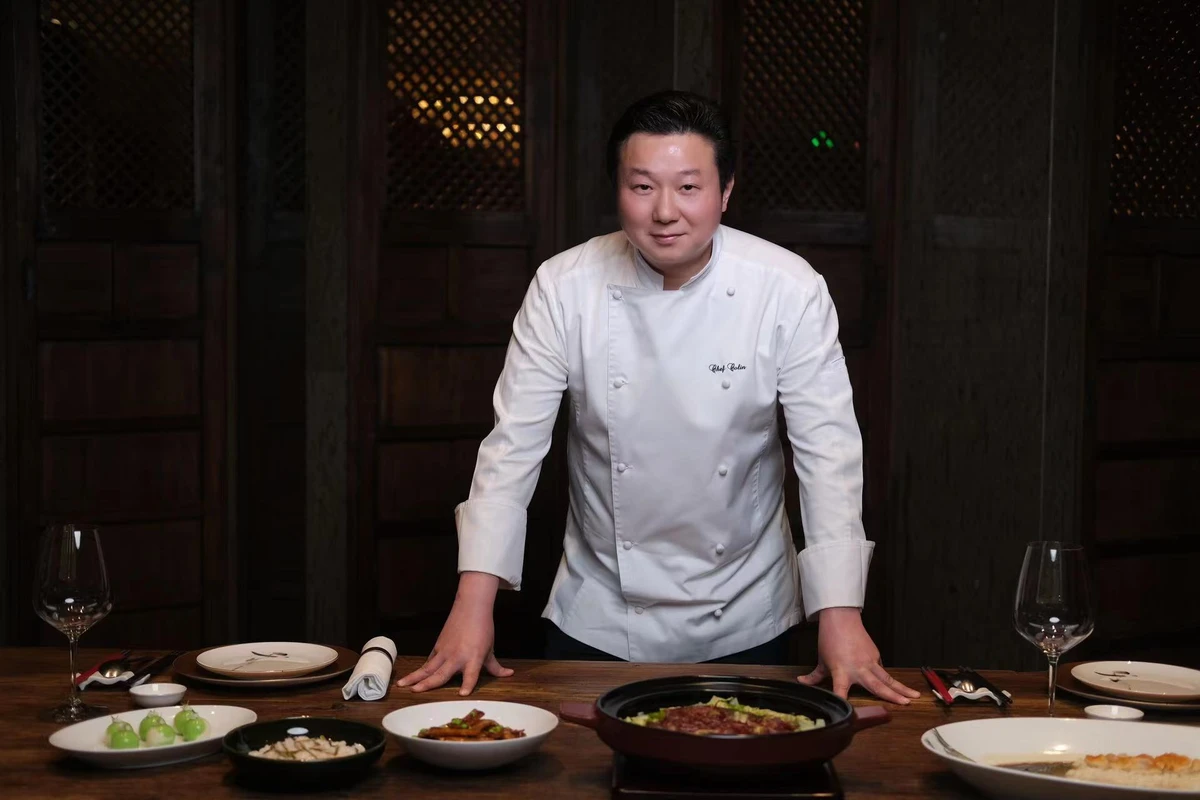
Chef Cheng Yu is the master of flavors at Hubin 28. This time, in the drowsy light of early spring, I set out with him to track down Hangzhou’s freshest native tastes.
Potherb Mustard (Xuelihong), made from: mustard greens
Who would have thought? Chef Cheng’s unforgettable bowl of dao du cai yellow croaker noodle soup — gleaming East China Sea yellow croaker, meat used as topping and bones simmered into broth. Even that pinch of dao du cai on top has crossed mountains and rivers.
Dao Du Cai Yellow Croaker Noodle Soup
The taste of spring in Hangzhou smells like wild greens from beyond the hills and over the water.
Poet Xu Zhihua led us to a mysterious “island.” As the spring breeze brushed our faces, we followed fish to the starting point of the Tang Poetry Road in eastern Zhejiang. We were about to do something big — um, foraging wild greens! The hills of Hangzhou are a giant kitchen garden, and the vegetables you clumsily sneak into your basket are the most precious.
At the place where the Fuchun River and Puyang River meet and flow into the Qiantang River, just a stone’s throw from Yupu ancient ferry in Yiqiao, Chef Cheng Yu was captivated by the scent of fresh mustard greens in the fields. The Eastern Jin writer Gu Yi recorded in the Wu Prefecture Records: “Thirty li east of Fuchun lies Yupu.”
This alluvial island has never been commercialized. Before me was Chang’ansha Wufeng Village, the very picture of “spring river tides rising level with the sea” — locals also call it Wufeng Island. Descendants of the Sixteen Strands of Shaoxing, plus a handful of migrants from Shuangpu and Fuyang’s Yushan, live here. Everyone speaks Shaoxing dialect, old and young alike, and they make dao du cai for pleasure. I could even understand them, and ended up acting as an interpreter.
In spring, Auntie Huahua, the island’s most skilled maker of dao du cai, says that tumour-shaped mustard (liujie) produces the most delicious pickles. Ordinary ones turn grayish, but hers are as vivid as a village belle — like the colors Van Gogh used for sunflowers.
Watching Auntie Huahua, Chef Cheng Yu couldn’t resist joining in. While we roamed the hills searching for Indian aster and shepherd’s purse, he had quietly become Auntie Huahua’s little helper.
“You don't need knife skills — what knife skills? Just remember to cut straight down, never at an angle. Chop bigger hearts smaller, then knead them with salt, rub and squeeze, layer them in. Make sure the salt is worked in and the juices come out, but don’t over-salt, or they won't taste good,” the auntie instructed from the side.
Looking at the mustard green “carpet” on her courtyard, we fell into yet another lesson on telling mustards apart. “This is tumour mustard (liujie), that’s yellow-leaf mustard (huangye jie), and these are ordinary mustard greens. Yellow-leaf mustard has a nice crunch.”
Along the way, I secretly photographed a neighbor’s drying mustard greens and had Auntie Huahua identify them. “Probably ordinary mustard — leaves look like mine. Different mustard varieties — these leaves are thicker, and they taste fresher.”
The dao du cai we usually buy is often somewhat dark; the auntie said it's due to improper storage. She advised dividing the pickled greens into small portions and freezing them, thawing as needed. I thought to myself: controlled fermentation is also about knowing when to halt the process — pressing pause at the golden moment to guarantee quality.
Chef Cheng, eager to get to the bottom of it, exchanged many technical questions with her. “First wash the greens, let them dry briefly in the sun, chop them after they’re dry, then spread them out to dry again, add some salt and knead, continue adding salt the next day and knead again — it’s a lot of work. Then pack them tightly into a clay jar — they must be packed tight or they won’t taste good. After two days, turn the jar upside down, and that’s it.”
Sure enough, when you open a jar of these mustard greens, the aroma bowls you over. “It’s the pure fragrance of mustard greens — even better than fresh vegetables. But few people make it now, most of it is factory-made.” Chef Cheng also wanted to pickle his own jar, and he actually did it.
“In the past, after packing the greens into the vat, they’d let kids tread them barefoot. The pickled greens would then be turned into ‘Immortal Soup,’ which every household ate in hot weather. I sniffed the finished pickles — a slightly complex, fresh scent hit me, truly enchanting.”
I said, how about finding some wild greens that don’t need pickling to eat?
On the island, alfalfa goes by many names — pigweed, clover seeds. Compared with caotou (a kind of clover), the stem isn’t as thick, it's solid, the top has three leaves, and the seeds are more fragrant. If not tender enough, it will get stuck in your teeth. There’s also southern alfalfa, hollow-stemmed, which Chef Cheng found and planned to stir-fry back at home.
I grumbled to myself — do they think I’m a wild boar? Then I thought, wow, wild boars really have it good!
The farmers here customarily use wild mugwort to make green rice balls (qingtuan), and Auntie Huahua says it tastes best. It’s different from mugwort leaves — locals call it ai hao, wild mugwort. Paired with stinky tofu, it’s heavenly. If it’s Majin stinky tofu from Kaihua in Quzhou, Zhejiang, then it’s paradise on top of heaven.
In fact, from southern Zhejiang to Fujian, the undisputed king of qingtuan is made from cudweed (shu qu cao). Truly each place has its own blessed plant. Eager to steal some, I scooped up a cudweed plant from the hills, planning to take it home and plant it, so I could make qingtuan the following year.
Mugwort and wild pea shoots
That day our hands were covered in mud as we worked the fields.
A chat in Chen Li’s living room: Let’s head to Wuchao Mountain — home flavor is not about commercial “flattery.”
That day we also gathered “Hu onion.”
In spring, it’s about eating “pungent” flavors. In Hangzhou’s fields and wild places, you’ll find some slender, toppling “onions.” Digging one up, the white, perfectly round bulb looks like a little white jade ball. Everyone calls them “Hu onion,” which reminded me of conversations about local knowledge in Teacher Chen Li’s living room.
Teacher Chen Li said, “The commonly used name ‘Hu onion’ is wrong — Hangzhou people can’t distinguish ‘Hu’ from ‘Wu,’ so it should actually be called ‘Wu onion.’ This onion is a native species; Zhang Qian’s mission to the Western Regions contributed nothing here.”
“In spring, one representative ingredient in the Jiangnan-Zhejiang region is Wu onion. It belongs to the Amaryllidaceae family and is quite common. Hangzhou is technically part of the ancient Wu region.”
In the season of peach blossoms and flowing water when mandarin fish are plump, country folk prepare river fish and sprinkle Wu onion on top.
When it comes to knowledge, just the “food” part is already wonderful. Teacher Chen Li suggested we go to Wuchao Mountain to search for spring.
“Apart from Wu onion, you might also see pine pollen — it must be from Masson’s pine. It’s an important ingredient in Hangzhou-style pine pollen cake. When making it traditionally, you mix rice flour with sugar in a mold, add some skinned mung bean paste, shape it, and then sprinkle pine pollen on top,” Teacher Chen said.
The road was long, but lucky we had bamboo shoots as consolation. “Given today’s weather, there should be shoots tomorrow. Among wild vegetables, bitter bamboo shoots and yellow soybean bamboo shoots are very common. Those slender ones can be used for a mixed bamboo shoot stir-fry, cut into finger-length segments. You can also add some lettuce stems, but don’t add any meat or fish. Wild bamboo shoots, asparagus, and celtuce combined into a mixed bamboo shoot stir-fry — that’s full of spring flavor.”
Teacher Chen Li is like an encyclopedia of food. He said Hangzhounese often call thunder bamboo shoots “White Buji” — they're less fibrous and relatively tender, perfect for braised bamboo shoots in soy sauce. Different bamboo shoots have different oxalic acid and water content, some are best braised to retain moisture. I also learned a new way to enjoy thunder bamboo shoots — bamboo shoot sauce. Grind the shoots in a food processor to the size of rice grains, add chicken broth, meat broth, or salted pork broth according to your taste, plus some ham skin and fresh pig skin simmered into aspic. One bite, and it’s a burst of bamboo shoot juice and aroma.
White Buji bamboo shoots come a little later. Right now, the most timely offering on Wuchao Mountain is the purple-shell wild bamboo shoot. Every season has its blessings.
The Er Ya classic says: “Bamboo shoot — the sprout of bamboo.” For me, bamboo shoots practically equal the very tip of spring in Jiangnan; spring vegetables almost equal eating bamboo shoots.
The history of eating bamboo shoots in China goes back 3,000 years. Where there’s bamboo, one inevitably mentions literati. Chef Cheng firmly believes that the literati, who could not live without bamboo, are just as important as bamboo shoot dishes. “Without the literati, the taste and essence of a dish can’t be spread. All the famous historical cuisine systems came into being this way.”
Jinhua Ham Shoots and Silkworm Rice
Chef Cheng’s spring menu unfurls across these hills and fields. He says, “Bamboo shoots are a must! I’ve also chosen seasonal vegetables — fava beans, Chinese chives, Indian aster... When fava beans hit the market, Fuchun River crucian carp arrive. Pan-fried, they’re incredibly fresh.”
Steamed Fresh Shad with Red-Sauce Pinghu Wine-Fermented Eggs
Speaking of fish, Chef Cheng’s new menu features “Red-Sauce Pinghu Wine-Fermented Eggs.” Teacher Chen Li remarked, “Shad has a traditional affinity with fermented grain.” This instantly made the wine-fermented shad in my memory shine even brighter.
“You have to understand an ingredient’s characteristics. For example, duck eggs treated with fermented grain — the aroma from protein denaturation is somewhat similar to the flavor of Ningbo’s wine-fermented bones. At home, try a sip of Baileys and a piece of fermented egg; you’ll discover how the flavors intertwine,” Teacher Chen Li said.
Having our horizons broadened, our cooking ambitions naturally grew wilder. Back from the fields, we had to explore the market too.
The new menu grows out of nature — and out of the market.
Renowned designer Shen Lei also pays close attention to the market basket. As long as he’s not traveling out of town, his daily routine is basically from the studio, to the market on the way back, then home. Having designed many famous restaurants, he still thinks the food at his own home is the best.
Lately, Wener Market has become particularly famous in Hangzhou, and he is its designer.
“I bought my first apartment in the late 1990s, right next to Wener Market, so I know the life structure and residents’ habits there very well. Later, I lived long-term near Wulin Gate, and the Mai Yu Qiao Market was close by. I always had expectations and thoughts about what they’d sell in different seasons,” Teacher Shen said.
Only after strolling through it did I realize: it’s a market made by food lovers for food lovers!
“It’s the same as design — you know how to proceed once you see the material. Real chefs are the same: they get inspired by the food itself. Discovering new ingredients while walking through the market or stepping into the countryside always sparks inspiration that belongs solely to that season. Actually, designing dishes shouldn’t be about technique; it’s about the Dao — the interlocking of different ingredient attributes. That’s the foundation — there needs to be resonance. With that in mind, whether to please guests or to create what the dish is meant to be is a choice. We still want to make honest, real flavors, find things you don’t see every day but that are certainly unique to Hangzhou in that season, without chasing after lofty extravagance,” Teacher Shen Lei said.
Teacher Shen Lei, who only began cooking for himself after going to the UK to study 20 years ago, shares a connoisseur’s tacit understanding with Chef Cheng Yu.
“Going to the market” is a deeply therapeutic process for him. “After being healed, you’re in a great mood to design, to play, to be with people — I think that might be the real meaning of the market. The market is a place where residents get their energy; it’s like the heart, after beating, that energy can go anywhere in the body.”
As a designer, he has visited many famous markets around the world, both domestic and international. In a colorful market, “you quickly learn what people in that region like to eat, what their tastes are, whether they have a bold character, whether they’re a food-loving people. The market is a way to quickly understand a city.”
Many market vendors are passionate about their produce. If they sell out in the morning, they might close their stall in the afternoon. Similarly, Chef Cheng’s spring menu is available only while the season lasts; once the best tasting window passes, it’s gone. So we should treasure the taste of each moment — that’s essential. That’s also why the market always feels fresh: every day and every hour is different, and that’s the greatest joy.
“Before the New Year, we ordered a dragon kite from Weifang and hung it in a stall. Maybe I wasn’t thinking from a spatial perspective. What I wanted to express was that precious, delicious things don’t last that long. What a person can hold inside differs from one moment to another. In the market, some ingredients awaken memories — maybe something you haven’t tried for a long time, maybe you want to cook it in a new way. When that feeling arises, you realize ‘tailoring your menu to your ingredients’ is a wonderful phrase.”
Chef Cheng deeply agrees. “When I was an apprentice, how was this dish made? Today, when I see it again, how should I reinvent it? In the end, so-called innovation is about making extensions from a rooted foundation, not overturning everything, because tastes are rooted in memory.”
“Just like Hangzhou’s spring markets — they have to make you happy. I studied and now work near West Lake. My life unfolds around this city, a cycle of four seasons, each with its unique beauty. I go to my residential compound’s garden and notice the plum blossoms, peach blossoms, cherry blossoms in bloom — they’re all storing up energy. In that state, you realize that great food, fine wine — these give you energy. A lot of people talk about design empowerment; sometimes I see it as quite minor. Compared to food, design may not be that important,” Teacher Shen said.
I’m more eager than ever for Hubin 28’s spring menu — that taste of home, imbued with Chef Cheng Yu’s own cultivation. The mud on my feet and hands is a witness to a master chef’s cooking.
May every meal you eat by West Lake feel like encountering Hangzhou’s brilliant spring light.
Do you love spring dishes?
“The peach tree is young and elegant,
Its leaves are lush and green.
This bride is going to her new home,
She will bring harmony to her family.”
— The Book of Songs, “The Peach Tree”
Food Bless You!
Advisor for “Once Upon a Bite”
Creator of “The Divine Table”
Producer of “Wild China” and “A Life Worth 369”


