A Pilgrimage to Tibet: For Beauty and for You
“Living in the Potala Palace, I am the greatest king of the snow land; wandering the streets of Lhasa, I am the most charming lover in the world.” — Tsangyang Gyatso
A legendary figure in the eyes of the world, a man of profound love. When you walk the paths he once lingered on, perhaps you'll understand why his love runs so deep.
It’s been a while since I returned from Tibet, but the memories remain vivid: the snow-capped peaks and glaciers, the boundless grasslands, the sacred Potala Palace, the fluttering prayer flags, and the devout, weathered faces of pilgrims prostrating themselves before the Jokhang Temple. Only by undergoing the baptism of the road into Tibet, being awestruck, moved, tearful, and joyful, can you truly understand Tibet—a place so breathtakingly beautiful it leaves you breathless, a place you must visit once in a lifetime. So I came, and your beauty was just perfect.
Because it was a trip for two women with limited vacation days, we didn’t consider self-driving. Instead, we took the train into Tibet and flew back. They say China has three great infrastructure projects of the century: the Qinghai-Tibet Railway, the Three Gorges Dam, and the Hong Kong-Zhuhai-Macao Bridge. I plan to check them off one by one, so let’s start with the Qinghai-Tibet Railway. In truth, our journey into Tibet didn’t go smoothly; it was a memorable “lost on the road” experience. Our itinerary was to fly from Hangzhou to Xining, then take the Qinghai-Tibet Railway from Xining to Lhasa. The most popular train from Xining to Lhasa is the internet-famous Z165, departing Xining at 21:30, with a brief stop at Nagchu for photos. My best friend and I set alarms a month in advance to grab tickets, but because of the summer peak season, we couldn’t get them. So we settled for the next best option, the Z9815 departing at 23:02. On the day of departure, we arrived in Hangzhou on time. The flight from Hangzhou to Xining had a layover and was scheduled to land at 17:35 in Xining. My friend and I had planned to have some time to explore Xining. However, the flight was delayed by a full four and a half hours and didn’t touch down until 22:00. That meant we had only one hour to collect luggage and get from the airport to the train station. On the plane we felt desperate, fearing we’d be stranded in Xining for the night. Since the rest of our itinerary couldn’t be changed, missing the train meant flying to Lhasa the next day and missing the Qinghai-Tibet Railway. As soon as we landed, we made frantic calls asking for a green channel and sprinted all the way. Fortunately, at the very last minute we made it aboard. We even felt relieved we hadn’t gotten the Z165 tickets, or else my best friend and I would have been hugging and crying in a Xining hotel.
It was my first time on a green train, and the conditions were better than I expected: four people to a compartment, upper and lower bunks. To be honest, I didn’t sleep well that night. When I woke up, we had already reached Golmud. From Golmud, altitude sickness symptoms begin, and the train’s oxygen supply system is activated. My symptom was a mild headache, nothing serious. I won’t go on about the scenery along the way—just one word: gorgeous! Train attendants came by to share stories about the Qinghai-Tibet Railway. When they told the story of building the Yangbajain Tunnel, many in our carriage wept. It’s a railway built with the workers’ blood and tears, and it’s precisely that harrowing construction that makes this such a unique engineering feat.
Breakfast on the Qinghai-Tibet Railway, 33 yuan.
Day 1: Barkhor Street, Jokhang Temple, Lhasa to Nyingchi, overnight in Nyingchi
Barkhor Street is Lhasa’s famous kora route, called the “sacred path” by Tibetans. The streets retain the original look of the old town, where all sorts of people—pilgrims or tourists—express their attitude toward faith. I especially loved wandering aimlessly along Barkhor Street, teasing the lazy dogs of the old town, watching the devotees circumambulating with their prayer wheels, and savoring the aromatic sweet tea in little roadside shops. The liveliest spot on Barkhor Street is undoubtedly the Jokhang Temple, which holds the highest place in the hearts of Tibetan people. Having witnessed over 1,300 years of change, the temple has seen the city’s transformations, but the one constant is the faith etched into the faces of generations of pilgrims. Countless devotees from all corners of the country trek thousands of miles, prostrating themselves all the way to Lhasa, just to see with their own eyes the 12-year-old life-size statue of Sakyamuni in the temple. Such dedication to faith is deeply moving.
The internet-famous Makye Ame restaurant.
Adorable little fellows everywhere on Barkhor Street.
Day 2: Nyingchi, Niyang River, Yarlung Zangbo Grand Canyon, overnight inside the canyon scenic area
Because of its rich vegetation, Nyingchi is called the “Jiangnan of Tibet” and has the highest oxygen level in the region, with altitudes dropping below 3,000 meters. So starting from Nyingchi to gradually adjust to the altitude makes good sense. We set out in the morning and passed Benzri Mountain, a sacred peak in the Bon religion. The highlight here is the Niyang River scenic area. Strolling quietly along the Niyang River and breathing the highland air was a unique pleasure. In the Yarlung Zangbo Grand Canyon scenic area, Namcha Barwa stands 7,782 meters tall. Its massive triangular peak is snow-covered year-round, wrapped in mist and clouds, and rarely shows its true face, earning it the nickname “Shy Maiden Peak.” In the evening, we stayed in a Tibetan-style village and joined a bonfire party hosted by the locals. We all sang and danced together, getting a taste of Tibetan hospitality.
Yarlung Zangbo Grand Canyon
Day 3: Nyingchi, Basum Tso, overnight inside the scenic area
Basum Tso means “green water” in Tibetan. It’s Tibet’s first and currently only national 5A-level natural scenic area. The turquoise lake cradled by snowy peaks is breathtakingly beautiful, giving the illusion of wandering into a fairyland. Within Basum Tso lies a small village whose Tibetan name means “forgotten.” Due to its remote location, few outsiders knew about it. Now with tourism development, the village has started to communicate with the outside world. Although language is still a bit of a barrier, it didn’t stop us from visiting homes, sitting down to eat barley pancakes, drink butter tea, and learn about their daily lives.
Heart Island in Basum Tso
Delicious sweet tea in a Tibetan home
Day 4: Nyingchi to Barkhor Thangka Center, Potala Palace, overnight in Lhasa
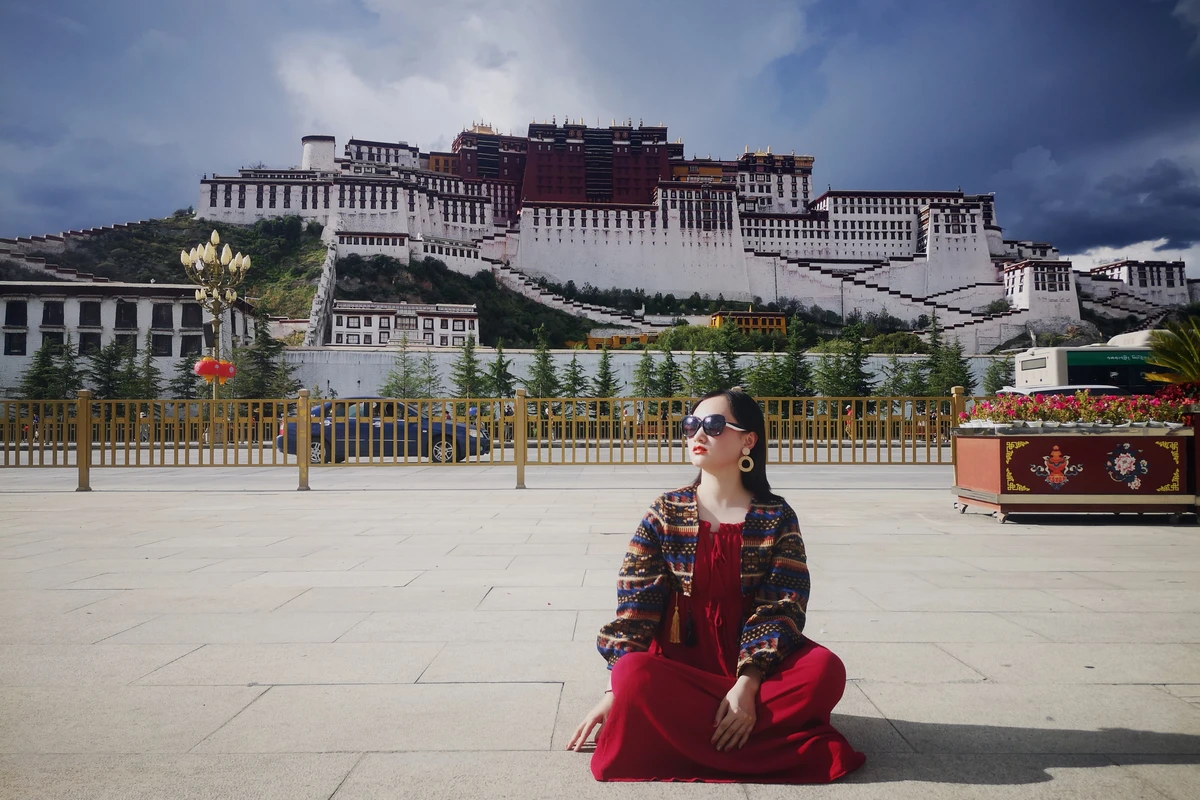
Previously, I only knew Thangka as a style of painting. It wasn’t until I went to the Thangka Center and listened to the explanation that I deeply understood its beauty—both meticulous and free, both religious and scientific, both strict and artistic. The complexity of its production process and the stunning final product took my breath away. It’s hard to imagine two or three people spending two or three years completing a single painting; only the power of faith can explain that. Then we went to the Potala Palace. Standing before this palace complex built by Songtsen Gampo to welcome Princess Wencheng, I felt a sense of reunion, as if I had known it for a long time. The palace clings to the hill, composed of the White Palace and the Red Palace, sacred and solemn. As the symbol of Lhasa, the Potala Palace truly captivates the soul, and tickets are extremely hard to come by. Because we hadn’t booked in advance, we could only admire it from outside. So for those determined to go inside, remember to snatch tickets early. The evening live performance of Princess Wencheng was, in my opinion, rather average—perhaps because I’ve seen too many similar shows and became a bit numb. But looking at the Potala Palace from outside the performance venue at night was another kind of breathtaking sight.
Encountering Tibetan newlyweds taking wedding photos by the Potala Palace
The 50-yuan note view spot
Princess Wencheng performance
Overlooking the Potala Palace from the performance venue
Day 5: Samye Monastery, Chimpu Hermitage, overnight in Shannan
Samye Monastery, built during the Tubo dynasty, was Tibet’s first monastery where monks were ordained. The architecture follows the Buddhist cosmology, and the central temple combines Tibetan, Han Chinese, and Indian styles. The overall shape of the monastery is also very special—it’s modeled after the mandala of the Buddhist universe.
In the afternoon, we went to Chimpu Hermitage, a secluded sacred place for meditation in Tibet. Legend says Guru Rinpoche himself practiced here, leaving behind 108 meditation caves. Even today, practitioners still meditate here, and pilgrims from various places come to walk the sacred path. Of course, this pilgrimage is not easy; body and will are tested. Climbing 500 vertical meters in elevation at an altitude of 4,000 meters—I didn’t have the courage and could only silently pray for my teammates at the foot of the mountain.
Day 6: Yamdrok Lake, overnight in Lhasa
One of Tibet’s three sacred lakes, and relatively close to Lhasa. The drive from Lhasa to Yamdrok Lake takes about two and a half hours. Before reaching the lake, you stop at Kamba La Pass at an altitude of 4,990 meters, the perfect spot to photograph the goddess’s true face. From there, you can see a vivid turquoise ribbon winding through the mountains. Then we went to the lake’s edge to experience the sacred beauty up close. With gentle ripples on the surface, simply sitting quietly by the lake calmed my mind.
Returning from Yamdrok Lake that evening, we wandered back to Barkhor Street. The nighttime Barkhor is different from the daytime—mysterious, like a shy maiden veiled in gauze, half hidden. After dinner at Pizza Hut, we were suddenly caught in a downpour. We ducked into a travel bookstore called Time Travel and serendipitously found postcards I loved. We ordered a pot of chrysanthemum tea—a cup of tea, a book—and enjoyed a rare moment of leisurely bliss during the journey.
Day 7: Nam Tso, overnight in Lhasa
Nam Tso, another sacred lake along with Yamdrok, is much farther and higher, with the highest pass reaching 5,190 meters. Weather changes unpredictably, and snow can even fall in summer. So it’s open to visitors only from June to September; other times the mountain paths are closed. This high-altitude environment keeps it pristine and untouched. Unfortunately, the weather was bad on our day, with rain. We walked shivering by the sacred lake for a short while before leaving early.
We returned to Lhasa after 9 p.m. That was our last night in the holy city. My best friend and I were longing to see the Potala Palace at night, so despite our exhaustion, we dragged ourselves to the Potala Palace square. The night view was truly beautiful, making the trip well worth it.
A bit about altitude sickness:
Altitude sickness is real. In our group of 18, only a few had no symptoms at all. Most of us had some degree of sickness, but thankfully none of it was serious, and everyone managed to complete the trip. Here are a few tips for dealing with altitude sickness:
1. Start taking Rhodiola rosea about 20 days before the trip. I’m not sure if it really helps, but at least the placebo effect gives peace of mind.
2. Reduce aerobic exercise about a week before departure. Take good care of your body. Don’t be overconfident. Often, fitter people get worse altitude sickness, especially those who exercise a lot, because their bodies need more oxygen.
3. Drink plenty of water on travel days. This was advised by our tour leader Pingping. Though I’m not sure if it works, I followed it obediently.
4. Relax and enjoy the journey. Don’t constantly focus on altitude sickness.
5. If you do feel sick, don’t panic. Mild symptoms usually ease within one or two days.
“How many secrets must a person hide, to skillfully navigate this life? This plateau shimmering with Buddha’s light, just a step or two and it’s paradise. Yet still so many people, are weighed down by their heavy hearts and cannot move.” — Tsangyang Gyatso
I hope we can all take dreams as our horses and live up to the glory of youth. Tibet, I will surely return, within this lifetime.


