Winter Travel in Tibet Part 8 – Leisurely Moments in Lhasa: Visiting Norbulingka
In Lhasa, the Potala Palace is known as the Winter Palace, while Norbulingka is the Summer Palace. Norbulingka means 'Treasure Garden' and is called 'the Summer Palace of Lhasa.' Before liberation, it was a retreat for a privileged few, but today it has been transformed into a delightful public summer escape.
The Norbulingka you see today is the result of over two centuries of restoration and expansion, making it the largest and most beautiful man-made garden in Tibet.
On my final day in Tibet, I decided to visit the Summer Palace. Stepping into Norbulingka, everything I saw, heard, touched with my fingertips, and felt in my heart... all of it was simply wonderful.
In winter, there is hardly anyone here. Walking through it, you're enveloped by a mysterious and tranquil beauty.
The park is divided into three sections: the eastern front palace area, which includes the entrance and the forecourt before the Weizhen Sanjie Pavilion (Pavilion that Commands the Three Realms); the central core, which is the palace quarter; and the western section, the Golden Norbulingka, a natural woodland retreat full of rustic charm.
Passing through this gate, you arrive at a place adorned with exquisite, lavish decorations and rich, intricate murals.
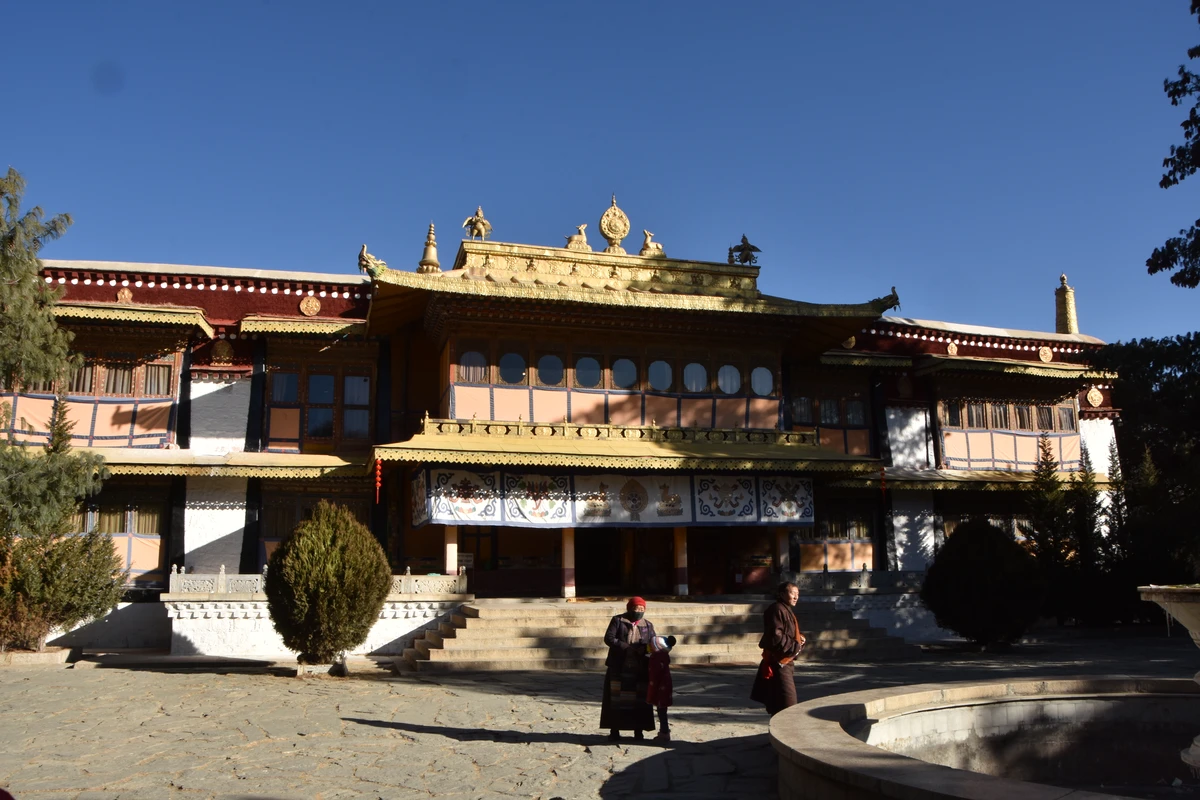
Built between 1954 and 1956, this is one of the most magnificent structures in Norbulingka. In Tibetan, Dhadan Mingju Podrang means 'Eternal Palace.' Because it was constructed relatively recently, it is commonly called the New Palace.
Facing south, Dhadan Mingju Podrang is a two-storey flat-roofed Tibetan building. Ascending the steps, a pair of tiger-skin whips hangs on either side of the main door, symbols of authority.
The furnishings and decor blend ethnic charm with a strong modern sensibility, while the murals are truly exceptional.
In particular, the wall of the 'Sixi Duigu' room in Dhadan Mingju Podrang is covered with a massive mural painted in vivid greens and blues, bringing Tibetan history to life in astonishing detail. I was fortunate that, with so few visitors around, a staff member warmly explained the mural to us, giving us a genuine understanding of Tibet's past. This mural presents major historical events in a comic-strip format, comprising 301 explanatory texts and 246 scenes. It depicts the enchanting legend of the Tibetan people's origins, the rise and fall of local dynasties, the introduction of Buddhism and the formation of its various schools, and the enduring close ties between Han and Tibetan peoples – a perfect illustration of the Tibetan tradition of using painting to tell history.
Its subjects include: the origins of the Tibetan people, the rise and fall of the Tubo Dynasty, the Later Propagation of Buddhism in Tibet from 846 to 1391, and the development of the Kadam, Kagyu, Sakya, and Gelug schools. It is arguably the most complete historical mural in Tibet to this day.
Through this side door, you can reach Dacuo Jipo Podrang (the Lake Pavilion).
Within the park, there is also a scripture library.
There is a 'Lake Center Palace,' with a rectangular emerald pond at its heart, surrounded by stone balustrades. On the northern side of the pond stands a square, three-bay pavilion with a colonnade. Its eaves curve gently upward, and the bracket sets under the eaves are carved with Han-style dragon images, giving a majestic 'flying dragon in the sky' aura, the figures staring intently ahead with a certain imperial dignity.
If you come to Lhasa, don't just visit the Potala Palace and the Jokhang Temple – remember to see Norbulingka, Lhasa's back garden. This is the most beautiful garden in the city. Strolling through this ancient and peaceful park, you can feel the charm of pastoral life.
Pack your dreams, shed your burdens, and let your heartbeat embrace winter in Tibet. Winter Lhasa is bathed in warm, brilliant sunshine; it's also the season when the most pilgrims visit. Here, happiness doesn't merely show on the surface – it springs from the heart. It's the blossoming of the heart, a spiritual homecoming, a sanctuary for the soul.
That moment, I raised the wind horse flags, not to pray for blessings, but to await your arrival.
That day, I closed my eyes in the fragrant mist of the scripture hall, and suddenly heard the truth in your chanting.
That night, I listened all night to the sacred songs, not to seek enlightenment, but to catch a trace of your breath.
That month, I turned all the prayer wheels, not for deliverance, but to brush your fingertips.
That year, I prostrated along the mountain path, not for an audience, but to cling to your warmth.
That life, the life after life, I circled mountains, rivers, and stupas, not to cultivate a better rebirth, but to meet you on the way.
That instant, I ascended to become a celestial being, not for immortality, but to protect your peace and joy.


