2020 Tibet Road Trip: Self-Drive Tips & Advice for Entering Tibet
PART1 Overview:
Yours truly, an unemployed wanderer, entered Tibet via the Sichuan-Tibet and Yunnan-Tibet routes in July 2020, and in August took the Qinghai-Tibet Highway into Tibet and the Sichuan-Tibet Highway out. So I've gained a decent understanding of these three main entry corridors. To help fellow travelers plan future trips, before school starts again, I'm noting down some humble tips for reference.
Two entries into Tibet:
PART1 Qinghai-Tibet Route – A Road I Wouldn’t Take Again
Reason 1:
The highlights of the Qinghai-Tibet route are in Qinghai. The famous Qinghai Lake, the recently trending "Most Beautiful Highway," the stunningly green Dachaidan Emerald Lake, the vast blue Little Qaidam Lake – all of them lie far from Tibet, on the northern side of Golmud. There's no need to push further toward Tibet. From Golmud to Tanggula Pass, it's nothing but endless gobi and white snowy mountains. The first time, it's breathtaking, but ten straight hours of similar landscapes gets truly boring.
Reason 2:
Exhausting drives and a dilemma with accommodation. Between Golmud and the first "civilized place" along the G109 in Tibet – Amdo County – stretch the Kunlun Mountains and Tanggula Mountains. Between these two perpetually snow-capped giants lies the intimidating Hoh Xil. Constant high altitude, sparse vegetation, and extremely low oxygen make it easy to suffer from persistent altitude sickness if you enter Tibet via this route for the first time, adding to travel fatigue.
Moreover, from the table, possible overnight stops on the Golmud-Tibet route are Tanggula Town and Amdo County. If you stay in Tanggula Town the first night, the high prices and basic conditions won't win your heart. And the town's ultra-low oxygen and humidity are perfect companions for insomnia. If you push straight to Amdo in one day, that 15-hour drive will surely test your stamina.
Reason 3:
Terrible road conditions and heavy truck traffic.
The road is so bad that if you drive at 80 km/h, your car will take off. The roadbed is wavy, the surface looks like it's been carpet-bombed, and some sections aren't even paved. The funniest part: you drive a kilometer of good road, think you can open up, and then an "invisible" pothole will scare you out of your wits. Even better, you have to overtake while navigating crater-like potholes. The most ridiculous thing is the speed limit on such a road is 70 km/h. So I recommend using a WRC car; at the very least, a Subaru Impreza STI rally car to hit that limit. Why not a hardcore off-roader? Personal preference, that's all.
If you really want to experience Hoh Xil's magical wilderness, the road from Shigatse to Everest is a good alternative.
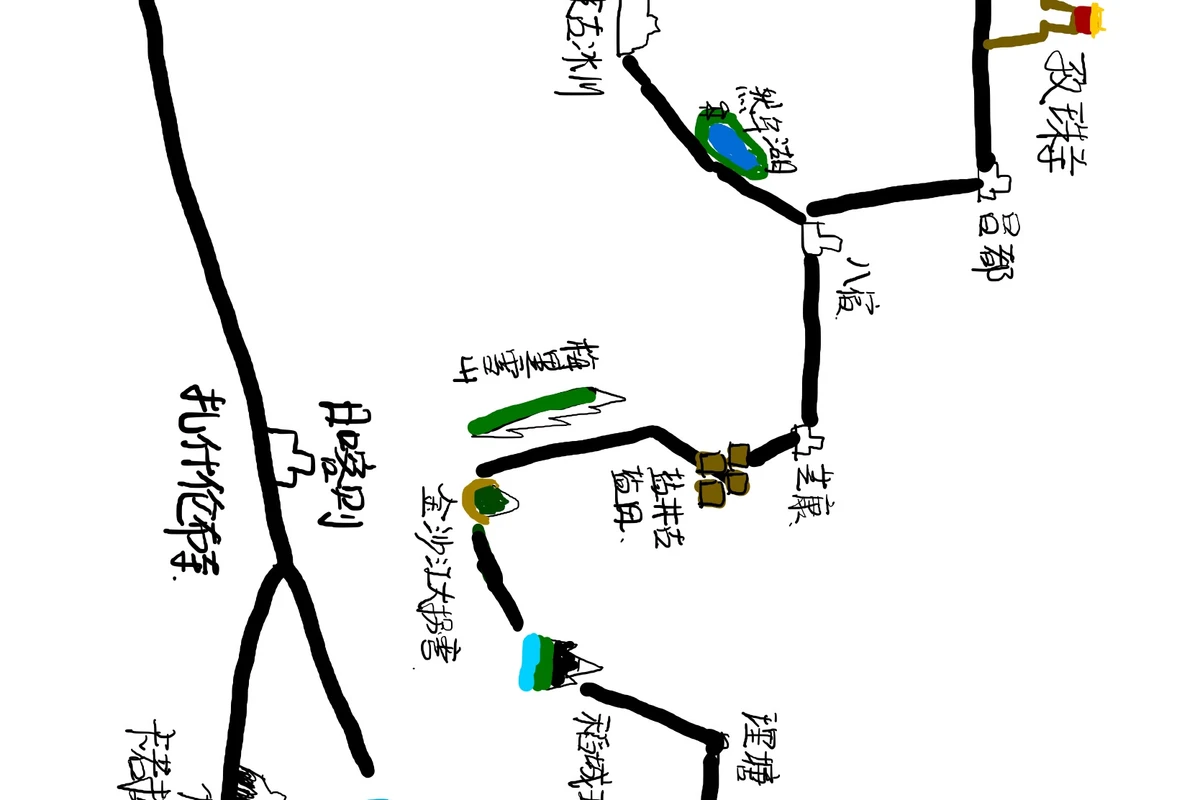
PART2: The 318 – A Road You’ll Want to Return To:
Note why I don't just say "Sichuan-Tibet Highway." Because there are two: 318 and 317. The 317 offers very authentic scenery and Tibetan culture along the way. In my opinion, if you want to experience Tibetan culture largely untouched, the 317 is a great choice. Zizhu Monastery on the 317, perched on a mountaintop and reached by an unpaved mountain road, still retains genuine Tibetan hospitality – highly recommended. However, the 317's road is for adventurous veteran drivers.
The 318, on the other hand, is quite modern. Not only the road – the 318 corridor is also the most commercialized. Let me correct something: within limits, more commercialization is better. And right now, the 318 is at that "just right" sweet spot. It lets you stay comfortably and see things comfortably.
Why "see things comfortably"? The 318 earns its reputation as a scenic highway for good reason. Here you truly understand what it means to have a new view with every step. In a single day, you encounter not just different weather, but different climates; forests and barrens coexist in the same panorama; ice and snow share the stage with blazing sun. That's the charm of vertical alpine climate zones.
The 318 is beautiful throughout, but in my personal opinion, the stretch from Nyingchi to Bomi is the most stunning. Here, without the distant mountains, you'd think you're in a southern autumn; overlooking the scene, it feels like a northern fall; close your eyes, and you'd swear you've entered paradise – because the oxygen level, humidity, and temperature are all so perfectly comfortable. If time allows, I strongly recommend staying a couple of days in these places to find your own Walden Pond.
PART3 Besides scenic views, which spots are worth special visits?
Best approach: If entering via the Sichuan-Tibet route, stay overnight in Amdo (or Nagqu) on the first day; then you can reach Namtso by noon the next day. If you're not fussy about accommodation, just find a guesthouse by the lake. Visit the Holy Elephant Gate in the afternoon, then stay at the guesthouse. If you demand higher comfort, you'll have to skip the Holy Elephant Gate, tour Namtso's south shore, and return to Damxung.
2. Daocheng Yading
The scenic area alone needs a day and a half. I recommend the long route directly. If it's your first time on the plateau or your fitness is average, hire a horse to save energy for the steepest final section. Fitness buffs, decide for yourselves. On Daocheng's long route, be sure to see Five Color Sea and Milk Lake; after those, the short route can be skipped.
3. Yamdrok Lake
The north shore of Yamdrok is just over two hours' drive from Lhasa. Leave Lhasa in the morning, tour the lake, and return in the afternoon – the best plan. If you're heading to Everest, you can slot Yamdrok on the return leg from Shigatse to Lhasa (see the opening itinerary chart).
4. Mount Everest
To be honest, seeing Everest is "high risk" because weather can obscure the view; it's not uncommon to arrive after a grueling journey only to see clouds. Plus, Everest is a two-day drive from Lhasa, suitable only for itineraries with plenty of time. The best plan: go from Lhasa to Shigatse, spare half a day to visit Tashilhunpo Monastery, then the next morning after 8 am apply for your border permit. After getting it, depart Shigatse at 9 am, and you can reach the scenic area gate by about 7 pm. Then take the shuttle bus up. At the end, visit Rongbuk Monastery first, then quietly watch the full spectacle from bright sunshine on Everest to the last golden rays of sunset.
Note: It's cold and windy at Everest viewpoints – be sure to bring a down jacket and a shell jacket or similar warm clothing.
After the evening viewing, it will be around 9–10 pm. You can stay overnight in a local Tibetan home at the foot of Everest; if the weather cooperates, photographing the starry sky is rewarding. (Be sure to book in advance.)
PART4 Pitfalls
1. For handicrafts, just have a bit of fun – never spend big money on them.
2. Oxygen levels on Everest are sufficient; don't rent a 600-yuan oxygen cylinder. The blankets in Tibetan homes are not dirty; no need to rent coats or padded quilts. (If you join a tour to Everest, the driver may exaggerate the harsh conditions to entice you to rent these items.)
3. For guides at Jokhang Temple and Potala Palace, be sure to hire from the designated places. Avoid freelance guides with guide badges touting for business; their commentary quality is noticeably inferior to the official ones.
4. The ticket for the Princess Wencheng show includes a raincoat.


