My Eight-Day Solo Trip to Tibet: Part 2 – Departure
On the afternoon of the 20th, "the head of our household" took our son and personally drove me to the high-speed rail station, as a sign of approval and encouragement for this long journey. It even had a touch of the old revolutionary spirit—like "the wife sending her husband off to war" in the Taihang Mountains. After all, this was a journey of eight thousand li (roughly 4,000 kilometers) into thin air, and who knew if my body could handle it. The renovated Xingtai East Station now lets drop-off vehicles drive right up to the entrance, but you can't stop for more than three minutes. This is a real convenience for travelers with large luggage, though the downside is there's no time to express farewell feelings. Fortunately, we Chinese aren't big on public displays of emotion anyway.
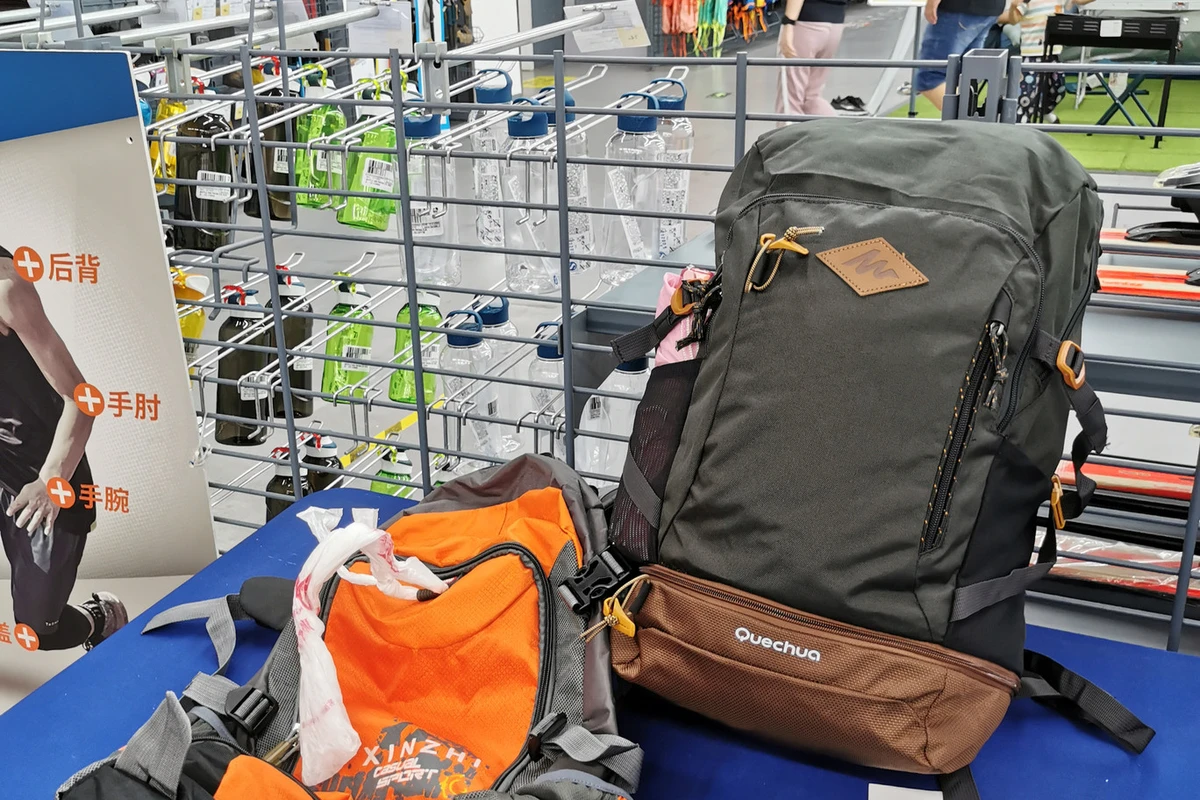
A "trip on a whim" is never as simple as it sounds! The heavens seemed to be thinking: how can one truly appreciate life's many flavors without a little setback to dampen the thrill of a spontaneous getaway? As I got out of the car and prepared to hoist my backpack onto my shoulders, disaster struck. This bag was a freebie from some purchase, and partly because of poor quality, partly because it had never been packed so full—the zipper broke! I couldn't wear it on my back; I had to carry it in my hands to keep everything from spilling out. The train was about to leave—what was I to do? My quick-witted son immediately pointed me toward a lifesaver: "You've got a three-hour layover in Shijiazhuang. Just manage to board now, and I'll find a Decathlon nearby the Shijiazhuang station online and send you the details. Once you arrive, buy a new bag and switch everything over." Haha, remembering that 12306 had refused to sell me an 8 p.m. ticket, I secretly rejoiced. It was the "stubborn" 12306 that saved my "trip on a whim" from collapsing.
After arriving in Shijiazhuang, I changed into my new gear from Decathlon and hailed a cab to the North Station. This was only the second time I'd take a taxi on the whole trip. Since I was traveling solo with no rush to get anywhere, my principle was to use public transport as much as possible. First, it's cheaper; second, I feel public transport offers a greater sense of "immersion"—it lets you experience the real life of local people more deeply. The only reason I took a taxi this time was because lugging that un-wearable "big bundle" around had already worn me out completely.
(The new bag I bought)
"Where to, old-timer?" The taxi driver was a middle-aged man with a buzz cut, looking only a few years younger than me. That "old-timer" sent a shiver through my heart—ah, time is cruel! I told him I was off to Lhasa for a spin, a note of contentment in my voice. The driver immediately said he'd love to get out and travel too someday, but circumstances just wouldn't allow it. He then went on to tell me about his family situation. He had three children: the eldest daughter was already married, while the second daughter and youngest son were still in school—money was needed everywhere. Considering he was even younger than me but had three kids, the pressure must have been immense by Chinese standards of parenting. All I could say was, "You're going through the bitter now to enjoy the sweet later; once all three kids have grown up and started families, you'll be able to sit back and enjoy life!" Thinking about it, his dream of traveling might not materialize until who knows when. That ordinary cabbie was a snapshot of the vast majority of Chinese parents.
Before we knew it, we arrived at Shijiazhuang North Station. Five years ago, I'd taken a train from here to Yinchuan; it was also at night, and I'd gone straight into the station without lingering outside, just feeling that the station was sparsely populated and dreary. This time I took a closer look and found little had changed except the lights around the small front square were brighter than before. The canopy over the waiting hall looked like a temporary structure, the indoor facilities were dated, and sanitation was poor. In such an environment, the passengers seemed to be treated as second-class. Compared with the Shijiazhuang Station where I'd just arrived by high-speed rail, it was worlds apart—like a child raised by a cruel stepmother in an old novel, utterly neglected. Limited funds have to be spent on the most visible spots; who cares about a place that draws so few people!
(Waiting room of Shijiazhuang North Station)
I found the entrance and saw that the pandemic check-in procedures weren't too complicated, so I decided to grab a bite outside first. Across from the station square, the entire east side was lined with small eateries. Judging by the brightness of their neon signs, I mentally picked a donkey-meat huoshao shop tucked further inside. But as soon as I stepped off the square, a friendly waitress from a Shanxi Noodle Shop closer to the street corner called out to me, saying they also had donkey-meat huoshao and wontons. Her enthusiasm, delivered in Sichuan-accented Mandarin, made it feel awkward to walk past her place to another. After all, I just needed to fill my stomach—anywhere would do. So I chose her shop. Eateries near stations don't rely much on repeat customers; they count on foot traffic. But a good location doesn't guarantee good business; the Shanxi Noodle Shop managed to snag this little donkey-meat huoshao sale all thanks to that waitress's calling out! I thought about my own workplace, also in the service industry, where in recent years competitive pressure has forced us to step up in-store and telephone marketing—something we're still not quite used to.
(Wontons at the Shanxi noodle shop)


