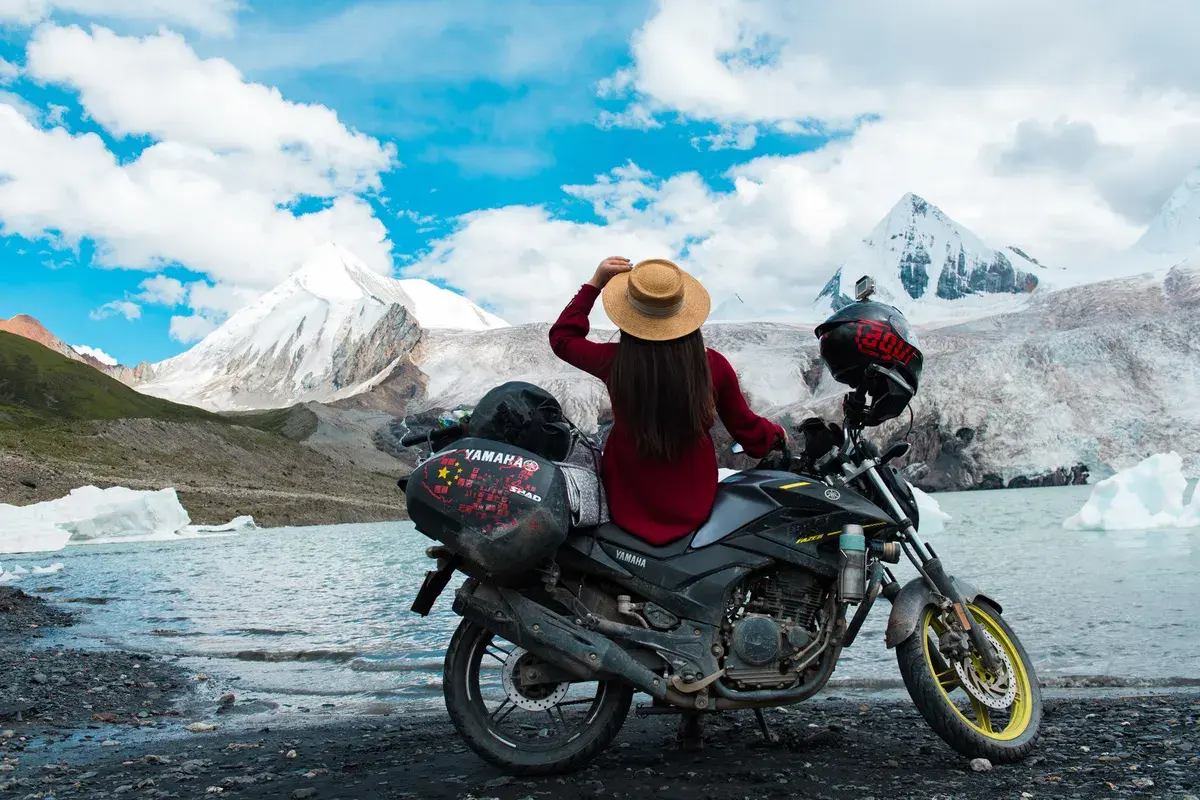
Crossing Northern Tibet on G317: A Journey into the Most Primitive Old Tibet – Holy Mountains, Sacred Lakes, and Temples Galore (11-Day Self-Drive Guide)
No matter how high the mountains, how long the rivers, how tough the road to paradise, life spans just a few decades. Seize the moment to see the ones you miss and the landscapes you dream of. Time flies – enjoy the moment... Tibet, that place you must visit at least once in a lifetime. In this autumn of blooming mountain flowers and ripening barley, I traveled thousands of miles over mountains just to keep an appointment with your face.
## About This Trip
Some say Lijiang is for flings, Dali for romance, and Tibet for healing. Do take the one you love to the place closest to heaven when you have the chance. Alas, in a bustling world, a true companion is hard to find, so many end up going to Tibet alone. In my naive youth, I dreamt of “taking a train to Lhasa”; in my mature years, I yearn for a self-drive journey through Tibet. Before turning 30, you must drive the northern Tibet route G317 once to understand what it means to live without regrets.
**D1: Chengdu – Lhasa – A Tiao Tea (food)** Stay: Sunlight City Tibetan-style Guesthouse (Potala Palace branch)
**D2: Potala Palace – Barkhor Street – Old Guangming Gangqiong Sweet Tea House (food)** Stay: Sunlight City Tibetan-style Guesthouse (Potala Palace branch)
**D3: Lhasa – Nagqu – Chuanwei Mutton Soup (food)** Stay: Zangbei Yingbin Hotel
**D4: Nagqu – Nujiang Grand Canyon – Biru** Stay: Nujiang Yuan Grand Hotel
**D5: Biru – Xia La Mountain Pass – Sanda Monastery – Yangxiu Township – Sapu Sacred Mountain – Biru** Stay: Nujiang Yuan Grand Hotel
**D6: Biru – Bangor County – Ya’an Restaurant (food)** Stay: Zangbei Yingbin Hotel
**D7: Bangor County – Qiongcuo – Namtso – Shengxiang Tianmen (Holy Elephant Heavenly Gate) – Nagqu** Stay: Xinjin Hotel
**D8: Nagqu – Bujia Snow Mountain – Dêngqên County** Stay: Chongcao Grand Hotel
**D9: Dêngqên County – Zizhu Monastery – Chamdo** Stay: Siji Fuyang Hotel
**D10: Chamdo – Dege Printing House – Garzê Gesar King City** Stay: Time Beyond Hot Spring B&B
**D11: Garzê – Bamei – Zheduo Mountain – Kangding – Ya’an – Chengdu**
Travel and food expert from Sichuan: @流浪ed丁小猫
**Gear:** camera, laptop, phone, octopus tripod, selfie stick, gimbal.
**Clothing:** wool coat, down jacket, long-sleeved dresses, trench coat, scarf, tights, combat boots, slippers. (Tibet is a high-altitude region; Lhasa is at 3,650 m, Nagqu over 4,450 m, Sapu Sacred Mountain around 5,000 m, and Shengxiang Tianmen about 4,700 m. High altitude brings large day-night temperature swings and unpredictable weather – pack accordingly.)
**Medication:** glucose, cold capsules, isatis root, altitude sickness tablets (Gaoyuan’an, Rhodiola).
**Snacks:** bread, biscuits, spicy strips, chocolate, fruit, etc. (Self-drive routes often pass through uninhabited areas with no shops; bring snacks to keep hunger at bay. You’ll often crave fruit – buy it in Tibet, though prices are higher.)
**Other items:** umbrella, sun hat, sunglasses.
**⚠️ Important tips:** Start taking Rhodiola a few days before entering high altitudes. After arriving in Tibet, avoid strenuous activity, shun spicy food, keep warm, and prevent colds. Those with weaker constitutions may bring supplemental oxygen. When self-driving, monitor fuel levels; avoid unfamiliar fuel brands at small stations.
## Day 1: Chengdu – Lhasa – A Tiao Tea (Food)
**D1 Timeline:** 7:50 Take off from Chengdu Shuangliu Airport, fly Chengdu–Lhasa, land at Lhasa Gonggar Airport at 10:05. 10:30 board the civil aviation bus, about 1 hour to Lhasa Civil Aviation Bureau. 11:40 switch to taxi to the pre-booked Sunlight City Guesthouse, located on Linkuo North Road near Xiaozhao Monastery, about a 10-minute ride. If traveling light, you can walk in about 20 minutes. 12:00 Check into the room, order Lhasa’s famous A Tiao handmade butter tea, then enjoy a half-day indoor break.
**Food & stay tips:**
- A Tiao Handmade Butter Tea: Hours 10:00–21:00. Address: 1st floor, Zangxiangxiang Shopping Mall, No. 7 Barkhor Street. Recommended: A Tiao handmade butter tea, Black Forest, original yak milk yogurt.
- Sunlight City Tibetan-style Guesthouse (starry sky king room): Address: Building 16, No. 11 Linkuo North Road.
Life is short! Spend it with someone sweet. Craving butter tea but don’t want to go out? Just order delivery – even that trendy shop is available. In Lhasa, I savored a delightful afternoon tea.
**First Impression: Sunlight City “Lhasa”**
**Tips for getting around Lhasa:**
- **Train:** Direct trains from Chengdu, Chongqing, Lanzhou, Xining, Beijing, Shanghai, Guangzhou to Lhasa. From the train station, take buses 86, 89, 91, or a taxi (about 20 yuan/person).
- **Flight:** Chengdu–Lhasa in 2 h 15 min, arriving at Gonggar Airport. **Civil aviation bus** from Gonggar Airport to Civil Aviation Bureau (round trip), fare 30 yuan/person, journey about 60 min. City departure: 6:30–20:00 (every 5–10 min in the morning, 10–15 min in the afternoon). Airport departure: synchronized with flights. **Taxi:** no meter, about 130–150 yuan, about 45 min drive.
Even before seeing it, I had long heard that Tibet is a hidden paradise with a thousand mountain peaks, the source of ten thousand rivers, the kingdom of Tibetan antelopes, and the homeland of yaks. Lhasa is the brightest jewel in that secret realm. Its yearly sunshine averages 3,005.3 hours – over 8 hours of sunlight per day – earning it the title “Sunlight City.”
Stepping into the holy city of Lhasa, every few steps you see devout pilgrims, hear the tinkling of prayer wheels, and smell the rich aroma of butter tea. The streets are filled with dazzling goods; merchants from north and south come and go – a scene of bustling prosperity. Beyond the city, the landscape is breathtaking: exotic flowers blanket the cliffsides, ancient monasteries hide among Tibetan hamlets, ten-thousand-ren glaciers pierce the sky, and cliffs are festooned with colorful prayer flags. Sapphire lakes mirror snowy peaks, and winds comb the grasslands to reveal cattle and sheep.
## Day 2: Potala Palace – Barkhor Street – Old Guangming Gangqiong Sweet Tea House (Food) – Potala Palace Night View
**D2 Timeline:** 10:30 Leave Sunlight City Guesthouse, walk 1.6 km (about 22 min) to the main gate of Potala Palace. 11:00 Pass security and enter the palace interior. 14:00 Finish touring Potala Palace. 14:30 Have a bowl of rice noodles at “Suo Yi Wan” near Xiaozhao Monastery – I had the signature wild mushroom soup rice noodle. 15:00 Arrive at Old Guangming Gangqiong Sweet Tea House, sit and sip sweet tea. 18:00 Wander Barkhor Street. 19:30 Walk to Potala Palace to capture the night scene, wait until the lights come on, then taxi back to the guesthouse (about 15 min).
**Food & stay tips:**
- Suo Yi Wan Rice Noodle Shop: Hours 9:00–21:00. Address: No. 2538 Beijing East Road, Lhasa. Recommended: Tricholoma matsutake wild mushroom soup rice noodle, yogurt.
- Old Guangming Gangqiong Sweet Tea House: Hours 8:00–21:00. Address: Diagonally opposite Xiangbala Hotel, Zangyiyuan Road (near Beijing Middle Road). Recommended: sweet tea, fried potatoes. The noodles are a bit hard due to altitude – not recommended. Sweet tea can be carried in a thermos but must be drunk the same day or it spoils.
- Sunlight City Tibetan-style Guesthouse (starry sky king room): Address: Building 16, No. 11 Linkuo North Road.
**Potala Palace – A World Epic Hall**
**Potala Palace tips:** Address: No. 35 Beijing Middle Road, Chengguan District, Lhasa. Hours: year-round 09:00–16:00 (last entry 15:00).
Tickets: peak season (1 May–31 Oct) 200 yuan/adult; off-season (1 Nov–30 Apr) 100 yuan/adult.
Discounts: children under 1.2 m free; children 1.2 m and above to under 12 half-price. Eligible visitors can buy half-price tickets with valid documents.
Getting there: From Gonggar Airport, take the airport bus to the Civil Aviation Bureau, then walk 640 m. From Lhasa train station, take buses 1, 14, 13, 9 and walk about 10 min, or taxi (about 26 yuan).
**Photography:** Night lighting is from 9:30 to 22:30 – time your visit for those shots. Best spots: front square of Potala Palace, back gate’s man-made lake. Yaowang Hill replicates the 50-yuan banknote backdrop.
**Taboos:** Inside the main hall, remove hats and sunglasses; skirts are forbidden – you’ll be asked to change into pants. No photography inside. Don’t step on thresholds. Strict security: no knives, liquid beverages, or flammable items.
**Ticket reservation:** Reserve on the official website one day in advance, starting at 9:00 daily. If you can’t visit on time, go to the reservation window to postpone or cancel.
**Ticket office:** after security, individual visitors enter through the main gate; groups use the east gate. The ticket counter is up many steps. If not entering the inner halls, you can still reserve a ticket to visit the palace exterior.
**Audio guide rental:** available after entering from the east gate, approx. 30 yuan/unit, 100 yuan deposit.
**Restrooms:** one restroom is located north of the White Palace’s Deyang Mansion.
**Parking:** West Gate parking lot, 6 yuan/hour.
Coming to Lhasa without posing before the Potala Palace means your trip is in vain. Travelers seem to agree: “If you haven’t been to Potala Palace, you can’t say you’ve been to Lhasa – or even Tibet.”
Whether it’s your first or umpteenth visit, you always feel the pull to the Potala Palace. Regardless of going inside, you want to walk around, admire its grandeur, and snap a photo with it. This landmark must be stamped on your Tibet experience — at least that’s what most friends on social media believe.
For some, this is the endpoint of a dream, thanks to the world-epic Potala Palace. Perched on Red Hill, this magnificent edifice is a holy ground that cleanses the soul. Is it worth paying to go inside? Netizens quip, “You’ll regret not going, and regret even more once you’ve gone!” Yet on my first visit, I chose to venture into the halls anyway, thinking, “Some places, if you don’t see them now, you might never see their beauty again.” (For instance, after the 8.8 earthquake, Jiuzhaigou’s Five-Flower Lake is not as grand as before, and Spark Lake nearly vanished.)
With over 1,300 years of history, the Potala Palace is not only stunning outside but also exquisitely carved and richly painted inside – a world of hidden wonders well worth exploring.
In the 7th century, after moving his capital to Lhasa, Tibetan King Songtsen Gampo built the Potala Palace on Red Hill, originally a 1,000-room complex of three nine-story buildings, to welcome Princess Wencheng. After destruction and several restorations, it stands today as a sacred sanctuary. Look closely and you’ll see its beauty and cleverness go far beyond the surface into the finest details of the inner chambers, the statues, and stupas.
To protect the interior and manage the weight load, advance reservations are needed. Book online a day before, and on the day, pass through security: individual visitors via the main gate, groups via the east gate.
Once inside the courtyard, follow signs and climb the stone steps, appreciating the playful details of each step and stone. The predominant colors are white, red, and yellow. The red on the outer walls is actually a tamarisk branch called “strange willow” embedded in the wall – not just decorative but also resistant to cold, moisture, corrosion, and heat.
From the Eastern Hall upward, you’ll see many exquisite murals. Pass through a small door where the ticket booth for the inner halls stands. Buy your ticket there and proceed. A long corridor opens into a broad square said to have been a venue for Tibetan opera. Threading through winding corridors, you reach the White Palace gate, climb narrow wooden stairs, and enter the White Palace interior.
Visiting the White Palace must be completed within one hour. Photography is forbidden throughout, whether in the inner halls or the outer corridors and walls – don’t risk sneaking a shot; violations have serious consequences. Inside the White Palace gate, more magnificent murals greet you, the most famous being “Princess Wencheng’s Entry into Tibet.” Follow the route to the grandest hall of the White Palace, which holds a tablet bestowed by Emperor Tongzhi and the golden seal of the Fifth Dalai Lama – priceless treasures.
Wandering the White Palace, every furnishing seems storied, and even the corridors are extraordinary. The gallery is lavishly adorned with vivid murals telling various legends. On one side, a hole in the corridor is part of the palace’s drainage system, cleverly designed curving channels that funnel rainwater away, preventing water damage. Truly, the wisdom of the ancients is awe-inspiring.
At the top of the White Palace, a path leads directly to the Red Palace. From the open platform, you can overlook the entire Lhasa city. The Red Palace houses countless rare treasures: gilded statues, exquisite mandalas, towering stupas, and Buddha figures – simply breathtaking. Such a magnificent sanctuary must be entered and savored; walking within fills the heart with profound tranquility.
After the Red Palace, the inner hall tour ends. At the exit platform, you have a view of the rear garden and its scenic artificial lake. If time allows, take a stroll in the park to admire Potala from another angle. Yaowang Hill also offers a fine vantage point. As night falls and lights illuminate the palace, it becomes even more majestic.
**Barkhor Street – The Sacred Kora Path**
**Barkhor Street tips:** Address: Barkhor Street, Chengguan District, Lhasa. Open all day, no admission fee.
Getting there: Take buses 7, 8, 20 to Celin Gate stop, then walk along Danjielin Road.
Food guide: Old Guangming Gangqiong Sweet Tea House (even locals love it; sweet tea costs 1 yuan per cup, rich in old Tibetan culture), A Tiao Handmade Butter Tea (modern Tibetan tea, more tourist-friendly; both butter tea and sweet tea are good), Suo Yi Wan Rice Noodle (listed on “Food Forest”; signature Nyingchi matsutake chicken soup noodles, yogurt also good).
Souvenirs: caterpillar fungus, Tibetan knives, masks, wooden bowls, thangka, tsampa, butter tea, Tibetan noodles, Garzê yellow pea jelly, barley wine.
Round and round, lap after lap, as if you could walk to the end of time. – Barkhor Street pilgrimage
I had long heard of Barkhor Street’s fame. For travelers, it’s a must-visit “fun street” in Lhasa; for Tibetans, it’s the “middle kora” of their devout pilgrimage.
With over 1,300 years of history, the old street still retains the ancient Lhasa atmosphere. The cobblestones were all polished before being laid, and several old Tibetan buildings remain. In the heart of the street, an incense burner keeps a perpetual flame.
Looking back, Barkhor Street was once just a footpath trampled by Jokhang Temple pilgrims. Over millennia, it evolved into a commercial quarter radiating in eight directions from the temple – hence the name “Octagon Street.” Today, it’s a bustling Lhasa CBD packed with colorful shops, combining eating, drinking, and shopping. The most famous spot is the Old Guangming Gangqiong Sweet Tea House, constantly thronged with diners.
Strolling along Barkhor, you frequently encounter pilgrims prostrating themselves, deeply reverent to their deities. On the original path, one after another, Tibetans walk clockwise along the “sacred way,” reciting sutras and spinning prayer wheels in silent unison, like soldiers following an unspoken command.
Has this ancient kora path changed with the times? Glancing around, you’ll notice more people posing in Tibetan costumes than actual pilgrims. The “sacred way” in Tibetan hearts seems to be quietly turning into an Instagram photo trail.
## Day 3: Lhasa – Nagqu – Chuanwei Mutton Soup (Food)
**D3 Timeline:** Sleep in at the guesthouse until 11:00, then pack up. With heavy luggage, take a taxi to Lhasa Train Station (about 25 min). Board the 12:55 train Lhasa–Nagqu, arrive at 16:33. 17:00 Check into Zangbei Yingbin Hotel and rest. 20:00 Dinner at Chuanwei Mutton Soup – very authentic. 22:00 Return to the hotel, take glucose and altitude sickness meds, then rest. At over 4,500 m elevation, the oxygen is even thinner at night, causing slight headaches while trying to sleep.
**Food & stay tips:**
- Chuanwei Mutton Soup: Hours 10:00–22:00. Address: Opposite the Tourism Bureau on Liaoning South Road, Nagqu (intersection of Liaoning South Road and Huancheng Road). Recommended: mutton, lamb offal.
- Zangbei Yingbin Hotel: Address: No. 57 Liaoning North Road, Nagqu.
**Ngari is far, but Nagqu is beautiful**
**Nagqu tips:** Location: Nagqu in northern Tibet lies among the Tanggula, Nyainqêntanglha, and Gangdise mountain ranges. It borders Chamdo to the east, Ngari to the west, Lhasa and Nyingchi to the south, and Xinjiang and Qinghai to the north. The scenery is picturesque, serene, and vast.
Transport: Train – direct trains from Chengdu, Chongqing, Lanzhou, Xining, Beijing, Shanghai, Guangzhou to Nagqu. Self-drive – from Lhasa: Duilong Avenue → G109 → Binhe Road → Zhejiang West Road → Nagqu. From Chamdo: Sanjiang Road → G214 → Zhujiaola Mountain Tunnel → G317 → Zhejiang Middle Road → Nagqu.
Specialties: Caterpillar fungus, saffron, butter tsampa, ginseng clam liquor, cashmere wool, Tibetan fritillary, bala cake.
Note: Average elevation in Nagqu is over 4,500 m. On arrival, avoid spicy food and alcohol; keep warm.
An old Tibetan saying goes: “Ngari is distant, Chamdo is tough, Nagqu is the harshest.” But with paved roads crisscrossing the snowy plateau, Nagqu has transformed. It’s not only the hometown of caterpillar fungus but also boasts awe-inspiring secret paradises: the most magical Eastern Grand Canyon, the “peerless hidden realm” of Sapu Sacred Mountain, and the ultimate secret of northern Tibet – Shengxiang Tianmen...
A pure white hada brings the sincerest blessings. Amid lively Tibetan song and dance, roaring motorcycle riders take the stage. Under blue skies and white clouds, a grand self-drive gathering unfolds. The roads are long, the rivers winding. Discover the ultimate Nagqu and begin a skyline journey. Following the fluttering “war flags,” I joined the brave knights traversing mountains and waters to meet the most beautiful Nagqu.
## Day 4: Nagqu – Nujiang Grand Canyon – Biru
**D4 Timeline:** 9:30 Depart hotel. 10:00 Attend a motorcycle self-drive mobilization rally at the Nagqu Tourism Bureau. 11:00 Start driving along G317 – beautiful scenery en route, passing the magnificent Nujiang Grand Canyon. Then take G558 and Ningbo Road to Biru County’s Nujiang Yuan Grand Hotel. Total 248 km, about 4 h 35 min. (Stop at Nujiang Grand Canyon for photos and rest; have lunch on the go. The planned visit to the Skull Wall was canceled as it wasn’t open.)
**Food & stay tips:** This is the first official self-drive day on the northern Tibet G317 route. Meals are “roadside fuel” – pick Sichuan eateries, they’re generally decent. Bring your own dry rations in case of traffic jams with no food. Nujiang Yuan Grand Hotel is currently the tallest building in Biru County; you’ll spot it as soon as you enter town after the expressway. It doesn’t yet appear on maps. Biru, nicknamed “Little Jiangnan of Tibet,” sits at about 4,000 m elevation, promising a very sweet sleep at night.
**Nujiang Grand Canyon – The Most Magical Eastern Gorge**
**Nujiang Grand Canyon tips:** Self-drive only, no public buses. Mostly winding mountain roads; drive carefully.
Traveling through the legends of old Tibet, the most unforgettable sight is the world’s longest and most mysterious Eastern Grand Canyon – an epic wonder that steals your breath.
You might not recognize “Eastern Grand Canyon,” but mention “Nujiang Grand Canyon” and it instantly feels familiar. This magical gorge stretches across Sichuan, Yunnan, and Tibet, stitching together countless snowy peaks, vast blue lakes, steep perilous cliffs, and ancient serene villages into a magnificent landscape scroll. Its simple folk customs and colorful culture add to the legend of the East.
Driving north from Lhasa, with brilliant sunshine and pure white clouds, breathing thin air filled with the fragrance of green grassland, gazing at continuous snowy mountains... cruising along a road that looks like an oil painting is pure delight, every single moment.
You might think that Tibet, the “roof of the world,” always offers paradise-like scenery. But reality can be harsh. One moment you’re soaking in a poetic tableau; the next, you’re reeling on a twisting paved road. Indeed, netizens say: “Eyes in heaven, body in hell.” This winding mountain road hugging the river is the only way to Nujiang Grand Canyon.
Before seeing its shape, you hear its roar. The thundering Nujiang River sounds like an endless volley of cannon fire, frightening yet awe-inspiring. In August, Tibet’s rainy season, standing on a cliff overlooking the surging Nujiang waters snaking through the mountains, the muddy yellow river stains the green hills, and the turbid mist blurs the gorge. This serpentine canyon resembles a giant dragon leaping across the land, splitting mountains and cleaving valleys... Its playful nature has unwittingly created the world’s most magical Eastern Gorge – a spectacle of unparalleled grandeur.
The upper reaches in Tibet are called “Black Water River” because of the river’s dark hue. The widely known Nujiang in Yunnan is actually the lower part of the same canyon.
In photographic exhibitions, you often see Yunnan’s “First Bend of Nujiang,” a 270-degree U-shaped curve embracing the village of Kantong, 50 meters above the river – a broad, idyllic landscape like a paradise, hence its fame. Yet the even steeper “First Bend of Nujiang” in Biru County, Tibet, remains little known. The farther east you go along the tributary, the deeper the incision, the narrower the valley floor – a chasm with kilometer-high cliffs, spectacular beyond words. The former is a dreamy pastoral scene; the latter is an adventurer’s “Temple Run.”
A vertical climate where one mountain spans four seasons, creating a varied plateau landscape corridor. Often, the river valley is lush green like midsummer, the slopes boast flower-strewn golden grass like autumn, and the peaks are capped with snowy clouds like deep winter. Gazing from afar, the Nujiang Canyon reveals layer upon layer of green, as if forming majestic terraces. Near the cliff edge, hamlets dot the landscape; the lush barley fields teem with life, giving rise to the legend of northern Tibet’s “Little Jiangnan.”
This self-drive route is narrow, full of curves and cliffs, unsuitable for coaches. Only experienced drivers dare navigate it stylishly. Consequently, you’ll see hardly any vehicles. The magnificent scenery along the way is yours alone. Even during the Golden Week holiday, this road remains uncongested.
The world’s most primitive and rugged Nujiang Grand Canyon is essentially a premium “Temple Run,” with poetic vistas at every turn. For this unparalleled spectacle, would you brave the hardships and come “riding the wind and waves”?
## Day 5: Biru – Xia La Mountain Pass – Sanda Monastery – Yangxiu Township – Sapu Sacred Mountain – Biru
**D5 Timeline:** 8:30 Depart Biru County. After 30 km, arrive at Xia La Mountain Pass around 9:30. 11:00 Continue along G558 for 35 km (about 42 min), reaching Yangxiu Township around 11:50. At the Y-shaped fork on the left, you’ll spot the small Sanda Monastery; from here begins the hellish “bullet road.” Follow the dirt road straight to Sapu Sacred Mountain’s caterpillar fungus lake. 17:00 Start return, back to Biru County around 21:00.
**Little Jiangnan of Northern Tibet – Biru County**
**Xia La Mountain Pass (elevation 5,072 m):** 30 km from the county seat, about 57 min by car. The winding mountain road has many cliffs; drive cautiously and avoid night driving. Photo spots: cliff edges, the Xia La Mountain signpost, and the prayer-flag hill.
Biru County, with its “Jiangnan flair,” averages about 4,000 m elevation. Nestled between the Tanggula and Nyainqêntanglha ranges, at the upper Nujiang River, its terrain is mainly low hills interspersed with high mountains and gorges, ringed by ice-capped peaks. Legend says this is where “female yaks settled,” and it produces Tibet’s most expensive caterpillar fungus.
After Biru County’s rough road, turn into the lane behind the county town, follow G317 along the Nujiang, cross the high-mountain gorge road, and the first high peak to climb is Xia La Mountain at 5,072 m. In the early morning, mist still shrouds the gorge. Stop at the pass’s flat area by the roadside. One side hugs the mountain wall; the other falls into a bottomless abyss. Swirling clouds created a scene like paradise. Here, my companion’s drone captured a miraculous “Buddha’s light” and even a rainbow-like giant halo – truly magical. Walking forward, an open grassland reveals a natural “cloud lake” near the ridge – too wonderful. We had to press on, so couldn’t explore closer.
Winding along the paved road, the scenery shifts: one side lush hills, the other low shrubs and meadows. Unique signposts show an arrow pointing straight down to the road center – markers for when snow blankets the road in winter, guiding drivers to stay on track. Driving through fantastical rock formations, it felt like entering a geological park – wonderfully surreal.
**Sapu Sacred Mountain – A Peerless Hidden Realm**
**Sapu Sacred Mountain tips:** Location: Puzong Gully, Yangxiu Township, Biru County, Nagqu. Hours: after 19:00, no entry. Tickets: free.
Getting there: Self-drive navigate to “Yangxiu Township.” At a Y-shaped fork (one paved road, one dirt road over a bridge), take the left dirt road, pass Sanda Monastery, and continue to the outer lake. To protect the glacial lake, vehicles are now prohibited from entering the inner lake area; you must hike in.
Fuel stations: Xiazhen Town, Yangxiu Township.
Accommodation: For sunset and starry sky shots, consider staying overnight in a Tibetan home near the inner lake – about 100 yuan per bed.
Tips: Bring extra food or props like a camping sunhat, ukulele, Tibetan costume for more atmospheric photos.
“In that life, I turned mountains, waters, and stupas, not to cultivate the next life, but to meet you on the way.” How many people, because of Tsongkhapa’s line, boarded a train to Lhasa and embarked on their own “pilgrimage”?
Traditionally, kora was a Tibetan religious practice; today, with cultural blending, it has also become a new outdoor pursuit for travelers. Among Tibet’s ten sacred mountains, the most mysterious are Mount Kailash, Meili’s Thirteen Peaks, and Namcha Barwa – chased by travelers just to glimpse their true faces.
While people still obsess over these three elusive holy mountains, a snow mountain with a “perfect, otherworldly visage” has emerged in Nagqu and quickly gained fame: the peerless hidden realm of Sapu Sacred Mountain.
Beautiful Sapu Sacred Mountain sits quietly in Puzong Gully, Yangxiu Township, Biru County, unknown for centuries. Unlike other sacred peaks in Tibet, Sapu boasts a flawless equilateral “pyramid” triangle peak and blue glaciers that rival Lake Baikal. These two features alone define its hidden-realm status.
Nestled deep in “Little Jiangnan of northern Tibet,” Sapu Sacred Mountain stunned the world upon its discovery. Moreover, it raised travelers’ aesthetic standards for snow-mountain beauty.
I trekked across hundreds of miles, fording streams and climbing mountains, just to meet you and behold your matchless face. The peerless hidden realm deep in Nagqu: Sapu Sacred Mountain. Its summit is forever snow-hooded. In the glacial lake, blue ice often floats, stranded. The pyramid-like triangle peak – rare in the world – seems within reach. At the lakeside, flowers bloom red and grass green, yaks and sheep graze, and cute marmots pop up... At the outer lake, prayer flags flutter, and pilgrims come and go.
In Tibet, every sacred mountain and lake has a moving legend, and Sapu is no exception. Sapu Sacred Mountain is not a single peak but a family: from left to right stand Sapu’s wife, the wife’s illegitimate child after an affair, Sapu’s second son, his eldest son, Sapu himself, and Sapu’s daughter. One cannot help but marvel at Tibetan wisdom – giving names and stories transforms cold, icy mountains into something richly evocative.
Driving from Biru County, we crossed the misty Xia La Mountain Pass, passed the quaint Sanda Monastery, endured the baptism of mud and “bullet roads,” and finally arrived at the foot of Sapu Sacred Mountain. The first viewpoint is at the prayer-flag-festooned outer lake (also called Caterpillar Fungus Lake). Standing on the shore and peering through the colorful flags, the sight of Sapu in the distance is utterly stunning.
Continuing along the winding mountain road, past a slope cliff, you see a snow mountain shaped like a ring-shaped “jade pendant.” The patchwork of unmelted snow and dark grey valleys creates a rare and whimsical sight. On a clear day, the play of light on Caterpillar Fungus Lake is heart-achingly beautiful.
Descend along the low foothills to the only accommodation inside Sapu – a small Tibetan house offering beds. Pass its yard and go further down to the lowest grassland. Wading across wet marshes, you reach the inner lake (also called Ice Lake or Samutso). Standing on this open ground and gazing at Sapu Sacred Mountain, I unexpectedly found my eyes brimming with tears. How deeply the Creator loves Nagqu to bestow upon it such a peerless face. Along the lake, pale-blue glaciers drift like adorable little dolphins – so lifelike. Behind the ice lake, the harmonious Sapu family sits quietly, right before your eyes. The immensity of nature leaves you speechless. If you shift perspective, the rolling Sapu peaks and the wondrous ice lake resemble the family gathered around a “hot pot” in the ice.
Sapu Sacred Mountain and its glaciers are the most precious gifts heaven gave Nagqu. As they gain fame, this once-forlorn Eden no longer feels desolate. For such a rare and supreme spectacle, travelers journey thousands of miles just to witness the “peerless visage” of the sacred mountain and ice lake.
## Day 6: Biru – Bangor County – Ya’an Restaurant (Food)
**D6 Timeline:** 8:00 Depart Biru County, follow G317 then G558, total 477 km, about 7 h 51 min. A full day on the road. To reach the hotel earlier and rest, we only stopped for restroom breaks, refueling, and quick meals. Checked into the best hotel in Bangor County in the evening. At Ya’an Restaurant, we tasted the best “spicy chicken” in all of Tibet – utterly satisfying.
**Stay tip:** Bangor Xinjin Hotel (elevation 4,700 m, the best local hotel, but really just a standard budget-chain level). Address: Intersection of Tongna Road and Jijiangzhaxi West Road, Bangor.
Suggestion: If your group is in good shape, not fussy, and willing to endure some hardship, and you have multiple drivers to rotate, consider leaving earlier and driving straight into Shengxiang Tianmen scenic area. Stay overnight there for more play time the next day.
## Day 7: Bangor County – Qiongcuo – Namtso – Shengxiang Tianmen – Nagqu
**D7 Timeline:** 8:00 Depart hotel. Total 167 km, about 3 h 30 min. A day of “mistakes” (cuo = lake in Tibetan) – beautiful lakes everywhere. The first we saw was “Dangqiongcuo” (Qiongcuo), whose water shifts between emerald and sapphire, like a high-altitude Jiuzhaigou. The second stop was at the Shengxiang Tianmen visitor center (under construction). Continuing further, on the left you’ll see a crown-shaped rocky hill; this spot is open and almost empty, while most rush straight to Shengxiang Tianmen. If you prefer fewer crowds, stop here – the scenery is gorgeous, with continuous snowy peaks and the sapphire Namtso, perfect for photos. 14:00 Arrive at Shengxiang Tianmen. So many people! To get a “heavenly gate” shot without others, you need patient queue supervision. 16:00 Head back to Nagqu County, 319 km, about 5 h 34 min. Though the Shengxiang Tianmen visit was rushed, the return journey gifted us pink evening clouds and even Tibetan antelopes.
**Qiongcuo – The “Emerald Lake” of Northern Tibet**
**Qiongcuo (also Dangqiongcuo, Dangxiongcuo):** Address: Wembu North Village, Nima County, Nagqu. Open all day, free. Self-drive only, no public transport.
From Lhasa, a 4-hour train ride brought us to Nagqu at about 4,450 m elevation. The barren surrounding hills and endless grasslands were breathtaking.
In August, with morning mists, we drove on winding paved roads. The meadows on both sides bloomed in a riot of colors, as if the wind and rain had embroidered thousands of flowers – wonderful. After crossing the world’s longest, most magical Nujiang Grand Canyon, we pressed on, swaying through turns and climbs, dozing off.
Suddenly, a sharp brake jolted me awake. Sturdy yaks were ambling across the road. Beyond them, a turquoise lake peeked from behind the grasslands. The cloud-wreathed land gradually cleared under faint sunlight. A highway cut through the prairie, a lakeshore nestled beside it – here was Nagqu’s Qiongcuo.
Though eager to snap a picture, I held back. We drove a bit further to the Qiongcuo viewing platform. Standing there, looking down at the whole lake – it was like a priceless emerald gem, so vivid, so pure.
A soft breeze carried the sweet scent of lake water. This Qiongcuo, cradled by mountains, looked like a babe in swaddling clothes. Its turquoise water, crystal clear and sparkling, resembled the baby’s big, liquid eyes. Yet someone might say: is this pristine lake a tear from heaven, or a sweet spring gifted to the earth?
Qiongcuo sits at 4,475 m elevation, covering 54.5 square kilometers. Its name in Tibetan means “little Dangra Yutso.” The water color is an emerald green, shifting between blue and green to the naked eye – quite magical.
Long ago, Qiongcuo and Dangra Yutso were one lake. As water levels dropped, nature split them into two: the emerald Qiongcuo and the lake-blue Dangra Yutso, now 40 km apart. What a vast, magnificent sight they must have been when they were one! In northwest China, “two-color lakes” are all the rage, yet few know that northern Tibet also hides such a wondrous “two-color lake.”
Past the scattered mani stones, in the distance, snowy peaks began to show their tips amid the misty brown mountains, like shy girls gently parting their veils to gaze at the opposite shore. Silence reigned; time seemed to pause. This poetic tableau lifted my spirit.
By the lake were salt-white marshes, and tree-root-like gullies bordered by tenacious vegetation struggling to thrive, adding a touch of life to the barren land. The patterned marshes and emerald water composed a beautiful “beach.” No wonder they say Tibetans never go to the seaside – the lakes right at their doorstep outshine any blue ocean.
Across the prairie stretching hundreds of miles, cattle and sheep grazed in herds. On the winding road, a vehicle was a rare sight every half-day. This masterpiece of mountains, lake, and grassland lies quietly here, like a hidden realm from ancient legend, timeless and unchanged.
**Namtso – The Breathtaking “Heavenly Lake”**
**Namtso tips:** Open all day, free. (Note: This refers to a crown-shaped small hill near Shengxiang Tianmen, part of Namtso. Compared to the currently hot Shengxiang Tianmen, this spot has fewer people, you can park, and take photos.)
Tibet is a mysterious place with brilliant sunshine, pure white clouds, and clear skies. Thin air, endless snowy mountains, tranquil lakes. On a self-drive through northern Tibet, you keep “making mistakes” (tsho = lake) – passing lakes big and small, savoring varied waterscapes. The most unforgettable is Namtso, resplendent like a blue gem.
At the foot of majestic snow mountains, a turquoise lake sparkles under the sun. On the lakeside gobi, patches of quivering green algae mark winter’s subtle records left by wind and snow. Sitting silently by strange rock cliffs, gazing up at the serene blue sky and white clouds, you feel transported into an ancient tale.
**Shengxiang Tianmen – The Ultimate Secret of Northern Tibet**
**Shengxiang Tianmen tips:** Address: North shore of Namtso Scenic Area, Bangor County, Nagqu. Open all day. Ticket: 80 yuan/person (reserve 3 days in advance; service points available in Lhasa city, or reserve by phone).
Transport: Use Baidu Maps for navigation. From various starting points, drive to the under-construction visitor center; beyond lies a “washboard road.” You can switch to the scenic shuttle or drive in yourself.
Other tips: If you buy a combo ticket to stay overnight, prepare ample food and power banks.
I once traveled from city to city for grand mountains and famous rivers, and drifted from road to road for dreams of a distant homeland. Mountains and seas gave me splendid vistas; ancient hamlets bestowed quiet moments. After witnessing all the bustle of the world and roaming to its farthest corners, I ended up stopping for a giant hollow rock – love at first sight, unforgettable for a lifetime. This ultimate secret of the uninhabited northern Tibet is too wondrous, like a sacred gate to heaven.
It’s not as imposing as Potala Palace, nor as mighty as Mount Everest, nor as sacred as Jokhang Temple, but it’s the best gift Tibet offers. It is the deep heaven-side hidden realm of old Tibet: Shengxiang Tianmen.
Under the vast sky, lake and heavens merge; prayer flags flutter. Beside the emerald lake, strange rocks scatter and snowy mountains stretch. One glance stuns; a second look captivates... A sacred rock shaped like a giant elephant stands on the north shore of Namtso. The heavenly gate gapes within the stone elephant, as if peeping at Namtso. Holy snow peaks, pure lake water, and the bizarre sacred stone compose the most ethereal picture between heaven and earth – every frame unforgettable.
Shengxiang Tianmen lies in Qinglong Township, Bangor County, Nagqu, on Namtso’s northern shore. If Namtso is heaven’s bright and moving eye, then Shengxiang Tianmen is the glittering pupil, a priceless treasure. In Tibetan legend, this paradise-like site is where the mountain god Nyainqêntanglha wedded the goddess Namtso.
After driving a hundred miles and enduring the punishment of “washboard roads,” I finally laid eyes on Shengxiang Tianmen. Following a muddy path down, I stood before the stone elephant and studied it: a hollow gap sits between its body and trunk, like a stone gate. One side is the mortal world; the other, paradise – this is where the path to heaven begins.
It’s said that within Shengxiang Tianmen’s fjord once stood a ruined temple, overgrown with weeds, its walls crumbling. It was a secret retreat for accomplished practitioners. Now gone, only the celestial bodies over the lake might remember its traces.
On that windy, cloudy afternoon, a huge dark cloud split Shengxiang Tianmen in two: one half clear and bright, the other grim and grey – each with its own charm. As the clouds shifted, the whole lake lit up, sunbeams burst forth, and the snowy peaks shyly revealed themselves. At that moment, the world seemed to freeze; the breathtaking beauty made me forget time.
To see the full panorama of Shengxiang Tianmen, climb the cliff to the right of the entrance. Standing there, even without a drone, you can capture the entire scene in one frame. This is the prime panorama spot. Cove after cove looks like billowing waves, cute and endlessly beautiful.
Like other Tibetan lakes, this expanse of jade water resembles the sea – sometimes azure, sometimes emerald – free of any impurity, as pure and unpretentious as the Tibetan people themselves. Around the lake, circles of brown cliffs stand like mighty generals guarding the holy gate. Walking among them feels like roaming inside a magnificent geological scroll.
If you’re a landscape photography enthusiast, don’t scorn the basic lodging here; spend a night at Shengxiang Tianmen. In the unpolluted wilderness of northern Tibet, the stunning sunset, the dreamy moon and stars, are all worth waiting for.
On the bumpy dirt road, prayer flags thickly drape the rocky hillsides, and mani mounds of all sizes dot the area – this is the Tibetans’ supreme reverence for sacred mountains and lakes. For them, pilgrimage lives not only on the path but is deeply engraved in their hearts – truly admirable.
The uninhabited northern Tibet, the ultimate secret realm of a lifetime’s most splendid scenery, must be visited at least once. Even if mountains are high, cliffs steep, roads treacherous, and rivers long, the moment you see Shengxiang Tianmen, you’ll understand: every hardship along the way was worth it.
## Day 8: Nagqu – Bujia Snow Mountain – Dêngqên County
**D8 Timeline:** 8:00 Depart Nagqu, begin the return journey along the northern Tibet G317. To Dêngqên County about 476 km, roughly 8 h 57 min driving. Another drowsy day on the road. Pass many rivers, mountains, and monasteries. Near the gas station close to Bujia Snow Mountain, there’s a monastery resembling a “mini Potala Palace.” If time allows, spend an hour visiting Bujia Snow Mountain – eastern Tibet’s highest peak. It features Bujia Glacier with five hanging glaciers, the densest cluster of hanging glaciers in the world. There’s also a small lake up there; the scenery is on par with Sapu Sacred Mountain. At the foot of Bujia Snow Mountain, the village of Yunxiong in Wadoka Hamlet, Rongbu Town, remains a very primitive Tibetan settlement, untouched by modernity – perfect for photos.
**Food & stay tips:**
- Yipinxian Ecological Beef Restaurant: Hours 11:00–22:00. Address: Near Qiongbu Road, Dêngqên (60 m northwest of Dafuhao Entertainment City). Recommended: yak tendon, yak meat (a long-established local eatery; shabby interior but great flavor, with spicy and clear broth options).
- Chongcao Grand Hotel: Address: East side of Public Security Bureau, Yingbin Avenue.
Note: Dêngqên County is quite impressive; there’s even nightlife. Near Chongcao Grand Hotel, several well-known Sichuan-style hotpot and dry-pot restaurants can be found.
**Zizhu Monastery – The City in the Sky**
**Zizhu Monastery tips:** Address: On Zizhu Mountain, Juen Township, Dêngqên County, Chamdo. Open all day, free.
Transport: 1. Take a bus from Chamdo to Juen Township, Dêngqên, then charter a vehicle up Zizhu Mountain. 2. From Dêngqên County, take G317 → 535 Township Road → Zizhu Monastery.
In this vast and wondrous world, nothing is impossible. Perched on a cliff at 4,800 m stands a “city in the sky” that has endured for over 3,000 years. Through three millennia of wind and rain, it remains proud and firm – simply astounding. What’s most puzzling is that this mystical “sky city” only reveals itself to those with karmic affinity; the unconnected will pass right by. Hence people say: “Fortunate is the one who glimpses it – a life without regret.”
This is the brightest jewel on the northern Tibet G317: Zizhu Monastery, also known as the “city in the sky” and a homeland of faith atop high peaks. Far from worldly clamor, hidden among perilous cliffs on sacred Zizhu Mountain, it is the most sanctified place of practice in Tibet.
Zizhu Monastery lies in Juen Township, Qiongbu Dêngqên, Chamdo, 37 km from the county seat, right next to G317. One side sheer rock faces, the other an abyss. The elevation rockets from 3,500 m at the foot to 4,800 m at the summit. To meet it, the hardship along the way is beyond words; I know it myself.
In the early morning mist, we left Dêngqên County, drove through muddy puddles, threaded sky-narrow gorges, and climbed the spiraling road symbolizing the six realms of rebirth. Guided by mountain spirit messengers, we finally met Zizhu Monastery.
The vast mountainous ridges bristle with jagged rocks; in one dreadfully steep place, six bald rock peaks stand, behind them a bottomless abyss. This is Zizhu Mountain, one of the four sacred mountains of the Bon religion in Tibetan Buddhism.
In the morning light, the high peaks wrapped in clouds, veils binding them, shrouded the monastery in mist – now hidden, now visible – like a fairyland. A clear breeze lifted the curtain of cloud, and Zizhu Monastery gradually emerged. Under the heavens, all things revived.
From the opposite viewing platform, the vermilion palace is surrounded by scattered houses, behind which rise the six lotus-petal-like peaks of Zizhu. Layer upon layer of protection, from the sacred hall comes the ebb and flow of chanting. Lamas sit in clusters on the ground, prayer wheels spinning endlessly.
Standing on the platform beside the monastery, gazing into the distance, the boundless might of the mountains overwhelms the heart. A vulture sweeps across the sky; sunlight spills over the ridges, and the monastery’s palace glints golden. Everyone who comes is drawn to the hollow peak among the six. At first glance, it resembles a mirror hanging in the air, able to see through one’s heart – incredibly magical. Tibetan legends say one king shot an arrow through it, another that a great roc left this treasure mirror piercing the mountain, reflecting the emptiness of all phenomena; thus it’s called the Peak That Sees Emptiness. Which is true? No one can tell.
“Zizhu” in Tibetan means six peaks, symbolizing the six kinds of beings that Guanyin Bodhisattva guides with compassion and wisdom. They are: Ruyi Treasure Peak, Inadvertent Crystal Peak, Seeing-Emptiness Peak, Sui Xin Suo Jia Peak, Unchanging Yongzhong Peak, and Utmost Summit Peak. Among the mottled peaks, white scarves and colorful prayer flags wrap around – seals of the Tibetans’ blessings.
Beautiful Zizhu Mountain offers ever-changing scenery year-round; autumn and winter are most splendid. Under a warm autumn sun, wildflowers bloom on the grassy alpine meadows. Through Zizhu’s “treasure mirror,” gaze far away: from near to far, barley fields of green and yellow stretch, merging into russet-and-orange Danxia valleys, as if God’s palette spilled, creating a harmonious plateau harvest oil painting.
On the other side of the six peaks stands a small, lonely peak. Behind it lies an unfathomable abyss. Walking along the cliffside grassland, you can take in the poetic little village far below – peaceful and silent. Deep in the mist, a Tibetan hamlet with tiered barley fields nestled among mountains and waters, wisps of smoke rising, content and undisturbed.
In truth, Zizhu Monastery, revered by tens of thousands, not only boasts miraculous architecture and magnificent plateau scenery but also houses many rare treasures. The most precious among them are the Left-Spiraling White Conch and the Buddha of Infinite Light – temple guardians. In the caves and on stone walls of the six peaks, masters left traces of their practice; naturally manifesting Buddha images, mandalas, and mantras dizzy the mind.
Talking with locals, I learned the best time for pilgrimage is from late June to mid-August. In late June, Zizhu Monastery holds grand ceremonies and spirit dances, the grandest being the “Paradise and Hell” spirit dance festival, held only every 12 years. In the Year of the Rooster, thousands of pilgrims brave the journey to witness this spectacular Buddhist event. Those lucky enough to see it receive supreme blessings and spiritual liberation.
This holy practice ground draws countless devout souls for pilgrimage and retreat. A high monk once said: “Practicing elsewhere for a year cannot match one month of practice here.” Such is its extraordinary spiritual power. The scattered houses and halls across Zizhu Mountain, like meditation caves, quietly tell their legends. Incense curls, chanting murmurs, butter lamps glow eternally. Time flows, the world changes, but Zizhu Monastery stands unmoved.
In my heart, there’s a pilgrimage dream – not the deep-walled Yonghe Temple, nor the exotic Jokhang Temple, nor the world-renowned Potala Palace, but this ancient and mysterious Zizhu Monastery. In the glorious autumn, having seen it, I have no regrets.
## Day 9: Dêngqên County – Zizhu Monastery – Chamdo
**D9 Timeline:** 8:30 Depart Dêngqên County. 9:30 Arrive at Zizhu Monastery. 11:30 Leave Zizhu Monastery, follow G317 and then G214 to Chamdo, 214 km, about 4 h 21 min. 17:00 Arrive at Siji Fuyang Hotel, Chamdo.
**Stay tip:** Siji Fuyang Hotel, Address: No. 63 Xingfu Street, Jomda County.
**The Northern Sichuan-Tibet Route – Most Primitive Cultural Paradise**
**Dege Printing House tips:** Location: No. 13 Bagong Street, Dege County, Garzê. Ticket: 50 yuan/person.
Advice: If time permits, go inside. The rich collection of scriptures is unique and great for portrait photography.
They say you must drive the “Sichuan-Tibet G318” once in your life, but I only love the northern Tibet G317 with its more primitive and majestic cultural scenery.
G317 mostly traverses high-altitude pastoral areas, with even higher elevations, sparse population, and more pristine landscapes. Driving this route is pure enjoyment – you see hardly any cars the entire trip! Along the way, snowy mountains stretch endlessly, and Tibetan monasteries and stupas come one after another... The scenery is so poetic it feels like cruising through a masterpiece scroll, witnessing the original face of old Tibet – its purity and simplicity are exhilarating.
For me, faith is faith. For them, faith is life itself. – Dege Printing House
## Day 10: Chamdo – Dege Printing House – Garzê Gesar King City – Time Beyond Hot Spring B&B
**D10 Timeline:** 11:00 Depart Chamdo for Dege Printing House, 93 km, about 2 h. 14:00 Depart Dege, take G317 to Gesar King City, 185 km, about 3 h 26 min. 18:00 Arrive at Gesar King City.
So this is what poetry and the faraway feel like!
**Stay tip:** Time Beyond Hot Spring B&B, Address: Near Gesar King City, by the White Stupa. (The owner is very laid-back, only receives those with affinity; no online booking channels.)
**Zheduo Mountain – The First Pass of Kham**
**Zheduo Mountain tips:** Address: Zheduo Mountain, Kangding, Garzê. Open all day, free.
Transport: Self-drive, navigate to “Zheduo Mountain.” Pay attention to road conditions in snowy/icy weather.
On a journey, some sceneries we will encounter again. Zheduo Mountain is the first pass into Tibet and also the gateway of Kham. This time, with the self-drive convoy, even though we traversed Sichuan-Tibet G317 via Zheduo Mountain, I was still captivated by its beauty.
The highest peak of Zheduo Mountain is 4,962 m, with the pass at 4,298 m – a drop of 1,800 m from Kangding city. Driving up the winding road to the pass in early autumn, while Chengdu sweltered, Zheduo Mountain was shivering cold with heavy snow. Everyone quickly donned winter clothes.
Returning a year later, Zheduo Mountain had changed. More prayer flags now adorned the railings along the steps leading up to the viewpoint. The locals even built a prayer-flag blessing area for tourists to leave wishes on Zheduo Mountain.
The elevation milestone on Zheduo has become an Instagram-famous photo spot alongside a Tibetan yak; vendors selling snacks crowd both sides of the milestone.
## Day 11: Garzê – Bamei – Zheduo Mountain – Kangding – Ya’an – Chengdu
**D11 Timeline:** 8:00 Depart Garzê, take G317 → China Panda Avenue → G318 → Ya’an-Ye Express → Beijing-Kunming Expressway, total 640 km, about 11 h. The whole day on the road. Because I already drove the northern Tibet G317 last year’s National Day holiday (Chengdu–Chamdo), refer to the travelogue: “Driving the Northern Sichuan-Tibet G317, Crossing the Hengduan Mountains, Retracing the Route of the People’s Liberation Army, Interpreting Jomda, Tibet.”
**A Word from the Author:** There is a kind of person who, upon seeing beautiful scenery, can forget about food and sleep. Funny enough, I’m exactly that. In the 11 days on the northern Sichuan-Tibet route, 9 were spent driving. Following the principle “fool the stomach at noon, but a proper meal at night!”, on 2 of those 9 self-drive days I barely ate – even though I had plenty of snacks, I didn’t feel like eating. The most magical day was visiting Sapu Sacred Mountain: perhaps because we were so lucky, from morning to evening the scenery never stopped; no one in the car remembered we’d skipped lunch. On the return journey, lunch was mostly noodles or wontons; sometimes due to long hours in the car and motion sickness, I ate nothing, relying solely on orange peels to beat the nausea.
Over 11 days, we endured “bullet roads,” “washboard roads,” and traffic jams to finally complete the “reverse northern Tibet G317 journey.” After last year’s National Day trip from Chengdu via Shimian, Bamei, Dege, Chamdo, Jomda, two years of northern Tibet travel have fulfilled my Tibet dream. In late autumn, G317 is as beautiful as a painting. Strap on your backpack and head into the distance – to that ever-dreamed-of holy paradise.


