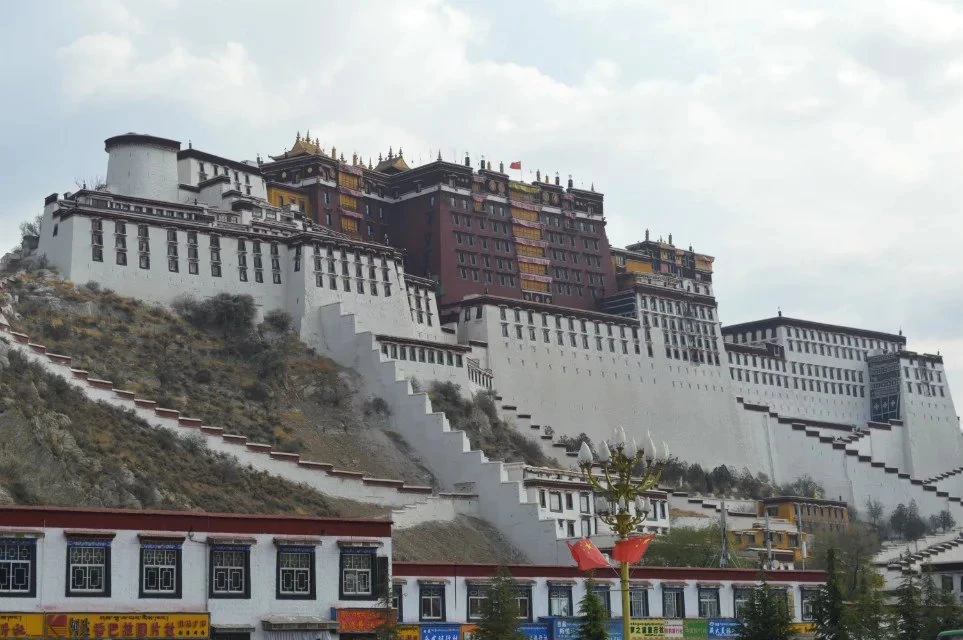
Either the Body or the Soul Is on the Road — My Travels (Part 5)
Living in the Potala Palace, I'm the greatest king of the snowland.
Roaming the streets of Lhasa, I'm the world's most charming lover.
Fearing that passion would ruin my spiritual path,
And retreating to the mountains would miss the enchanting beauty.
In this world, is there a way to have both,
Not betraying the Buddha and not betraying you?
— The Sixth Dalai Lama, Tsangyang Gyatso
------------------------------------------------------------------------------------------------------------------------------------------------------------------------
Everyone says traveling is just going from a place you're tired of to a place others are tired of. But the greatest meaning of travel isn't how many people you meet or how many sights you see, but rather that as you go, you rediscover yourself. You might have a decent job, but you might not have the time. You might have a lot of money, but you might not have a healthy body. While we're still young and in good health, why not travel?
Day 3, April 30. Because we're visiting the Potala Palace today, I'm too excited to sleep. The off-season for Potala Palace is from November 1 to April 30, with tickets at 100 RMB. Peak season is from May 1 to October 30, at 200 RMB. And you need to book in advance. Fortunately, we caught the last chance. I'd suggest joining a tour group for the visit; at least a local guide will explain things, otherwise you'll just skim the surface. Since I was in a loose group booked for the afternoon entry, I spent the morning having fun at the Potala Palace square. The air was incredibly fresh, and once the sun came out, it wasn't cold. The White Pagoda — once the gate of Lhasa — is said to be where the great Dalai Lamas entered Potala Palace. Going around the White Pagoda, you reach the Chakpori viewing point. It's free and also the background of the 50 RMB note. Briefly, the Chakpori viewing point is the site of the palaces of King Songtsen Gampo's two consorts (Princess Wencheng and Princess Bhrikuti). Back then, Potala Palace itself was just a meditation cave on the hill. Today you can't see the remains of their palaces, but it's the best viewing platform for Potala Palace. A standard photo from here is a must. Sorry for the ones I took earlier in the square — they really aren't as good. But the sun was blazing, the wind strong, and there were beggars; it was tough to show off. Having so much fun, I didn't notice it was already noon. I grabbed a quick bite and went to the south gate of Potala Palace to find the guide and get ready to enter. Actually, it didn't feel like many people visit Potala Palace each day — only about 300 in the afternoon. Rumor has it that Tibetans have separate entrances and tickets (2 yuan). A Tibetan kid was playing with pigeons at the gate. There are many beggars; someone will exchange small change for you — 1 jiao notes. I didn't know, so I gave 1 yuan bills, while others gave 1 jiao. No wonder so many chased after me. Annoying! Also, many Tibetan women sell jewelry here, 100 yuan a strand; it's basically a scam. If you ignore them, the price becomes 100 yuan for ten strands. These are bought wholesale in Barkhor Street and strung together. Not interesting at all — can't compare to the big Hehuachi wholesale market in Chengdu. It looked very steep; the guide said visiting Potala Palace takes about two hours. Better walk slowly to avoid altitude sickness.
First stop: the Wordless Stele, erected to celebrate the completion of the Red Palace, over 300 years old. Climbing, climbing up. Across is the Potala Palace square and the Monument to the Peaceful Liberation of Tibet — also the highest square in the world. The Chakpori viewing platform really tired this chubby guy out. I forgot to ask the guide what the white wall plaster is made of; it's as white as snow. After walking along the outer palace wall, the entrance inside is the only place in Potala Palace where you can photograph murals — these are the Four Heavenly Kings of Buddhism. From here on, you officially enter the Red Palace and White Palace. No photography inside; if you snap a picture, you'll have to surrender your device to the lamas.
Let me introduce this platform: it's the square where the lamas used to gather and where the Dalai Lama held or watched ceremonies. From the windows, the Dalai Lama and Panchen Lama would watch the monks. Going up brings you to the Red Palace, the main office area of the Dalai Lama, with his political hall (actually tiny), reception rooms, and his own meditation room. Potala Palace is also the Avalokiteshvara's sacred site in Tibetan Buddhism, with many statues — all made of pure gold. And there are the stupas of successive Dalai Lamas, except Tsangyang Gyatso's (which is in Qinghai). I lingered a long time in Tsangyang Gyatso's palace, really wanting to take a photo to keep. Think how many have read Tsangyang Gyatso's poems and then packed their bags for Lhasa. Whether you see me or not, I am there, neither sad nor joyful... Neither Tsangyang Gyatso's Potala Palace nor Potala Palace's Tsangyang Gyatso can be easily separated. Thinking of his pursuit of love with Makye Ame that moved so many, thinking of him — the king of the snowland — secretly meeting Makye Ame in a Barkhor Street bar, so real. Tragedy is always full of coincidences; love in every era defies worldly norms. Later the enthronement, later the Qing court's dethronement, and finally his journey to Qinghai, dying in a foreign land. Generations of Dalai Lamas left us a magnificent Potala Palace, but I only remember one Dalai Lama — Tsangyang Gyatso.
I found an image of Tsangyang Gyatso online... he looks a bit like a bodhisattva. Actually, the interior of Potala Palace is quite narrow; for a chubby guy like me, moving around was inconvenient. Walking and stopping, slowly admiring. After the visit, we exited from the back mountain. Truly exhausted. So, early to bed, because tomorrow we're off to see Nyenchen Tanglha Mountain and the sacred lake Namtso.


