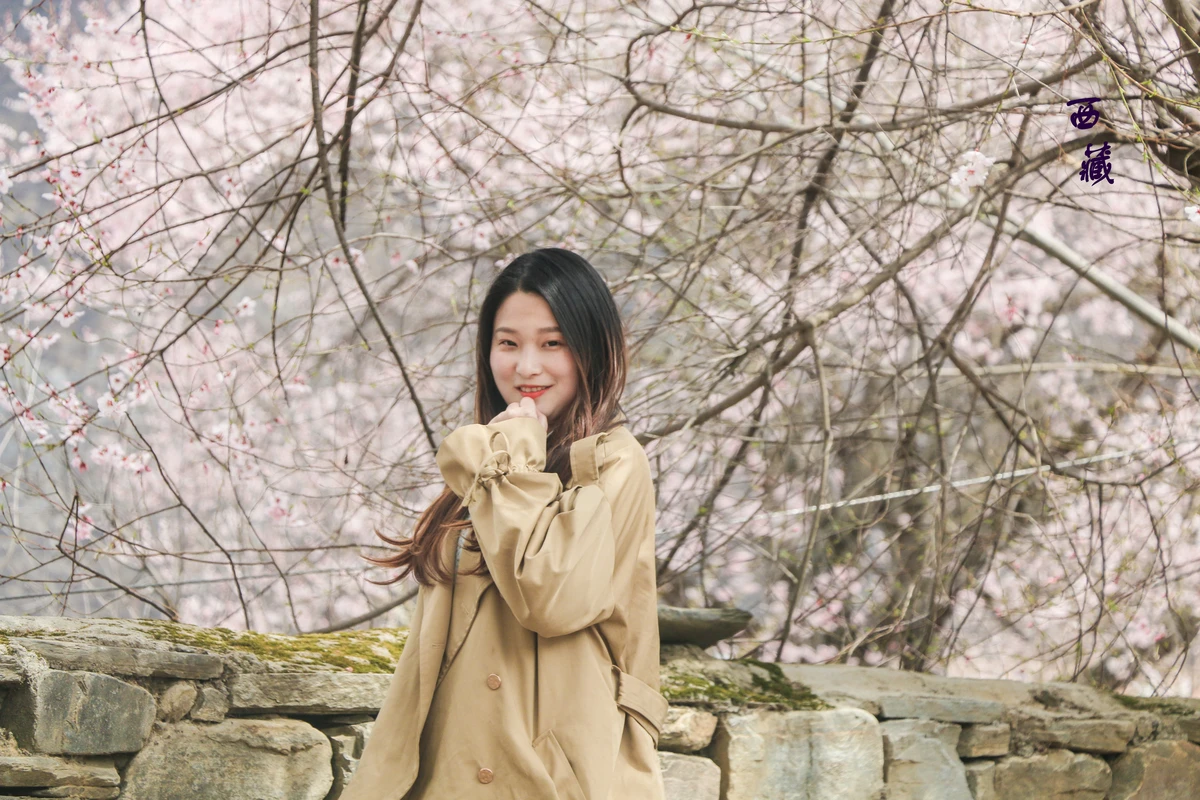
#HandinHandTravel# Unveiling the Map of Tibet – Encountering Spring on the Snowy Plateau
As the saying goes, 'Without visiting Tibet, one cannot truly speak of traveling.' Tibet has always been shrouded in mystery for me, a place I longed to visit, yet time and again the fear of altitude sickness made me hesitate. In the spring of 2021, we finally mustered the courage to set foot in Tibet, choosing the Nyingchi route where altitude sickness is less common. However, we still ended up suffering from it. The entire trip was exhausting and grueling. Was it worth it? I might not have the courage to visit Tibet again, but I will tell you with certainty: Tibet is a place you must visit once in your lifetime.
Getting to know Tibet through 24 images
Yamdrok Lake, one of the three sacred lakes of Tibet, with its deep, intense blue
The Tibetan antelope’s rump is in the shape of a heart
Ranwu Lake is at its most beautiful in March and April
Both the morning and evening light at Ranwu Lake are breathtakingly beautiful
The rarely seen Namcha Barwa peeked through the clouds
Peach blossoms at Gala Peach Blossom Village, the main venue for the Nyingchi Peach Blossom Festival, were the first to bloom
Though we missed the peak bloom in the Grand Canyon, the scenery along the Nyang River still delighted us
In Bomi, we finally enjoyed a feast of peach blossoms
Lulang Town: lakes, snow mountains, and meadows
A photo op with the same backdrop as the 50-yuan banknote
Our itinerary:
Day 1: Chongqing – Nyingchi – Gala Peach Blossom Village – Tunbai Village in the Grand Canyon (overnight in Tunbai Village)
Day 2: Tunbai Village – Sosong Village (overnight in Tunbai Village)
Day 3: Tunbai Village – Sejila Mountain – Lulang Town – Gangcun Village (overnight in Lulang Town)
Day 4: Lulang Town – highlight section of National Highway 318 – Ranwu Lake – Laigu Glacier (overnight at Ranwu Lake)
Day 5: Ranwu Lake – Bomi Peach Blossom Valley (Qingdo Town, Yuxu Township) – Bomi Gang Township (overnight in Bomi)
Day 6: Bomi – Lhasa (overnight in Lhasa)
Day 7: Day trip to Yamdrok Lake, then return journey
Accommodation along the Sichuan-Tibet Highway is limited and cannot compare with that in cities. I won’t list all our hotels, but I’ll mention three I’d recommend and one to avoid.
Mainling Grand Canyon Qiyuan Tribe: https://hotels.ctrip.com/hotels/detail?hotelid=15548320&cityid=21368
Since hotels in Sosong Village were very tight during peach blossom season, we booked a hotel in Tunbai Village, which is right next to Sosong Village, about a 10-minute drive away. Compared to Sosong Village, accommodation here was less in demand. We booked a balcony-view room facing Namcha Barwa, with an excellent location. The hotel is inside the Grand Canyon scenic area, so you need to purchase an entrance ticket for the canyon. Self-driving visitors don’t need to buy a sightseeing bus ticket.
The service was great, and the owner was very enthusiastic, recommending scenic spots and the best photo locations. The room was reasonably clean, and the bathroom amenities looked clean. In March and April, the temperature difference in Tibet is large, but the room had heating and an electric blanket.
Drawbacks: 1. No disposable slippers; the slippers provided didn’t look very clean, so it’s advisable to bring your own. 2. The hotel restaurant had average food; it’s better to eat in Sosong Village. We ordered Sichuan dishes, but they weren’t very tasty. 3. The shower water temperature was tricky—either too hot or too cold, and I almost caught a cold on the first night.
Rating: four stars. Overall, the facilities and service in the Grand Canyon area were decent.
During our trip, we found another place worth recommending: Gongzundemu Farmhouse in Mainling.
I won’t comment on the hygiene or facilities since we didn’t stay there, but you can check the reviews yourself. I recommend it mainly for its location—about 1 km from our hotel, on the way from Tunbai Village to Sosong Village, just before you start ascending, there’s a small road leading in. The farmhouse is right by the Yarlung Tsangpo River, with a lovely setting. On good weather days, you can capture reflections of Namcha Barwa here.
Nyingchi Lulang Zhujiang International Hotel: https://hotels.ctrip.com/hotels/detail?hotelid=16983307&cityid=108
Good environment and hygiene, which is rare along Highway 318. The snow-mountain-view rooms have nice views. Fruit is provided upon check-in, a late-night snack is offered in the evening, and the breakfast is fairly abundant. However, there weren’t enough service staff; at breakfast, the dining tables were cleared very slowly.
Rating: five stars.
Bomi Pingcuokangsang Resort Hotel: https://hotels.ctrip.com/hotels/detail?hotelid=8919020&cityid=21979
Pingcuokangsang has a good reputation throughout Tibet. This night in Bomi was the best sleep of our entire trip. The room was clean, the shampoo and shower gel were pleasant to use, and body lotion was provided. They also left fruit, yogurt, and snacks with a thoughtful welcome card.
Rating: five stars.
Finally, the hotel to avoid: Baxoi Mingjing Hotel.
This is where we stayed at Ranwu Lake. I was originally drawn to Ranwu Lake by a blog post about the Baxoi Ranwu International Self-Driving RV Campground, which convinced me to go to Tibet. Why did we end up choosing Baxoi Mingjing Hotel? Because it claimed to offer oxygen supply. After reading many positive reviews about the oxygen-supplied rooms, I opted for it. The hygiene was exactly as described in reviews—abysmal. Moreover, the hotel didn’t provide oxygen, claiming the equipment was broken. It was a truly miserable night. The room didn’t even have bottled water, and the cleanliness was unacceptable.
A long journey just for the spring on the snowy plateau.
Gala Peach Blossom Village: main venue of the Nyingchi Peach Blossom Festival
Admission: 30 yuan
We hadn’t originally planned to visit Gala Peach Blossom Village; as the festival’s main venue, it was bound to be crowded, and we didn’t want to deal with that. But since the weather was cold in Nyingchi this year and the blooming season was delayed, Gala Peach Blossom Village was the first place to burst into bloom. When we arrived, it was the best place for blossoms in the Nyingchi area, so we added it to our itinerary as our first stop. The festival was still a week away, so there weren’t too many tourists yet.
Wild peach trees paired with rapeseed flowers—simply beautiful.
Before the trip, my mom asked, “You can see peach blossoms anywhere; why go all the way to Tibet?” Because while peach blossoms can be found everywhere, only in Tibet can you see them with snow mountains as a backdrop. Sosong Village is undoubtedly the best place to view snow mountains and peach blossoms together.
The village is inside the Grand Canyon scenic area, so you need to buy an entrance ticket at the visitor center. If you stay overnight inside, you can drive in; otherwise, you must purchase a sightseeing bus ticket.
The Nyang River scenery along the road into the Grand Canyon
I highly recommend spending a night in Sosong Village or the nearby Tunbai Village. A one-day group tour feels very rushed—just a quick stop at the viewing platform for photos, without truly exploring those charming spots. We stayed two days, hoping for a better chance to see Namcha Barwa. And luckily, we did—though these two days were overcast and drizzly, Namcha Barwa peeked out from time to time.
In the fields of Sosong Village, peach blossoms blazed brightly and barley stretched endlessly.
Overlooking the Grand Canyon from the viewing platform, the peach blossoms hadn’t fully opened yet, just scattered here and there. In full bloom, it would be even more stunning.
Gurushe Monastery in Tunbai Village is where Guru Rinpoche retreated. The staircase isn’t long, but climbing it at high altitude was quite strenuous—a different perspective on Namcha Barwa.
From the highest point of Sosong Village, you can capture snow mountains, the canyon, and peach blossoms without a drone.
Continuing further from Sosong Village, Daling Village is also well worth a visit.
Any random path or single peach tree makes a great photo.
Third blossom stop: Bomi Peach Blossom Valley
From Runa Village all the way to Qingdo Town and Yuxu Township, the valley stretches for dozens of kilometers. The peach trees here are all centuries-old, scattered among forests and fields, with a road running through and snow mountains in the background.
After two rainy days in the Grand Canyon, we were greeted by brilliant sunshine in Bomi Peach Blossom Valley, lifting our spirits.
The ancient peach trees in Qingdo Town intermingle with vast barley fields, with villages dotted in between.
Every snapshot is a picture-perfect scene; you can never take enough photos.
Gang Township opposite the peach blossom valley was a serendipitous discovery—almost no tourists.
The day we left the valley, it started raining again. I took one last memory of the peach blossom valley from the viewing platform.
Traveling over mountains and rivers to see you, tired but joyful.
Ranwu Lake sits at around 4,200 meters above sea level. Although we had already spent a few days in Nyingchi and crossed Sejila Mountain, we still suffered from altitude sickness—splitting headaches. Perhaps because the temperature dropped sharply, I felt frustrated, wondering why I came. But when I saw Ranwu Lake, all that melted away. March truly is the most beautiful time here.
The weather was on our side today: the lake was calm and crystal clear.
Laigu Glacier is the largest and widest known glacier in Tibet. Since the ice had started melting in March, we could only view it from a distance and couldn’t walk onto it.
A glance that spans millennia: Yamdrok Lake.
This was the most exhausting day of driving. Apart from the winding mountain roads leading to Yamdrok Lake, the unpaved trail around the lake rattled our bones to the point of falling apart.
The blue of Yamdrok is not a translucent blue but a deeply saturated one.
The wind at Yamdrok Lake was so fierce it nearly blew us into the water.
Beyond the viewing platform, the real highlight is the lakeside road all the way to Riduo Monastery. Strolling along the shore at leisure reveals scenery you won’t see from any designated viewpoint.
Riduo Monastery was fenced off, so we didn’t have a chance to go inside.
Sheep grazing outside Riduo Monastery.
On the approach to Riduo Monastery, we encountered wild Tibetan antelopes, staring at us with a mix of curiosity and innocence as we drove past.
That heart-shaped rump swayed with a truly enchanting gait.
Tibet also offers idyllic rural scenes. In Lulang Town, we warmed up with a pot of stone-pot chicken.
Lulang Town is a tourist town built along Highway 318. The town itself doesn’t offer much to do, but the surrounding forests and villages are quite scenic.
Since it was newly built, the food and accommodation are better than elsewhere along Highway 318. It’s a good place to rest and recharge. If you’re short on time, you can skip it.
Finally, let’s end this journey with a photo series of the Potala Palace.
People often say Tibet is a place overflowing with faith. It was undeniably an exhausting trip, yet I don’t regret making it. Perhaps I won’t find the courage to return to Tibet—after all, the memory of altitude sickness still haunts me. Still, I must say: Tibet, it’s a place where the world is worth it.


