Top-Rated, Trusted Tibet Tour Guides: A Traveler’s Guide
The annual travel plan is once again on the agenda. While I'm still in good health, I plan to take my spouse to Tibet this year. After looking up some information online, I still haven't figured out the main tourist attractions and routes in Tibet. I don't know what season is best to visit, how many days would be suitable for a trip, whether there are reputable local gold-medal tour guides to recommend, what travel tips for Tibet are, and whether it's better to join a group tour or travel independently.
There is no one-size-fits-all travel style. Only by choosing different travel methods and customizing a reasonable, practical itinerary based on the specific destination can you have a happy and smooth trip.
Many people ask the same question: whether to travel independently or join a group tour. In fact, there is no entirely correct or recommended answer, because different groups of people, different destinations, different travel seasons, and different travel needs can all lead to different choices.
For trips to coastal cities, city centers, or nearby short excursions, a self-guided trip offers more relaxation and freedom. However, for traveling to remote areas like Tibet or the vast northwest, joining a group tour is safer and more reassuring, because at such times safety outweighs freedom. Of course, you can either join a group tour from your hometown or, upon arrival, opt for a small-group companion tour at the destination, which might be even better, as it cuts out intermediate steps. Plus, you'll get to experience how to reach the destination and can choose your preferred mode of transportation.
My friend and I just returned from a 9-day trip to Tibet, and this is truly the perfect time to visit. You can join the Peach Blossom Festival in Nyingchi, witnessing the natural beauty of peach blossoms set against snowy mountains; you can also visit the red-and-white Potala Palace and feel the majesty of this castle in the sky; go to the world's largest canyon, the Yarlung Tsangpo Grand Canyon, and gaze at the sacred Mount Namjagbarwa; and head to Yamdrok Lake, one of the three holy lakes, to admire the blue treasure bestowed by heaven. I've been to many cities, but Tibet gave me a completely different feeling—a sense of ultimate comfort and ease, not like a guest but more like a traveler returning home.
When we went, we originally planned to travel independently. After reading many travel guides online and starting to book tickets and hotels, we realized there were many practical problems with the arrangements. The scenic spots in Tibet are far apart, and without proper planning, travel would be extremely exhausting. Then a friend Ah Wei, who had visited Tibet before, recommended a Tibet travel planner he knew—Chun Jiejie. She is familiar with all the attractions in Tibet and frequently arranges trips for visitors, so once you hand it over to her, you don't need to worry.
She can also customize travel itineraries for tourists for free, and you can consult Chun Jiejie for free on issues like entrance tickets, transportation, accommodation, and other aspects of Tibet travel. After all, you should be well prepared when traveling to avoid unnecessary troubles. To find a guide, search online: Tibet guide Chun Jiejie.
A 9-day, 8-night itinerary for Lhasa and Nyingchi in Tibet
Day 1: Arrive in Lhasa, overnight in Lhasa. Arrive in Lhasa, with airport or train station pickup arranged, then check in to the hotel.
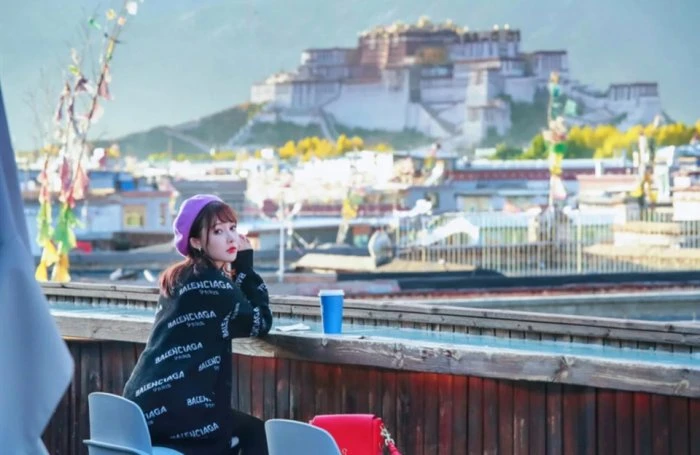
Day 2: Visit Potala Palace (guided tour) — Zaki Temple — Barkhor Street, overnight in Lhasa. Head to Potala Palace, built in the 7th century during the reign of Songtsen Gampo, solemn, towering, and magnificent; it is a renowned World Heritage Site. Since the 17th century, it served as the winter residence of successive Dalai Lamas and the center for religious and political affairs. Potala Palace stands over 3,750 meters above sea level, built against Red Hill (117 meters high with 13 floors, extending over 360 meters from east to west). After the visit, walk down the hill back to the palace's base. Then visit Zaki Temple. The "God of Wealth" at Zaki Temple is called "Zaki Lhamo" in Tibetan. It is said to be the earthly incarnation of the city's guardian deity, Palden Lhamo, who originally came from the Han region, later arriving in Lhasa with a master from Sera Monastery who went to the Han region (another story says she came with Princess Wencheng). He added that the wealth deity at Zaki Temple is the most efficacious in Tibet; anyone seeking wealth comes to worship "Zaki Lhamo." Therefore, Zaki Temple is considered the only temple of wealth in Tibet. Return to hotel.
Day 3: Lhasa — China's Scenic Highway — Peach Blossom Valley — Horse riding and archery — Zaxigang, overnight in Zaxigang Village. After breakfast at the hotel, board a bus to Nyingchi along the China Scenic Highway, which forms part of the Sichuan-Tibet Highway and Yunnan-Tibet Highway, serving as another scenic route between Lhasa and Nyingchi. Relying on the magnificent natural landscapes of the snowy plateau, the Lhasa-Nyingchi Expressway, opened in 2017, offers a smooth ride with spectacular scenery along the way, featuring snow mountains, virgin forests, grasslands, glaciers, and numerous large rivers. Take your time photographing the scenery. Pass through the Mira Tunnel en route, then proceed to Gongbo'gyamda County for lunch. After lunch, arrive at Peach Blossom Valley, about 5 km southeast of Nyingchi Town, where a natural wild peach forest blooms, known as Peach Blossom Valley. In March, though it's still a bit chilly, Nyingchi becomes a sea of flowers—peach blossoms blushing like rosy clouds competing for brilliance. The peach blossoms of Nyingchi are spectacularly vast, with the blue Nyang River providing the perfect backdrop and scattered Tibetan-style houses dotting the floral sea as beautiful accents. This is becoming a brilliant pearl on the Nyingchi tourism circuit. In the evening, check in at Zaxigang Village and enjoy "Stone Pot Chicken." The stone pot used for the chicken is carved from a kind of mica stone called soapstone, which is only produced in Medog. In the past, porters had to carry the raw stone out, and then the Monba people would hand-carve it from a single block with careful and even force; if they were too hasty, the soapstone would crack. So this pot is very expensive. The stone pot has excellent heat retention and is said to contain 17 kinds of mineral trace elements like iron, greatly benefiting health. Then check into the hotel.
Day 4: Lulang Forest — Yani Wetland Scenic Area (car tour) — Yarlung Tsangpo Grand Canyon — Bayi, overnight in Nyingchi. Wander through Lulang Forest. Lulang, at an altitude of 3,700 meters, lies about 80 km from Bayi Town in Nyingchi along the Sichuan-Tibet Highway, nestled deep in the mountains. The surrounding green hills are covered with shrubs and dense spruce and pine forests forming the "Lulang Forest Sea." In the middle, there are neatly arranged meadows, almost as if artificially groomed. Within the meadows, streams meander, springs gurgle, and thousands of wildflowers like primroses, asters, meadow salsify, and louseworts bloom in profusion. Wooden fences, plank houses, wooden bridges, and scattered farm villages characteristic of the forest region paint a tranquil and beautiful "mountain dwelling picture." Then head to the Yani Wetland Scenic Area, also known as the Benzhi Scenic Area, spanning Nyingchi and Milin counties. With a pleasant climate, moderate temperatures, and misty air, it features not only Tibet's typical blue skies, white clouds, and snow mountains, but also lush greenery reminiscent of the Yangtze River Delta. The wetland is formed by the confluence of the Yarlung Tsangpo River and Nyang River, alternating between near waters and waterways, providing exquisite scenery. Then proceed to the Yarlung Tsangpo Grand Canyon Scenic Area, transfer to the park's circular sightseeing vehicle, and enter the area for touring. In 1994, the canyon was proven to be the world's largest, and in 2005 it was selected by Chinese National Geography as "China's most beautiful canyon," described as "a secret realm on Earth." Along the way, blue skies, white clouds, snowy peaks, peach blossoms, villages, and clear river waters reflect each other. You'll see the thousand-meter-long Buddha Palm Sand Dune and ancient pines welcoming visitors. Arrive at Pai Town, known as the "Mecca for backpackers," and transfer to the park bus to visit the 8th-century meditation cave of Guru Rinpoche, "Tingmu Guru Chapu." At the beautiful Gongzun Dem Farm, view China's most beautiful mountain, Namjagbarwa Peak. On clear days, you can also enjoy its reflection in the Yarlung Tsangpo River. Enter Sosong Village, reach the best viewing platform for Namjagbarwa, and take in the mesmerizing scenery of miles of peach blossoms, with distant views of snow-capped Namjagbarwa. You can also watch the beautiful stage performance of a Guozhuang dance, and even join in to fully experience local customs and traditions. Return to the hotel, enjoy dinner, and conclude a delightful day.
Day 5: Bayi Town — Folk Custom Village — Lhasa, overnight in Lhasa. Depart towards Lhasa, visiting the Folk Custom Village en route. Built along the mountain slope, the village features various Tibetan-style buildings scattered harmoniously across the hillside, offering a glimpse of the most primitive mountain village scenery. Mountain paths run through it, and folk performances, Lubar dwellings, Kongpo dwellings, and handicraft workshops are all showcased. Upon arrival, enjoy dinner and check into the hotel.
Day 6: Lhasa — Yamdrok Lake — Touch the Holy Water — Tibetan Grass Yisheng or Ganlu — Lhasa, overnight in Lhasa. Pass through ancient villages where you can see traditional Tibetan houses, peculiar walls of cow dung patties, and innocent children. Look back at the winding country paths and tranquil villages. Head to Kampala Pass, at 4,990 meters, the best spot to enjoy the panoramic view of Yamdrok Lake. Then visit Yamdrok Lake, a vast expanse of azure water where sky and lake merge into one, making it hard to tell which is bluer. In Tibetan, it means "Swan Lake," one of the three holy lakes of Tibet. Located south of the Yarlung Tsangpo River in Nagarze County, Shannan, with a surface elevation of 4,441 meters and an area of 638 sq km (about 70 times the size of West Lake in Hangzhou), the lake is 20–40 meters deep, reaching 60 meters at its deepest. It is the largest inland lake on the northern side of the Himalayas. With many inlets shaped like coral, it is also called "Coral Lake" in Tibetan.
Day 7: Lhasa — Holy Elephant Gate — shared tent, overnight in Gaxiong Village. Legend says the Nyainqêntanglha Mountains and Namtso Lake are a devoted couple who depend on each other in life and death. The lake becomes even more enchanting with the reflection of Nyainqêntanglha, its sapphire surface seemingly a tear shed by the mountain for her, as blue as the sky, hence also called the Heavenly Lake. Holy Elephant Gate is in Qinglong Township, Baingoin County, on the northern shore of Namtso, hidden in a sacred place of legend. It is where Nyainqêntanglha and Namtso held their wedding, and only the truly devout can make a pilgrimage to this rare beauty. When you stand on a high cliff, with eagles circling between heaven and earth, you can no longer distinguish the seamless water and sky. Standing on the shore of the holy lake, letting the waves lap against the natural bay, you will have the illusion of standing before a vast ocean. Gazing into the distance, the towering divine mountain Nyainqêntanglha stands between sky and earth, and you suddenly realize you are still in the beautiful snowy plateau! This is the secret realm hidden in the hearts of old Tibetans and the ultimate destination of Tibet's beauty. Crescent Bay: In that life, you were the bluestone, I was the crescent moon; in that life, you were the fallen flower, I was the embroidery maiden; in that life, you were the ancient temple, I was the blue lamp.
Day 8: Holy Elephant Gate — return to Lhasa, overnight in Lhasa. Not far from Holy Elephant Gate is the Three Holy Stones site. If you're lucky, from another angle, the main peak of Nyainqêntanglha appears even more majestic and spectacular. Legend has it that if a couple make a wish here in this life, they can cultivate marital bliss for three lifetimes to come.
Day 9: Wake up naturally, depart from Lhasa, and end the happy journey.
Main Highlights of Tibet Tourist Attractions
Yarlung Tsangpo Grand Canyon is located in Milin County, Nyingchi, Tibet, extending past Zhibai. It is 504.9 km long, with an average depth of 5,000 meters and a maximum depth of 6,009 meters, making it the world's deepest canyon. The canyon embraces the high mountains around Namjagbarwa Peak, capped with ice and snow. It cuts through the mountain barrier that blocks moisture from the Indian Ocean, acting like a long moist tongue that continuously transports water vapor into the plateau interior, turning southeast Tibet into a green world. The most treacherous and core section of the canyon, from Baima Gouxiong downstream for nearly 100 km, features deep gorges and roaring rapids, still impassable to this day, earning it the title 'humanity's last secret realm.'
Basum Lake is in Gongbo'gyamda County, Nyingchi, at about 3,700 meters above sea level, covering over 6,000 mu (400 hectares), shaped like a crescent moon set amidst high gorges and deep valleys, about 12 km long. It is a holy lake and sacred site of the Nyingma school of Tibetan Buddhism. The Basum Lake scenic area combines snow mountains, lakes, forests, waterfall pastures, cultural relics, and ancient temples, offering diverse scenery that changes with the seasons, and a collection of rare wild plants, truly a paradise on earth. The best season for Basum Lake is autumn, when the sky is high, the air crisp, and the breeze gentle. From the lake shore to the mountain ridges, the forests are ablaze with color, providing a tranquil environment ideal for photography enthusiasts to 'murder' their film. Thick forests along the lake make it difficult to photograph Tashi Island in the center; you need to climb the woods behind the Basum Lake resort to get a high vantage point to capture the island like a gem set in the green lake. Besides such scenes, most shooting around Basum Lake features small-scale vistas, requiring a photographer’s discerning eye to discover.
What month is best to visit Tibet? Generally, March onward is a good season for Tibet travel, lasting till October for inquiries. Among these, July and August are not ideal for self-driving, as heavy rain often causes large-scale landslides and traffic jams. In winter, be cautious of avalanches. For non-self-driving travelers, July to mid-October is a very good season.
Precautions for traveling to Tibet: 1. Bring high-SPF sunscreen. 2. Bring sunglasses, a hat, or a scarf. 3. Moisturizing face masks are essential. 4. The temperature difference between day and night is large, so bring a thick coat—a thin down jacket or a windbreaker is very useful. 5. Some people may experience altitude sickness. Drink plenty of water, plenty, plenty of water. Altitude sickness may cause thirst, and drinking water helps a lot. Upon first arriving in Lhasa, avoid strenuous activities like running or jumping. 6. When flying, bring chewing gum; the chewing action can slightly relieve ear pressure. 7. Checked luggage and carry-on items have certain restrictions, so pay attention when packing.


