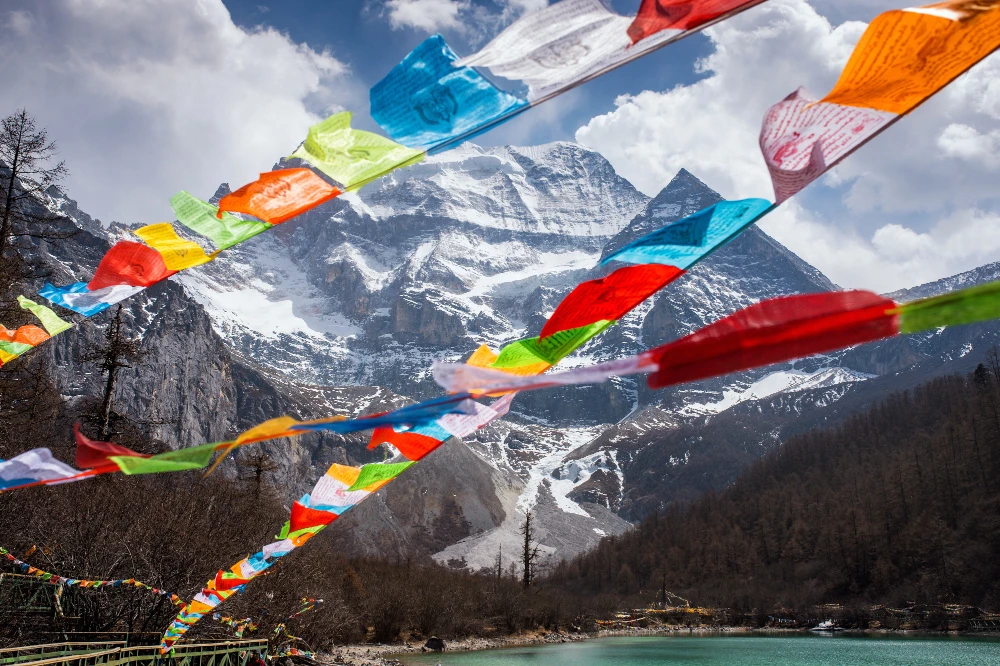
Lhasa, the City of Sunlight
Lhasa, the City of Sunlight. Here you can immerse yourself in Tibetan culture, and aside from sun protection, you don't need to worry about anything.
Lhasa stands majestically on the north bank of the Lhasa River on the Qinghai-Tibet Plateau. At an altitude of 3,650 meters, it is one of the highest inhabited places on Earth. In Tibetan, "Lhasa" means "land of the Buddha." Bathed in sunlight year-round with an average of eight hours of sunshine a day, Lhasa has earned the nickname "City of Sunlight" among many travel enthusiasts.
This mysterious and radiant city is also world-famous for its ancient Tibetan Buddhist culture.
When traveling to Lhasa, altitude sickness is the number one thing to watch out for. Always pay close attention to your physical condition, and if you feel unwell, contact your guide or a local medical institution immediately. They have plenty of experience and can quickly offer a treatment plan. Additionally, because Lhasa sits on the Qinghai-Tibet Plateau, the air is dry, the sun is intense, and UV rays are strong. So be sure to prepare plenty of sun protection.
The local tourist attractions are mainly cultural sites. Among the most famous are the Potala Palace, Jokhang Temple, Barkhor Street, Drepung Monastery, and Sera Monastery. These are must-visit places for first-time travelers to Lhasa. Since the city center is flat with little elevation change, most sites are at an altitude of around 3,650 meters. Traveling to Lhasa first not only allows you to enjoy the sights and experience the local customs, but also helps you better acclimate to the high altitude.
The Potala Palace is known as the "Pearl on the Roof of the World." Its architectural layout, civil engineering, metal smelting, paintings, and carvings are renowned worldwide, showcasing the superb skills of Tibetan, Han, Mongolian, and Manchu craftsmen, as well as the great achievements of Tibetan architectural art.
However, the Potala Palace was not built overnight. It went through over a thousand years of construction and expansion to reach the scale we see today. When visiting the Potala Palace, understanding its architectural history and evolution will give you an even deeper appreciation of its supreme status and the greatness of its architectural value. As the symbol of Tibet, the Potala Palace is a holy place in the hearts of all pilgrims! The word "Potala" is Sanskrit, also translated as "Putuo," originally referring to the abode of the Bodhisattva Avalokiteshvara.
Coming here, you can not only see a vast collection of historical relics inside the palace and admire the splendid architectural art of the Tibetan people, but also undergo a soul-cleansing experience in that sacred atmosphere.
Apart from the Potala Palace, Jokhang Temple is another must-see for visitors to Lhasa. Visiting the Potala Palace requires climbing a long flight of stairs, and the altitude will rise by over 100 meters, so some travelers may decide to skip it. But Jokhang Temple, located right in the city center next to Barkhor Street, is almost impossible to miss.
Jokhang Temple was first built in the twenty-first year of the Zhenguan era of the Tang Dynasty (647 AD) by Tibetan king Songtsen Gampo to commemorate the arrival of Princess Bhrikuti in Tibet. Expanded and renovated over successive dynasties, it has grown into a huge architectural complex with a history of over 1,350 years.
Jokhang Temple holds a supreme position in Tibetan Buddhism. In November 2000, as an extension of the Potala Palace, it was inscribed on the World Heritage List as a World Cultural Heritage site.
The temple borders Barkhor Street, and you can overlook Jokhang Square and the street views from inside the temple. As a famous pilgrim circuit and commercial center of Lhasa, Barkhor Street is called the "Sacred Road" by Tibetans. It is also the street where visitors can best feel the pulse of Lhasa after arriving, and a convenient place to buy travel souvenirs.
St. Regis Lhasa Resort
The St. Regis Lhasa Resort is located on Jiangsu Road, the main thoroughfare of Lhasa. It is about a 15-minute walk to the Jokhang Temple and Barkhor Street areas, where you can experience the traditional face and lifestyle of the ancient city; it is around 3 kilometers from the Potala Palace, with many dining options nearby.
The hotel has over a hundred guest rooms, ranging from 51 to 498 square meters. All rooms enable guests to enjoy sweeping views of the undulating Tibetan mountains while also delighting in the spacious living areas, custom furnishings, and elegant interiors of the hotel's rooms and suites. The signature St. Regis Butler Service provides tailor-made stays according to the needs of global travelers.
The hotel features the "Show" all-day dining restaurant, the Yan Ting Chinese restaurant, and a wine cellar, all dedicated to satisfying the palates of discerning gourmets.
The prestigious Iridium Spa is a luxury spa club in Tibet. Its stunning golden swimming pool, comfortable and convenient changing facilities, and six luxurious treatment rooms offer an unprecedented luxury spa experience.
The hotel has a unique spa brand—「Qi」Spa—that uses traditional methods to bring body and mind into perfect harmony. There is also a fully equipped fitness center with a gym and swimming pool, plus an on-site medical clinic for any consultations.
InterContinental Lhasa Paradise Hotel
The InterContinental Lhasa Paradise Hotel is located on Jiangsu Avenue in Chengguan District, near the Lhasa municipal government and the Lhasa River. It is 2 kilometers from Lhasa Wanda Plaza, 7 kilometers from the Potala Palace, and about a 15-minute drive from the city center.
Here, you are perfectly immersed in the sublime beauty of the snowy plateau, vividly interpreting the unique charm of the Tibetan region. The hotel's design is powerfully expressive, and its distinctive architectural style has made it a new landmark in Lhasa, with a total floor area of about 220,000 square meters that reflects its extraordinary taste.
The guest rooms are lavish, comfortable, spacious, and bright, fully equipped with all amenities, including high-quality king beds. You can enjoy the magnificent scenery of the Lhasa plateau river valley right from your room.
With first-class cuisine and a warm, sincere hospitality ethos, the hotel delivers an in-depth and discerning guest experience.
Shangri-La Hotel, Lhasa
The Shangri-La Hotel, Lhasa, is situated on Luobulinka Road, about an 8-minute walk from the world-renowned Potala Palace, and adjacent to the Norbulingka Summer Palace and the Tibet Museum.
Built in a traditional Tibetan style, the hotel features a variety of modern guest rooms, as well as the esteemed Horizon Club and a private lounge. The rooms are bright, understated, and fully equipped, all measuring over 43 square meters, allowing you to enjoy a sense of luxury in space.
The signature restaurant, Sichuan Spice, serves authentic Cantonese and Sichuan cuisine, while the all-day dining Yun Ding restaurant offers a selection of local and international dishes. Shambala and the Traveler Lounge introduce local Tibetan-flavored barbecue and specialty drinks.
The hotel has a unique spa brand—「Qi」Spa—that uses traditional methods to achieve perfect harmony of body and mind. There is also a well-equipped fitness center with a gym, swimming pool, and a 24-hour clinic. A 24-hour oxygen bar is also provided, allowing guests to breathe air with the same oxygen concentration as at lower elevations while enjoying foot reflexology.
The hotel offers free outdoor and indoor parking, with WiFi available in public areas and guest rooms.


