Creating My Own Story in Lhasa: A Five-Day Journey
For every traveler, Lhasa is a must-visit destination. I remember someone once said that everyone who travels to Lhasa has a story. But I didn't know what my story would be – or rather, I would create my own story about Lhasa.
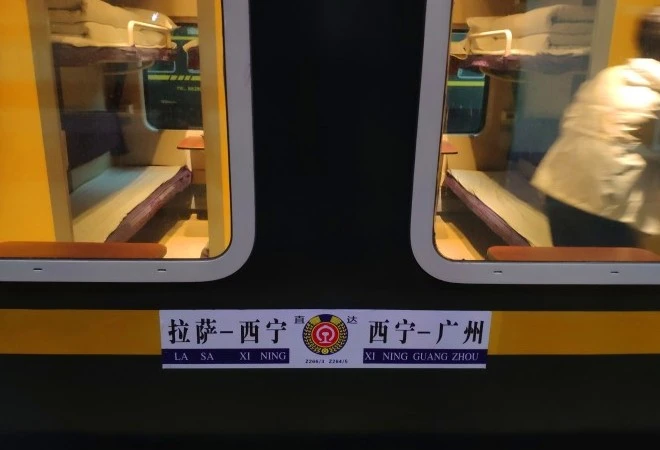
I flew from Chengdu to Xining. In the evening, I arrived at Xining Station and finally boarded the Qinghai–Tibet train I'd been dreaming about, headed to the Roof of the World!
DAY 1: Super 8 Select Hotel Lhasa Railway Station Square
DAY 1: Chengdu – Xining – Lhasa
DAY 2: Potala Palace
DAY 3: Jokhang Temple
DAY 4: Rituo Monastery
DAY 5: Super 8 Select Hotel Lhasa Railway Station Square
Lhasa is dotted with snack stalls, offering a dazzling array of cold noodles, lamb offal, and more. I ordered a bowl of cold noodles; the texture was silky and tender, the chili mingling with a tangy sauce – incredibly appetizing.
Nearby, an uncle was selling stir-fried lamb offal. A portion with lamb tripe cost 18 yuan and smelled amazing. I bought one to try. The lamb liver was a bit tough, but the tripe was especially tender. Overall, it was delicious!
At noon, I had yak meat hotpot, a Tibetan specialty. It was chewier than regular beef, and although the broth was a little spicy for me, it was still wonderfully savory.
I stayed at the Super 8 Select Hotel Lhasa Railway Station Square. I'd read great reviews about its environment and service, so I booked a room online in advance. The hotel is located in Lhasa's Liuwu New District, right opposite Lhasa Railway Station – only about 200 meters away. The front desk lady told me all rooms have windows, and from October to April you can even see snow-capped mountains. Though I arrived after the best snow-viewing season, the room was comfortable, fully equipped, and clean. All in all, it was a very pleasant stay.
On my first day in Lhasa, sheer exhaustion hit me. I headed straight to the Super 8 Select Hotel Lhasa Railway Station Square, stowed my luggage, and began planning my itinerary. In the evening, I went out to see the street scenes. Lhasa under the night sky was extraordinarily beautiful. Some elderly locals walked along, spinning prayer wheels in one hand and fingering prayer beads in the other, chanting as they went – such a place of deep faith!
The next day, I went to Potala Palace. Photography is not allowed inside, so I could only listen quietly to the guide's explanations as we walked through the entire palace. The main structures consist of the Red Palace and the White Palace. The Red Palace was originally built in the 7th century by Songtsen Gampo, king of the Tubo dynasty, to welcome Princess Wencheng and Princess Bhrikuti. From the 9th century onward, the Dalai Lamas and Panchen Lamas gradually added the White Palace, forming the complex we see today. Walking along the sky-high paths and gazing at the distant snowy mountains, I felt as if I were in a dream.
That evening, I happened to catch the fountain show, and Potala Palace looked especially magnificent bathed in lights – what a lucky moment.
I then visited Jokhang Temple, near Potala Palace. In Tibetan, it's called 'Jokhang,' the ultimate pilgrimage destination for Tibetan Buddhists and the second most popular attraction in Lhasa. It's 8.4 kilometers from my hotel, about a 20-minute drive.
When visiting, you can't wear shorts, short skirts, dresses, or revealing clothes. Hats, sunglasses, and masks are not allowed; you must wear a mask and bring your ID, as it's checked at the entrance. Also prepare some small change – 0.5 or 1 yuan notes, about 10 of them, to place one by one. When worshiping, simply put your palms together and bow. Before worshiping, be sure to observe the face and posture of the Buddha statue to show respect. If you're performing a kora (circumambulation), odd numbers are preferred – one, three, five, or seven circles, with seven considered the most auspicious.
By the way, casual photography is not allowed inside the temple. If you want to take pictures, you can purchase a photography permit from the temple management for 90 yuan. Also, when visiting Jokhang Temple, always walk clockwise, as is the Tibetan Buddhist tradition. It's a place full of faith, so please explore respectfully.
The beautiful photos of Jokhang Temple I found online don't do it justice – it's even more stunning in real life. I highly recommend adding it to your must-visit list!
I still decided to visit Rituo Monastery, which I'd been longing to see. I rented a car and set off from Lhasa; it took a little over two hours to get there (I didn't check exactly). The first sight of Rituo Monastery left me absolutely stunned – how could it be this beautiful! The waters of Yamdrok Lake beside the monastery looked like a fairyland, requiring no filters at all and far surpassing those hyped blue seas abroad.
A special tip: Previously, you only had to pay 20 yuan to the monks if you wanted to climb up to the monastery. Now, there's a toll fee right at the road junction, so be sure to bring cash.
By the fifth day, I was simply exhausted. The past few days of driving, hiking, and pilgrimages had drained all our energy, but in the most joyful way. I returned to the Super 8 Select Hotel Lhasa Railway Station Square to rest up, then packed my bags and headed home.
My Lhasa dream ends here for now. Until we meet again, fate permitting.


