If You've Been Through Heartbreak, Accept a Love Letter from Dali, Lijiang, and Lugu Lake
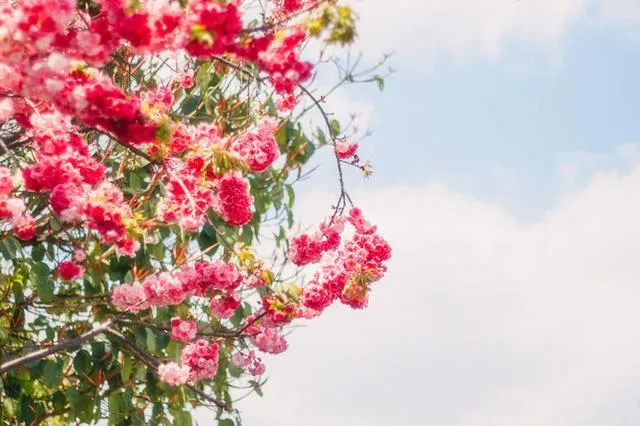
When I walked through Dali's bustling crowds and met you under the city's glorious sunlight, you stood under the cherry blossom tree, silent as always. You said, I know we will meet again, in the warm sunlight of the ancient town, beneath the cherry blossoms. I smiled. Actually, the most beautiful thing in life is anticipation. I look forward to the sunshine of Dali Ancient Town just as I look forward to you, and to this journey.
The secular world can be hateful sometimes; it turns everything simple and innocent into something utilitarian, stripping away nature and beauty. Over the years I’ve visited a few old towns, and most have been tainted by that worldly flavor. The Dali in my imagination is the romantic dream of many, a place of wind, flowers, snow, and moon, where one expects endless charm and allure. I am just a traveler, unversed in romance, not seeking amorous adventures. Yet Dali Ancient Town was not quite what I had imagined. Though the streets are lined with a dazzling array of shops and crowded with a steady stream of tourists, I didn’t sense any vulgar restlessness. You said you preferred those narrow lanes, where more locals live. You were right. In such alleyways, I saw children coming home from school, saw sunlight piercing through the old town to cast shifting patterns of light and shadow. Stories met on the road, the joys and sorrows flowing through passersby, the truths hidden beneath secular surfaces—I didn’t capture them with a camera, but I kept them in my heart.
At Dali’s Cangshan Gate, the sun was setting; that was our laziest, most leisurely moment. Sometimes traveling needs no map, no destination. That idle wandering, stumbling upon an unmentioned corner and discovering a unique beauty—that’s the most delightful surprise. Later we passed the Confucian Temple and then Yu'er Garden. These spots, hardly considered attractions, were simple and clean. That day, Yu'er Garden had very few visitors, which gifted us a special tranquility. The garden not only had cherry blossoms but also Dali’s famous camellias, along with many unnamed roadside wildflowers. In early spring, the whole garden was fragrant. I knew you loved the peace here, so we sat for a long time, bathed in the lingering light of the setting sun.
When the sun finally dropped behind Cangshan, a hazy dusk enveloped the old town. Lights flickered, gradually brightened, until all was aglow, like a colorful garment donned in the not-yet-deep night. Dali’s night is lively but not ostentatious; people linger, reluctant to let go of this moment of ease. Walking from the North Gate to Wuhua Tower, you must visit the bustling Foreigner Street, with its noisy bars and shops. I wasn’t interested. Bypassing those, I stumbled upon a quaint little bookstore. In such a cacophonous district, anyone who can still sit down and read surely has some refinement. Compared with the clamorous main streets, those obscure little alleys hide charming, intimate pubs and cafés. Through the window, in the dim yellow light, young men strummed wooden guitars and sang softly. Who knows how many restless, earnest dreams they hold?
That night, you went to bed early. I stood on the hostel rooftop, gazing into the distant darkness. Far off, lights still shone brightly, and I could see the famous Three Pagodas of Chongsheng Temple. I had imagined sitting there at ease on the spacious roof, watching the stars, but the surrounding brightness left only a few specks in the sky. No wonder—when the moon is bright, stars are few. Fortunately, I was accompanied by a brilliant clear moon and a gentle evening breeze. I thought of the song "Evening Breeze" by Haomeimei. They sing: Gentle evening breeze, softly blowing, into the lover's dreams; gentle evening breeze, softly blowing, across the hometown sky; gentle evening breeze, softly blowing, through the city's lights; tonight's evening breeze, where are you heading? Please tell me.
You said during those days we didn’t have a single photo together. So we randomly picked a corner by the roadside, set up a tripod, and took this picture. Actually, for me, you are not a vulgar, complicated admiration, nor a heart-stirring emotion. We are just fellow travelers on the journey, not mentioning the past, not asking about the future. I often envy you—envy your free and easy way of traveling, your courage to face distant places without fear; I also sympathize with you, with the fragility and solitude of traveling alone. You have a passion for tasting local foods everywhere; every place you go, you hunt down the specialties. So traveling with you, I feasted all the way—that was a great fortune.
Erhai holds all imaginations of beauty: Cangshan's snow, Erhai's moon. We saw Erhai's moon not late at night but at sunrise. That dawn at Caicun Pier, the sky was washed clean. Standing on the shore, we only heard the water gently lapping the bank, so peaceful it was intoxicating. Neither of us spoke, waiting in the slightly chilly breeze. Finally, the distant mountain peaks turned from pitch black to crimson, then burst into a blaze of light—magnificent and fleeting. When the first rays of sunlight sprinkled the lake and shone with rippling light, Erhai was like a newborn child, revealing its purity before all.
That day, what left the deepest impression on me was not the glory of the sunrise, but your silhouette. From the glimmering dawn light to the rising sun, you sat in the radiant glow, leaving me only a lonely figure. What were you pondering so deeply? I didn’t know, nor did I wish to know. Those past events have pained you for so long; why make things harder for yourself, adding more sorrow? Now that the sun has risen brilliantly, why not pack up again and set off once more?
Dali’s clouds are intoxicating. It is precisely because of these clouds that Erhai does not appear monotonous and lonely. Look, the clouds rimming the sky continually change shape, drifting with the wind, sometimes adorning the azure sky, sometimes veiling the blazing sun. Sunlight pierces through, casting enchanting crepuscular rays, illuminating the distant rolling mountains and lush fields, now hidden, now revealed. This must be the most beautiful moment of Cangshan and Erhai.
You said you had dreamed countless times of coming to Dali, with Cangshan at your back, facing Erhai, placing a round table, brewing a cup of light tea, and chatting about life with a couple of close friends. Life spans mere decades; seeing through thousands of superficial glories, they cannot compare to soft songs sung over shallow wine cups. I said, this must be a life many yearn for. Each of us has the right to choose our own path. Just like you and me, perhaps a bit weary of the hustle and bustle of big cities, yet if truly offered a life of poetry and distant lands, you hesitate. We will eventually return to our hometown, and then yearn for distant places again. You neither agreed nor disagreed. The long road of life, which is more important—hometown or faraway places? I don’t know. Xizhou, I met a poetic girl there. The road construction on the West Ring Road was perhaps a regret; from Dali Ancient Town to Xizhou, we mostly took the Dali-Lijiang highway. But the scenery along that road was equally charming. That day we rode an electric bike, stopping to take photos whenever we saw a view we liked. One quiet, late night, flipping through the photos, I thought again of our days in Xizhou. So, under the dim yellow lamplight, I wrote the poem at the beginning. In a place far from the city, endless fields, white-walled, grey-tiled houses—isn’t that exactly the faraway place and hometown we long for? I still remember how you ran freely that day, under the blue sky, beside the white clouds, in the fields. That day in Xizhou was our freest time. You said you loved that silhouette, but my favorite is the sorrowful look in your eyes as you gaze into the distance.
Softly reciting an inner scripture. Our original plan was to go to Shuanglang the next day. But during those days, Shuanglang had road construction. Worried the rough road might affect our travel mood, you changed the plan, and we had to waste the hostel we had booked, such a pity. In the Dali travel guides, I have never seen anyone recommend Jizhao Nunnery; I had never even heard of it. But that day I fell in love with this place, and I believe you did too. A loss on one side is a gain on the other; it is precisely these regrets and surprises on the road that make the journey so precious.
Jizhao Nunnery is built on the mountainside of Cangshan, but taxis can only stop at the foot, so we had to hike up for quite a while. You said you absolutely hate mountain climbing, yet on these two trips with me, you’ve been tricked into climbing mountains both times. I knew you were referring to last time in Maolan, when we hiked mountain trails in midsummer for hours—truly exhausting. But compared to that, this was nothing. Passing Gantong Temple and walking onward, taking photos as we went, after about half an hour we saw the entrance to Jizhao Nunnery. The four of us traveling together sat down for a group photo. Later that afternoon at mealtime, we ordered a braised chicken dish and added an egg, so you dubbed our little squad "Braised Chicken with Egg." I’ve grown used to it; I already knew from last time that you name every group after food…
The backyard arrangement was even more exquisite and tasteful. Bamboo baskets whispered with tiny flowers, a small pool beside a white wall with a fish pond—if I hadn’t known this was a nunnery, I’d have taken it for the private courtyard of some imaginative poet or writer. You know, many times I have thought: when I’m old, I’ll choose a place of leisurely beauty, build a modest little courtyard house, plant flowers and grass, and upon opening the door, behold green waters and blue mountains. In those days, brewing a pot of tea, reading a book, just growing old that way. Jizhao Nunnery was exactly what I had imagined.
Shuhe: no regrets about returning, only regrets it was so hurried. You said you don’t like Lijiang; there’s too much wine, women, and song, making one restless if staying too long. To reach Lugu Lake, we had to pass through Lijiang. You suggested staying in Shuhe, not far from Lijiang but with a different style. Actually, I had also thought of Shuhe. I hadn’t been to Lijiang, so I didn’t know what it was really like. But Shuhe suited us better. You said Shuhe is what you imagined an ancient town should be.
By nine in the evening, the town quieted down. On those little paths away from the center, shops closed early, leaving only faint glimmers of light. We navigated by these lights to find our way back, not worrying even if we got lost, walking in circles until we found our way out. The Sifang Tingyin Square, bustling with people in the daytime, was now so silent it felt a bit lonely. I like Shuhe with some liveliness, and I equally like Shuhe like this—lonely, or perhaps not loneliness but a pause and quiet reflection after the bustle.
That evening we had a great food feast in Shuhe, at a restaurant beside a small stream. The environment was especially nice, the place very popular. We ordered their signature copper pot rice, which was exceptionally fragrant and delicious—definitely a recommendation. The steam pot chicken had a wonderful soup, so fresh and tasty, truly superb. The yak meat was very aromatic, paired with onion, perfection. Also, a local specialty vegetable, "Water Nature's Yang Flower"—haha, the first time I heard that name I was shocked, but the taste was really quite good. The owner was very hospitable and even treated us to some ice jelly, really nice. The owner was also a tall, beautiful lady, a feast for the eyes, haha!
Setting off from Shuhe that day, the weather was not good. It was gloomily overcast when we departed, and soon it drizzled. We encountered an accident on the road and took a detour, so by the time we reached Lige, it was already afternoon. That day, Lugu Lake was like early spring of the four seasons—though everything still seemed withered, it was gradually reviving. In the occasional patches where the wind blew clouds apart, I saw the azure sky; that was our hope for the next day.
At the Lige pier, we met many seabirds. These spirits of Lugu Lake would sometimes float quietly on the water, sometimes call out and fly up in flocks. They also had a bit of greed, following the departing small boats far out, chasing the food people threw them. You said not seeing seagulls in Dali was a regret, never expecting to see them at Lugu Lake. But we had only that one encounter; after that, in the sunny days that followed, they vanished without a trace. I can only think of them as gifts of Lugu Lake on cloudy days, bringing a touch of color to the grey sky.
But Lugu Lake’s weather is as fickle as worldly affairs. That morning’s gloom was swept away entirely; clouds were blown apart into wisps floating among the mountains. Lugu Lake’s sky shone a brilliant azure.
Arriving at Nisai Village, we finally reached the lake. Nisai Village has few households; compared to Lige and Daluoshui, it felt much quieter, but the scenery was no less impressive. That day the sun was very strong, yet you said, the sunshine is just right. It’s said there are two Lovers' Trees in Nisai Village, but we didn’t find them. Strangely, Dali and Lugu Lake seem to have lovers' trees, yet we never got to see them. Perhaps those legendary Lovers' Trees were never meant for us.
Leaving Nisai Village and then Xiaoluoshui, a few simple clouds drifted over. And these simple clouds, reflected in the lake water, added color to the monotonous blue. But none of these colors could match your radiance. Beside the lake, you seemed to brighten the scenery, making it even more luminous and alive.
Along the way we saw boats drifting by. This stretch of road was not particularly bustling, but the weather was stunningly beautiful, and the boats and clouds became the finest ornaments to the lake and sky. So we walked very slowly, so slowly that it felt like we wanted to leave a photo at every step as a memento. I remember you also took a photo with a road sign; you said you loved posing with road signs. Such girlish whims—I found them amusing, a little funny.
Then you suddenly asked me: Will the person you’re waiting for appear on the other side of the mountain? I gazed into the distance and said, He will surely come, one morning with a sky full of rosy clouds, in the moment when dreams awaken, in the sunlight that shines through the cracks into life. He will come after all, accompanying your faraway places, following his wandering. You know, on this trip, I also emulated those artsy youth and tucked a copy of Liang Shiqiu's "Yashe Essays" into my luggage. But sadly, I didn’t get to read much of it and brought it back just as it was. Perhaps the scenery along the way was too beautiful, and I was too preoccupied to take up the book. Or maybe the friends on the road, our lively chats, were even more alluring than those beautiful sights.
Well, let’s just write this much.
Travelogue Index
1. Dali Ancient Town
2. Erhai
3. Jizhao Nunnery
4. Shuhe Ancient Town
5. Lugu Lake
Travel Information
Hotel Index
Guide Index
Flight Index
Website Navigation
Travel Index
Cruise Index
Business Travel Index
Affiliate Cooperation
Distribution Alliance
Friendship Links
Corporate Gift Card Purchase
Insurance Agency
Agency Cooperation
Hotel Franchise
Destination and Scenic Area Cooperation
More Affiliate Cooperation
About Ctrip
About Ctrip
Ctrip Hot Topics
Contact Us
Recruitment
User Agreement
Privacy Policy
Business License
Security Center
Ctrip Content Center
Intellectual Property
Trip.com Group Algorithm Announcement


