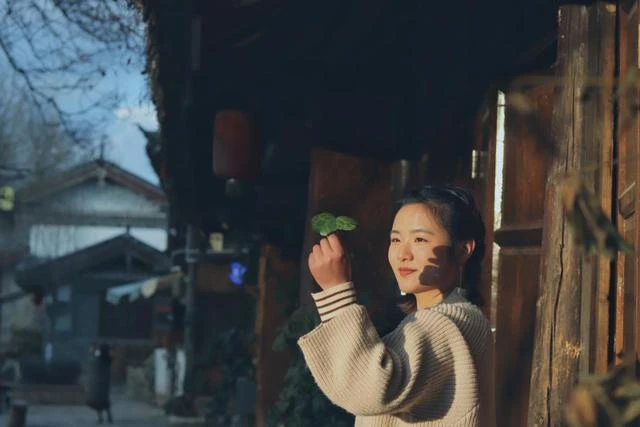
Lijiang Travel Guide: Lijiang is an Unforgettable City
Summer's stifling heat melted away the moment I set foot in Lijiang.
The damp air and crisp chill unmistakably told me—
I'd finally touched the real,
the unforgettable faraway place in Zhao Lei's song.
Countless stars at night,
the rainy season washing the stone streets clean;
and the ever-burning fire pits,
the moon still bright, the colorful clouds still there.
That city that holds so much of Zhao Lei's sentiment
—is called Lijiang.
Transport: Changsha—Lijiang (direct flight)
Accommodation: Shuhe Ancient Town
Food: Native chicken rice noodles; matsutake chicken hotpot; shredded mushroom fried rice; snow-melt cold-water fish; cured pork rib hotpot
Itinerary: Dayan Old Town; Mu's Residence; Jade Dragon Snow Mountain; Baisha Ancient Town; Shuhe Ancient Town; Lijiang Eternal Love Show
Lijiang is at high altitude with strong UV rays—remember sun protection. Ladies, bring a hat, sunglasses, and sunscreen.
Summer temperatures in Lijiang are around 15–26°C. It's the rainy season, and after rain the temperature can drop to 15°C, so pack a thick coat in addition to spring/summer clothes.
-Dayan Old Town-
“Back then we sang day and night, back then we got drunk on the stone bridge.”
The time to start exploring Dayan Old Town should be at night.
The neon-lit bar street reflects off the century-old, foot-polished flagstone roads.
By the unquenchable fire pit, a bottle of wine can unveil all the emotions that matter in life.
We arrived at the old town in the early evening, bustling and lively.
Tourists crowded shoulder to shoulder in the middle of the streets.
Suddenly, a downpour came,
everyone huddled into the shops along the street for shelter.
By dinner time, the rain was pattering outside.
We found a highly rated, steaming wild mushroom hotpot restaurant,
and instantly the rain became none of our concern.
Address: Inside Sifang Temple Fair, 72 Changshui Road, Gucheng District, Lijiang
Restaurant name: Stone Pot Yu Shan Zhen Guan · Yunnan Wild Mushroom Theme Restaurant
At mealtime, the main hall had few empty tables left.
The lively hum of voices, the clink of glasses, the bubbling of stock in the pot
made the cozy little restaurant especially warm and vibrant in the deepening night.
Thanks to the internet,
we could roughly know the restaurant's signature dishes from a major review site.
August in Yunnan is the season for wild mushrooms.
First came the shredded mushroom fried rice. The rich, savory mushrooms with perfectly separated grains of rice
filled our empty stomachs and weakened resolve.
We nibbled protein-rich fried insects,
sipped the restaurant's homemade plum wine and rose wine,
and finally had a taste of the intensely fragrant matsutake chicken broth,
dipping our food in the secret Yunnan-style dipping sauce. I was close to being well fed and content.
Our appetite warmly satisfied,
next came the evening I'd been most looking forward to.
When we first learned to imagine a beautiful life,
some scenes from books became concrete embodiments of our inner utopia.
A bottle of wine, sitting through the night,
in the small room, a singer faces the fire pit.
Strangers sit side by side.
Walking past the entrance of “Da Bing's Little Hut,”
peering through the dim glass window,
inside sit the confused youth of this era
with their young hearts,
brimming with passion and ideals.
“Legend has it there's a pure land, dwelling beyond the sun.”
On CCTV's screen in 2012,
there was a drama about the rise and fall, strife and struggles of ethnic minority families in northwestern Yunnan
—“Mu's Residence Storm” (Mufu Fengyun).
When I first arrived in Lijiang, I saw the slogan “The Forbidden City in the north, Mu's Residence in the south.”
Visiting in person, it’s not really comparable in scale and grandeur to the Forbidden City in Beijing.
But on the gateway to Tibet in northwestern Yunnan, at the heart of the Lijiang basin,
it was truly remarkable to have an ethnic group so closely connected with the central plains.
During the Ming Dynasty, the Mu family, rulers of Lijiang, modeled their mansion after the Forbidden City in Nanjing,
building their own residence, becoming the local chieftain recognized by the Ming emperor.
From then on, Lijiang's commercial development gained more momentum.
Lijiang's cultural depth comes not only from mysterious tribal history,
but also from the ancient awareness of compatibility,
surviving well amidst the Han, Bai, and Tibetan cultures.
The wisdom and breadth of an ethnic group are embodied in this Ming-style architectural complex.
Walking the streets of the old town,
young people wear Hanfu or robes with a Zen-like feel.
Disheveled street musicians—
amid the torrent of reality,
Lijiang has become a city that retains the most romantic sentiments.
It can embrace your nonconformity, your aloofness,
and your imagined “utopia” for life.
-Jade Dragon Snow Mountain-
Come listen to the story of the love-death site—the Jade Dragon Third Kingdom.
In mainstream Chinese history, Lijiang is rarely seen.
Throughout dynasties, Lijiang was always a frontier land.
Not until the Qing Dynasty did the strengthening and unprecedented centralization of power
lead the ruling center to send officials to Lijiang,
implementing the same management system as the Central Plains.
The chieftain system was replaced by the appointed-official system, known as “gaitu guiliu” (replacing chiefs with officials).
Why bring up these bits of historical dust?
Because in this systemic transition,
the young men and women of Lijiang's Naxi ethnic group could no longer freely love.
The Han-influenced “parents' order, matchmaker's word” began to shake the original way of union.
So the brave and resolute Naxi youth,
to resist such forced marriages,
hand in hand, walked to the Spruce Meadow on Jade Dragon Snow Mountain.
In the Naxi's ancient epic,
hidden within the Spruce Meadow is the Jade Dragon Third Kingdom,
a place with endless fine wine and food,
pleasant climate, and countless treasures and exotic beasts.
So they chose to die for love at the Spruce Meadow,
using it as an entrance into that spiritual realm.
Thus, Jade Dragon Snow Mountain is not only the Naxi's sacred mountain,
but also a poignant love mountain in the hearts of Naxi men and women.
Now walking on the plank path in the Spruce Meadow,
towering spruce trees flank the path,
and on the meadow, cattle and sheep roam leisurely.
The snow mountain, so close, envelopes all this in its embrace.
As mist and clouds thread through the gentle breeze, flowers and grass sway slightly,
as if we can still hear that ancient, sorrowful, beautiful song.
-Baisha Ancient Town-
Precious footprints left by nomadic origins.
Before the Naxi moved into the Lijiang basin,
theories about their origin were many,
but most texts point to a common direction
—a branch of the Qiang ethnic group.
The earliest Naxi regarded Lijiang as a fertile pasture,
and that's why they chose to settle here.
Later, on the land of Baisha,
the Naxi built their community.
Gradually, there were houses, temples, commercial civilization, and agricultural civilization.
Today, Baisha Ancient Town
is still the oldest and most tranquil among the three ancient towns,
with the highest proportion of local residents,
and the least commercialized.
Under the archway of Baisha Ancient Town,
Naxi grandmothers still sit,
selling homegrown vegetables and the unchanging passage of time.
Don't forget this tiny old town.
Compared to the now-popular Shaxi Ancient Town in Dali,
Baisha is more like a pearl lost in time,
covering its own light with dust,
fearing that any noise might disturb its leisurely life.
-Shuhe Ancient Town-
“The foreigner standing on Qinglong Bridge said, this is simply the bridge of marriage.”
Shuhe's beauty lies in its water.
Trickling streams weave through stones at the bottom of the creek.
Water plants in Jiuding Dragon Pond sway gracefully.
Under the shade of trees on Qinglong Bridge, couples line up for wedding photos.
After taking his photo with a backpack, the foreigner
couldn't help but exclaim: “This is the bridge of marriage.”
Sunshine is never a luxury in Lijiang.
When golden light spills into the emerald channels,
the water plants in Shuhe resemble the scene in Xu Zhimo's poem:
“Green fronds on soft mud,
swaying leisurely beneath the water.”
In the gentle waves of Shuhe,
I too am willing to be a waterweed,
watching daily under the elm's shade a pool
that's impossible to tell if it's a clear spring or a rainbow from the sky.
-Lijiang Eternal Love Show-
The men of the horse caravan, the women at the foot of the snow mountain.
Inside the red bridal tent, the lover whispers farewell.
The men of the horse caravan embark on their journey;
the Naxi woman under the snow mountain can only wait.
One show brings Lijiang's culture to life, piece by piece.
You can see the great roc bird from ancient Naxi myths,
see how Mosuo lads climb up to the window of a flower tower,
see how the horse caravan men battle mountain bandits,
see the prosperity on the Southern Silk Road,
see the Naxi girls waiting at the foot of Jade Dragon Mountain for reunion,
and even see the lovers who, oppressed by convention, ultimately choose to go to the Jade Dragon Third Kingdom.
“Give me one day, and I’ll give you a thousand years.”
This slogan is no exaggeration. In just one hour,
we gathered the most essential cultural heritage of Lijiang.
Lijiang's depth, through historical shifts
and centuries of Naxi tolerance,
has slowly accumulated, been built up, and found its tone.
The depth of our journey determines the breadth of the Lijiang we see.
This city, like a paradise lost,
stands at the junction of the Yunnan-Guizhou Plateau and the Qinghai-Tibet Plateau.
Whether it's the epic songs of ancient peoples
or the modern folk ballads left by contemporary literary youth,
all are singing about an ideal “utopia.”
As long as you walk slowly and feel,
the Lijiang in Zhao Lei's song
remains the faraway place I can't forget.


