How to Make the Most of Lijiang, Yunnan? This 2-Day Relaxing Itinerary Is a Must-Save
Day 1: Tinghua Valley — Tinghua Hall — Shuhe Ancient Town. Day 2: Baisha Murals — Baisha Ancient Town.
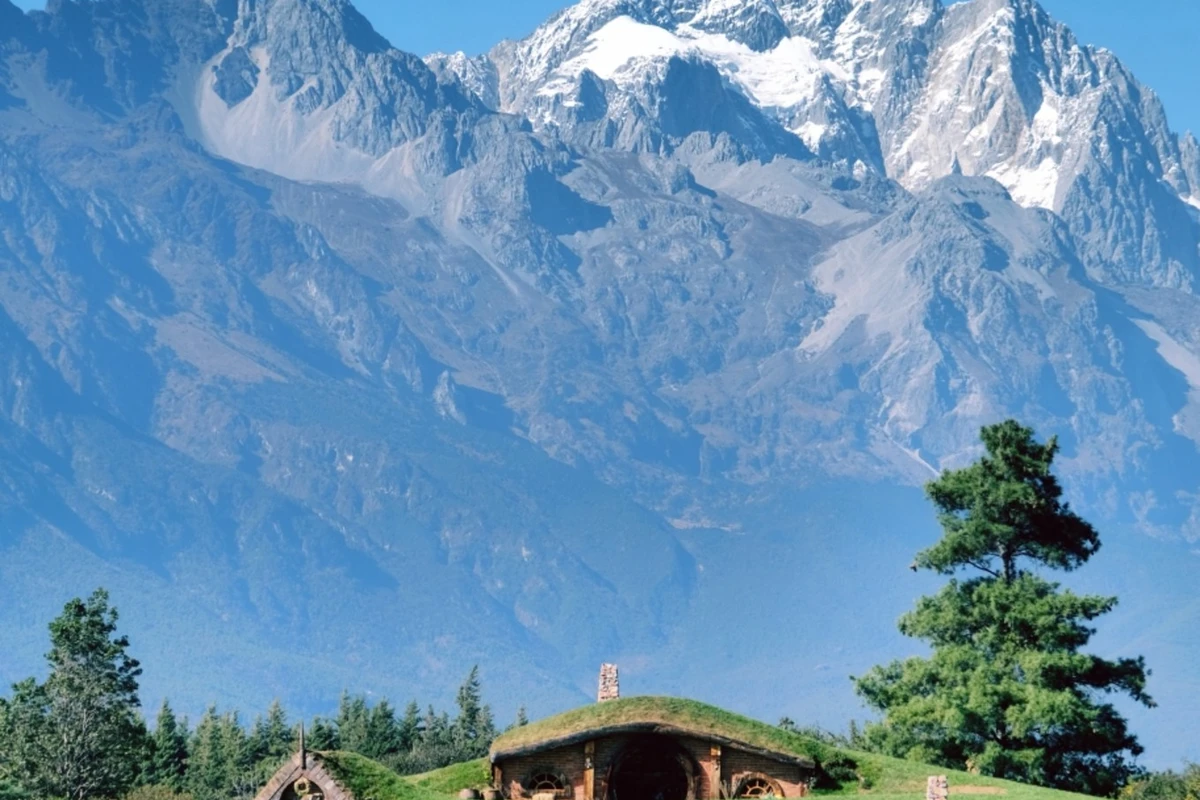
Tinghua Valley: blue sky, white clouds, meadows, a sea of flowers, and Jade Dragon Snow Mountain.
Coming to Lijiang doesn’t mean you have to visit Lijiang Ancient Town. Tinghua Valley needs no embellishment—it’s simply beautiful! And what if you add a church, Hobbit houses, and a treetop walkway? It’s no different from heaven, stunningly breathtaking~
I love it here, not for any other reason, but because it has everything I want. A castle, a church, Hobbit houses. It fulfills all my fantasies.
Give me a cup of tea, and I could stay here quietly all day, not thinking about anything, just gazing at the distant snow mountain, daydreaming, letting my mind go blank.
On the meadow in front of the snow mountain, there are a few vintage cars parked, perfectly matched with the surroundings. They aren’t models; the doors can be opened, and there are even keys inside.
Step into a Hobbit house. Duck through the low door, and it’s just like in The Lord of the Rings. Lush green hills and clear waters embrace this place—I truly adore it.
This is the last pure land hidden within bustling Lijiang. Tinghua Valley sits at the most beautiful spot in all of China, the most scenic part of Lijiang—at the sexiest position of Jade Dragon Snow Mountain.
A romantic lavender garden, with lavender meaning “waiting for love.” Its noble, mysterious colour, its enchanting romantic fragrance—lifting your face to soak in the gentle sunshine here.
Lijiang softens the years of wandering, startles time with the first light. When you mention Lijiang, most think of Lijiang Ancient Town, Blue Moon Valley, Yunshanping, or maybe Jade Dragon Snow Mountain and Lashihai. But Tinghua Valley is the most beautiful off-the-beaten-path~
The graceful boardwalk leads to the other shore of happiness; here, every snap yields a masterpiece.
Is this the legendary fairy-tale world? Breathing the fresh air, looking at Jade Dragon Snow Mountain, all worries are cast aside.
Across mountains and lakes, beneath the 5,596-metre Jade Dragon Snow Mountain, at an elevation of 2,600 metres on the Yunnan-Guizhou Plateau, Tinghua Valley nestles in this land.
A fresh sunflower field—sunflower meanings vary by count: one says you are my only one, two mean a sweet world of just us two, five signify no regrets, thirteen mean secret crush. It feels like a sweet autumn from a Miyazaki comic, a simple, beautiful world.
Moreover, this is also the birthplace of Naxi culture. Nine hundred years of morning drums and evening bells echo the legends of Dongba. Baisha murals, Dongba ancient courtyards, Naxi ancient music, the snow-mountain miraculous doctor—every story here piques curiosity.
Shuhe Ancient Town Tinghua Hall: Enjoying Tranquil Moments
After returning from Tinghua Valley, I checked into Tinghua Hall. Flowers bloom all over the courtyard, climbing the walls, covering every inch of the house.
This is Shuhe Tinghua Hall, a secret garden hidden in Shuhe Ancient Town.
A riot of colour, European-style fountains, one dizzying moment of beauty, as if transported to a European garden town. Ride a wooden horse in the dreamy courtyard, count the passing years in an atmosphere-filled room.
Dandelion, blue rose, lantana... these flowers not only adorn the courtyard but also serve as delightful names for the guest rooms.
Push open the window, and sunlight immediately spills in, highlighting the beautiful grain of the white oak furniture.
“In the sunniest spot, build a little courtyard, plant flowers and grass, and leave the world behind.” In this kaleidoscopic yard, spend long, leisurely moments idly listening to falling blossoms.
Life is full of surprises, just like this wall of green, inspiring a zest for life. The adorable big teddy bear sits in the middle of the courtyard, perfectly at home in this green fairy-tale kingdom.
Designed in European country style with a floral theme, the property is divided into front and back yards, threaded through with three garden views: Jasmine Town central garden, a garden restaurant, and a rooftop garden.
Every corner is filled with pots and clusters of flowers, clustered around as if telling you stories from a past you never knew.
Step onto the terrace for a distant view of Jade Dragon Snow Mountain, while the beauty of Shuhe Ancient Town unfolds beneath you. The garden breakfast room is surrounded by all kinds of flowers. Gaze over the roof tiles piled one after another, and in an instant, you see the Shuhe of a thousand years ago.
The rooms feature understated country style, with wood tones filling every corner; white walls and white doors create an impression of maximum immaculate purity.
Fully imported white oak solid wood furniture, custom-made latex mattresses, 90% down duvet cores and pillow cores. Everything is high-end yet low-key.
Walk into the living room, and there’s even a stool for changing shoes. A subtle fragrance fills the entire room. By the bedside, late-night snacks are prepared for me: flower cakes and milk, so thoughtful it’s beyond charming.
Shuhe Ancient Town: Experience the Town’s Most Primitive Beauty
Shuhe Ancient Town, where Tinghua Hall is located, evolved from a rural market and still retains a countryside feel, like ditches, trees, and vines—things photography enthusiasts love to capture.
Lijiang Ancient Town is too commercialized, almost everything overlaid with artificial traces. By comparison, I much prefer the authenticity of Shuhe Ancient Town.
Lazy cats, a lazy afternoon. The quaintness and original sediment here better match my understanding and imagination of an old town. I always find little moments here that touch my heart.
Sitting on long wooden benches or small wooden chairs that still carry the scent of earth, just quietly contemplating time, is another way of life.
Shuhe Ancient Town isn’t large; it’s mostly shops and inns. Most numerous are shops selling specialty goods, like Miao-style handcrafted silver jewellery and Burmese jade, all with old-style wooden shop fronts.
A small stream runs through the entire Shuhe Ancient Town, reflecting the beauty of the whole place.
If you want to see the snow mountain, just find a guesthouse here, and you can still see Jade Dragon Snow Mountain.
When Xu Xiake visited Zhishan Jietuo Forest, he passed this way. In his Travel Notes of Xu Xiake, he wrote: “Crossing a stone bridge over a dry ravine, looking west to the middle sea, willows dark and waves swirling, a large settlement fronts it, called Shihe Courtyard.” Shihe is the ancient name for today’s Shuhe Ancient Town. The stone bridge mentioned is one of the town’s must-see spots—Qinglong Bridge.
Qinglong Bridge stands beside Sifang Street in the core area of the ancient town, opposite Sifang Bridge behind it, with Jubao Mountain to the west.
When tired of strolling, randomly pick a café, listen to live folk music, and order a mango smoothie. The afternoon feels especially pleasant.
Casually stop for a bowl of rice noodles, and it turns out surprisingly delicious! It seems Shuhe Ancient Town is full of great food.
Baisha Murals: Narrating a Thousand Years of History
On the second day, head to Baisha Ancient Town to see the Baisha Murals. “Baisha Murals” are the most famous attraction in Baisha Ancient Town. From the early Ming to the late Qing dynasty, Lijiang mural art flourished. Lijiang murals inherited Tang and Song mural traditions and are treasures of world mural art.
The “Baisha Murals” compound follows the traditional Chinese central-axis symmetrical layout. Inside are many centuries-old trees. Usually, there aren’t many visitors, making the whole courtyard serene and quaint.
“Dabaoji Palace” was built in the 15th year of Yongle in the Ming dynasty. It consists of a mountain gate, front courtyard, scripture tower, cloister, and Liuli Hall. It houses precious materials for studying China’s ethnic minority cultural history, art history, and religious history.
Baisha murals are one of the expressions of Lijiang’s Dongba culture, and the paintings faithfully reflect the diversified life in the Lijiang region. Here you can also learn about the history and origins of Naxi culture.
During the flourishing period of Lijiang murals, there were over 200 murals. Today, 55 remain in the museum, heavily oxidized, with only about 16 still relatively intact. Viewing these ancient murals brings a sense of calm.
Baisha murals absorbed the meticulous brushwork of Han Chinese painting, blended the brilliant colours of Tibetan Buddhist painting, and added the boldness and romance of Naxi character—each mural is extremely colourful and splendid.
Baisha Ancient Town: A Hidden Corner beneath Jade Dragon Snow Mountain
Baisha doesn’t have an excess of commercial hustle; it still retains the most genuine local lifestyle.
Baisha Ancient Town is small, without dazzling rows of shops or endless streams of people. This is where the Naxi people live; over eighty to ninety percent of residents are indigenous Naxi.
Because Baisha Ancient Town lies at the foot of the snow mountain, you can see the distant snow mountain from almost every corner of the town, creating a beautiful contrast with the ancient charm, like a watercolour painting. Seeing the few tourists on the streets gives you a sense of being in a reclusive haven.
In Baisha Ancient Town, you’ll see dogs strolling lazily, old men sipping tea and playing chess in the sunshine, and children playing merrily. Time seems frozen; the feeling is wonderful.
This was once the political, economic, commercial, and cultural centre of Naxi Lijiang, and also the birthplace of the Mu clan chieftain’s regime. It witnessed Lijiang’s ancient prosperity and the rise of the Mu clan.
A thousand-year-old town, after experiencing past glory and vicissitudes, has washed away the lead of the years, leaving behind a serene face—a lazy contentment in the bright sunshine and calm in the drizzly rain. It quietly sits beneath Jade Dragon Snow Mountain, gazing upon the peaceful passage of time, narrating the long-standing stories of the Naxi people to future generations.
Under the continuous Naxi-style roof tiles, everywhere you look is contentment. The sky is a light, washed-out blue, as clear and pure as the water of Blue Moon Valley.
Many traditional crafts are still preserved here. You can step into a tie-dye workshop and experience the tie-dye process, recreating traditional Naxi patterns.
Like its beautiful name, it is pure and flawless. The Snow Mountain Goddess scattered a handful of silver fragments along the road to the ancient town. As years pass, it eternally guards the Naxi town at the foot of the mountain.
Transportation tips: Cycling: Ride from Lijiang Ancient Town to Baisha Ancient Town, 11 km, about 55 minutes. Bus: Take bus No. 6 to Baisha Township Government stop (Baisha Ancient Town intersection). Taxi: From Lijiang Ancient Town, about 30 minutes.
Love Yunnan, love Lijiang; Lijiang is not just Lijiang Ancient Town. There are many more places and distant horizons waiting for you to explore.


