Yunnan: A Land Not to Be Touched Lightly
Apart from the province where I live and work, Yunnan is the place I have visited the most. I have traveled to prefectures and cities including Kunming, Chuxiong, Dehong, Baoshan, Dali, Lijiang, Diqing, Honghe, Wenshan, Yuxi, Pu'er, Jinghong, and Qujing. Among them, Dali, Lijiang, Shangri-La, and Xishuangbanna I've been to at least two or three times, and Tengchong perhaps four or five times. It reached the point where, when planning a winter trip, my wife asked me why we were going to Yunnan again, and I had to take a hard look at my own Yunnan journeys.
South of the colorful clouds, there is birdsong and flower fragrance all year round, with gentle breezes bringing coolness. The spring-like Kunming, the romantic Dali, the gentle and graceful Lijiang, the vine-entwined Xishuangbanna, the hidden paradise of Shangri-La, the exotic border town of Ruili, the outstanding land of Heshun, the beautiful landscapes of green mountains and clear waters, the simple ethnic minorities, the gorgeous traditional costumes, the gray-brick and black-tile dwellings — walking among the beautiful scenery, wandering through the quiet ancient city lanes, the unique aura of Yunnan is everywhere. Yunnan is a land you should not touch lightly.
For some reason, many domestic tour products set the age limit for group participation at 65. We are approaching it, with our only child not by our side, so a sense of urgency grows day by day. Two years ago, when traveling in Europe, we planned to tour the continent over three to five years, but the sudden outbreak of the COVID-19 pandemic forced us to abort the plan. My wife had been stuck in the United States and just returned. Yunnan's uniquely favorable climate and tourism resources naturally became our top choice for a winter trip.
After searching for quite a while on several travel websites, I found that most destinations and attractions offered in current tour products are popular and Instagram-famous, and nearly all of them I had already visited. The places I truly wanted to go were not covered by any product. The distances between tourist spots in Yunnan are vast, and self-driving is too exhausting. To fill in the gaps for my wife, who hadn't been to some places, and to avoid unnecessary overlaps between products, after weighing the options, we decided to use Dali as a connecting point and booked three products on Ctrip. Two products were for sightseeing; after 20 days of travel fatigue, we used one mobile resort product to relax and relieve the physical strain.
The first leg was a 12-day, 11-night group tour covering Tengchong's Heshun Ancient Town, Mangshi, Ruili, Nujiang Grand Canyon, Bingzhongluo, the First Bend of the Nujiang River, Peach Blossom Island, Qiunatong Village, Wuli Village, Shimen Pass, Laomudeng Village, Weishan Ancient City, Wuliang Mountain Cherry Blossom Valley, Yinxing Village (Ginkgo Village), and Dulong River Canyon. It was a small-group boutique tour for independent travelers, starting on November 28 and ending on December 9. Aside from Tengchong, Mangshi, and Ruili, most were off-the-beaten-path spots with few tourists. When booking, there was only one departure date on November 28; missing it meant waiting another year.
It was a wonderful itinerary. The whole group had only six tourists, two Naxi drivers with the surname He, and an 11-seat minibus. The entire journey covered over 3,500 kilometers, passing through the four prefectures of Dali, Baoshan, Dehong, and Nujiang. Six travelers—a traveling companion from Shanghai and a couple from Qingdao—became like old friends reunited. We first sped along the Hangrui Expressway, then moved from national highways to provincial, county, township, and village roads, tracing the Nujiang River upstream and winding through the gorges between the Nu Mountains and Gaoligong Mountains. We stayed in hotels and local homes, drank home-brewed wine, and enjoyed authentic free-range chicken meals in villagers' houses in total joy and harmony. Mr. Meng, over seventy, was nicknamed "Little Brother Meng," and Mr. Chen, in his sixties but youthful, was called "Little Brother Chen." I became the village chief without a village after joking about running for village chief, and Ms. Jia, who gave us all our nicknames, voluntarily took on the role of tour guide and secretary. She was the youngest and was accompanying Mr. Yuan, who had just retired, on a southern journey.
The second leg was a 9-day, 8-night group tour covering Dali, Lijiang, Shangri-La, Lugu Lake, and Erhai Lake, from December 9 to 17, entering via Dali and exiting from Lijiang. It was labeled a '4-diamond, 12-person mini-group, pure sightseeing tour.' In reality, during the trip, we were merely split and combined according to each order number's destinations. Besides airport pickup and drop-off, in principle, there was one vehicle and one guide per place, so at most every two days and at least every half day we had to change vehicles and guides. Each change was troublesome and time-consuming. The driver-guide in Shangri-La even took the chance to visit a Tibetan home and promote yak jerky. Despite some inconvenience and awkwardness, it improved the specificity and professionalism of the guides' explanations, giving a local flavor.
We had visited Dali, Lijiang, Shangri-La, Lugu Lake, and Erhai Lake many times before. What remained unchanged was our original heart of reverence for nature and religious faith. We explored ancient towns, toured mountain lakes, watched performances, sampled milk fan, drank highland barley wine, ate hand-grasped rice, endured the bitter cold of the Yunnan-Guizhou Plateau, enjoyed the coziness of boutique inns, power-walked before dawn, and spaced out in the sunset. At the foot of Jade Dragon Snow Mountain, we watched Impression Lijiang; red-billed gulls circled above pig-trough boats; we had a red wine party on a yacht, tasted farm-style flavors on Jinsuo Island, experienced ethnic minority life, and felt the power of religious beliefs. Traveling is like a sea of learning—review the old to know the new.
The third leg was a 6-day, 5-night group tour covering Kunming, Pu'er, and Xishuangbanna, starting in Kunming on December 18 and ending there on the 23rd. It was billed as a 'warm-winter selection' with five-star hotel accommodation throughout. The itinerary included Jiuxiang Cave, Pu'er National Park, the Xishuangbanna Tropical Botanical Garden of the Chinese Academy of Sciences, an elephant show in Wild Elephant Valley, close interaction with red pandas, water-splashing blessings at the Grand Buddha Temple, and a visit to a Dai village. A song-and-dance gala, Mengbalanaxi, was a complimentary add-on. We flew from Lijiang to Kunming on the 17th, leaving two days between the trips for rest and enjoying local cuisine.
Yunnan is rich in tourism resources and was developed early. It has seen industry-leading glory as well as the regrettable practice of luring tourists with low prices. In the past, when traveling in Yunnan, one often heard complaints about forced shopping. After rectification and management, things should have improved in the last couple of years. To avoid the cheap-price trap, when booking, I specifically screened for high-quality tours. To my surprise, the last of the three itineraries, whether in terms of daily average cost or hotel selection, was the highest. Yet it was precisely this high-quality group where, after getting on the bus in Kunming, we were constantly subjected to brainwashing. Most detestably, the guide far-fetchedly linked spending money with Buddhism, claiming in the Buddha's name that tourism is about burning money and shopping is equal to doing good deeds. He tolerated no questioning or interruption, nor allowed dozing or sightseeing, and in the extreme, even resorted to threats and curses.
The guide's motives were utterly undisguised, and his language was vulgar. Even under the banner of poverty alleviation and in the Buddha's name, he could neither win sympathy nor touch hearts. At the fixed jade shop in Xishuangbanna that the guide eagerly anticipated, despite using man-to-man tactics for every family and wasting a whole morning, the 20-person group's total shopping amount was only a little over 4,000 yuan. The shadowers were relentless, not even leaving us when we went to the restroom, shamelessly saying it was their job. Perhaps things backfire when they go too far; the more 'professional' they were, the more tourists played hide-and-seek. The VIP travel butler Xiao Zhou, who followed my itinerary, clearly told me when mentioning shopping stops that just viewing the exhibits was enough. In view of the glib sales pitch and the collusive atmosphere, we made an impromptu decision to buy an item that we didn't fancy but cost more than the tour itself, to give the guide some face and ensure a peaceful rest of the journey.
The Jinsha, Lancang, and Nujiang rivers, originating on the Qinghai-Tibet Plateau, flow parallel from north to south for over 170 kilometers within Yunnan, crossing the cities of Lijiang, Diqing Tibetan Autonomous Prefecture, and Nujiang Lisu Autonomous Prefecture, forming the extraordinary natural geographical wonder of Three Parallel Rivers that never meet. The three legs of the trip lasted 26 days in total. We traversed Cangshan Mountain and Erhai Lake, climbed Jade Dragon Snow Mountain, and lingered in ancient towns and villages. As our vehicle switched from national highways to provincial, county, township, and village roads and sped along, now tracing the Nujiang upstream, now flowing downstream along the Jinsha, now winding back and forth around the Lancang, the wind whistled, waters roared, and flowers bloomed. We breathed the crisp air, inhaling the fragrance of buds, as if immersed in a realm of reflection and illusion, returning to emptiness merged with the whole.
On this winter journey in Yunnan, we traveled over 8,000 kilometers by vehicle and trekked six to seven hundred kilometers on foot, using our own feet to measure the height of Gaoligong Mountain and the length of the Dulong River, imprinting our footprints on the cities, ancient towns, and villages of Yunnan. Every day we got up at four or five in the morning. Whether under the combined glow of stars and moon or beneath clouds and rain, whether on cement roads or muddy trails, guided by moonlight or streetlamps, we composed and calm jogged 10 kilometers to greet the dawn of a new day. The daily run plus the day's travel walking added up to at least twenty-plus kilometers and sometimes thirty or forty kilometers, yet I never felt tired. A beautiful journey is like entering a wonderland without people, making you forget time and worries. Everything experienced, whether pleasant or unbearable, will converge into beautiful memories.
(Yunnan Winter Travel Diary 1, visited Nov. 28–Dec. 23, 2020, written on Jan. 3 in Zhuhai)
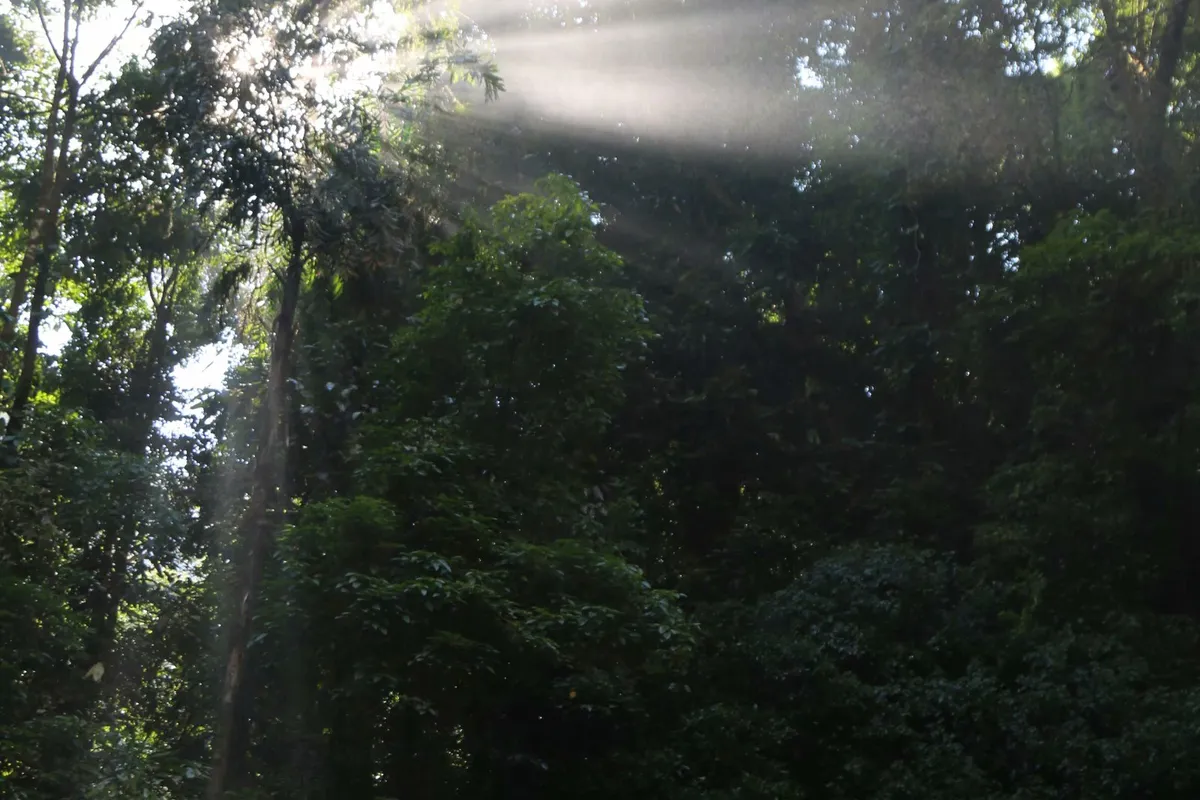
(Mengli Tropical Rainforest)
(Longjiang Bridge)
(Ruili Yinjing National Gate)
(Ginkgo Village Household)
(Heshun Library)
(Luzhou City Downtown)
(The First Roar of the Nujiang)
(Bingzhongluo's Abandoned Man-and-Horse Suspension Bridge)
(Qiuganluo Snow Mountain and Sea of Clouds)
(Dulong River Rainbow Bridge)
(Nu Ethnic Group Museum)
(Laomudeng Church)
(Star Arch Tower in Weishan Ancient City)
(Nanjian Earth Forest)
(Wuliang Mountain Cherry Valley)
(Dali Travel Photo Shoot)
(Erhai Lake Cruise)
(Elephant Stroll)
(Mengle Grand Buddha Temple)
(Short-legged Horse by Shudu Lake)
(Gadan Songzanlin Monastery)
(Real-scene Impression Lijiang at Jade Dragon Snow Mountain)


