Comparable to Dunhuang, This Shaanxi Cave with Tens of Thousands of Buddha Statues Remains So Low-Key
As a major province of history and culture, Shaanxi has always been a very popular tourist destination, with the capital city Xi'an being particularly famous because it is one of the important birthplaces of Chinese civilization. However, there is another place in Shaanxi that is very low-key. It is an important center for the spread of Buddhist culture in China, possessing numerous cultural relics but little known. This place is Zichang, known as the "second Dunhuang."
Speaking of Zichang, what many people are familiar with are its delicious Zichang pancakes and the imagined endless yellow soil. In fact, Zichang County not only has the reputation of "Red Capital," but also records the history of Zichang in the Zhongshan Grottoes at the southern foot of Zhongshan Mountain. The Zhongshan Grottoes house tens of thousands of Buddha statues. Thousands of years ago, the mountain rocks were carved into cave art, embodying delicate emotions within the rough and bold geographical culture of northern Shaanxi. These Buddhist caves began construction during the Taihe period of the Jin Dynasty, dating back thousands of years. Located on the ancient Silk Road, different civilizations collided and merged here, making it one of the important birthplaces of Buddhist propagation in Northwest China. According to documentary records, there were originally eighteen caves, but only five have been developed so far.
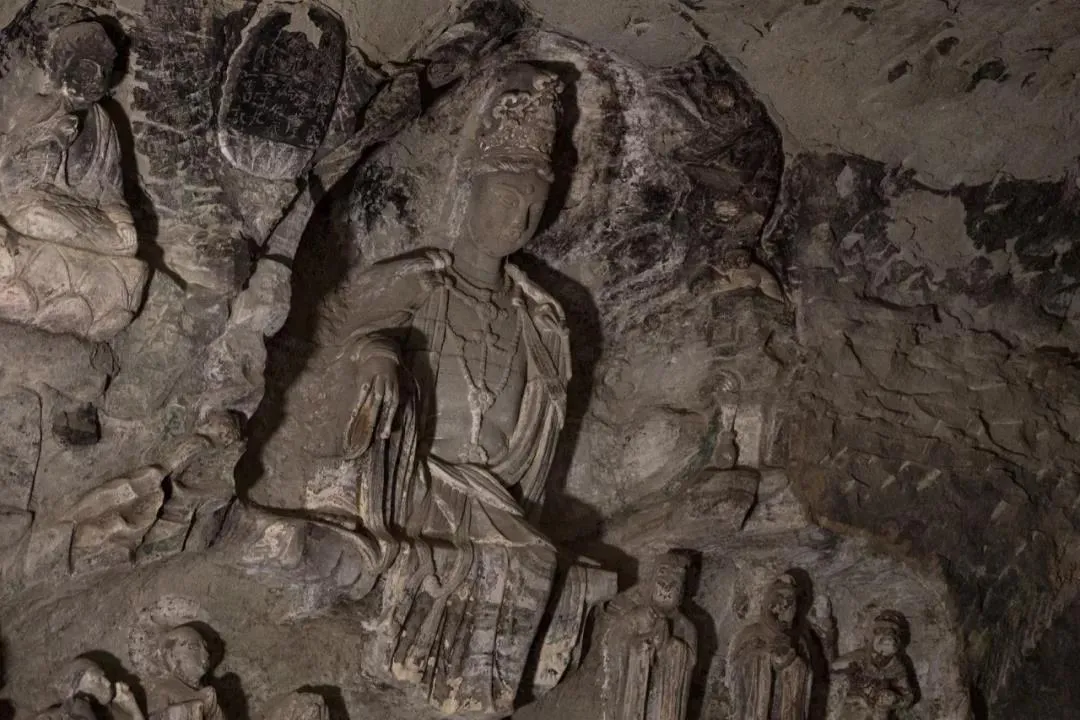
The most exquisite part is concentrated in the third cave. Cave No. 3 contains over ten thousand Buddha statues of various sizes, known as the Ten Thousand Buddha Rock. The walls and pillars are covered with carved statues. In the main cave, there are three large Buddhas. Every detail in the cave fully displays the Buddhist thought of the early Song Dynasty. Outside the main cave, there are two small caves on each side that have been severely eroded by wind and sand. The rock walls originally covered with carved statues now only have faint traces.
As one of the four major grottoes in Shaanxi, the Zhongshan Grottoes are grand in scale and rank first among the four. The other three are the Qingliangshan Grottoes, Wan'an Chan Temple Grottoes, and Hongsi Temple Grottoes. The tens of thousands of Buddha statues here have very high artistic value, well-preserved with colors as bright as new. From these statues, one can see the superb carving techniques and ingenious conception of ancient times, because these statues are all carved from a single intact rock. If any part of the carving is damaged, the entire rock is ruined. The painted decorations here are exquisitely stunning, comparable to Dunhuang in both research and artistic value. The "octagonal funnel-shaped caisson" structure is also breathtaking. Buddhist statues of the Song Dynasty are not as opulent as those of the Tang Dynasty, nor as free-spirited as those of the Northern and Southern Dynasties; instead, they have a touch of elegance and composure, integrating Chinese culture and aesthetic characteristics into the carving technique, with more emphasis on cultural and ideological expression. The Zhongshan Grottoes, in terms of both carving technology and aesthetic level, represent the peak of their era to a certain extent.
That this "earliest group of grottoes in China" is so low-key is unexpected for many tourists. It is believed that in the future, as the value of the Zhongshan Grottoes is revealed, they will attract many tourists to visit this historical wonder.


