Dreaming Back to Yan'an: Seeking the Passionate Red Tour - One-Day Yan'an Highlights
【Why go to Yan'an?】
"The Ordinary World" brought me closer to the happy life in northern Shaanxi, and I longed to go there.
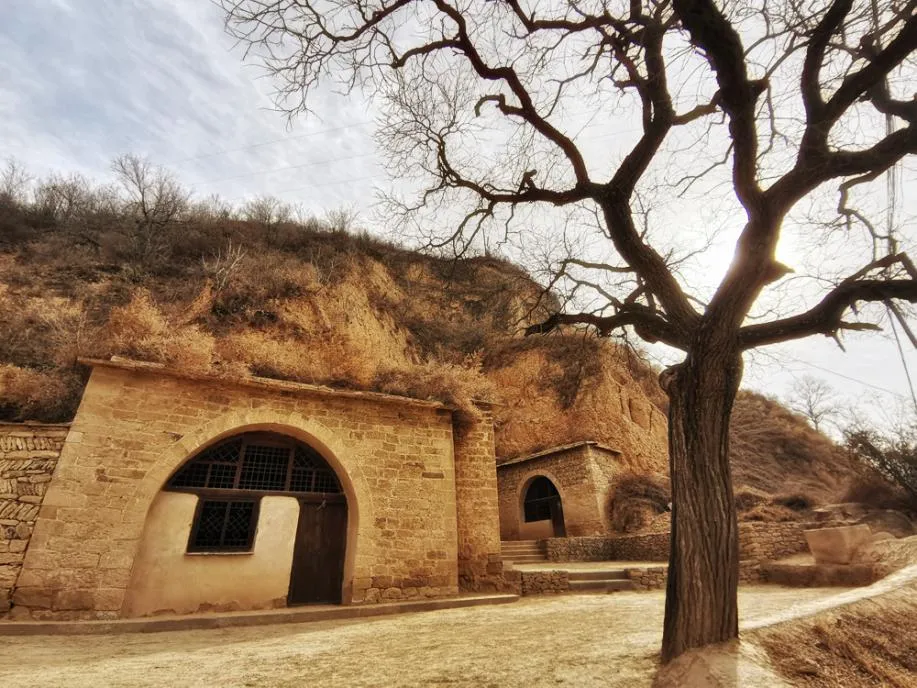
Although it's also in Shaanxi, the life on the Loess Plateau in northern Shaanxi felt mysterious and very appealing.
I'm from the Guanzhong region, which is too familiar to me.
Due to filming, I often go to southern Shaanxi and especially love its "delicate beauty."
But northern Shaanxi was a place I had never set foot in before.
Coincidentally, I needed to go to the Wave Valley in Jingbian to take photos, so I traced the source of the Yellow River and came to northern Shaanxi.
In northern Shaanxi, I felt the grandeur of the Loess Plateau and walked across red sandstone formed over hundreds of millions of years.
Since it was work, I only skimmed through Jingbian and didn't really explore.
After experiencing these local customs, the last stop of my northern Shaanxi trip was the holy land of Yan'an.
Arriving at Yan'an High-Speed Railway Station in the morning, after returning my rental car, I began my red tour in the city.
This time I went to Yan'an starting from Xi'an (I rented a car upon arriving in Yan'an and drove straight to Jingbian, then returned to Yan'an after finishing the shoot).
Yan'an had high-speed rail service early on.
I didn't drive myself this time (though it's only a three-hour drive, driving alone on the highway is too boring). Instead, I took the high-speed rail from Xi'an to Yan'an. A second-class seat costs only 95.5 yuan, and the trip takes 2 hours and 29 minutes.
Yan'an's city center is not large. Since the city is nestled in a mountain valley, many roads are one-way, so I don't recommend driving in the city. It gets very congested in the rain or during rush hours. You can take the bus or taxi. Taxi fares start at the base rate, which is not expensive.
The main attractions are Pagoda Hill, the Revolutionary Memorial Museum, Zaoyuan, and Yangjialing. Basically, you can visit them all in one day. Stay overnight, eat a lamb trotter, and have a bowl of lamb noodles. As they say in Shaanxi: "Mei bao bao!!" (meaning absolutely wonderful).
【One-Day Red Highlights Itinerary (All on the central axis of Yan'an)】
Accommodation in the city - Pagoda Hill (morning) - Yan'an Revolutionary Memorial Hall (morning) - Lunch - Yangjialing Revolutionary Site (morning) - Zaoyuan Site (afternoon) - Dinner
【The "Magic" of Yan'an】
"Grandpa once went to Yan'an, walking the 25,000-li Long March; carrying a rifle and eating millet, the kerosene lamp lit the prairie fire. Go to Yan'an, go to Yan'an, the old hoe opened up a new world; go to Yan'an, go to Yan'an, the spinning wheel shook out the dawn of the East..."
A 2019 original song, "Go to Yan'an," vividly depicted the dream of countless progressive Chinese youths in the 1930s and 1940s: "Go to Yan'an!"
What magic does Yan'an possess? In that era when Yan'an was still very barren, what made these people head straight for the thorns, not hesitating to face death? Some of these youths came from wealthy families and lived comfortable lives.
It wasn't until I went to Yan'an that I felt the red magic of Yan'an!
Our Party and the Red Army came to northern Shaanxi, leaving behind thirteen eventful years and many revolutionary sites.
Although many people are no longer here, the sites remain, and the spirit remains. Coming to Yan'an to experience a "Red East" tour is, I think, a very meaningful thing.
"Many times in dreams I return to Yan'an, embracing Pagoda Hill with both hands. Thousands of calls and shouts for you, Mother Yan'an is right here."
He Jingzhi's famous lines praise Pagoda Hill.
On my first visit to Yan'an, Pagoda Hill was what I looked forward to most. I had seen it countless times in photos or documentaries about Yan'an. They say if you understand Pagoda Hill, you understand Yan'an's history.
Pagoda Hill is located in the center of Yan'an, named after the pagoda on its summit. No matter where you stand in Yan'an city, you can almost always see the pagoda on the hill. Pagoda Hill is the iconic landmark of the revolutionary holy land Yan'an and a must-visit.
The hill has been turned into Pagoda Hill Park, with lush trees and a pleasant environment.
The morning of the day I arrived in Yan'an, it drizzled in the city. There were few tourists on Pagoda Hill that morning, and the lack of noise added a sense of solemnity and tranquility.
Soon after entering the scenic area and walking up the path, on the left side of the stone wall, Chen Yi's "Song of Yan'an Pagoda" was written in red characters:
"Yan'an has a pagoda, towering on the high mountain. Soaring into the clouds, the spire points the direction. Red sun shines on white snow, all people look up."
This shows the importance of Pagoda Hill in the hearts of Yan'an people.
The pagoda on Pagoda Hill was first built in the Tang Dynasty. Over a thousand years, it has weathered the erosion of wind and rain and the baptism of war. By the time of national liberation, it was riddled with bullet holes and scarred.
After national liberation, Yan'an City repaired the pagoda. The wind-eroded bricks were replaced, the bullet holes were filled, the base was reinforced, and a lightning rod was installed on the spire.
A thousand years later, we can still see the solemn pagoda standing upright, which fills us with comfort and pride.
Besides the pagoda, the most "legendary" item on the hill is an old bell in a pavilion. It is an iron bell cast in the Ming Dynasty. During the War of Resistance, it rendered great service. When the Central Committee of the Communist Party was in Yan'an, the bell was used for timekeeping, but once enemy planes were spotted, it would be rung as an alarm.
Climbing to the top of Pagoda Hill, you can overlook the entire Yan'an city. Across the river from Pagoda Hill is Qingliang Mountain.
In the past, Yan'an was all Loess Plateau, but the new Yan'an before your eyes shows a vibrant scene. Looking down at the Yanhe River Bridge, locals say it has withstood many floods of the Yanhe River without any damage.
Towering Pagoda Hill, rolling Yanhe River, stand and flow on this land of Yan'an, forever enduring.
Opening hours: 08:00-12:00
Visit time: 1-2 hours
Admission: Free (shuttle bus requires ticket)
Yan'an Revolutionary Memorial Hall (morning)
Yan'an Revolutionary Memorial Hall is located on the west side of Pagoda Hill.
After visiting Yan'an Pagoda Hill, I walked to the Yan'an Revolutionary Memorial Hall.
The road from Pagoda Hill to the memorial hall is very easy. Along the way, on one side is the Yanhe River, on the other are the Qingliang Mountain ranges, with mountains and water. Walking and looking, I soon arrived at the revolutionary memorial hall.
The memorial hall was first built in January 1950, originally at the Nanguan reception office. It is one of the earliest revolutionary memorial halls established after the founding of the People's Republic of China.
The square in front of the memorial hall is very large. When I stood on the huge square in front of the memorial hall and saw the statue of Chairman Mao, a sense of solemnity and awe washed over me.
For those who like photography, don't forget to take a photo with Chairman Mao at the square entrance.
The memorial hall was first built in January 1950, originally at the Nanguan reception office. It is one of the earliest revolutionary memorial halls established after the founding of the People's Republic of China.
The square in front of the memorial hall is very large. When I stood on the huge square in front of the memorial hall and saw the statue of Chairman Mao, a sense of solemnity and awe washed over me.
For those who like photography, don't forget to take a photo with Chairman Mao at the square entrance.
As soon as I entered the main hall, I was stunned. Facing the entrance is a giant relief sculpture of various revolutionary leaders, with fresh flowers placed by visitors in front.
The smiles of the "leaders" also made me feel the joy of revolutionary victory. Behind the statue is Pagoda Hill, representing Yan'an's revolutionary spirit. After seeing Pagoda Hill, looking at this picture made my heart surge. So, after visiting Pagoda Hill and getting a macro view of Yan'an's panorama, then coming to the revolutionary memorial hall, my understanding of the revolutionary spirit became more thorough.
The memorial hall has 6 exhibition halls, displaying a large number of revolutionary historical artifacts, reproducing the glorious achievements of Mao Zedong, Liu Shaoqi, Zhou Enlai, Zhu De, and others in Yan'an. It also shows the daily necessities used by the great men during the revolutionary period, as well as many captured enemy weapons, ammunition, banknotes, medals, and badges. You can also see the famous "millet plus rifles."
Because the exhibition hall contains so much information, many artifacts only have names without detailed descriptions. So when visiting the revolutionary memorial hall, you must hire a tour guide. Listening to them tell the stories behind each artifact is very interesting. Moreover, they connect the scenes in historical order, which is much more engaging than my "bare" viewing. However, I'm a bit lazy and adopted the method of "mooching off a guide." The memorial hall receives a large number of visitors every day, so just tagging along with any tour group yields a lot of gains.
For someone like me who loves machinery, seeing many captured weapons is very "exciting." For example, the machine gun captured in the Zhiluo Battle—the Swiss SIG KE7—was used by our Party's Red Army in the capture of Luding Bridge. The exhibition hall also has many artifacts used by Chairman Mao, such as a table where Chairman Mao lived in a villager's home in Yuanjiagou in 1936. It was on this table that Chairman Mao wrote the famous poem "Snow: To the Tune of Spring in a Pleasure Garden."
The exhibition hall also has many artifacts used by Chairman Mao, such as a table where Chairman Mao lived in a villager's home in Yuanjiagou in 1936. It was on this table that Chairman Mao wrote the famous poem "Snow: To the Tune of Spring in a Pleasure Garden."
Yan'an used to have city walls. I only learned this after seeing the restored model of Yan'an's "ancient city." One section displayed a replica of the South Gate rebuilt during the Qianlong reign. Unfortunately, when Yan'an Airport was built in 1945, part of the city wall was demolished to pave the runway, and later the wall completely disappeared.
For someone like me who loves photography, I was very excited to see a film camera. This was a camera once used by He Long. I never thought He Long was also a photography enthusiast!
The exhibition hall displays a large number of captured Japanese military equipment, such as Type 92 infantry guns, Type 24 heavy machine guns, and so on. The museum displays over 1,260 revolutionary historical artifacts and more than 670 historical photos. These materials provide extremely valuable resources for studying Chinese revolutionary history, the history of the Shaanxi-Gansu-Ningxia Border Region revolution, and revolutionary tradition education.
After finishing the first floor, I went up to the second floor. Having seen many documents and artifacts, I was a bit visually fatigued. Suddenly, the restored Yan'an New Market Street caught my eye and brightened my mood.
The restored street, with life-sized models of people, each with their own role and action, made me think that adding sound effects would make it even better, taking me back to those glorious years.
The memorial hall vividly recreates history, allowing us to review what we learned in textbooks as children, evoking many memories, and helping me personally experience the hardships of the revolution. Walking through the entire memorial hall, my soul seemed to return to that era of war. After seeing the whole memorial hall, you will understand why "the Communist Party could defeat the Kuomintang" and why the revolution was victorious.
Opening hours: 08:00-14:00
Visit time: 2-3 hours
Admission: Free with ID card
After visiting Pagoda Hill and the Yan'an Revolutionary Memorial Hall, it was almost noon. Hungry, I started craving a bowl of lamb noodles. As a Shaanxi native, I recommend everyone to have a bowl of pickled cabbage spare ribs noodles for lunch. Chuan Yun Suancai Noodles has been in Yan'an for many years, now with many chain stores, and is a brand highly recognized by Yan'an locals. The spare ribs noodles are the star product. A regular small bowl is quite large, with several pieces of spare ribs. When eating noodles, you must pair it with grilled tendon. For noodle lovers, it's worth trying at noon.
However, according to Yan'an local friends, the current suancai noodles are not as good as they used to be. Maybe because I didn't eat them as a child, I thought they tasted fine.
Name: Chuan Yun Suancai Noodles
Price: About 30 yuan per person
After lunch and a short rest, I started walking to the Yangjialing Revolutionary Site.
Yangjialing Revolutionary Site is located in the northwest of Yan'an city. Here are the former residences of Mao Zedong, Zhou Enlai, Liu Shaoqi, Zhu De, and the former site of the General Office of the Central Committee of the CCP.
From 1938 to 1940 and from 1942 to 1943, the Central Committee led the Chinese War of Resistance against Japan, the famous Yan'an Rectification Movement, and the Great Production Movement here.
At Yangjialing, you can see a very inconspicuous small stone table. Don't underestimate this table. In August 1946, Chairman Mao met with American journalist Anna Louise Strong here. In response to the domestic "fear of America," Chairman Mao put forward the famous thesis "All reactionaries are paper tigers."
Chairman Mao and other revolutionary leaders lived here. During the hard times, they worked and farmed together with the local people, overcoming harsh conditions and practicing self-reliance.
In 1942, the Central Auditorium was built at Yangjialing, and the Seventh National Congress was held here, where the statement "All reactionaries are paper tigers" was proposed.
Chairman Mao and other revolutionary leaders lived here. During the hard times, they worked and farmed together with the local people, overcoming harsh conditions and practicing self-reliance.
In 1942, the Central Auditorium was built at Yangjialing, and the Seventh National Congress was held here, where the statement "All reactionaries are paper tigers" was proposed.
As described in the essay "A Morning at Yangjialing": The sun had just risen when Chairman Mao walked out of his cave dwelling and went to the field he had personally cultivated. With one hand holding the bucket and the other the ladle, water slowly flowed onto the seedlings. The young soldier beside Chairman Mao, holding the water, smiled at the seedlings as if saying, "Little seedlings, little seedlings, drink the water of the Yanhe River and grow quickly!" In the distance, Eighth Route Army soldiers were busy carrying water to irrigate the seedlings. The morning at Yangjialing, a golden sunshine.
Opening hours: 08:00-17:30
Visit time: 1-3 hours
Admission: Free with ID card
Zaoyuan Revolutionary Site was the last attraction I visited that day, a must-see place. It was also the grand finale.
It was the location of the Secretariat of the Central Committee of the Communist Party of China.
Zaoyuan was originally the estate of a landlord. After the Central Committee of the CCP stationed in Yan'an, it became the office of the Central Social Department and was renamed "Yan Garden." The two characters "延园" (Yan Garden) written by Kang Sheng are still visible on the stone pillars of the original gate.
After the Central Committee evacuated Yan'an in 1947, the Kuomintang army carried out devastating destruction of Yan'an, and Zaoyuan was also severely damaged. After 1953, the people's government began to restore it to its original appearance.
Now the Zaoyuan site includes the small auditorium of the Central Secretariat, the former residences of Mao Zedong, Zhou Enlai, Liu Shaoqi, Zhu De, Ren Bishi, Zhang Wentian, Peng Dehuai, the "Serve the People" speech platform, the Central Medical Office, the Happiness Canal, and other attractions.
Zaoyuan still retains the former cave dwellings, which are open for visitors. The furniture inside has been restored to its original style. You can see the furnishings are very simple. Although it was the residence of the highest leadership, the conditions were still very basic. It is hard to imagine that the great leaders who led the Chinese revolution to victory once lived in such simple rooms.
The small auditorium of the Secretariat sits in the center of Yan Garden, made of brick and wood. It was the meeting room of the Central Secretariat and also a club. The decision regarding the Chongqing negotiations was made here.
Locust trees, paths, houses, grass — if not for the two big characters "Zaoyuan," you would think it was an ordinary residence in the Yan'an countryside.
I arrived here in the afternoon, and the sun was gradually setting. The slanting sunlight streamed through the locust trees onto the path of Zaoyuan and also onto my face, making me feel as warm as the revolutionary spirit flowing through Zaoyuan, making Yan'an so warm.
Opening hours: 08:00-17:30
Visit time: 1-3 hours
Admission: Free with ID card
Northern Shaanxi has a rich variety of food. If a bowl of noodles at noon didn't satisfy you, I recommend some must-eat foods when visiting Yan'an.
One of the must-eat foods in Yan'an: if you don't eat it, it's like you didn't come. I first tried Zichang pancakes at Yongxingfang in Xi'an, but the authentic Zichang pancake in Yan'an tastes better than in Xi'an.
Zichang pancake is a specialty of Zichang County, Yan'an, Shaanxi. The pancake is as thin as paper, silvery white and translucent. A large pancake can be as big as a pot lid, while a small one is the size of a hand. It is served with vinegar, garlic soup, and chili oil, fragrant and never boring.
This is a traditional northern Shaanxi food made from unremarkable potatoes. In the past, people made it by wrapping potatoes in flour and steaming. Back then, when people were poor, they turned the potatoes everywhere into delicious food. Now that they are well-off, eating "yangyu cacaca" (potato mashed and steamed) has become trendy. Add minced garlic, sauce, vinegar, chili oil, scallion oil, or sesame oil for a great taste.
Buckwheat noodles (qiaomian heluo) are made from buckwheat into noodle strips, served with mutton soup. It is very delicious. Wuqi County and Zhidan County in Yan'an are rich in buckwheat; the buckwheat noodles there are the most authentic, but the ones in Yan'an city also taste good.
Lamb noodles are the most representative noodle dish in northern Shaanxi. Well-braised lamb is served with rich broth. Take a bite, then have some refreshing pickled vegetables — it's simply heavenly.
Yan'an cold jelly (liangfen): Cold jelly is a well-known food in Yan'an. It is made from buckwheat grits, but there are also mung bean cold jelly and potato cold jelly. Cool and refreshing, it tastes great. It is suitable for summer trips to Yan'an; eating it in winter might feel a bit cold.
This travelogue contains 5,780 characters and 90 photos. It has helped 59 Yan'an tourists.
Table of Contents:
1. One-Day Red Highlights Itinerary
2. Pagoda Hill (morning)
3. What to eat at noon?
4. Yangjialing Revolutionary Site (afternoon)
5. Zaoyuan Revolutionary Site (afternoon)
6. What to eat in Yan'an?
7. TIPS: Travel info, hotel index, guide index, ticket index, website navigation, travel index, cruise index, corporate travel index, franchise cooperation, distribution alliance, friendship links, corporate gift card procurement, insurance agency, agency cooperation, hotel franchise, destination and scenic area cooperation, more franchise cooperation, about Ctrip, about Ctrip, Ctrip hot topics, contact us, careers, user agreement, privacy policy, business license, security center, Ctrip content center, intellectual property, Trip.com Group algorithm announcement.


