The Captivating History, Peonies, and Buddhism-Daoism of Luoyang
All photos in this article were taken by the author of "Black and White Touch." All rights reserved. No unauthorized use or reproduction is permitted.
Luoyang is one of China's four great ancient capitals (the other three being Beijing, Nanjing, and Xi'an). With a civilization history spanning over 5,000 years, it is one of the birthplaces of Chinese civilization. More than ten dynasties established their capitals here successively, so traveling in Luoyang reveals the charm of an ancient capital and the legacy of history everywhere. Sites like Dingding Gate, Yingtian Gate, Lijing Gate, and the Hall of Heaven and the Hall of Mingtang offer an intuitive impression, but for a deeper understanding, the various distinctive museums in Luoyang are not to be missed.
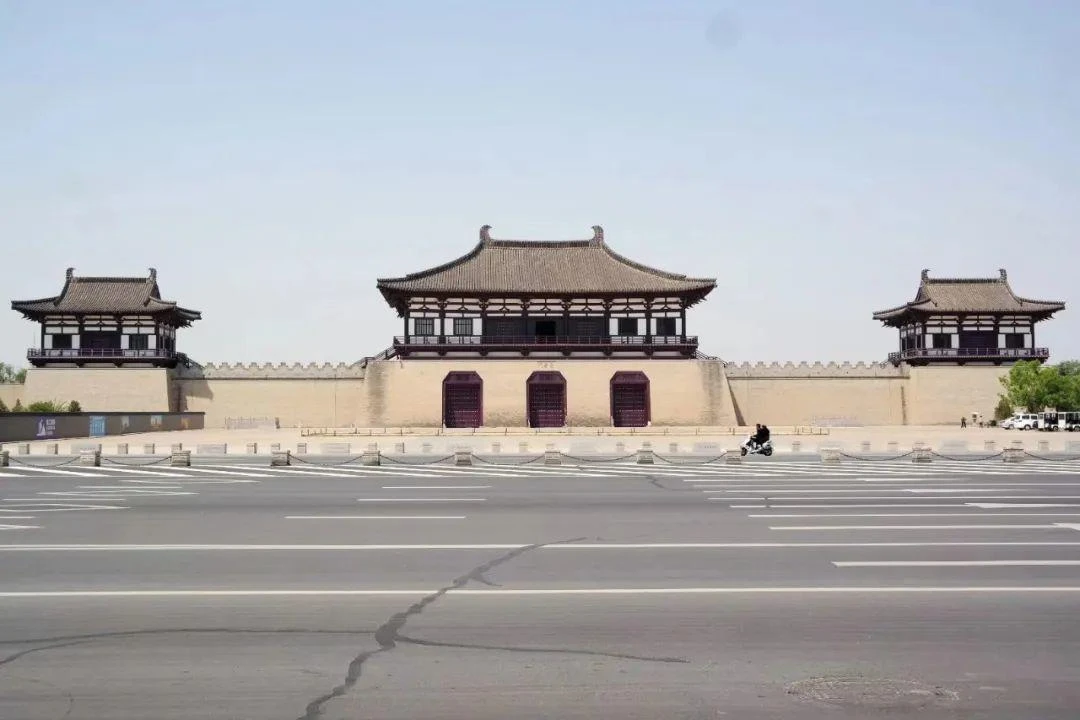
(Dingding Gate: The main south gate of the outer city of Sui-Tang Luoyang)
Moreover, Luoyang peonies are also renowned worldwide.
Peonies, with their graceful, luxurious, and splendid appearance, symbolize good fortune, wealth, and prosperity. They are China's national flower. Liu Yuxi of the Tang Dynasty famously wrote: "Only the peony is truly the national beauty; when it blooms, it stirs the capital." Among all peonies, those from Luoyang are the most esteemed. The cultivation of Luoyang peonies began in the Sui Dynasty, flourished in the Tang, and by the Song Dynasty, they were the best under heaven. Ouyang Xiu of the Song Dynasty also wrote: "Luoyang's soil is most suitable for flowers, and peonies are especially extraordinary." Luoyang is hailed as the "Millennium Imperial Capital, Peony Flower City." So if you visit Luoyang between April and early May, the various peony gardens are also not to be missed.
(Peonies in Wangcheng Park)
Also, the Longmen Grottoes, one of the four major grottoes, is something you certainly won't miss whether I remind you or not.
The Longmen Grottoes, begun in the Northern Wei Dynasty, continued to be carved until the Song Dynasty. Over 400 years of large-scale carving made this a rich and vivid exhibition site of Buddhist culture. But there is another scenic spot in Luoyang closely related to traditional Chinese belief—Daoism—that would be a pity to miss, not only because Laozi retired and practiced here but also because it is the most beautiful part of the 800-li Funiu Mountains, a branch of the Qinling Mountains: Laojun Mountain.
(Leshan Giant Buddha at Longmen Grottoes)
(Golden Summit of Laojun Mountain)
Today's article will take you around Luoyang, experiencing the history, grace, and beliefs of this millennium-old ancient capital through its museums, peony gardens, grottoes, and landscapes.
Like every ancient city rich in history, Luoyang has countless museums. The Dingding Gate Site Museum, Yingtian Gate Site Museum, Zhou Dynasty King City Museum of the Six-Horse Carriage, Duke of Zhou Temple Museum, Sui-Tang Grand Canal Museum, Yanshi Shang City Museum, etc., all interpret the long-standing and profound history from different angles. The most comprehensive among them is the Luoyang Museum. Let's start the historical journey there.
Chinese civilization is the only ancient civilization that has never been interrupted, and Heluo civilization is a symbol of Chinese civilization. Luoyang is situated in the center of the world, "with mountains and rivers as its stronghold, its strategic position is outstanding." The climate is mild and the four seasons are distinct.
More than 300,000 years ago, ancestors had already begun to thrive here. Around 10,000 years ago, the Heluo region entered the Neolithic Age.
In the 21st century BC, China's first dynasty, the Xia, was established here. Later, the Shang, Western Zhou, Eastern Zhou, Eastern Han, Cao Wei, Western Jin, Northern Wei, Sui, Tang, Later Liang, Later Tang, and Later Jin successively established their capitals here, making it the "Capital of Thirteen Dynasties."
Within a range of less than 30 kilometers from Luoyang Yanshi to Jianhe, there are five major sites: the Shang Dynasty capital, Xia Dynasty capital, Han-Wei Luoyang city, Sui-Tang Luoyang city, and Eastern Zhou royal city, known as "Five Capitals Gathering at Luoyang."
On Mount Mang and by the Yi River stand the Eastern Zhou royal mausoleums, Eastern Han imperial tombs, Cao Wei imperial tombs, Western Jin imperial tombs, Northern Wei imperial tombs, and Tang Gongling, among other imperial burial grounds, forming a spectacular scene known as the "Oriental Pyramids."
As Zuo Si wrote in the "Three Capitals Rhapsody": "The Xiao and Han mountains hold the emperor's residence; the Heluo region is the home of kings."
Additionally, the Heluo region has been a cradle of talent. Many major events in Chinese history occurred here, many outstanding figures lived here, and many significant inventions were created here: the "Hetu Luoshu" (Yellow River Map and Luo River Writing) opened the door of wisdom for Chinese civilization; the Duke of Zhou established rituals and music, setting the principles of patriarchal society; Confucianism and Neo-Confucianism were founded here; Daoism, Buddhism, Zoroastrianism, fire worship, and Nestorianism converged here; Zhang Heng invented the armillary sphere and seismoscope; Cai Lun invented papermaking; the Silk Road spanning east and west began here; the Sui-Tang Grand Canal connecting north and south set sail from here...
Sima Guang once lamented: "If you ask about the rise and fall of ancient and modern affairs, please just look at Luoyang city."
Now let's see Luoyang's past and present through some representative cultural relics.
The three dynasties of Xia, Shang, and Zhou are the Bronze Age in Chinese history. All built their capitals in the Heluo region. The Xia Dynasty built its capital at Zhenxun (today's Erlitou village in Yanshi). The palace site excavated at Erlitou is the earliest palace site discovered in China, unveiling the mystery of this ancient dynasty.
(Toad from the Xia Dynasty unearthed at Erlitou)
The Shang tribe originally was an ancient tribe active in the lower reaches of the Yellow River. By the end of the Xia, the Shang people had developed into the middle and lower reaches of the Yellow River, infiltrating the Xia's ruling area. Around 1600 BC, Shang Tang overthrew the Xia and established his capital at Xibo (Yanshi Shang City). From Shang Tang onward, ten emperors ruled for about 200 years, all with Xibo as the capital.
(Bronze tripod "Zishen Faji" from the Shang Dynasty)
In 1046 BC, King Wu of Zhou overthrew the Shang and established the Zhou Dynasty. The Zhou Dynasty is divided into Western Zhou and Eastern Zhou, marked by King Ping's eastward move to Luoyi.
The Western Zhou took Haojing (today's Xi'an) as its capital. To strengthen control over the central plain and southeastern regions, the Zhou court built the eastern capital "Chengzhou," making Luoyang another political, economic, and cultural center of China. The Western Zhou placed equal emphasis on the two capitals, being the first dynasty in Chinese history to implement a dual-capital system.
(Bronze Xu vessel "Zhaobo Hu" from the Western Zhou)
(Bronze square Ding with animal-face pattern from the Western Zhou: one of the museum's treasures, this artifact will appear multiple times later)
In 771 BC, the Quanrong invaded the Western Zhou, killing King You at the foot of Mount Li. The feudal lords supported the crown prince Yijiu as King Ping. A year later, the capital was moved to Luoyi, historically known as the Eastern Zhou.
From King Ping of Eastern Zhou to King Nan, fourteen kings ruled, all with the Royal City as the capital during the Spring and Autumn period.
In the later Eastern Zhou, King Jing moved the capital to Chengzhou to avoid the rebellion of Prince Zhao. From then to King Shenjing, there were thirty-one kings during the Warring States period.
During the Eastern Zhou, social economy and culture developed rapidly, people's thoughts greatly liberated. Sages such as Laozi and Confucius appeared. The capital Luoyi became a center of ritual and music culture and a stage for a hundred schools of thought.
(Bronze tripod with scale ring pattern from the Spring and Autumn period)
(Bronze tripod with gold and silver inlay from the Warring States period)
(Bronze tripod with coiled serpent pattern from the Warring States period)
(Jade figure from the Warring States period)
In 221 BC, Qin unified the six states and the whole country, making Luoyang part of Sanchuan Commandery. The Western Han initially made Luoyang its capital, then moved to Chang'an, making Luoyang a key military town controlling the east. The Eastern Han established its capital in Luoyang, making it the political, economic, and cultural center of the country. At that time, political stability, economic prosperity, cultural flourishing, and frequent foreign exchanges made Luoyang the eastern starting point of the Silk Road. The famous White Horse Temple was built during this period.
(Gilded bronze feathered man from the Eastern Han)
(Stone Bixie from the Eastern Han: one of the museum's treasures, using multiple techniques such as round carving, flat carving, and line engraving, with highly skilled craftsmanship, it is a classic representative of such stone carvings, reflecting the deep and majestic spirit of Han stone carving)
(Painted pottery female figure performing a seven-plate dance)
(Glass bottle from the Eastern Han)
(Painted pottery hundred-flower lamp from the Eastern Han)
(Xiping Stone Classics from the Eastern Han: the earliest officially authorized Confucian classics in Chinese history)
(Bronze mold for commandery and state wuzhu coins from the Eastern Han)
(Han Dynasty stone relief: kissing scene)
In 208 AD, the Three Kingdoms of Wei, Shu, and Wu formed a tripartite division. In 220 AD, Cao Pi, Emperor Wen of Wei, replaced Han and established Wei, making Luoyang the capital, historically known as Cao Wei, which lasted 46 years. In 263, Shu was conquered by Cao Wei. In 265, Sima Yan, Emperor Wu of Jin, replaced Cao Wei and established the Western Jin. In 280, Western Jin conquered Wu, unifying the country, with Luoyang as the capital for a total of 52 years.
During the Wei and Jin periods, society was turbulent, the nobility lived extravagantly, and the common people suffered hardship, but ideology and culture developed significantly. Wei-Jin scholars generally revered Laozi and Zhuangzi, disdained rituals, forming the so-called "Wei-Jin demeanor," admired by later literati. The Three Caos, the Seven Scholars of Jian'an, the Seven Sages of the Bamboo Grove, and the Twenty-four Friends of Jingu all wrote brilliant works in Luoyang. Zuo Si's "Three Capitals Rhapsody" was highly praised, causing the phenomenon of "Luoyang paper expensive." Ma Jun invented the dragon-bone water pump and the south-pointing chariot, hailed as "the world's ingenious craftsman."
At the end of the Western Jin, continuous wars led to the southward migration of the central plains people centered on Luoyang, becoming the ancestors of today's Hakka people in the southeastern coastal areas and Hong Kong, Macau, and Taiwan. ("Hakka" means "guest family," reflecting the migrants' attachment to their homeland Heluo; they call themselves "Heluo Lang" and many retain central plains living habits.)
(White jade cup from the Cao Wei period: one of the museum's treasures, reflecting the simple lifestyle of the Three Kingdoms era)
(Amber figurine of a ram with a rider from the Cao Wei period)
(Pottery beast from the Western Jin period)
(Jet ram from the Western Jin period: only the size of a peanut when magnified, showing the fineness of ancient craftsmanship)
(Agate Bi disc with kui dragon pattern from the Western Jin period)
In 493 AD, the Northern Wei, established by the Xianbei ethnic minority, moved its capital from Pingcheng (today's Datong, Shanxi) to Luoyang, lasting 42 years.
Emperor Xiaowen of Northern Wei vigorously promoted sinicization policies, achieving the first great ethnic fusion in Chinese history. During the Northern Wei, Buddhism flourished, with many temples in Luoyang. The Longmen Grottoes were carved during this period.
(Clay human face from the Northern Wei)
(Clay broken hand from a medium-sized statue from the Northern Wei)
(Clay head with hair bun from the Northern Wei)
(Jade Bixie from the Northern Wei)
(Painted male pottery figurine from the Northern Wei)
In 581 AD, Yang Jian replaced the Northern Zhou and established the Sui Dynasty. In 589, he conquered Chen, unifying the country, ending the 169-year division of the Northern and Southern Dynasties. The Sui Dynasty lasted only 38 years, but it made many innovations in institutions. The establishment of the Three Departments and Six Ministries system and the imperial examination system laid the foundation for the Sui-Tang golden age.
In the first year of Daye of Emperor Yang of Sui (605 AD), the Sui built the eastern capital Luoyang and dug the Grand Canal centered on Luoyang, making Luoyang a hub and center of economic and cultural exchange between north and south.
In 618 AD, the Tang Dynasty was established. As one of the empire's two capitals, the eastern capital Luoyang reached its peak in capital development history. During Empress Wu Zetian's reign, Luoyang was elevated to "Shendu" (Divine Capital). Palaces and gardens were built, grottoes were carved, and an open and inclusive policy toward foreign cultures was implemented. Hu music, Hu language, and Hu clothing led fashion trends. Zoroastrianism, Nestorianism, Manichaeism, and traditional Chinese Confucianism, Buddhism, and Daoism each had their place. Tribute came from all directions, envoys from all nations arrived, and the Divine Capital Luoyang became the center of the Eastern world.
(Painted pottery horse and horse-taming figurine from the Tang Dynasty)
(Bronze mirror with silver and gold inlay of flowers and birds from the Tang Dynasty)
(Pottery figurine of a female rider playing a whistle from the Tang Dynasty: showing the openness of the High Tang era)
(Sancai female figurine in Hu clothing from the Tang Dynasty)
(White-glazed double-dragon vase from the Tang Dynasty)
(Tang Sancai camel)
(Tang Sancai mandarin ducks)
(Tang Sancai duck holding a lotus leaf cup)
(Stone scripture pillar from the Tang Dynasty)
In 907 AD, the Tang Dynasty fell, and China entered the Five Dynasties period of frequent wars and rapid dynastic changes. The Later Liang, Later Tang, and Later Jin successively made Luoyang their capital, while the Later Han and Later Zhou took Luoyang as their western capital.
In 960 AD, the Song Dynasty was established, ending the division and fragmentation since the late Tang. The north and south were reunified, and the feudal economy and culture reached new heights.
The Northern Song implemented a dual-capital system, with Bianliang (today's Kaifeng) as the eastern capital and Luoyang as the western capital. Luoyang was one of the two major national centers, with flourishing culture and gathered celebrities. Cheng Yi and Cheng Hao founded Luoxue here, laying the foundation for Cheng-Zhu Neo-Confucianism. Sima Guang compiled China's first comprehensive chronological history, "Zizhi Tongjian" (Comprehensive Mirror for Aid in Government), here.
In the Northern Song, Luoyang was filled with famous gardens and widely planted peonies, attracting literati to recite: "The world's famous gardens value Luoyang most; Luoyang peonies are the best under heaven."
(Song Dynasty white-glazed carved peony pattern porcelain jar)
(Northern Song epitaph of Zu Wuze: Zu Wuze was an opponent of Wang Anshi's reforms along with Sima Guang; this epitaph is a witness to the historical event of the Northern Song reform; the round hole in the middle was later drilled by villagers and used as a wellhead stone)
After the Song Dynasty, China's political center moved to Beijing and Nanjing, and Luoyang gradually declined. There are not many Ming and Qing relics in the museum, but one Qing Dynasty artifact became one of the treasures of the Luoyang Museum: the "Three-story Golden Nanmu Pagoda." Made of golden nanmu, this pagoda was crafted in the early Qing Dynasty and transferred from the Forbidden City to Luoyang in 1973. Due to its precious material and exquisite shape, it is treasured as a gem.
During Luoyang's 1,500-year history as a capital, the Zhou Dynasty occupied the longest time, 717 years. Therefore, in the city center, there is a Zhou Royal City Square reflecting Zhou culture. Here, a Zhou Dynasty chariot and horse burial pit was excavated, and the Museum of the Six-Horse Carriage of the Son of Heaven was established on the site. Let's move to Zhou Royal City Square to visit.
(Sculpture of the Duke of Zhou building Luoyi at Wangcheng Square)
(Sculpture of the Six-Horse Carriage of the Son of Heaven in front of the museum)
If you have read the previous "Museum" article, you know that the Zhou Dynasty's ritual system was very complex. The Duke of Zhou established rituals and music, creating a complete set of ritual and music systems covering all aspects of social life, including diet, daily life, sacrifices, and funerals, distinguishing different classes. For example, regarding food vessels, ancient records state: "The Son of Heaven uses nine tripods, feudal lords seven, high officials five, and scholars three." The number of chariots and horses for travel was also clearly stipulated: "The Son of Heaven uses six horses, feudal lords five, ministers four, high officials three, scholars two, and commoners one."
(Duke of Zhou Temple beside Yingtian Gate, built to commemorate the Duke of Zhou, Ji Dan, who established the ritual and music system)
(The Zhou Dynasty used live horses for burial, so the chariot pits contain horse skeletons)
However, during the flourishing Eastern Han, people questioned the "Six-Horse Carriage of the Son of Heaven." Based on different ancient texts, there was a heated debate about whether the Son of Heaven used six or four horses. Participants included scholars like Xu Shen and Zheng Xuan, who cited extensive evidence, but neither could convince the other. More than 1,800 years later, with the excavation of the Six-Horse Carriage pit, it was finally proven that the Son of Heaven did use six horses.
The museum exhibits two chariot pits (the rest have been backfilled for protection). Pit No. 5 is the burial pit of a certain Zhou king, with a large number of chariots and horses, grand in scale and spectacular in momentum. Most chariots are drawn by two or four horses, and only one chariot is drawn by six horses. The chariots with two or four horses are arranged around the six-horse chariot in a star-encircling-moon formation, highlighting the unique kingly aura.
(Rare six-horse carriage of the Son of Heaven)
After the Zhou Dynasty, the Sui and Tang were the most prosperous periods for Luoyang. Today, the most common sights in Luoyang are Tang-style imitation buildings, including Dingding Gate, Yingtian Gate, and the Halls of Mingtang and Tiantang. Let's visit them one by one.
Dingding Gate was the main south gate of the outer city of Sui-Tang Luoyang. Built in the Sui Dynasty, it went through the Sui, Tang, Five Dynasties, and Northern Song, being used for over 530 years. It is one of the longest-used ancient capital city gates discovered in China. By the end of the Northern Song, the gate gradually fell into disuse. What we see today is a newly built Tang-style imitation—the Dingding Gate Site Museum, opposite which is Dingding Gate Square.
(Dingding Gate Site Museum)
(On the square, there is a huge tripod imitating the Western Zhou animal-face bronze square tripod exhibited in the Luoyang Museum)
(Looking at the square from the gate tower)
In the museum, we learn that Dingding Gate consists of the main tower and watchtowers. The passage connecting them, shaped like bird wings, is called the "Flying Corridor." The road from the ground to the main tower is called the "Horse Path." Sui-Tang Luoyang had three watchtowers: Yi Que, Dingding Gate Que, and Yingtian Gate Que. "The Son of Heaven uses three Que" was the highest ritual form for an ancient capital gate. Luoyang city had three Que. When the ancient emperor left the city, it could be called "The Son of Heaven leaves through three Que." Yi Que is a natural gate formed by the Yi River and mountains south of Luoyang.
(Dingding Gate Flying Corridor)
(Dingding Gate ruins)
Dingding Gate is the second Que of Sui-Tang Luoyang. The third Que is Yingtian Gate, about 7 km north of Dingding Gate.
Yingtian Gate was the main south gate of the imperial city of Sui-Tang Luoyang. Built in the first year of Daye of Sui (605 AD), it went through the same dynasties as Dingding Gate. Yingtian Gate was the venue for major state ceremonies and diplomatic activities, witnessing historical events such as Emperor Yang of Sui entering the eastern capital, Emperor Gaozong of Tang receiving the King of Baekje, and Wu Zetian ascending the throne.
Yingtian Gate is a huge concave-shaped building complex composed of the gate tower, side towers, and eastern and western watchtowers connected by corridors. On the gate are two observation decks named "Ziwei Guan." It is known as the "First Gate under Heaven" for its grand scale and imposing momentum.
The watchtowers are observation towers on both sides of the gate, classified as single, double, and triple Que, with triple Que being the highest grade, especially the bidirectional triple Que, which is the most complex. Yingtian Gate adopts the form of bidirectional triple Que.
Climbing Yingtian Gate offers a very broad view. To the south, you can see the bustling urban area of Luoyang; to the east, you can overlook the Duke of Zhou Temple; and to the north is the core of Sui-Tang Luoyang—the site of Mingtang and Tiantang, where Wu Zetian governed and worshipped Buddha.
(Bustling urban area south of Yingtian Gate)
(Duke of Zhou Temple east of Yingtian Gate)
(Mingtang and Tiantang north of Yingtian Gate)
Mingtang and Tiantang are the core area of the Sui-Tang Luoyang city site and the political power center of Empress Wu Zetian in the Divine Capital Luoyang.
Mingtang, also called "Hall of All Spirits," was built in 688 AD. It was where Wu Zetian performed sacrifices to heaven and earth, feasted officials, and held grand divine palace music and dance ceremonies.
The second floor of Mingtang is the main hall of the Hall of All Spirits, with the luxurious throne of Empress Wu. Regular performances of divine palace music and dance are held here.
The first floor of Mingtang is the exhibition hall of the Wu Zhou Dynasty, displaying Wu Zetian's life and achievements. The center is the site hall, where the foundation of Mingtang was excavated.
(Mingtang ruins)
(Twelve phoenix pillars symbolizing the twelve suggestions, showcasing Wu Zetian's achievements)
(Wu Zetian created 20 characters, including those for heaven, earth, sun, moon, and stars, reflecting her reverence and respect for nature)
Tiantang, also known as "Tongtian Futu" (Heaven-reaching Stupa), was built in 689 AD, located north of Mingtang. It was a sacred site for Wu Zetian to sense the four seasons and communicate with heaven. According to records, there was a giant Buddha in ancient Tiantang, with a little finger that could accommodate dozens of people. The current Tiantang is a Tang-style imitation tower structure with five external floors and nine internal floors, symbolizing the emperor's status of "nine five supremacy."
(Buddha statue in Tiantang)
(Climbing Tiantang offers a view of Mingtang and Yingtian Gate in the distance)
(Live performance of Empress Wu touring the garden: Wu Zetian admiring peonies accompanied by palace maids)
Northwest of Mingtang and Tiantang is Jiuzhou Pond—the royal garden of Sui-Tang Luoyang.
Jiuzhou Pond was initially built by Emperor Yang of Sui. It was the residence for underage princes and princesses, a place for the emperor and empress to rest and enjoy family happiness. After the Northern Song, the western capital declined, and Jiuzhou Pond was also abandoned. The current buildings are constructed based on the description in "Two Capitals New Records" by Wei Shu of the Tang Dynasty: "The pond winds and twists, with several islands in it, like the nine continents of the East Sea, covering ten qing of land, water over one zhang deep, birds and fish soaring and swimming, flowers and trees planted everywhere." The scenery is very beautiful.
The Yaoguang Hall, with its three parallel pavilions, is the main building of Jiuzhou Pond. It is said that Wu Zetian and Li Zhi often hosted banquets for officials here. From Yaoguang Hall, you can see the entire pond's splendor.
To the north of Yaoguang Hall is a pool of clear water, with islands scattered like stars. The islands are connected by rainbow bridges, making it a beautiful sight to wander through.
(Overlooking Jiuzhou Pond from Yaoguang Hall)
(Overlooking Tiantang from Jiuzhou Pond)
The night view of Sui-Tang Luoyang city is also enchanting. The Tang-style imitation buildings shine brilliantly under lights, showcasing the grandeur of a prosperous era.
(Yaoguang Hall at Jiuzhou Pond)
(Luoyi Ancient City)
Luoyang city also has many historical sites and monuments, such as the White Horse Temple, the first official Buddhist temple in China; the Guanlin Temple, where Guan Yu's head was buried; and the Jiulong Tripod, a landmark symbolizing the nine dynasties that made Luoyang their capital...
Due to space constraints, we cannot introduce them all in detail (the White Horse Temple and other temples have also been temporarily closed recently). If you have the opportunity to visit Luoyang, you can go and see them in person.
(Jiulong Tripod: topped with a Zhou Dynasty animal-face bronze tripod)
In July last year, the China Flower Association launched a voting campaign for "My Heart's National Flower," seeking public opinions on China's national flower. A week later, peonies won with a voting rate of 79.71%.
Not only modern people, but ancient people also had a special fondness for peonies. Han Cong lamented: "Like a dream or fairy, suddenly falling, where is the green screen in the twilight clouds?" Bai Juyi praised: "Flowers bloom and fall in twenty days, the whole city goes crazy."
Chinese people yearn for wealth and good luck, and peonies, with their large colorful flowers and dignified elegance, have been praised as "national beauty and heavenly fragrance" since ancient times, symbolizing wealth and good fortune. It is natural that they became the national flower.
(Peony flower arrangement in Wangcheng Park)
Many cities in China grow peonies, some quite famous, such as Beijing, Heze, Changshu, and even Linzhi in Tibet. But Luoyang peonies are the most renowned. Why is that?
Legend has it that Empress Wu Zetian of the Tang Dynasty, on a snowy day, suddenly had a whim and issued an edict: "Tomorrow I will tour the imperial garden, quickly inform the spring. Flowers must bloom tonight, don't wait for the morning breeze." All flower fairies, intimidated by the empress's power, bloomed one after another. Only the peony fairy, fearless of authority, refused to bloom. Angered, Empress Wu exiled the peony fairy to Luoyang, and since then, peonies have settled there.
(Sculpture of the Peony Fairy in Wangcheng Park)
Of course, the legend is certainly made up. In fact, Empress Wu Zetian loved Luoyang peonies very much. She lived in Luoyang for a total of 49 years and often toured gardens to admire peonies.
(Mingtang and Tiantang at Sui-Tang Luoyang: Empress Wu Zetian admiring peonies)
The real reason for the fame of Luoyang peonies is: peony cultivation originated in Heluo, began in the Sui, flourished in the Tang, and was "best under heaven" in the Northern Song. Luoyang is bounded by Mount Song to the east, the Qinling Mountains to the west, Yi Que to the south, and Mount Mang to the north. Since ancient times, it has been praised as "supported by mountains and rivers, its situation is outstanding." The unique geographical location provided favorable natural conditions for the growth and reproduction of peonies. So the Song scholar Ouyang Xiu once said: "Luoyang's soil is most suitable for flowers, and peonies are especially extraordinary."
How extraordinary? Let's go into the garden and see.
There are nearly ten peony gardens in Luoyang, many of which bear the title "Main Venue of the Peony Cultural Festival." We are going to Wangcheng Park and the China National Peony Garden.
Wangcheng Park gets its name from being built on the site of the Eastern Zhou Royal City. It is very close to the Museum of the Six-Horse Carriage of the Son of Heaven mentioned earlier. As soon as you enter, you see the Zhou Dynasty animal-face bronze tripod again. This is the fourth time we've seen this fellow. (The original is in the Luoyang Museum; a huge imitation is on Dingding Gate Square; and another imitation is on top of the Jiulong Tripod near Sui-Tang Luoyang.)
Behind the bronze tripod is Taiji Square, with a huge Bagua (Eight Trigrams) figure on the ground. The Eight Trigrams were originally created by Fuxi based on the star map "Hetu Luoshu" designed by Suirenshi. Legend has it that the Hetu Luoshu was discovered in the Luo River. The "I Ching" (Zhou Yi) written by King Wen of Zhou carried forward the Bagua culture, which has been passed down through the ages.
These are some of the Zhou-related landscapes in Wangcheng Park. Now let's get to the main topic—peonies.
The building on one side of the square is called "Mingtang." Recently, the "Wangcheng Spring Peony Flower Arrangement Art Exhibition" has been held there, with various peony varieties in colorful arrangements, beautifully layered and very attractive.
To the west of the park is the peony viewing area. A few days ago, a green peony became an internet sensation. It is said that green peonies are relatively rare, and the "Spring Willow" variety is even rarer. In the vast Wangcheng flower sea, there are only three.
Many tourists asked staff where they could see "Spring Willow" but were told it had already faded. Some were unwilling to give up and carefully searched around the flower bed, only to see the "withered willow" with fallen petals. They had to give up and turn their attention to other varieties.
Other peonies are also beautiful, with purple, pink, white, yellow colors... Some stand alone, some form clusters... Each has its own merits and charm, gorgeous and elegant, each beautiful in its own way, pleasing to the eye.
After admiring the peonies, you can also visit the zoo in Wangcheng Park, where there are many cute little animals.
Another excellent place to enjoy peonies is the China National Peony Garden.
Located on the site of the Sui-Tang ancient city, the China National Peony Garden stretches from Luoyang Bridge in the east to Peony Bridge in the west, 2.5 km long. It is the largest peony viewing garden in China.
In Wangcheng Park, peonies are concentrated in one area, but in the National Peony Garden, various peonies are scattered across different scenic spots and squares, with various sculptures, pavilions, rockeries, waterfalls, lakes, corridors, and bridges, offering a rich landscape.
(Double pavilion in Yanxiu Lake)
(Luscious and tempting peonies)
In this section, we will view the Buddha at Longmen Grottoes and "enlighten ourselves" with Daoism at the summit of Laojun Mountain.
Longmen Grottoes are located at "Yi Que" in Luoyang—the Longmen Mountain and Xiangshan Mountain on both sides of the Yi River. The area is green with mountains and clear water, full of vitality. Countless niches are scattered like stars on the cliffs of the east and west mountains, dense as beehives. The city gate of the Sui Dynasty imperial city faced Yi Que, hence the name "Longmen."
(East and west banks of the Yi River, green mountains and clear water)
(Crammed with Buddha niches, like a beehive)
The Longmen Grottoes were first carved during the reign of Emperor Xiaowen of Northern Wei when he moved the capital to Luoyang (493 AD). Later, through the Western Wei, Eastern Wei, Northern Qi, Sui, Tang, and Five Dynasties, they formed a grotto group stretching 1 km from north to south, with over 2,300 niches, more than 100,000 statues, and over 2,800 steles and inscriptions. Among them, the "Twenty Products of Longmen" are treasures of the Wei stele style in Chinese calligraphy art. The "Yi Que Buddha Niche Stele" by calligrapher Chu Suiliang of the Tang Dynasty is a model of Tang regular script. With so many cultural relics, Longmen Grottoes are listed as a World Cultural Heritage site.
(Guyang Cave and the Twenty Products of Longmen: Guyang Cave is the earliest excavated cave, carved during the Taihe period of Emperor Xiaowen of Northern Wei. Inside, there are many inscriptions. Nineteen of them, plus the record of Cixiang Huizheng from the Cixiang Kiln, are collectively known as the "Twenty Products of Longmen")
Longmen Grottoes are the most concentrated place for royal and noble statue carving in the Northern Wei and Tang dynasties, with strong national religious color. Among the many niches, the grand and magnificent Vairocana Buddha niche group is the most famous.
(Large Vairocana Buddha niche group)
The large Vairocana niche, also known as "Fengxian Temple," functions similarly to a ground temple, serving as a place for monks and laypeople to worship, make offerings, and meditate. It is just carved into the river cliff, with a different form.
Fengxian Temple was carved in the third year of Xianheng of early Tang (672 AD). Empress Wu Zetian donated 20,000 strings of her cosmetic money, and it took three years to complete. The central Vairocana Buddha is 17.14 meters tall, with a head four meters high. He has a plump face and beautiful eyes, looking dignified. According to legend, it was modeled after Wu Zetian's image. On both sides are Kasyapa, Ananda, Bodhisattvas, Heavenly Kings, and Vajra warriors. Kasyapa is solemn, Ananda is gentle, Bodhisattvas are magnificently dressed, Heavenly Kings are majestic, and Vajras are fierce. The vivid images are masterpieces of Tang Buddhist sculpture.
(Ananda and Bodhisattva)
(Kasyapa and Bodhisattva)
(Heavenly King and Vajra)
(Overlooking Fengxian Temple from the other side of the Yi River)
Besides the Vairocana Buddha, Longmen Grottoes have many interesting Buddha statues. Let me share some with you.
The picture below shows the Binyang South Cave (Cave 159), carved in the Northern Wei. It was built by Prince Li Tai of Wei to pray for the afterlife of his biological mother, Empress Zhangsun. The main Buddha Amitabha has a plump face and smooth robe lines.
The picture below shows the Binyang Middle Cave (Cave 140), built in the Northern Wei. It features Sakyamuni Buddha with two disciples and two Bodhisattvas. On the ground is a lotus treasure pond, and the ceiling has a lotus caisson and eight flying Apsaras.
The picture below shows the Binyang North Cave (Cave 104), first carved in the Northern Wei. The main deity is Amitabha Buddha, with a lively flame nimbus. This statue became an internet hit because the hand gesture looks like a peace sign, but it's actually because the thumb is missing. Although Buddhism has many mudras, there is no "peace sign."
The picture below shows the Laolong Cave (Cave 669), carved in the Tang Dynasty. The walls are densely carved with 54 niches, rich in statue content.
Buddha statues come in various forms. There are also two remarkable stones in the scenic area that attract attention: Luoyang Peony Stone and Plum Blossom Jade.
Luoyang Peony Stone has naturally formed peony flower patterns on it, lifelike in shape, diverse in posture, clear and elegant, making people marvel.
Plum Blossom Jade is a famous jade produced in Luoyang. Its natural patterns resemble plum blossoms, hence the name. This jade is rich in trace elements such as iron, zinc, sodium, magnesium, and potassium, with high collection value.
Not far from Longmen Grottoes, on the east bank of the Yi River, is Xiangshan Temple. The famous Tang poet Bai Juyi, also known as "Xiangshan Hermit," is associated with this place.
"Among the scenic mountains and rivers in the suburbs of Luoyang, Longmen ranks first; among the ten temples of Longmen for sightseeing, Xiangshan is the best." Xiangshan is rich in fragrant kudzu, hence the name. In the Tang Dynasty, Wu Zetian often visited here, leaving the story of "composing poems at Xiangshan and winning the brocade robe." Bai Juyi was especially fond of the scenery of Xiangshan. When he served as the governor of Henan, he donated six or seven hundred thousand coins to rebuild Xiangshan Temple. He formed the "Nine Elders of Xiangshan" with the monk Ruman and others, often gathering here to compose poems. After Bai Juyi's death, he requested to be buried beside the pagoda of Master Ruman at Xiangshan Temple. Today, Bai Garden on the north side of Xiangshan Temple is Bai Juyi's tomb garden.
(Xiangshan Temple buildings)
(Scenery of Bai Garden)
(Bai Juyi's tomb on Pipa Peak at the northern foot of Xiangshan: Bai Juyi's realistic long poem "Pipa Song" is an immortal masterpiece still praised today)
After seeing the Buddha statues and landscapes of Longmen Grottoes, let's go experience the peaks and Daoist temples of Laojun Mountain.
Laojun Mountain is located in Luanchuan County, about 150 km southwest of Luoyang. It is the main peak of the 800-li Funiu Mountains, a branch of the Qinling Mountains. It is a famous mountain with both cultural connotations and natural wonders.
Ancient records say that after writing the "Tao Te Ching," Laozi bid farewell to Yin Xi, the pass keeper of Hangu Pass, rode a green ox away, and no one knows where he ended up. However, legend has it that Laozi eventually retired to Jingshi Mountain in Luoyang, which is Laojun Mountain. So from the foot to the top, you can feel the influence of Daoist culture everywhere.
(Bronze statue of Laozi riding an ox and sculpture of Laozi preaching at the foot of the mountain)
(Laozi Cultural Park at the foothills: covered with yellow cloth is the world's tallest bronze statue of Laozi)
(Stones engraved with "Fu" (blessing) and "Dao" (the Way) along the climbing path)
(Rescue Hall halfway up the mountain: originally built in the Tang Dynasty, dedicated to Taiyi Jiuku Tianzun)
(The stone of Laozi transmitting scripture seen from the Cloud-walking Plank Road: a masterpiece of nature, lifelike)
(Wuwei Pavilion on the Horse Mane Ridge)
(Golden Summit Daoist Temple complex at the peak)
Going straight up, passing through the Southern Heavenly Gate, we arrive at the Golden Summit Daoist Temple complex.
The Golden Summit Daoist Temple complex is built against the mountain. The Bell Tower and Drum Tower at the entrance stand on the cliffs, both precipitous and majestic.
Here are Daoist buildings such as Laojun Temple, Daode Hall, Golden Hall, Liangbao Terrace, and Jade Emperor Peak, built in the style of Ming and Qing imperial palaces, majestic and grand. Especially the three golden peaks at the high points—Golden Hall, Liangbao Terrace, and Jade Emperor Peak—are bright in color and the finishing touch of Laojun Mountain scenery.
(Daoist ritual object Ruyi)
(Jade Emperor Peak: at the summit is the Jade Emperor Hall, enshrining the Jade Emperor, Taibai Jinxing, and Heavenly King Li)
(The Golden Hall resembles a golden crown on the mountain top, with the white corridor like a tie)
(Standing at the Golden Hall, overlooking Daode Hall and the Golden Summit behind, red and yellow complement each other, mountain and temple depend on each other, the scenery is intoxicating)
If it were only the Daoist landscapes everywhere, Laojun Mountain would not be called "more beautiful than the Five Sacred Mountains and more unique than the Three Famous Mountains." What makes Laojun Mountain widely praised is also its unique and beautiful natural scenery.
Laojun Mountain has mountains and water. At the foot of the mountain, Zhai Valley to the west and Pursuing Dream Valley to the east are excellent places to enjoy water scenery. Here, waterfalls appear every few steps, pools every five steps, with abundant water, lush grass, and dense bamboo forests. However, such scenery can also be found elsewhere (e.g., Yuntai Mountain in Jiaozuo). What sets Laojun Mountain apart is the Cloudscape Heavenly Road and Ten-mile Gallery near the summit.
The Cloudscape Heavenly Road integrates unique peaks, strange rocks, sea of clouds, and canyons. Along the 1,380-meter landscape belt, there are scenic spots such as Qingyun Peak, One-line Sky, Hundred Grass Meadow, Tongtian Gorge, and Maple King. With every step, the scenery changes. Below are towering cliffs, in front are lush mountain ranges. Traversing the Heavenly Road is like strolling through a beautiful painting.
(Glass walkway with lush mountain ranges below)
(Strange peaks stand in rows; the picture below resembles a camel)
(This one looks like a hungry baby bird)
(On the Heavenly Road, you can overlook the rolling mountains of the Funiu Mountains and Luanchuan County town)
The Ten-mile Gallery is adjacent to the Cloudscape Heavenly Road. The scenery here is like carved by knives and axes, jagged, colorful, and magnificent. The granite rock body here is a relatively young porphyritic biotite monzogranite formed during the Qinling orogeny about 140 to 80 million years ago, named "Laojun Mountain Rock Body" by geologists.
(A solitary peak)
(Piggy pretending to be a fairy)
(Heavenly King watching the sea)
(The picture below has no name; what do you think it looks like?)
(Junshan Stone Forest)
(Strange pine welcoming guests)
(Scenery like a painting)
There is a stone on the mountain path engraved with "Yangtze River." The Qinling Mountains, where the Funiu Mountains are located, are the north-south dividing line of China. Laojun Mountain, rising abruptly, is also the local boundary between subtropical and warm temperate climates. It is also the north-south division of river systems. The water system in Xixia County on the southern slope flows into the Dan River (a tributary of the Yangtze) via the Laoguan River, belonging to the Yangtze River basin. The water system in Luanchuan County on the northern slope flows into the Yellow River via the Yi River, belonging to the Yellow River basin.
At the end of the Ten-mile Gallery, you can see the glorious Golden Summit perched on the mountain peak, like a fairyland palace.
After visiting Laojun Mountain, the journey to Luoyang reaches its end. While taking the cable car down, I looked back at the rolling green mountains and the forest of peaks, my thoughts drifting like clouds:
Hetu Luoshu, the beginning of civilization; Xia, Shang, and Zhou dynasties; Luoyi established the capital; Wei, Jin, Northern and Southern Dynasties; Luoyang paper expensive; Tang style and Song charm, elegant peonies; Buddhism rises and falls; Daoism follows nature; prosperity has its limits; creation has its measure; the rise and fall of ancient and modern; Luoyang for a thousand years...


