2021 Luoyang May Day Travel Guide
01 A Brief Talk on This Trip
Every distant place has a kind of allure. Not because of beauty, not because of distance, but because my restless heart craves novelty. I was always curious about what kind of city Luoyang, the ancient capital of thirteen dynasties, really is. Then, by chance, someone said: Let's go on a trip to Luoyang. And so I really just grabbed my backpack and set off.
02 About Luoyang
When coming to a city, first you need to understand its cultural background.
Luoyang is one of the four holy cities of the world. It is the earliest established capital, with the most dynasties and the longest history in China. Over a hundred emperors have ruled here. The Yanshi Shang City, Xia Capital Zhenxun, Han-Wei Ancient City, Sui-Tang Luoyang City, and Eastern Zhou Wangcheng site are lined up from east to west along the Luo River, forming the spectacle of 'Five Capitals Aligned along the Luo.' It stands between the Yellow River and the Luo River, occupying the center of the world. It embodies both the generous and majestic spirit of the Central Plains and the charming and romantic quality of the southern water towns.
Luoyang is a place where the deeper you delve, the more you realize how little you know. Not only are cultural relics and historical sites everywhere, but even the ruined walls and broken tiles in the wilderness have stirring stories behind them.
After the creation of the world, since the Three Sovereigns and Five Emperors, Luoyang, with its magnificent natural beauty, became the divine capital admired by all under heaven!
03 First Important Thing for the Trip: Accommodation
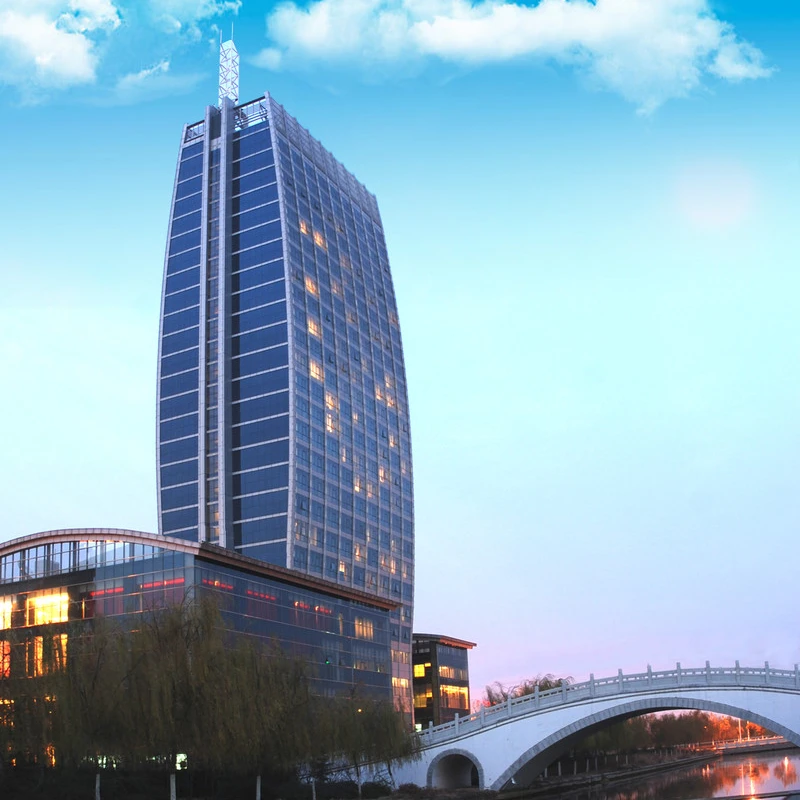
Although this trip was a spur-of-the-moment decision, I still seriously researched accommodation, after all, sleeping is one of life's great pleasures. The hotel environment in Luoyang is relatively good. The hotel I finally booked is the Mudu Lihao International Hotel, a famous five-star hotel in Luoyang. Its location is excellent, right next to the municipal government, and there are huge shopping malls like Quanshun and Zhengda within walking distance. As soon as you enter the lobby, you feel a sense of grandeur and splendor. The fully transparent glass curtain wall gives the hall a boundless sense of space. The modern, warm, and culturally tasteful decoration style makes the lobby luxurious and unique. The front desk guy was especially warm. Knowing we were tourists, he thoughtfully prepared a travel guide for us. The room was super cozy and comfortable.
Add shooting location Add image description
Add shooting location Add image description
Add shooting location Add image description
Add shooting location Add image description
Add shooting location Add image description
Add shooting location Add image description
04 Second Important Thing for the Trip: Food
The favorite of Luoyang people: Soup. When you come to Luoyang, you will notice a peculiar phenomenon: in the morning, on almost every street, there will be a group of people sitting at small roadside tables, holding a large bowl and drinking soup. Soup is the start of a day for Luoyang people, and it is the ultimate pleasure on their tongues. In the eyes of Luoyang people, even a grand feast cannot compare to a bowl of soup in the morning.
First recommendation: Fang Zhongshan Hot and Sour Soup. Rating: Five stars
Second recommendation: Old Li's Beef Soup. Rating: Five stars
Third recommendation: Huashan Road Small Bowl Donkey Meat Soup. Rating: Five stars
Add shooting location Add image description
Of course, an indispensable dish is the Water Banquet.
The 'Water Banquet' originated in Luoyang, closely related to its geography and climate. Luoyang is surrounded by mountains, located in a basin with little rainfall, dry and cold climate. Local folks often use soups in their diet and prefer sour and spicy flavors to resist the dry cold. People here are accustomed to using locally produced starch, lotus root, yam, radish, cabbage, etc., to make economical and soup-rich feasts. Even nobles and royalty were used to cooking main and side dishes together. Over time, the uniquely local Luoyang Water Banquet was created, gradually forming a flavor of 'distinct sour and spicy, refreshing and smooth.'
Add shooting location Add image description
First recommendation: Zhen Butong. Rating: Three stars. (Not recommended for small groups, more suitable for family dinners.)
05 The Third Essential Thing for the Trip: Sightseeing
Due to limited time, I only visited Longmen Grottoes, White Horse Temple, and Laojun Mountain.
NO.1 Longmen Grottoes
The Longmen Grottoes are an artistic expression of Buddhist culture, but they also reflect the politics, economy, and cultural fashions of the time. The grottoes preserve a large number of physical materials related to religion, art, architecture, calligraphy, music, clothing, medicine, etc. Therefore, it is a large-scale stone carving art museum. The Longmen Grottoes, together with the Yungang Grottoes in Shanxi, the Mogao Caves in Dunhuang, and the Maijishan Grottoes in Tianshui, are known as the Four Great Grottoes of China.
The Longmen Grottoes are magnificent and are the most classic attraction in Luoyang. The most stunning part is the statue group of Vairocana Buddha, which is half a mountain high and an absolute must-see.
Full-price ticket: 100 RMB per person
Opening hours: 8:00–18:00, last entry at 17:00.
Add shooting location Add image description
Add shooting location Add image description
NO.2 White Horse Temple
White Horse Temple is backed by Mangshan Mountain to the north and faces the Luo River to the south, with higher terrain in the north and lower in the south. The temple was first built in the 11th year of Yongping of Emperor Ming of the Eastern Han Dynasty (AD 68), over 1,900 years ago. White Horse Temple was the first Buddhist temple built after Buddhism was introduced to China during the Han Dynasty, so it is revered as the 'Source of the Dharma in the East.' According to historical records, Emperor Ming of the Eastern Han dreamed of a golden man flying in his courtyard. After waking up, he sent Cai Yin and Qin Jing as envoys to the Western Regions to seek Buddhist scriptures. The two envoys endured hardships and, while in Dayuezhi, met the Indian monks Kasyapa Matanga and Dharmaratna. They then carried scriptures on a white horse and welcomed the two monks back to Luoyang. Emperor Ming ordered the construction of this temple outside the Xiyong Gate of the capital city, modeled after Indian monasteries, specifically for the two monks to translate scriptures. Because the scriptures were brought back by a white horse, it was named White Horse Temple.
White Horse Temple can be divided into old and new architectural styles. The old buildings are full of Buddhist heritage, while the new buildings feature modern ancient Indian styles. Both sides have their unique charm.
'Bright moon shines on the ancient temple, climb the tower beyond the forest. South wind opens the long corridor, summer cool as autumn.' This is the White Horse Temple in the poem by Tang Dynasty poet Wang Changling. Today, this famous ancient temple still enjoys a reputation at home and abroad, standing majestically at the foot of Mangshan Mountain.
Full-price ticket: 35 RMB per person, includes White Horse Temple, Qiyun Pagoda, and World Buddhist Hall Exhibition Area
Opening hours: 7:30–19:00
Add shooting location Add image description
Add shooting location Add image description
NO.3 Laojun Mountain
About 128 kilometers from the city center, located on the south side of Luanchuan County.
Legend has it that Laozi, the founder of Eastern Zhou Taoism, once lived in seclusion and cultivated here, hence the name Laojun Mountain.
It is the main peak of the Funiu Mountains, over 2,000 meters above sea level. Since the Northern Wei Dynasty, temple complexes have been built here. Dynasties such as Tang, Song, Ming, and Qing regarded it as a Taoist holy site.
For thousands of years, it has been a sacred Taoist site in the Central Plains, attracting pilgrims from Henan, Shaanxi, Anhui, Hubei, and other provinces.
In addition to local specialty products for sale, the scenic area also features statues such as Laozi riding an ox and a golden statue of the Supreme Elderly Lord. It is a scenic area that combines mountain and water landscapes with Taoist culture in the Central Plains.
Full-price ticket: 130 RMB per person
NO.4 Sui and Tang Dynasty Relics Park
The Luoyang Sui and Tang Dynasty Relics Botanical Garden is located in the western part of the Li Fang area of the Sui and Tang city ruins on the south bank of the Luo River. It is a comprehensive botanical garden that integrates scientific research, popular science, culture, and entertainment, based on Luoyang's mountains, water, plants, and Sui and Tang dynasty relics culture, adhering to the principle of scientific protection and rational utilization.
Add shooting location Add image description
Add shooting location Add image description
Add shooting location Add image description
Add shooting location Add image description
Although this trip was very short and I didn't get to know the city in depth, every bit of this city left me with many beautiful memories. If I have the chance in the future, I hope to have more time to explore this charming city further. I also hope that this guide can help more people who plan to visit this city.


