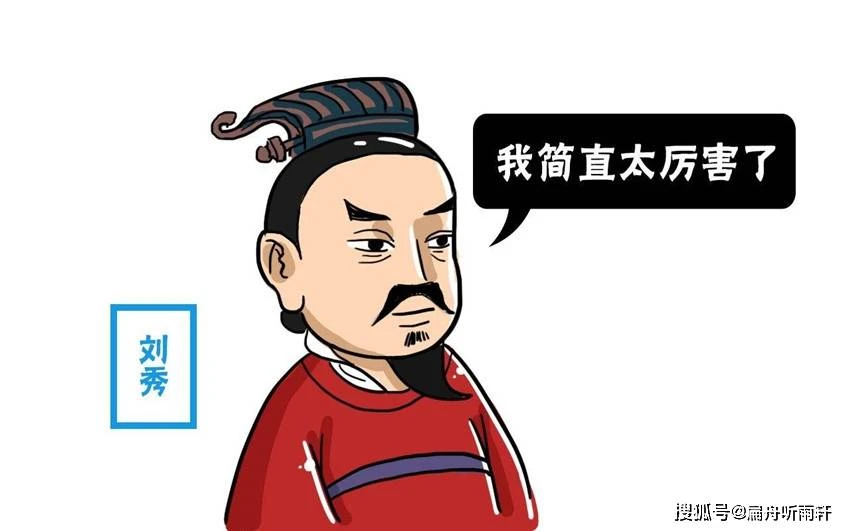
The Lonely Liu Xiu and His Solitary Tomb
Among the two Han dynasties, three emperors are most praiseworthy: Gaozu Liu Bang, Emperor Wu Liu Che, and Emperor Guangwu Liu Xiu. Liu Bang started from scratch and imposed his might across the land, founding the unified Great Han Empire; Liu Che stabilized the interior and expanded the frontiers, magnifying the empire's majestic spirit; Liu Xiu, with a soft exterior and a steely core, endured hardship and resurrected the empire from ashes, causing the decaying Han to stand tall once more.
Of all the emperors in Chinese history, Liu Xiu was the first I came to know.
Tiexie Village in Mengjin, Luoyang, was my grandmother's home. As a child, I often went there. At the southwest corner of the village, there was a large garden with broken walls and crumbling ruins, overgrown with weeds. A huge mound lay quietly inside, surrounded by lush cypress trees all year round, and filled with the constant chirping of birds. At night, the occasional call of an owl—"Goo-goo-miao... Goo-goo-miao..."—was quite eerie.
Grandma told me that the garden was called Liu Xiu's Grave, and the mound held the remains of Han emperor Liu Xiu. When Liu Xiu was alive and ruling as emperor, his son was very disobedient. If his father said go west, the son insisted on going east; if his father said he wanted something sweet, the son said salty was better. After death, the emperors of Luoyang preferred to be buried in the dry loess of Mang Mountain, and Liu Xiu shared this wish. He thought, "My son has never listened to me in his life. I hope that when I die, that unfilial brat doesn't simply throw me into the Yellow River to soak."
On his deathbed, Liu Xiu called his son over and exhorted him repeatedly: "If you still know filial piety, don't bury me on Mang Mountain. Instead, make the Yellow River roll north three times and bury me in the river's heart." The son thought, "I have disobeyed my father all my life. Now that he is about to die, I must not talk back; I must follow his wishes." So after Liu Xiu died, the son had the Yellow River diverted northward and buried his father in the main channel of the river.
For nearly two thousand years, Liu Xiu has lain alone in the soil beside the Yellow River. None of his descendants—princes or emperors—came to accompany him. Not one believed that the damp riverbed could be a geomantically auspicious site where children and grandchildren would gather. Instead, they all built their mausoleums ten kilometers south atop Mang Mountain. They did not wish to spend eternity with their ancestor in this shady place, "pillowing on the river and kicking the mountain"; they preferred the sunny Mang Mountain summit, "backing onto the mountain and facing the river," to flaunt that they could "use open and changing terrain to embrace vast ambitions and master all things." "Born in Suzhou and Hangzhou, buried in Beimang"—though a later saying—its essence has always been a pursuit from the heart. Whether emperor or commoner, the deep and dry loess of Mang Mountain was more suitable for living and enjoying pleasure, whether before death or after, whether in this world or the next.
Liu Xiu's tomb garden was originally named Yuanling. Perhaps because it was isolated in this remote place, its original name was gradually forgotten. For thousands of years, the people of Luoyang knew it by a more down-to-earth nickname: Liu Xiu's Grave. If you come to Luoyang and say you want to see Yuanling, few would understand what you're looking for; but if you say Liu Xiu's Grave, almost everyone can tell you roughly where it is. So much so that today, people have had to give it a dignified academic name—the Mausoleum of Emperor Guangwu of Han. Who has ever heard of Liu Bang's or Liu Che's tombs being called Liu Bang's Grave or Liu Che's Grave, or even the Mausoleum of Emperor Gaozu or the Mausoleum of Emperor Wu? Their mausoleums have always been called Changling and Maoling. "Grave"—among emperors, only Liu Xiu enjoys this title.
The story behind Liu Xiu's Grave about the father and son is of course just a strange legend. But why did Liu Xiu choose this spot beside the Yellow River, "pillowing on the river and kicking the mountain," as his resting place after death? Ancient feng shui masters left not a word in historical records, and modern scholars have not found a convincing reason. Perhaps the answer is simply the inner monologue of this founding emperor—a continuation of his spirit of solitary struggle against adversity throughout his life, and the secret to his perseverance and victory that he wished to carry into the afterlife.
Looking at Liu Xiu's entire life, at many critical moments he was in a lonely and helpless adverse situation, yet he often turned that loneliness into the highlight of his life.
By bloodline, Liu Xiu was a ninth-generation descendant of Liu Bang, but as the imperial clan spread out, the value of distant branches diluted generation by generation. His father, Liu Qin, only managed to become a minor county magistrate. When Liu Xiu was nine, Liu Qin died, and the Liu siblings became orphans. They were taken in by their uncle Liu Liang, and from then on this branch of the imperial clan became commoners.
During his growth, the introverted and pragmatic Liu Xiu, besides studying, also "worked diligently in farming," content to be a farmer with his face to the soil and back to the sky. His older brother Liu Yan, however, was bold and outgoing, "fond of chivalry and nurturing retainers." Under the circumstances of Wang Mang's usurpation of the Han, Liu Yan harbored the grand ambition to "restore the enterprise of Gaozu and establish peace for ten thousand generations." He often joked that his younger brother was like Liu Bang's elder brother Liu Zhong—only knew how to farm and had no ambition. On the path of farming and raising silkworms to support the family, Liu Xiu walked alone, without even a partner to help. He only smiled faintly at his brother's ridicule.
"Brothers fight together in war, father and son go into battle side by side." When the chivalrous Liu Yan raised an army, the cautious Liu Xiu "at first did not dare to join," but eventually, mindful of their fraternal bond, he was swept into the tide of rebellion. When he first entered battle, Liu Xiu did not even have a warhorse; he had to fight on an ox until he killed the county magistrate of Xinye in fierce combat and captured a horse, finally obtaining the mount necessary for a general.
Later, in the battle of Xiaochang'an, the rebel army was routed, and Liu Xiu "fled alone on horseback." During his escape, he managed to rescue his younger sister Liu Boji, but his elder sister Liu Yuan, afraid of burdening her brother, refused to mount the horse, and she and her three daughters were killed by the Xin army. Liu Xiu felt the desolation of being alone and helpless.
In the fifth month of the first year of the Gengshi era, under the powerful attack of the Xin imperial army, Liu Xiu led his outmatched rebel troops to retreat to Kunyang (present-day Ye County, Pingdingshan, Henan). Gathering the remnants of his defeated army, he counted the men: there were fewer than nine thousand defenders left in Kunyang city, while the imperial army, claiming a million but actually 420,000, was surging forward, intending to surround the isolated city tightly and capture it.
Once again facing a desperate situation of being outnumbered, Liu Xiu's officers and soldiers were "all terrified, worrying about their wives and children, and wanted to scatter back to various cities," as if frightened out of their wits. At this moment, the resolute Liu Xiu remained calm in the face of danger, deeply convinced that fighting alone in a desperate situation required staking everything on a single throw. Sternly and yet persuasively, he said: "Now our troops and grain are few, while the enemy outside is strong. If we unite our strength to resist, we can achieve merit. If we want to disperse, then none of us will survive. Moreover, Wancheng has not yet been taken, and they cannot come to rescue us. If Kunyang is broken, within a day all our units will be destroyed. Now, instead of thinking of preserving your wives and property, why not join hearts and minds to achieve fame and merit?"
Temporarily calming the soldiers' emotions, Liu Xiu took the lead and personally led thirteen cavalrymen out of the city at night, riding a hundred li to Dingling and Yan County to request reinforcements. He brought back 17,000 elite infantry and cavalry. Facing the enemy's iron encirclement, Liu Xiu risked his life, leading a daredevil charge through a bloody path, "cutting off dozens of heads." Seeing reinforcements arrive—though not many, enough to boost morale—the city defenders were overjoyed: "General Liu was usually timid when facing small enemies, but now he is brave against a great enemy. How strange! And he is at the forefront. Please let us assist you!"
With the city defenders and outside reinforcements coordinating from inside and out, a mere 20,000-odd men defeated a mighty 420,000. This battle, a classic example of the few defeating the many in Chinese and world military history, shocked everyone. The Battle of Kunyang completely reversed the strategic situation between the two sides. It was Liu Xiu's coming-of-age battle, proving his ability to endure and act decisively under isolation and helplessness, and could be called the foundation of Liu Xiu's imperial enterprise.
The great victory at Kunyang should have been a time for rewards, but what Liu Xiu received was devastating news. The Gengshi Emperor Liu Xuan, fearing that the Liu brothers of the same clan would become too powerful and influential, had without reason executed the capable Grand Marshal Liu Yan. His beloved elder brother was killed. Alone and helpless, Liu Xiu was filled with immense grief and indignation, but he had to force himself to endure the pain and immediately rush to Wancheng to apologize on his brother's behalf. He dared not submit a memorial requesting rewards for his role in the Battle of Kunyang, nor dared to wear mourning clothes for his innocent brother. In front of others, he could only force himself to appear calm, "eating and laughing as usual," and only when alone did he let his tears wet his collar. His inner loneliness and sorrow were unimaginable.
Seeing Liu Xiu so forbearing and lacking the unruly ambition of Liu Yan, Liu Xuan felt guilty and, pretending to be magnanimous, appointed Liu Xiu as General Who Breaks the Enemy and enfeoffed him as Marquis of Wuxin. Liu Xiu took the opportunity to leave Wancheng and escape the dangerous place where serving the emperor was like living with a tiger. He returned to Xinye and married his long-time first love, Yin Lihua, fulfilling his promise: "An official should be like the Chief of the Palace Guard; a wife should be like Yin Lihua." At that moment, only his beloved's comfort could soothe the loneliness and pain in Liu Xiu's heart.
However, the Gengshi Emperor's scheming against the Liu brothers did not stop. Soon, he devised another plot to kill two birds with one stone. "When Gengshi arrived in Luoyang, he sent Guangwu [Liu Xiu] as General Who Breaks the Enemy to act as Grand Marshal. In the tenth month, holding a imperial staff, he crossed the Yellow River northward to pacify and comfort the provinces and commanderies." The Central Plains had been pacified, but Hebei was still under the control of many warlords and powerful families who did not submit to the Gengshi regime. With the consensus that "whoever obtains Hebei can stabilize the realm," Liu Xuan sent Liu Xiu to persuade the Hebei powers to surrender. On the surface, Liu Xuan gave Liu Xiu the highest military post of Grand Marshal, but he gave him not a single soldier or horse to escort him. If Liu Xiu succeeded alone, the whole realm would belong to Liu Xuan; if Liu Xiu failed or was killed by the warlords, Liu Xuan could then punish him or use the warlords to eliminate a major threat.
Liu Xiu initially did not want to accept this "heavy responsibility," but his friends advised him to endure, saying that taking a step back would open up a vast horizon—he could both escape Liu Xuan's constant ill intentions and use his own abilities to carve out a new territory in the thorny Hebei region. Weighing the options, Liu Xiu had to bid farewell to his newlywed wife and secretly rendezvous with a few close friends on the way, galloping toward the uncertain future in Hebei.
As expected, the warlords in Hebei each had their own ambitions and did not take the Grand Marshal Liu Xiu, the Gengshi envoy without a single soldier, seriously. They even refused to let him enter the cities or give him food. Moreover, Wang Lang, who had declared himself emperor in Hebei, issued a wanted notice offering a fief of one hundred thousand households to anyone who captured or killed Liu Xiu. When they reached Raoyang, Liu Xiu and his men, cold and hungry, impersonated Wang Lang's envoy, the General of Handan, to get a meal. They were discovered and nearly arrested. Fortunately, when they fled north to Shanggu and Yuyang commanderies, they met Geng Yan, the son of Shanggu Grand Administrator Geng Kuang, and finally found a kindred spirit. Soon, Liu Xiu personally went to the Prince of Zhending's mansion and arranged a political marriage with the prince's nephew Liu Yang, marrying Liu Yang's niece Guo Shengtong.
With a foothold, Liu Xiu fully displayed his political and military talents. Through both civil and military means, he quickly rallied people's hearts, gathered various factions, and led the Twenty-Eight Generals of Yuntai to eliminate Wang Lang and pacify Hebei. On the day jiwei of the sixth month in the third year of the Gengshi era (August 5, 25 AD), at the age of thirty, Liu Xiu was acclaimed emperor at Qianqiu Pavilion in Haocheng (present-day Guchengdian Town, Baixiang County, Xingtai, Hebei). He ascended the throne to restore the Han dynasty, with the reign name Jianwu, historically known as Later Han or Eastern Han.
After another twelve years, Liu Xiu, stationed in Luoyang and commanding with ease, successively pacified Guanzhong, took Guandong, subdued Longxi, and conquered Sichuan and Shu, once again achieving the great unification of Chinese history. Later generations praised Liu Xiu for "rising from commoner stock and sweeping away the world," saying "his difficulty was even greater than that of Gaozu." Chairman Mao once said meaningfully: "People often say that a scholar can't rebel for ten years. Liu Xiu is an exception: he didn't make a sound for ten years, then startled everyone with his cry. He studied at home and kept to himself, but once he rebelled, he turned everything upside down. With great vigor, starting from scratch, he founded a new dynasty."
"He didn't make a sound for ten years, then startled everyone with his cry"—this is an affirmation of Liu Xiu's spirit of endurance. Not afraid of loneliness, willing to be solitary, gathering strength in solitude, and erupting in silence—Liu Xiu was adept at and accustomed to enjoying this philosophy of life.
Perhaps it was being at ease with loneliness that endowed Liu Xiu with the great wisdom and great achievement of endurance. Therefore, while alive, he chose this remote spot beside the Yellow River for himself, hoping that after ascending to heaven he could continue to endure loneliness and tolerate solitude, so that he could also plan a splendid enterprise in the celestial realm.
Many say that Liu Xiu was born humble, grew up in troubled times, understood the hardships of the people, and advocated simple burial. That is why he placed his mortal remains in the wilderness, elevating his soul.
But I contemplate that perhaps Liu Xiu loved his first love Yin Lihua too much. He deeply felt guilty for his injustice toward the deposed empress Guo Shengtong. That is why he stayed away from the sacred Mang Mountain and chose this inconspicuous corner to sleep forever with his beloved, undisturbed, whether the tomb is called a noble imperial mausoleum or a lowly grave. He only wished for peace and quiet, never to be disturbed again.
(Some images in this article are selected from the internet; if there is any infringement, please contact us for deletion.)


