Luoyang: Flower Viewing, Mountain Climbing, and Cultural Relics - A 3-Day Power Walking Tour
I've always wanted to see the peonies in Luoyang. Due to the pandemic, I couldn't go out for the past two years. This year, with better conditions, I finally planned a trip. I took a day off on Friday, left on Thursday evening, and returned to Beijing on Monday morning—just in time to shower and head to work.
DAY-1 April 13, Thursday: Beijing-Zhengzhou
From Beijing to Luoyang, you can take a high-speed train directly to Luoyang Longmen Station, then take the metro or a taxi to the city center. The latest train departs at 17:55, but I was running late, so I chose to travel overnight. The direct trains to Luoyang weren't convenient, so I opted for the route Beijing-Zhengzhou-Luoyang, spending the night on the train and saving one night's accommodation.
DAY-2 April 14, Friday: Zhengzhou-Luoyang
1. Zhengzhou-Luoyang
I arrived at Zhengzhou Station around 04:50. When exiting, be careful: you don't need to leave the station. Follow the signs for convenient transfers, go upstairs, and you'll be directly in the waiting hall. Zhengzhou Station is huge, with many waiting rooms and self-service luggage lockers inside. Travelers making a transfer can store their bags and enjoy a light day trip. After finding the waiting room, I freshened up, got some hot water, and used the restroom. Then the train to Luoyang started boarding. Although the ride was only two hours, I bought a soft sleeper ticket to rest as much as possible—I needed to start my power walking mode as soon as I arrived.
The train was delayed by about ten minutes, but it didn't dampen our excitement. We followed the signs, swiped our ID cards to exit, and found the exit seemed quite small. I had booked a hotel near the station, and I could see its sign from the train station—very convenient.
3. OYO Jingdu Business Hotel - Luggage Storage
I arrived at the hotel around 8 a.m. The front desk told me the room wasn't ready yet, so I stored my luggage and went out for breakfast.
4. Breakfast: Laoliujia Xiaoyao Town Hula Soup (6 years on review platform)
Before coming, I searched for nearby food and found many options. I chose this old shop, which has been on the review platform for 6 years. It's near the train station. Walking closer, I realized it was a small, humble eatery, but at 8 a.m. it was packed with people. The specialty is hula soup. The golden hula soup had an incredibly strong peppery flavor—after a few sips, my body started to warm up. The tofu pudding was topped with beans and pickled vegetables—I tried it for the first time and found it very refreshing. For those not used to strong hula soup, you can order a half-and-half mix: half hula soup and half tofu pudding. You'll still sweat, but it's more palatable. The cai jiao (fried dumplings) were filled with chives, carrots, vermicelli, etc. The ingredients were generous, and at just 1 yuan each, it was a great deal.
5. Luoyang Ancient Art Museum (Tomb Museum)
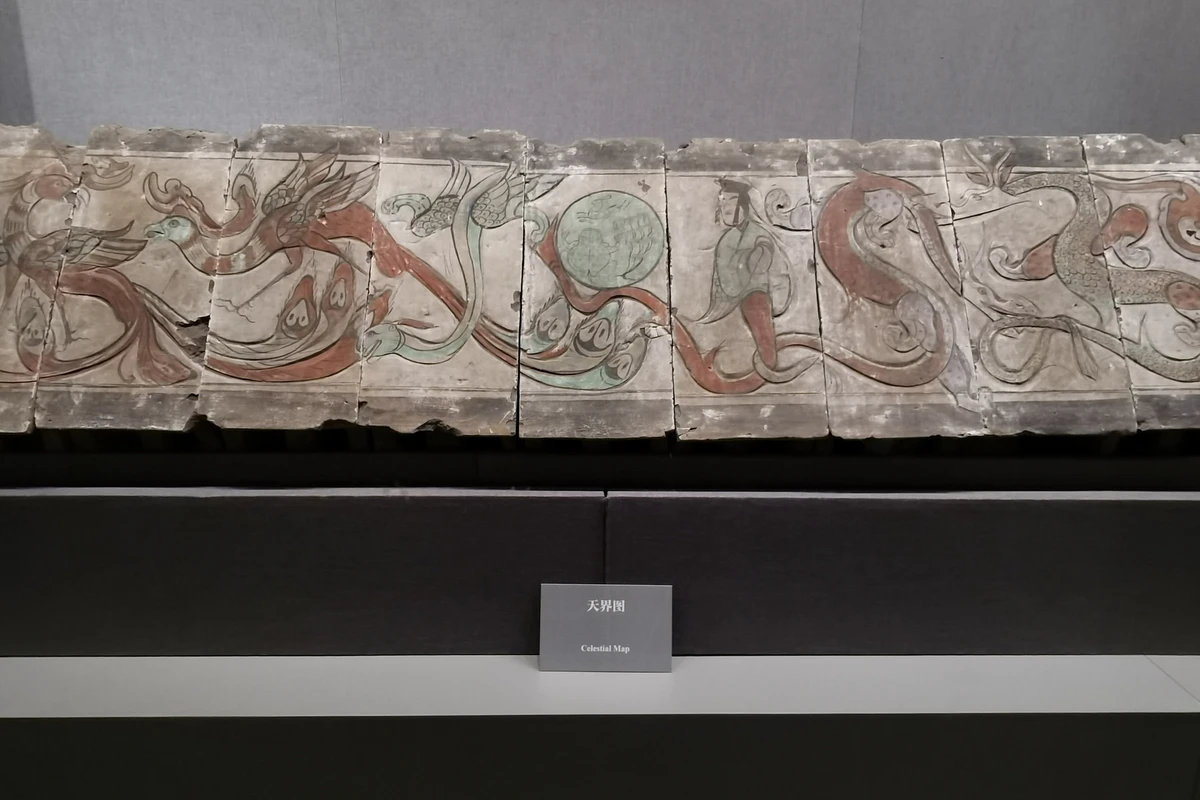
The Luoyang Ancient Art Museum is the largest museum in China dedicated to ancient tombs and the first of its kind in the world. It consists of three major exhibition areas: the Typical Tombs of Various Dynasties, the Northern Wei Imperial Tomb Area, and the Essence of Tomb Murals. The museum houses dozens of tomb chambers from various periods in Chinese history, all relocated from their original sites and restored underground according to their original layout. Here, you can closely observe the interior environment of ancient tombs, including tomb architecture, murals, and unearthed artifacts. I made a reservation in advance on WeChat. We arrived just before 9 a.m., and there was already a long queue at the entrance. There are no restrooms outside the park, so I went inside first after entering. Then I went down from the middle area—big mistake! So, be sure to start your visit from the first hall, then enter the underground palace. The imperial tomb area is laid out in a square loop—pay attention not to miss anything. After visiting all the underground sections, exit from the last hall, then go to the Jingling Imperial Tomb on the west side. Starting at 9 a.m., you can finish in about two hours. Currently, there is a performance by the Twelve Ladies Music Ensemble at 11 a.m.—if interested, check it out.
6. White Horse Temple
The White Horse Temple is the first temple built by the government after Buddhism was introduced to China, earning it the title "First Ancient Temple in China." The existing structures and relics date from the Yuan, Ming, and Qing dynasties and are aligned along a north-south axis. The Mahavira Hall is the main hall, with other key buildings including the Heavenly King Hall, the Great Buddha Hall, and the Pilu Pavilion. The temple houses a large collection of Yuan-dynasty dry-lacquer statues, such as the Buddhas of the Three Times, Two Heavenly Generals, and Eighteen Arhats, which are extremely precious. On the west side are Thai, Burmese, and Indian style buildings; on the east side are the tomb of Di Renjie and the Qiyun Pagoda. Admission is 35 yuan, available only at the gate, with half-price for teachers and students. If you have energy, visit east-central-west; if not, just central-west; or for just the White Horse Temple, return via the central axis. There are many Hanfu rental shops nearby—both exotic and Tang styles are suitable.
7. Laozihao Nourishing Braised Noodles (Laozihao Zibu Huimian)
There are many restaurants outside the White Horse Temple, but I found this old establishment on the review platform. It's about 600-700 meters away, but worth the walk. Their braised noodles won first place in a competition, and the restaurant also serves water feast dishes. The local soft drink is called Haibi, available in three flavors—orange being the best. The braised noodles come in a large bowl with plenty of meat. I suggest those with smaller appetites share one bowl and try other dishes. I ordered stir-fried greens, but the waitress said they were low on greens and asked if they could add tofu—so I got tofu with greens, which tasted pretty good. I also ordered a Yan Cai (a local dish), but because a dining companion was Muslim, no ham was added. The presentation was average, but the flavor was decent. Maybe because I had strong hula soup in the morning, the peppery kick of this Yan Cai seemed mild—but the soup was perfect for warming up.
8. Hanqingge Hanfu Experience Center
Coming to Luoyang, I definitely wanted to try Hanfu. I searched online and called 5-6 shops; only this one guaranteed one-on-one service during the photoshoot without adding other people, so I chose it. I booked a 6 p.m. shoot on WeChat in advance. I arrived at 4 p.m., and even though it was Friday, it was crowded. The first and second floors are for women's clothing, the third for men's. After selecting my outfit, I paid the remaining balance on the first floor, received styling and makeup cards, and waited in line. It took about an hour and a half. I chose a Tang-style night banquet outfit and found a hairstyle from Xiaohongshu; the stylist carefully replicated it, even the accessories. At 6 p.m., the photographer Divid arrived. He suggested I change into embroidered shoes, then took me to the ancient city for photos. The session promised at least 30 photos in one hour; I ended up with 45 in 40 minutes, which was fine. The photographer was very professional, having me pose in many awkward positions, but the results were great.
9. Luoyi Ancient City
The Luoyi Ancient City area includes the Wenfeng Pagoda, Confucian Temple, Tuoling Temple, and Si Yan Well protected sites, rich in cultural heritage. The scenic area is free to enter, full of people in Hanfu. The night view is beautiful, but it's more crowded—be careful.
10. Luoyang Ancient Coin Exhibition Hall
I stumbled upon this in the ancient city. Admission is 2 yuan, worth a visit. Beijing has two museums related to coins. Though small, this one displays coins beautifully and is educational.
11. Return to Hotel
Back at the hotel, my room was ready. I checked in with my ID card and paid a 50 yuan deposit. The room was on the third floor, but there was no elevator. I forgot to take a photo upon entering; the room was spacious but a bit outdated. Soundproofing was poor—around 4 a.m., someone started packing, and I couldn't sleep well. Also, the online price was higher than the walk-in rate, but you can reserve online; walk-in is cheaper but not guaranteed until after noon. So if you arrive early in the morning, you might be out of luck. I stayed two consecutive nights; the trash bag was changed, but toiletries and toilet paper weren't restocked—though I didn't use them, it felt lacking. However, at 232 yuan per night during the peony season, it was acceptable—the nearby 7 Days Inn was already 500 yuan, so you can't complain.
DAY-3 April 15, Saturday: Laojun Mountain Day Trip
1. Breakfast: Huashan Road Small Bowl Donkey Meat Soup (Xuanwumen Street Branch)
Early in the morning, I went to this donkey meat soup shop. I had seen it when I left the train station yesterday. Since my travel companion was Muslim and doesn't eat donkey meat, I came alone today. They serve various donkey meat dishes. At 7 a.m., the shop was almost full, very clean. You order first, then pick up your food with a ticket. I ordered the signature 20 yuan hot meat soup with freshly cut donkey meat; for over 15 yuan, you get a portion of shredded flatbread. At the pickup counter, the chef cuts the meat to order, weighing it—very standardized. My soup contained donkey meat, large intestines, and donkey blood jelly, with a huge bowl of broth. The meat was tender and didn't stick to my teeth.
2. Laojun Mountain Day Trip
Although I had booked in advance, plans changed. Originally, I booked a late-departure tour to see the night view, but the guide told me the group was completely full that day, so I had to gather an hour and a half earlier at 8:30 a.m. My plan to see peonies in the morning had to be canceled. The estimated queue time for the cable car was over an hour, but we arrived relatively late and queued less than half an hour. The journey involved frequent stops, and some sections were very congested—be sure to maintain a safe distance when hiking. The light-up time for Laojun Mountain was from 17:40 to 18:40, but it was still bright, so the lights weren't very visible in photos. Additionally, the Golden Summit was under renovation, so the photos didn't look great. I suggest taking a few photos after the lights come on, then hurry down—the first cable car queue will be short. The temperature difference between the summit and the base was huge; we arrived around 5 p.m., and even wearing a shell jacket with three heat packs, I felt nothing—only at the bottom did I feel the heat. There is no sheltered area at the top, so plan your time wisely—don't wait too long, or you'll catch a chill.
DAY-4 April 16, Sunday: Luoyang-Beijing
1. Breakfast: Tofu Ball Soup
For breakfast, I had tofu ball soup at a small shop downstairs. It was a humble eatery but very clean. The portion wasn't huge, but enough for one person, at a great price of 7 yuan.
2. Metro to Luoyang Station
I took the metro to see peonies. I downloaded the "Luoyixing" app, registered, and scanned the code to ride. You can also buy tickets directly. Five stops straight—very fast.
3. Sui-Tang City Site Botanical Garden
This is an important venue for tourists and locals to view flowers and relax. The botanical garden has 17 specialized areas, with the Thousand-Peony Garden covering about 400 mu (66 acres), consisting of the Hundred Flowers Garden, Nine Colors Garden, Special Garden, and Science Demonstration Garden. It plants over 30,000 peonies of 1,200 varieties in nine color series. There are over 20 recreational squares in various shapes, and more than 30 pavilions and corridors reflecting Sui-Tang architectural style with modern touches. The day before, I met an aunt who had visited three peony gardens, but since today's temperature was high, many flowers had wilted. So I followed my own plan and chose the Sui-Tang City Site Botanical Garden. Built in December 2005, the garden sits on the ruins of Sui-Tang Luoyang City. It's very large. I suggest entering from the west gate, as it's closest to the peonies. Since many flowers had faded, I recommend walking in a grid pattern to see as many as possible. The most famous peony, "Silver Thread Pouring Over the Top," is under 24-hour surveillance with a guard—don't miss it.
4. Dingdingmen Site Museum
I left the botanical garden at 9 a.m., rented a shared e-bike, and rode carefully—super convenient. The museum is free; scan the QR code at the entrance to make a reservation, then enter with the code or ID card. The first floor is large, with the archaeological site in the center and exhibits on the sides. At the end, go outside to the second floor, which has a costume exhibition. The whole visit takes about an hour.
5. Sui-Tang Grand Canal Culture Museum
The museum is popular recently; when I made a reservation, only 11 a.m. tickets were available. I took a taxi and arrived at exactly 11 a.m. There was a long queue at the entrance—you can only enter at your reserved time; arriving early won't work. Inside, it's spacious. I suggest starting from the right side of the first floor, then go up to the 2nd and 3rd floors. After that, go down to the left side of the first floor to see the 1st and 2nd floors. The museum has many artifacts and diverse exhibition methods; I recommend listening to an audio guide. The main content is on the right side of the 1st and 2nd floors; the 3rd floor has interactive experiences suitable for children. The left side of the 1st floor is an archaeological exhibition, and the 2nd floor is a painting exhibition. Since I also had to visit the Luoyang Museum, I mainly focused on the 1st and 2nd floors, skimming the rest. A thorough visit could take half a day; I spent about 2 hours.
6. Luoyang Museum
The Luoyang Museum is free, but you need to make a reservation on WeChat three working days in advance. This weekend was so crowded that I couldn't get a reservation. I finally bought a ticket for the special exhibition "Empress Wu Zetian" for 60 yuan to enter, but at the museum gate, I managed to get a free afternoon ticket, so I canceled the paid one and came in the afternoon. The museum is huge; you could spend a whole day. There are human guides, audio guides, and VR glasses guides. I downloaded the Sanmaoyou app and followed it; I could hear about all the famous exhibits. Comparing the options, the audio guide has the most points, VR has the least (only 36), and the app is in between. Choose based on your time.
7. Zhou Tianzi Driving Six Horses Museum
Admission is 30 yuan, cheaper online. The museum is not large, built on the original site for protection. The pits below are in their original state, clearly showing six horses—proving it's the chariot pit of the Son of Heaven of Zhou. There are explanatory panels around. The visit takes about half an hour.
8. Dinner: Xiaojie Pot Stickers (Xiaojie Guotie)
This was my last meal before leaving Luoyang. The place was extremely crowded. We ordered on the second floor; pot stickers must be ordered by the jin (500g). We ordered one jin of beef pot stickers, one jin of Xiaojie pot stickers, and a portion of boiled tripe. I recommend the boiled tripe—the sauce contains sesame paste, better for northern tastes.
9. Xigong Small Street
Xigong Small Street is a food street lined with various eateries. When we arrived, there was a live performance, so we watched for free.
10. Yingtian Gate
The site and square of Yingtian Gate are free to visit; climbing the gate tower and watching the show require a separate fee. It's beautifully lit at night, and the north square has a light show. If you have time, don't miss it.
11. Luoyang Station - Return to Beijing
I took a taxi back to the hotel, quickly grabbed my luggage, and entered the station. I waited about half an hour, washed up, packed, and filled my water bottle. On the train, I found an old lady lying on my lower berth (which I paid extra for)! I loudly told her it was my seat and demanded she leave. At first she ignored me, but when I showed proof that I paid extra for the lower berth, she finally moved to the adjacent lower berth. The worst part: around 4 a.m., the person in the adjacent berth arrived, and she was forced back to the middle berth—but she took my slippers! I only realized when I went to the restroom. Utterly speechless.
This Luoyang special forces-style trip, averaging 30,000 steps per day, went according to plan but had daily adjustments, even adding more check-in spots. Overall, it was very fulfilling. I was out from about 6 a.m. to 10 p.m. every day. In three days, I visited over 20 sites, tried Hanfu, sampled local specialties, and spent 1,603 yuan in total—a budget trip indeed.


